
Personal loans can help you cover major expenses, consolidate debt, or handle unexpected costs. At Financial Canadian, we’ve put together this guide to help you understand the personal loan options available across Canada.
Whether you’re comparing rates, evaluating fees, or assessing lenders, knowing what to look for makes a real difference in your borrowing decision. Let’s walk through the types of loans available and the factors that matter most.
Personal Loan Types Available in Canada
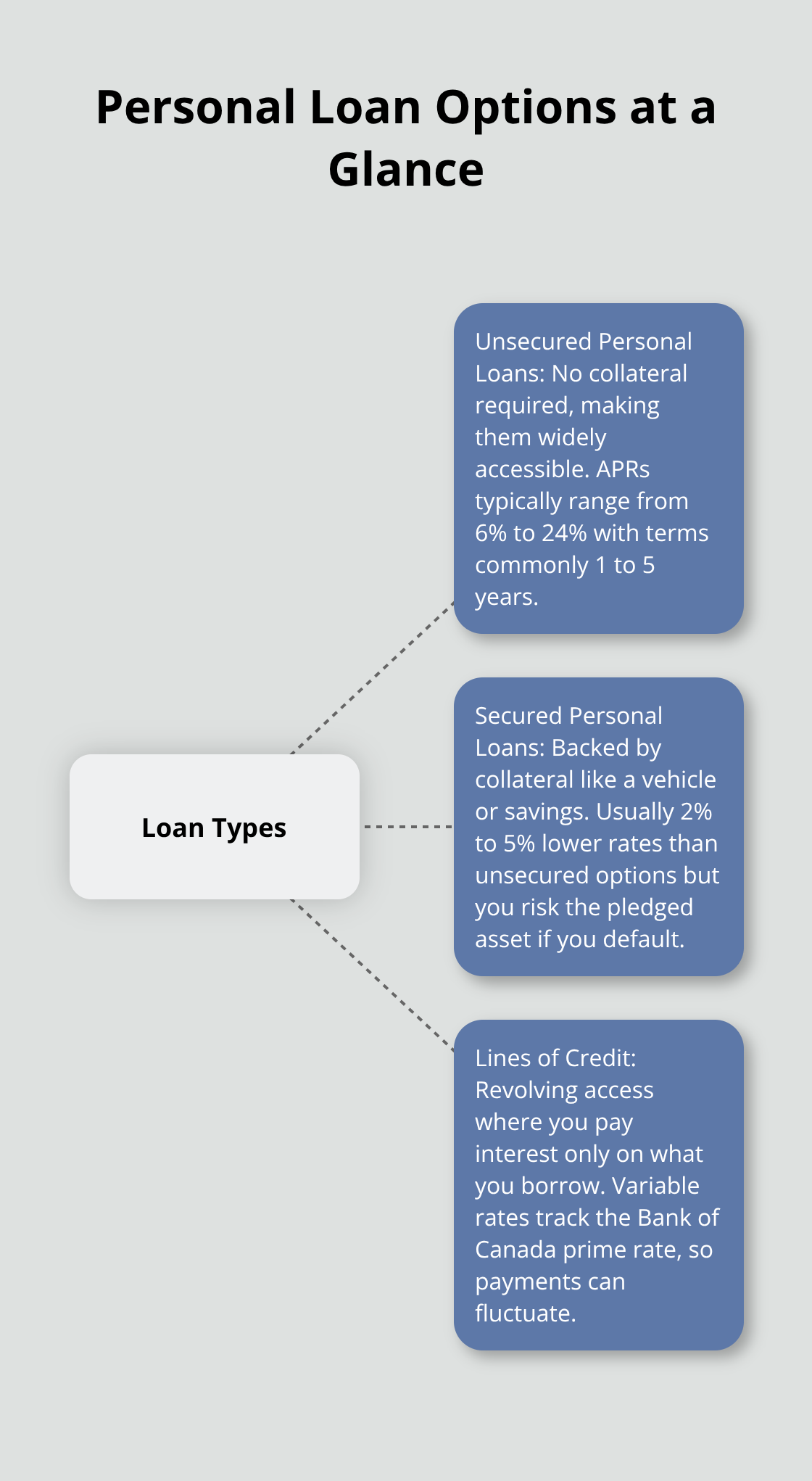
Unsecured personal loans dominate the Canadian market because they don’t require collateral, making them accessible to most borrowers. Banks like Scotiabank, BMO, TD, CIBC, and RBC all offer unsecured options with APRs ranging from 6% to 24% depending on your credit profile. Well-qualified borrowers with strong credit typically secure rates between 6% and 10%, while those with fair or poor credit face rates climbing toward 20% or higher. You apply online or in-branch, provide proof of income and employment, and lenders pull a hard credit inquiry through Equifax Canada or TransUnion Canada. Most unsecured personal loans range from $100 to $200,000, though approval amounts depend heavily on your debt-to-income ratio and credit score. Terms typically span 1 to 5 years, with some lenders extending to 7 years. Origination fees usually run 0.5% to 8% of the loan amount and get deducted from your disbursement or added to your balance.
Secured Loans: Trading Collateral for Lower Rates
Secured personal loans require you to pledge an asset-typically a vehicle, savings account, or home equity-as collateral. This structure lets lenders offer lower rates because they have recourse if you default. You’ll generally see rates 2% to 5% lower than unsecured options, making them attractive if you own assets and want to minimize borrowing costs. The tradeoff is clear: miss payments and you risk losing what you’ve pledged. Secured loans work well for debt consolidation or major home renovations when you’re comfortable with that risk and want predictable, lower monthly payments.
Lines of Credit: Flexibility Over Fixed Terms
Lines of credit operate differently from traditional personal loans. They’re revolving credit products where you access funds as needed, similar to a credit card. You only pay interest on what you actually borrow, not the full approved amount. This flexibility appeals to people facing irregular expenses or those wanting backup access to funds. However, variable interest rates on lines of credit track the Bank of Canada prime rate, which means your payment can fluctuate month to month, creating budget uncertainty compared to fixed-rate personal loans. Understanding these differences helps you identify which structure aligns with your financial situation and spending patterns.
Comparing Personal Loan Offers Without Wasting Time
APR is the only number that matters when comparing personal loans, and ignoring it will cost you thousands. The advertised interest rate tells you nothing-what you need is the Annual Percentage Rate (APR), which includes origination fees, insurance, and every other charge wrapped into one figure. Major Canadian banks publish starting rates that look attractive: Scotiabank advertises 6%, BMO shows 8.99%, TD lists 8.99%, CIBC quotes 9%, and RBC starts at 9%. These are marketing numbers for their best customers. Your actual rate depends entirely on your credit score, income, and debt-to-income ratio.
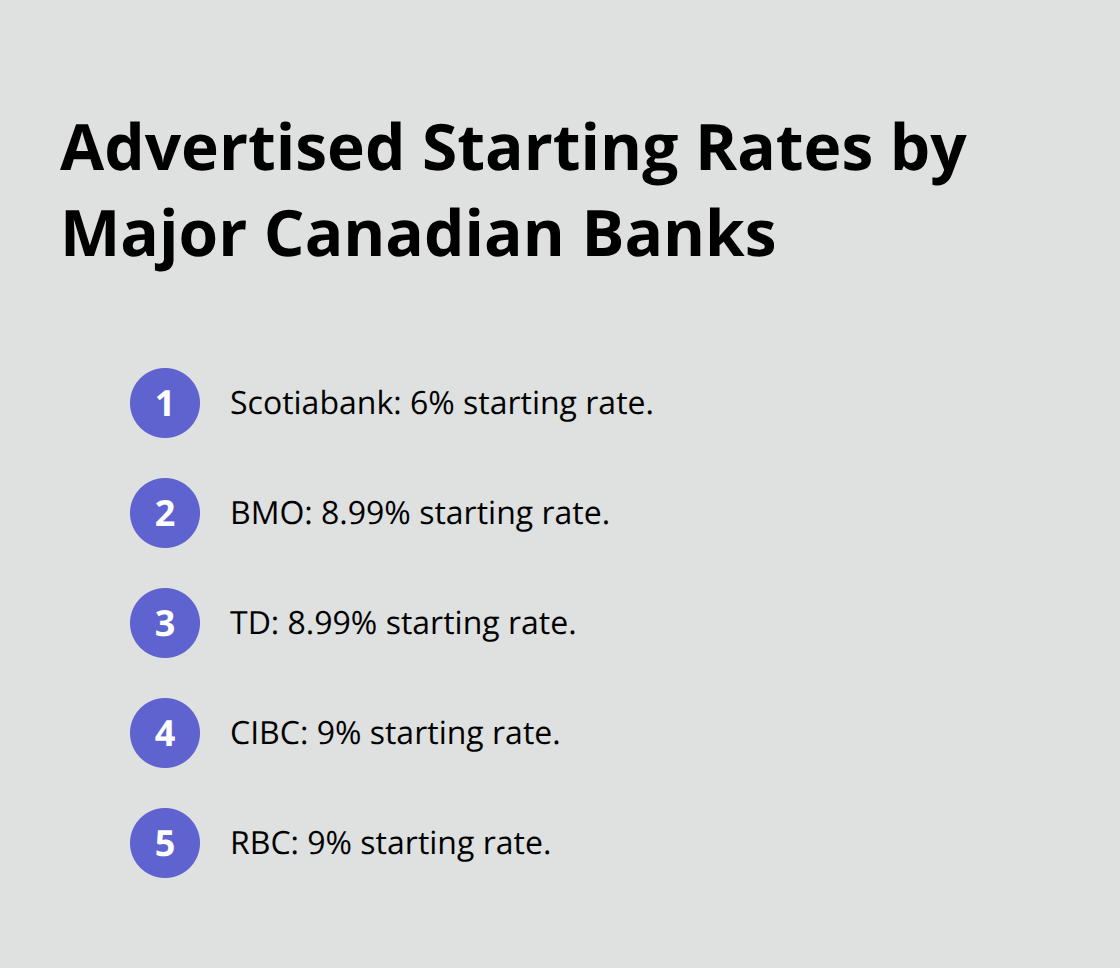
If you have fair credit, you land somewhere in the middle or higher end of their ranges.
Calculate the True Cost of Borrowing
Origination fees typically run 0.5% to 8% of the loan amount, and lenders either deduct this upfront from your disbursement or roll it into your balance. A $10,000 loan with a 5% origination fee costs you $500 in fees alone-that’s real money that changes your effective cost. When comparing two offers, calculate the total interest paid over the full term, not just the monthly payment. A longer term looks cheaper per month but costs significantly more overall because you pay interest for extra years.
Watch for Prepayment Penalties and Rate Structures
Prepayment penalties exist on some personal loans and can trap you into paying more interest than necessary. If you plan to pay off your loan early-perhaps because you received a bonus or sold an asset-a prepayment penalty could eliminate that advantage. Ask every lender directly whether they charge prepayment penalties before you apply. Fixed-rate loans protect your budget because your payment never changes, but variable-rate lines of credit move with the Bank of Canada prime rate, which was 2.25% as of July 2026. If rates rise, your payment rises too, and that uncertainty makes budgeting harder.
Verify Lender Reputation and Regulatory Standing
Lender reputation matters more than most borrowers realize because regulatory oversight varies significantly across Canada. Traditional banks fall under federal or provincial banking regulations and CDIC deposit insurance rules, but private lenders and peer-to-peer platforms operate with less oversight. Verify that your lender holds proper licensing in your province and check their reputation on independent review sites and the Better Business Bureau. A lender offering rates that seem too good to be true probably has hidden fees or uses aggressive collection practices. When you compare multiple offers using APR, ask about prepayment flexibility, and verify lender licensing, you position yourself to avoid predatory terms buried in fine print.
Your credit score and financial history play an equally important role in determining which loan actually works for your situation.
Key Factors to Consider Before Applying for a Personal Loan
Your Credit Score Determines Your Rate and Approval
Your credit score controls whether you qualify and what rate you’ll pay, so check where you stand before you apply. Lenders typically want a credit score around 600 or higher to approve unsecured personal loans, but scores below 650 push you toward higher rates or rejection. Equifax Canada and TransUnion Canada maintain your credit file, and you can pull your report free once yearly through their monitoring services. Check for errors before applying because inaccurate negative marks can unfairly lower your score. A hard inquiry from a loan application drops your score 5 to 10 points temporarily, so avoid applying to multiple lenders within a short window.
How Your Score Affects Your Rate
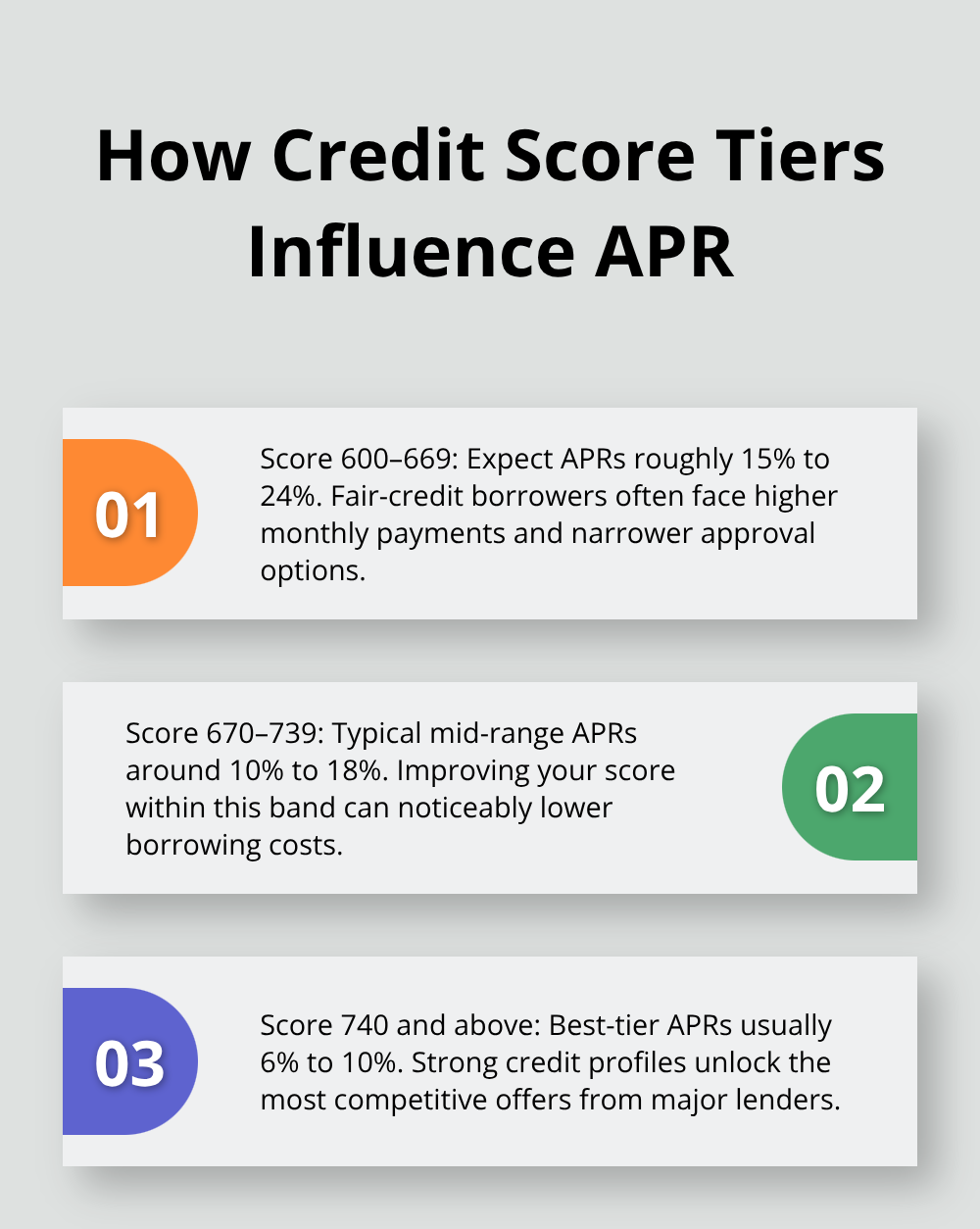
A score between 600 and 669 qualifies you for APRs in the 15% to 24% range from major banks. Scores between 670 and 739 typically qualify for mid-range rates around 10% to 18%. Anything above 740 unlocks the best rates, usually 6% to 10%.
Your payment history accounts for 35% of your score, so making on-time payments on your new loan actually rebuilds credit over time and creates a positive cycle.
Loan Amount and Term Length Control Your True Cost
Borrow only what you actually need because every extra dollar increases your total interest cost. A $15,000 personal loan at 12% APR over 5 years costs you $4,754 in interest alone, but stretch that same loan to 7 years and interest climbs to $6,846, adding nearly $2,100 to your cost. Shorter terms hurt your monthly budget but save money overall, while longer terms feel affordable month-to-month but trap you paying interest for years.
Calculate Your Debt-to-Income Ratio Before You Apply
Origination fees running 0.5% to 8% get added to your true cost, so a $20,000 loan with a 5% origination fee means you’re actually borrowing $21,000 or paying $1,000 upfront, depending on how the lender structures it. Calculate your debt-to-income ratio before applying because lenders typically want this below 43%, meaning your total monthly debt payments shouldn’t exceed 43% of your gross monthly income. If you earn $4,000 monthly, lenders want your total debt payments under $1,720 per month. Exceeding this threshold gets you rejected or forces you toward secured loans requiring collateral.
Final Thoughts
Personal loan options in Canada span unsecured loans, secured loans, and lines of credit, each serving different financial situations and borrowing needs. Unsecured personal loans remain the most accessible choice for most Canadians, offering flexibility without collateral requirements, while secured loans reward borrowers with assets by lowering rates. Lines of credit provide ongoing access to funds for irregular expenses, though variable rates introduce payment uncertainty.
The key to making the right choice lies in comparing APR across multiple lenders rather than chasing advertised rates, calculating your true borrowing cost including origination fees, and verifying that any lender holds proper provincial licensing and regulatory standing. Pull your credit report from Equifax Canada or TransUnion Canada to identify errors and understand where you stand before you apply. Check your debt-to-income ratio against the 43% threshold lenders typically enforce, and be honest about how much you actually need to borrow.
Start by gathering quotes from at least three lenders without worrying about credit score impact, since initial quotes don’t trigger hard inquiries. Compare the APR figures side by side, ask about prepayment flexibility, and choose the lender whose terms align with your financial reality, not just the lowest advertised rate. We at Financial Canadian help borrowers navigate personal loan options in Canada through transparent guidance and practical tools that make comparing loan terms straightforward.









Leave a comment