
Debt is one of the biggest financial stressors Canadians face today. The good news is that debt relief Canada options exist, and many of them are more accessible than you think.
At Financial Canadian, we’ve put together this guide to help you understand your choices and find the path that works for your situation. Whether you’re dealing with credit card debt, personal loans, or multiple obligations, there’s a strategy that can help you regain control.
Your Main Debt Relief Options in Canada
Consumer Proposals: Negotiating a Settlement
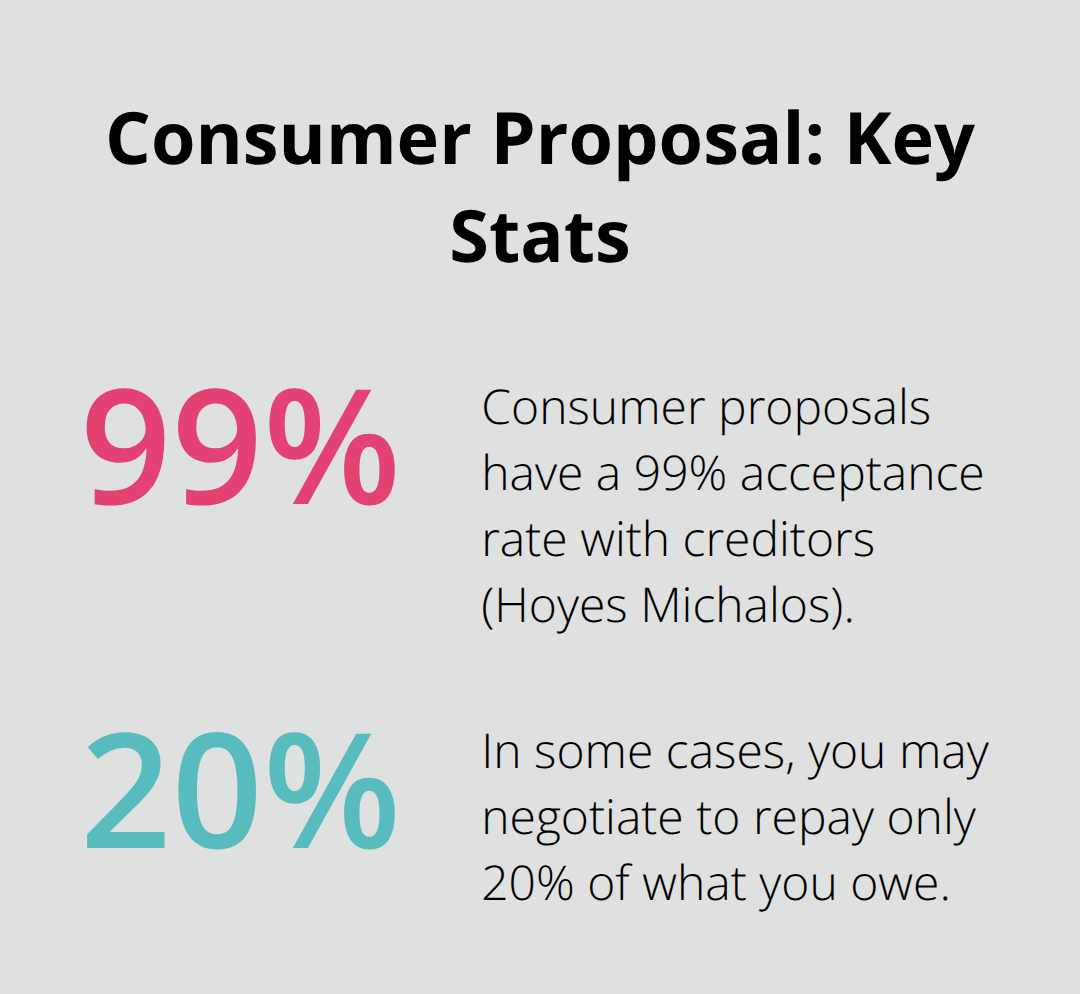
A Consumer Proposal provides for a reduction of debt owed to unsecured creditors, or an extension of time for repayment of the debt, or both. This option works best if you have unsecured debt under $250,000 (excluding mortgage) and want to keep your assets intact. The acceptance rate for consumer proposals is remarkably high-Hoyes Michalos reports a 99% acceptance rate with creditors, meaning your negotiated terms are likely to succeed. Your credit score recovers faster with this route too; a consumer proposal stays on your credit record for three years after completion, compared to six years for bankruptcy. The debt reduction can be substantial as well-in some cases, you may negotiate to repay only 20% of what you owe, depending on your creditors, income, and assets.
Bankruptcy: The Last Resort Option
Bankruptcy remains available but should only be considered when your income cannot support any repayment plan. A first-time bankruptcy discharge typically occurs within 9 to 21 months after you complete required duties, including two credit counseling sessions and monthly income and expense reports. While bankruptcy provides a clean slate, it stays on your credit record for about six years and requires surrendering certain assets, with limited exceptions. The process is federally regulated and legally binding, offering creditor protection during the insolvency period.
Debt Consolidation and Balance Transfers
Debt consolidation and balance transfer strategies operate differently-these aren’t formal legal processes but rather ways to restructure existing debt. A debt consolidation loan lets you pay off multiple debts with a single loan at a lower interest rate, though you must qualify based on credit and try to ensure the new rate is genuinely lower than your combined current rates. Credit Canada’s Debt Consolidation Program negotiates directly with your creditors to reduce or eliminate interest on unsecured debts, consolidating them into one monthly payment without requiring a new loan. This non-profit approach works regardless of credit score in many cases, though entering the program may temporarily lower your credit score before it improves through consistent, on-time payments.
Now that you understand the three main pathways available, the next step involves assessing which option aligns with your specific financial situation-your total debt load, income stability, and long-term credit goals all play a role in determining the best fit for you.
Choosing Your Debt Relief Strategy
Calculate Your Debt-to-Income Ratio
Start by calculating your exact debt-to-income ratio, which reveals whether you can realistically repay any portion of what you owe. Calculate your debt-to-income ratio by adding up all your monthly debt payments and dividing the total by your gross monthly income. If your total unsecured debt sits below $250,000 and your ratio suggests you could repay even 20% of that amount over time, a consumer proposal becomes viable. If your income cannot support any repayment structure, bankruptcy may be your only path forward.
Assess Your Monthly Cash Flow and Income Stability
Next, examine your monthly cash flow ruthlessly. Can you commit to fixed payments for three to five years? If yes, a consumer proposal or debt consolidation program works. If your income fluctuates significantly or you face wage garnishments, consumer proposals stop garnishments immediately while bankruptcy requires completing monthly income and expense reports, making the proposal the faster shield against creditors. Your asset situation matters too-if you own a home, vehicle, or investments you want to protect, consumer proposals let you keep far more than bankruptcy would allow.
Understand Credit Score Recovery Timelines
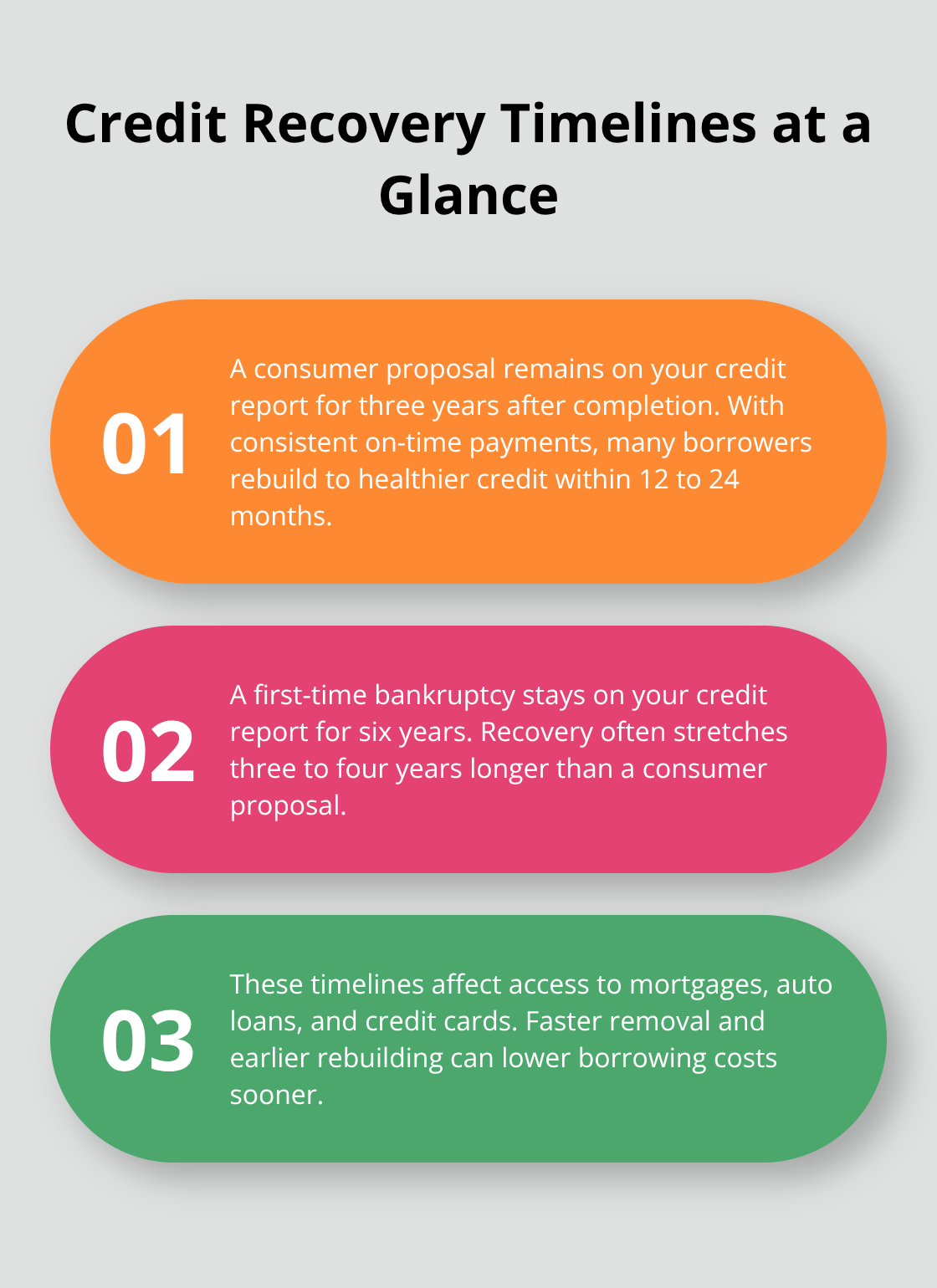
Credit score recovery timelines directly influence your long-term financial options. A consumer proposal remains on your credit report for three years after completion, whereas a first-time bankruptcy stays for six years. This matters because rebuilding credit after a consumer proposal typically takes 12 to 24 months with consistent on-time payments, while bankruptcy recovery often stretches three to four years longer.
Compare Costs and Timelines Across Options
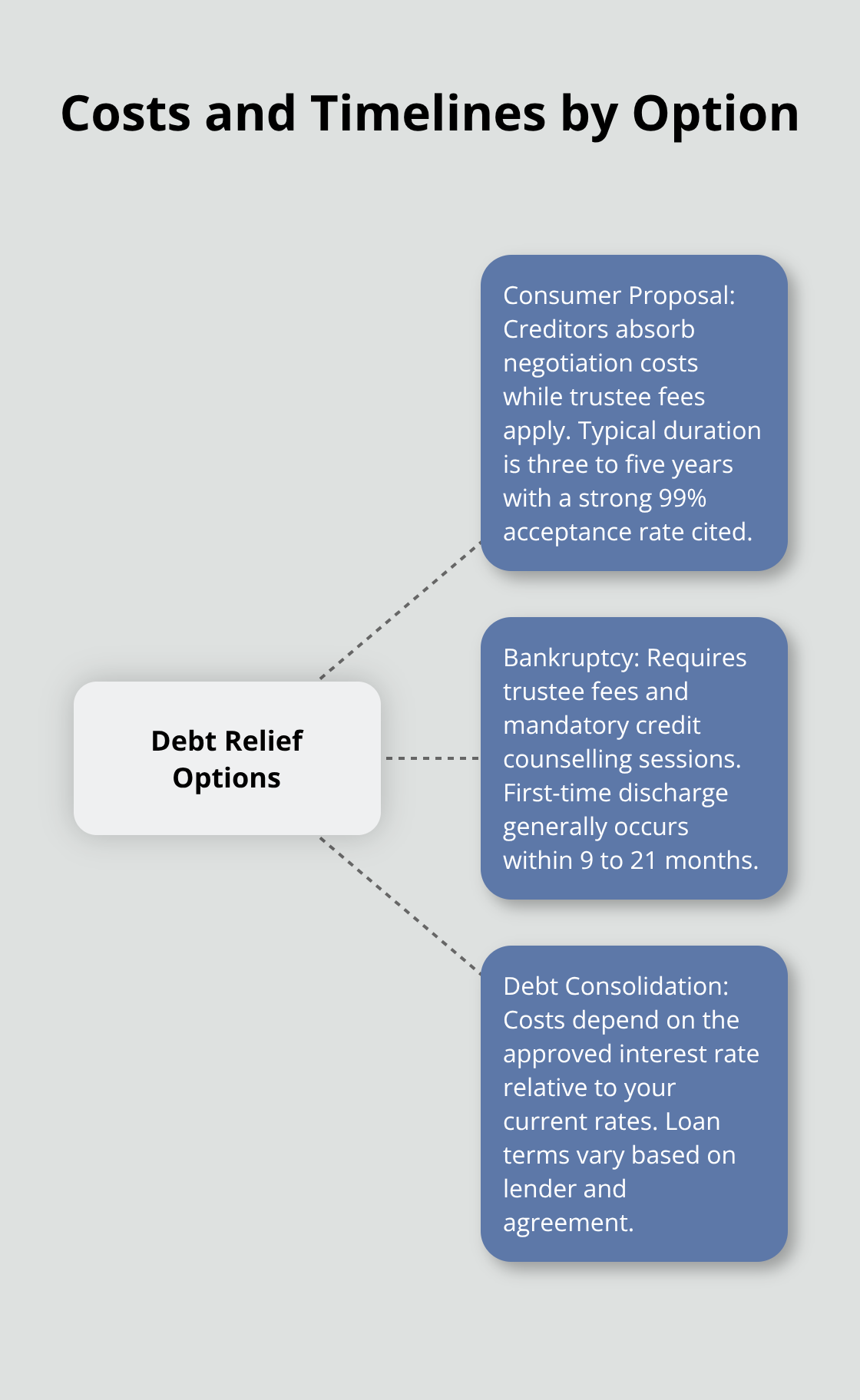
Compare the actual costs of each path: consumer proposals involve Licensed Insolvency Trustee fees, but creditors absorb negotiation costs; bankruptcy requires trustee fees and mandatory credit counseling sessions; debt consolidation loans depend entirely on your approved interest rate and whether it undercuts your current combined rates. Hoyes Michalos reports a 99% acceptance rate for consumer proposals, meaning your negotiated terms face minimal rejection risk. The timeline differs sharply too-consumer proposals typically conclude within three to five years, first-time bankruptcy discharge occurs in 9 to 21 months, and debt consolidation loans span whatever term you negotiate.
Evaluate Your Ability to Maintain Financial Discipline
Examine whether you can sustain discipline: entering a debt consolidation program requires abandoning unsecured credit cards entirely, while a consumer proposal legally prevents creditors from pursuing you during the repayment period. Your choice hinges on this fundamental question: do you have income to negotiate repayment, or do you need a complete financial reset? Once you’ve answered these questions honestly, the next step involves working with professionals who can guide you through the formal process and help you avoid costly mistakes.
Working with Credit Counsellors and Licensed Insolvency Trustees
Who Has Legal Authority to File Your Debt Relief
Licensed Insolvency Trustees hold the only legal authority to file consumer proposals or administer bankruptcies in Canada, making them non-negotiable if you pursue formal debt relief. These professionals are federally regulated and must complete rigorous training before they operate. When you meet with a Licensed Insolvency Trustee, they assess your income, expenses, assets, and debts to determine which pathway actually works for your situation rather than pushing you toward the most profitable option for them. Credit counsellors operate differently-they typically work as non-profit advisors who help you understand budgeting, debt management plans, and whether formal insolvency is necessary at all.
What Credit Counsellors Offer
Credit Canada, Canada’s longest-standing non-profit credit counselling agency with over 60 years of experience, offers free confidential counselling and holds an A+ BBB rating with consistent five-star reviews on Google and Trustpilot. The distinction matters because credit counsellors guide you through options while Licensed Insolvency Trustees execute the formal legal process. Many Canadians waste time and money with unlicensed debt consultants who charge high fees for referrals that licensed professionals handle directly at no upfront cost to you.
Questions to Ask Before You Hire
Before you hire anyone, ask whether they’re actually licensed-request their Licensed Insolvency Trustee registration number or credit counselling certification. Ask what fees they charge and when those fees are due; legitimate professionals don’t demand payment before they file paperwork. Question their acceptance rate with creditors; Hoyes Michalos reports a 99% consumer proposal acceptance rate, which signals strong negotiation outcomes. Inquire about their timeline-how long does a typical consumer proposal take from start to discharge, and what monthly payments might you expect based on your income level?
Verify Protection and Transparency
Ask whether they offer free initial consultations; Credit Canada and most reputable Licensed Insolvency Trustees provide no-obligation assessments before you commit. Confirm they stop collection calls immediately after you file; this protection begins the moment your proposal is submitted, not after creditor approval. The professional you choose should explain exactly what happens next, what your obligations are during the repayment period, and how your credit rebuilds afterward. Request their track record with creditors and ask for references from past clients if possible (though confidentiality may limit what they can share).
Final Thoughts
You now understand the three primary debt relief Canada options available to you: consumer proposals, bankruptcy, and debt consolidation. Consumer proposals offer the fastest credit recovery at three years on your record, with a 99% acceptance rate from creditors and potential debt reductions up to 80% depending on your situation. Bankruptcy provides a complete financial reset in 9 to 21 months but remains on your credit record for six years and requires surrendering assets. Debt consolidation restructures your existing obligations into a single payment, working regardless of credit score through non-profit programs like Credit Canada’s approach.
The outcomes differ significantly based on your income, assets, and debt load. If you earn enough to repay even a portion of what you owe and want to protect your home or vehicle, a consumer proposal makes sense. If your income cannot support any repayment structure, bankruptcy becomes necessary. If you have stable income and want to avoid formal insolvency entirely, debt consolidation offers a middle path.
Start immediately by gathering your financial statements, calculating your exact debt-to-income ratio, and assessing your monthly cash flow honestly. Contact a Licensed Insolvency Trustee for a free consultation; they’ll evaluate your situation without pressure or upfront fees. Ask about their acceptance rates, timelines, and whether they stop collection calls immediately after filing. Credit Canada operates with over 60 years of experience and offers free counselling at 1-800-267-2272, while Hoyes Michalos provides consultations across Ontario with phone and video options to help you build your financial recovery plan today.









Leave a comment