
Finding the best personal loans in Canada means comparing more than just interest rates. You need to weigh fees, repayment flexibility, and which lender actually fits your financial situation.
At Financial Canadian, we’ve built this guide to cut through the noise. We’ll walk you through the main loan types, show you what to compare, and introduce you to real lenders operating across Canada.
What Loan Types Can You Actually Get in Canada
Unsecured Personal Loans: The Most Accessible Option
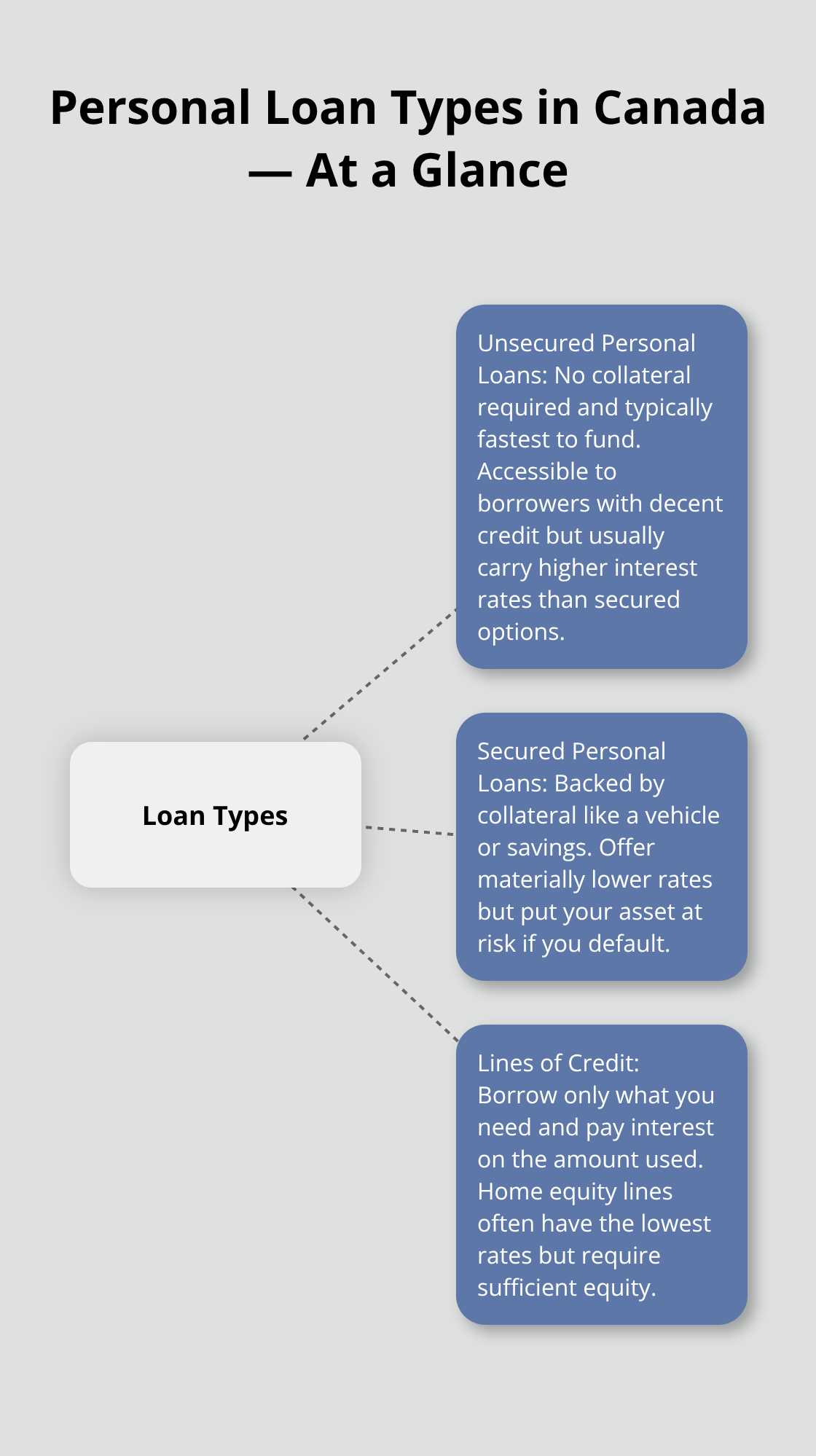
Canada’s personal loan market centers on unsecured personal loans because lenders accept the risk without requiring collateral, making them accessible to most borrowers with decent credit. These loans typically range from $1,000 to $50,000, with interest rates varying dramatically based on your credit score. Credit scores typically range from 300 to 850. You get fast approval and flexible use of funds, but you’ll pay significantly more interest than a secured alternative.
Secured Personal Loans: Lower Rates With Higher Stakes
Secured personal loans require collateral like a vehicle or savings account, which lets lenders offer rates 3-7 percentage points lower than unsecured options. This matters enormously over time. A $15,000 loan at 8% costs you roughly $2,450 in interest over five years, while the same loan at 15% costs $4,900.
However, defaulting on a secured loan means losing your collateral, which is why this option works best if you have substantial assets and absolute confidence in repayment.
Lines of Credit: Pay Only What You Use
Lines of credit operate differently-you access funds as needed rather than receiving a lump sum, paying interest only on what you actually borrow. A home equity line of credit typically sits between 6-9%, making it Canada’s cheapest borrowing option, though it requires home equity. Unsecured lines of credit exist but carry rates closer to 10-16%. The practical reality is that secured loans and lines of credit make sense only if you have assets to pledge and stable income.
Which Option Fits Your Situation
For most Canadians seeking straightforward borrowing, unsecured personal loans remain the realistic choice despite higher rates, because they don’t risk your home or car. Your next step involves understanding what lenders actually look for when they evaluate your application and which providers operate across Canada.
What Actually Matters When Comparing Personal Loans
Interest Rates: The Hidden Math Most Borrowers Miss
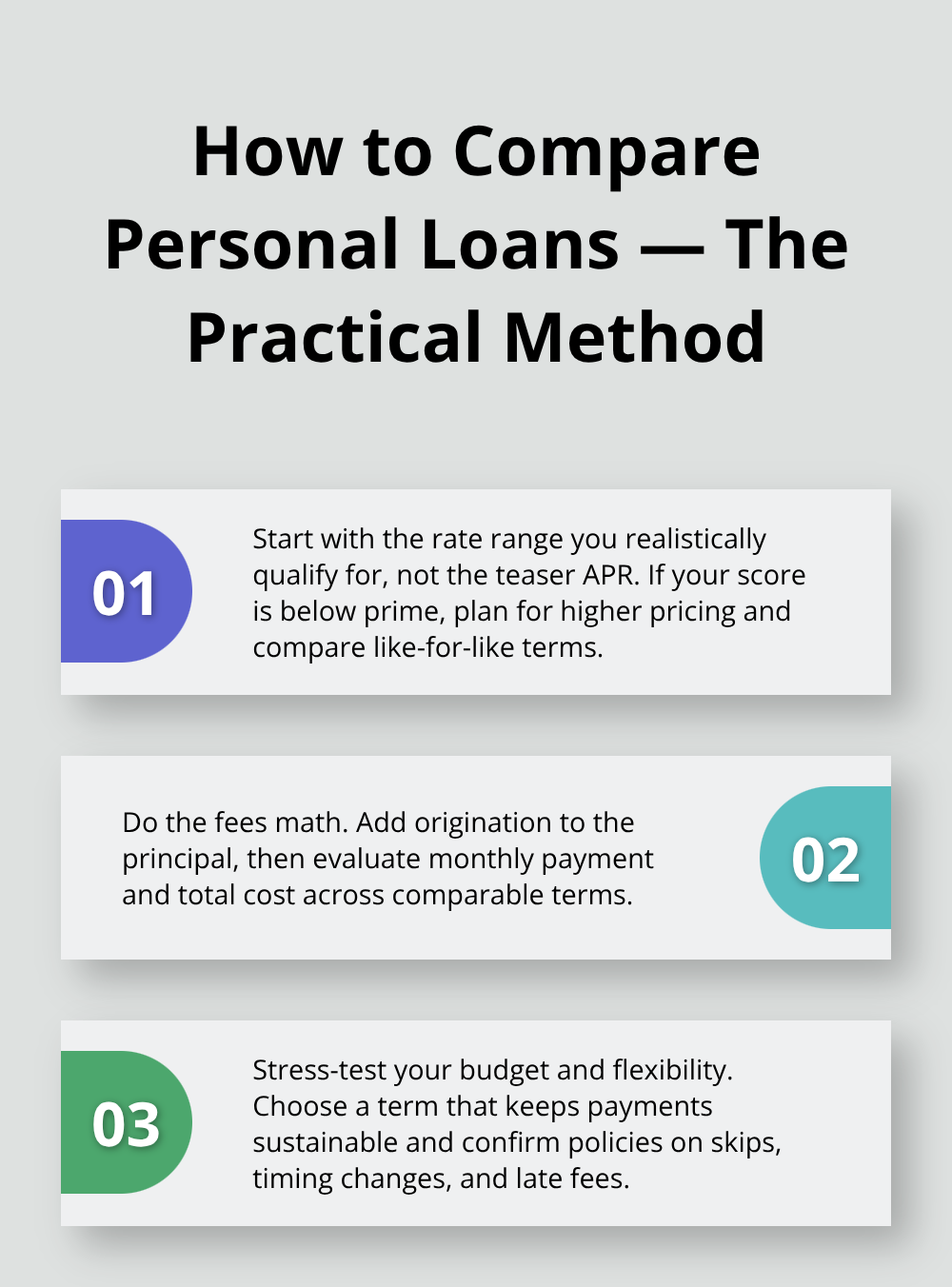
Interest rates grab all the attention, but they’re only part of the equation. When you compare personal loans, three measurable factors directly impact your total cost and whether you can sustain repayment. Most lenders advertise their lowest rates to prime borrowers with excellent credit, so if your score sits below 700, expect rates 5-10 percentage points higher than advertised. This matters tremendously: a $20,000 loan at 7% versus 12% adds roughly $1,000 annually to your payments.
Fees and Penalties: Where Hidden Costs Hide
Beyond the headline rate, origination fees typically range from 1% to 10% of your loan amount, processing fees run $50-300, and some lenders charge prepayment penalties of 1-3% if you pay early. These fees stack up fast and often get buried in disclosure documents most people never read carefully. Before applying anywhere, add the origination fee to the principal, then divide by your monthly payment amount to calculate total cost. Compare this figure across three different lenders rather than accepting the first approval.
Repayment Terms and Flexibility: The Budget Reality Check
A five-year loan sounds manageable until you calculate that $400 monthly payment against your actual budget, but a seven-year term drops it to roughly $280 monthly while adding significant interest costs. The real insight: calculate your monthly payment, then determine if that amount leaves you breathing room for emergencies and other obligations. Some lenders offer flexible payment schedules that let you skip a month or adjust timing, while others enforce strict deadlines with late fees starting at $25-35.
Credit Reporting: Building History While You Borrow
Check whether the lender reports payments to credit bureaus consistently, since this directly impacts your credit score improvement. Many online lenders report monthly, while some smaller alternatives don’t report at all, meaning you pay interest without building credit history. This distinction matters significantly if you’re working to rebuild your credit profile alongside managing debt.
The difference between a genuinely affordable loan and one that creates financial stress often comes down to these measurable factors and whether the repayment schedule fits your actual income pattern. Understanding what lenders look for when they evaluate your application helps you position yourself competitively before you apply.
Where to Actually Get a Personal Loan in Canada
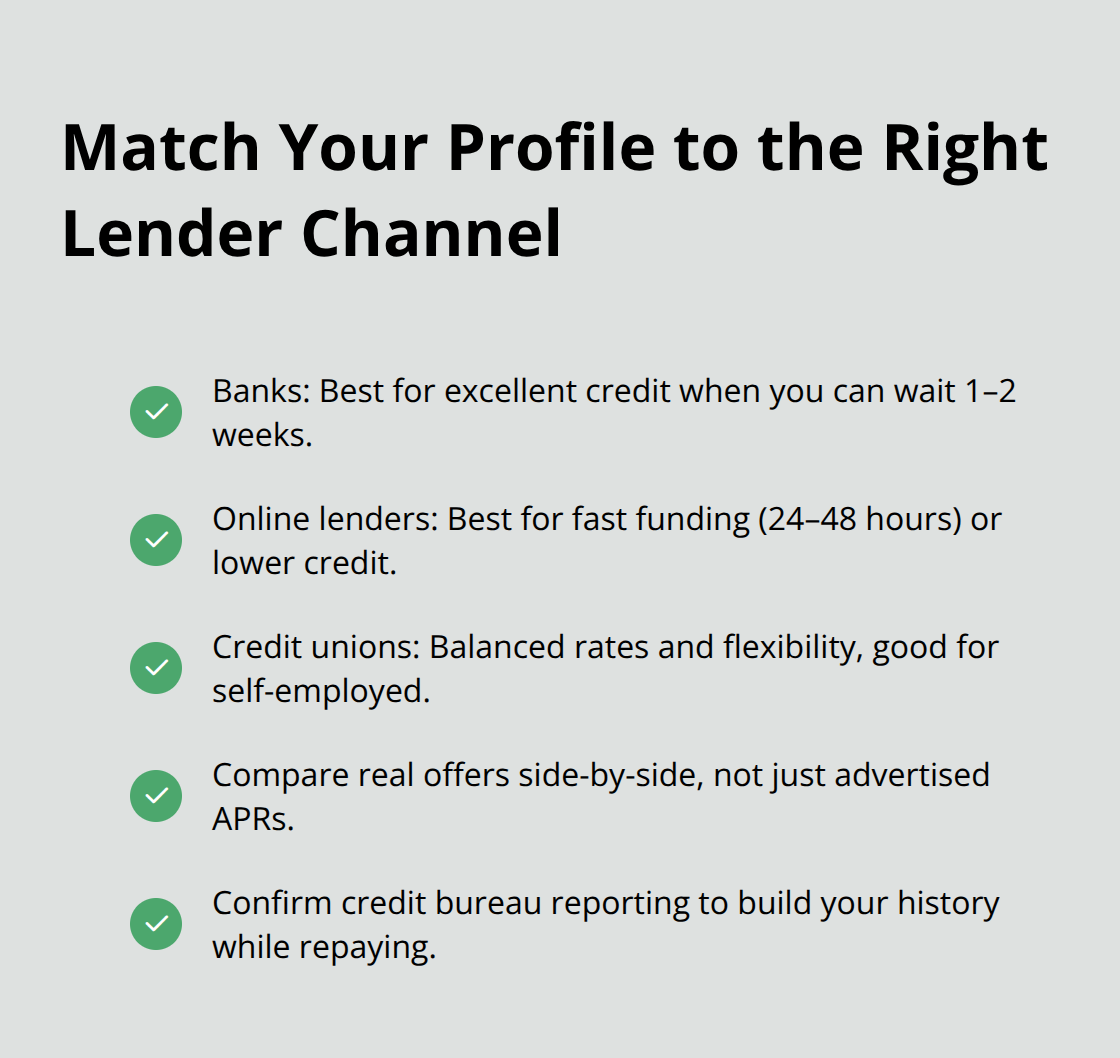
Canada’s lending landscape splits into three distinct channels, each with dramatically different approval speeds, interest rates, and customer experiences. Traditional banks dominate the market but move slowly and demand pristine credit scores, while online lenders approve applications in hours and accept lower credit profiles at higher rates. Credit unions occupy the middle ground with competitive rates and community focus but limited geographic reach. Your choice between these options determines whether you’ll pay 6% or 18% interest and whether approval takes two weeks or two days.
Most Canadians assume banks offer the best rates automatically, but this assumption costs them thousands in unnecessary interest.
Banks and Traditional Lenders: Slow but Competitive
Royal Bank of Canada, TD Bank, and Scotiabank require minimum credit scores around 660-680 and extensive income verification through tax returns and employment letters. Their rates typically range from 6.99% to 12.99% for prime borrowers, but they rarely approve applicants with scores below 650 or self-employed income. The approval process takes 5-10 business days minimum, and they decline you outright rather than offer a higher rate if your profile doesn’t fit their strict criteria. Banks work best only if you have excellent credit and can wait.
Online Lenders and Fintech Companies: Speed Over Cost
Mogo, Borrowell, and Zest Finance approve applications in 24-48 hours and accept credit scores as low as 580, making them realistic for most Canadians with recent credit problems. Their rates run 9.99% to 21.99% depending on creditworthiness, and they verify income through open banking connections that pull your bank statements automatically rather than requiring documents you must gather. Online lenders are your only practical option if you need funds within 48 hours, regardless of cost.
Credit Unions: The Middle Path
Credit unions operating across Canada such as Tangerine and Coast Capital offer rates between 7.99% and 15.99% with moderate credit score requirements around 620-650. They often provide flexibility on self-employed income verification that traditional banks won’t match. Their approval timeline sits between banks and online lenders at 3-7 business days, making them realistic for self-employed workers or those rebuilding credit.
Matching Your Situation to the Right Lender
If you have stable employment, excellent credit, and can wait two weeks, a traditional bank saves you thousands in interest. If you’re self-employed or rebuilding credit, credit unions and online lenders are your realistic paths forward since banks will simply reject your application. Your credit score, income documentation, and timeline each point toward a different lender type.
Final Thoughts
Choosing the best personal loans Canada offers requires you to match three concrete factors against your actual situation: your credit score determines which lenders will approve you and what rate you’ll pay, your income documentation shapes which lender types will consider your application, and your timeline dictates whether you can wait two weeks or need funds within 48 hours. The comparison factors we’ve covered matter because they directly impact your monthly payment and total interest cost-a $20,000 loan at 8% versus 15% creates a $1,000 annual difference in interest alone. Origination fees, prepayment penalties, and repayment flexibility each shift your true cost and whether you can sustain payments without financial stress.
Your next step depends on where you stand right now. If you have excellent credit and stable employment, contact your current bank first since their rates typically beat online alternatives by 3-5 percentage points. If your credit score sits below 650 or you’re self-employed, skip the banks entirely and focus on credit unions or online lenders that actually approve your profile. If you need funds within 48 hours, online lenders are your only realistic option regardless of cost.
Before you apply, gather your documentation-banks require tax returns and employment letters, online lenders pull your bank statements automatically through open banking, and credit unions typically fall somewhere between these approaches. Compare actual numbers from three different lenders rather than accepting the first approval, and calculate your monthly payment against your real budget to confirm you can sustain it for the full term. At Financial Canadian, we believe transparent comparison and practical decision-making beat chasing the lowest advertised rate, and our responsive web design service helps you build a strong online presence with visually stunning layouts and SEO best practices.










Leave a comment