
Finding the right Canada online loan option shouldn’t eat up your entire afternoon. We at Financial Canadian know that comparing lenders, rates, and terms takes time you don’t have.
That’s why we’ve put together this guide to help you cut through the noise and find what works for your situation fast.
Canada’s Three Main Online Loan Paths
Personal Loans from Traditional Banks
Personal loans from traditional banks typically range from $5,000 to $50,000 with interest rates between 6% and 21%, depending on your credit score. RBC and TD both offer online personal loans with approval timelines of 1 to 3 business days. These loans work best if you have decent credit and need funds for debt consolidation, home renovations, or major purchases.
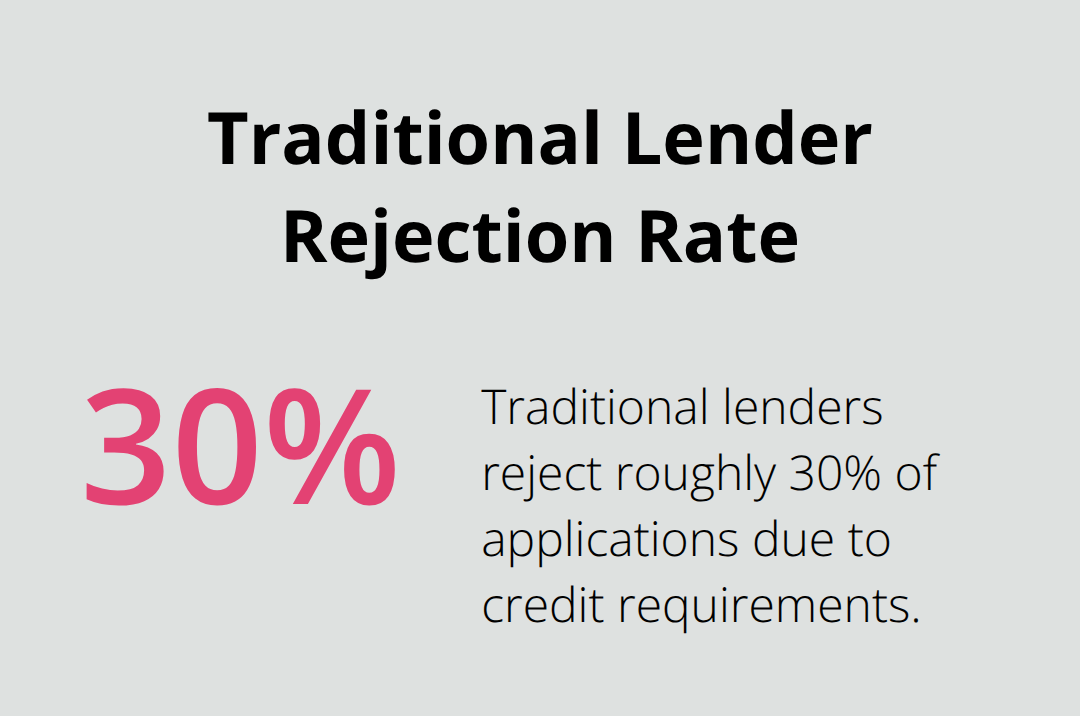
Traditional lenders reject roughly 30% of applications due to credit requirements, which makes them slower than alternatives. You’ll pay less interest overall, but you’ll wait longer for approval and funding.
Payday Loans and Short-Term Solutions
Payday loans operate in a completely different space. These loans typically max out at $2,500 with repayment periods of 2 to 4 weeks, and interest rates hit 400% APR or higher. Nearly 2 million Canadians use payday loans each year, mostly because they need cash between paychecks.
Lenders like Cash Money and Speedy Loans approve applications within hours, sometimes minutes. However, this speed comes with a brutal cost: a $500 payday loan can cost you $100 in fees alone. The convenience of rapid funding makes payday loans attractive when you’re desperate, but the fees compound quickly if you can’t repay on time.
Lines of Credit and Alternative Lenders
Credit unions across Canada offer lines of credit starting at 7% interest with flexible withdrawal options and repayment terms up to 10 years. Fintech lenders like Borrowell and Mogo approve applications in minutes using alternative credit assessment methods, meaning they don’t just rely on your traditional credit score.
These alternatives accept applicants with lower credit scores and offer more flexibility than banks, though rates typically run 1 to 3 percentage points higher than traditional lenders. They fill the middle ground between the speed of payday lenders and the cost savings of banks.
Matching Your Needs to the Right Loan Type
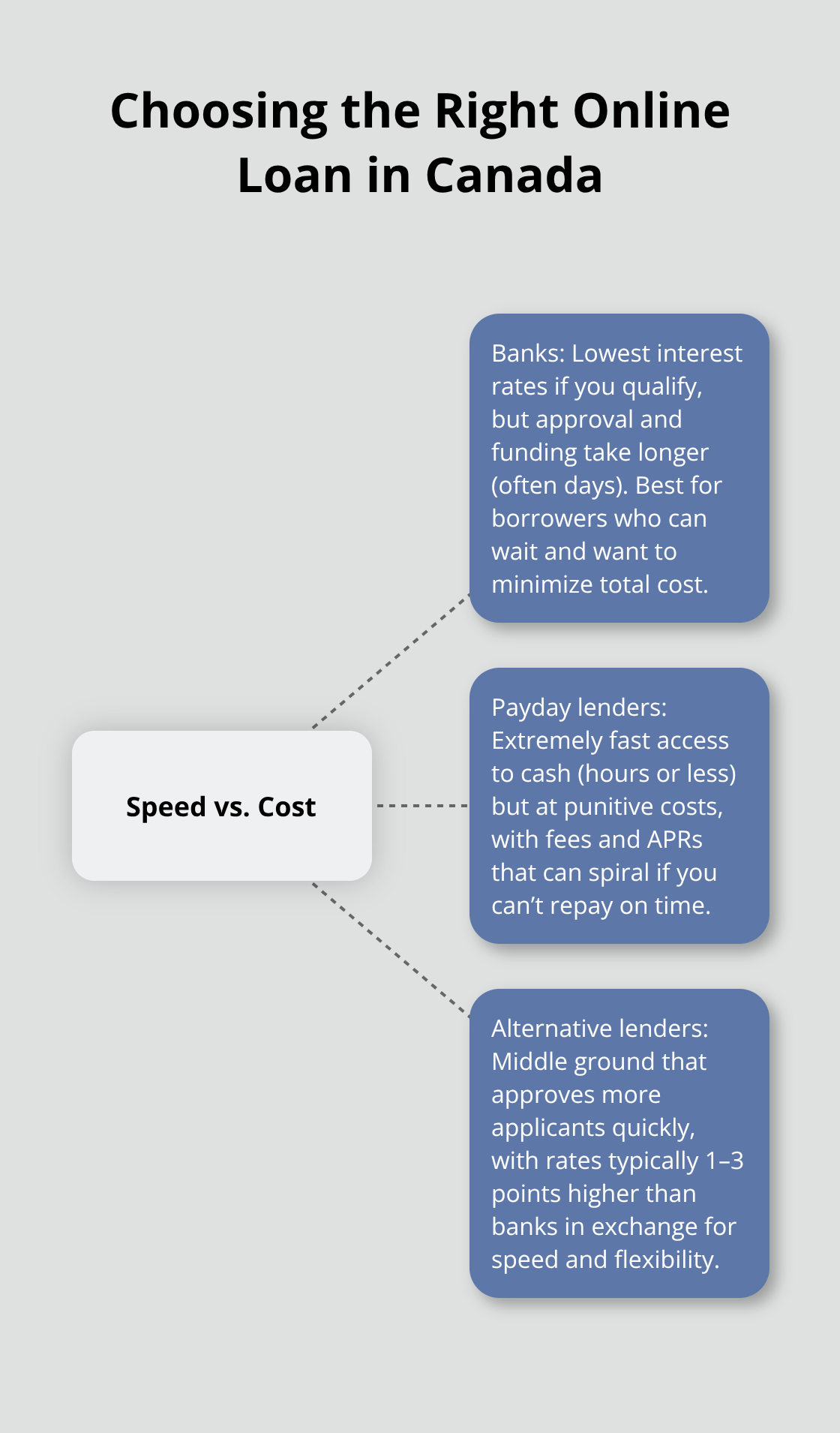
The real decision comes down to speed versus cost. Banks save you money but take time, payday lenders move fast but drain your wallet, and alternative lenders split the difference. Your choice depends on how urgently you need funds and what interest rate you can actually afford to pay back.
Once you’ve identified which loan type fits your situation, the next step involves comparing specific lenders within that category to find the best rates and terms available to you.
What Really Matters When Comparing Online Loans
Interest Rates Tell Only Half the Story
APR matters, but the total cost of borrowing matters more. A 12% APR on a $10,000 loan over five years costs you roughly $2,700 in interest, while the same loan at 18% APR costs $4,900. That $2,200 difference isn’t theoretical-it comes straight from your pocket. Most lenders display APR prominently, but you need to calculate the actual dollar amount you’ll pay back. Online loan calculators from RBC, TD, or Borrowell let you plug in your numbers and see the true cost before applying. Compare what you’ll actually owe at the end of the loan term, not just the rates side by side.
Repayment Schedules Determine What You Can Actually Afford
Loan terms and repayment schedules determine whether you can actually afford the monthly payments. A $15,000 personal loan over three years costs roughly $430 per month at 10% APR, but stretched to five years, it drops to $280 monthly. The longer term saves you monthly cash flow but costs you $2,400 more in total interest. Credit unions offer more flexible terms than traditional lenders. Write down your actual monthly budget and calculate whether the payment fits without squeezing other essentials. If a lender won’t let you see the full amortization schedule before approval, move on to another option.
Lender Reputation Separates Legitimate Operators from Predatory Ones
Check Trustpilot and Google Reviews for patterns in complaints (isolated negative reviews happen, but repeated issues with hidden fees or aggressive collection practices are red flags). The Financial Consumer Agency of Canada publishes complaint data showing which lenders face the most regulatory action. Payday lenders dominate this list, which aligns with their brutal fee structures. For traditional banks and credit unions, check your provincial regulator’s website to see if they’ve faced enforcement actions. Call the lender’s customer service line and ask specific questions about fees, early repayment penalties, and what happens if you miss a payment. A lender that answers clearly and honestly during the sales process usually treats you fairly afterward (one that dodges questions or pressures you toward approval should be avoided entirely).
Now that you understand what separates a good loan from a bad one, the next step involves identifying which lenders actually deliver on these standards.
Where to Actually Borrow Money Online in Canada
Traditional Banks Offer the Lowest Rates for Qualified Borrowers
RBC and TD dominate the Canadian online personal loan market, and for good reason. RBC Personal Loans range from $5,000 to $50,000 with rates starting at 6.99% for applicants with excellent credit, while TD offers similar products with approval decisions within one business day. Both banks publish their rates upfront on their websites, which means no surprises during the application process. However, these lenders move slowly compared to alternatives, and their approval odds drop sharply if your credit score sits below 650.
Traditional banks offer the lowest rates for qualified borrowers, with major lenders typically advertising starting rates between 6% and 10% APR. Scotiabank positions itself as the middle ground, approving loans in 24 hours with slightly more flexible credit requirements than RBC or TD, though rates typically run 1 to 2 percentage points higher. If you have solid credit and can wait a few days, traditional banks deliver the lowest interest rates available. The tradeoff remains non-negotiable: speed for savings, or savings for speed.
Credit Unions Deliver Faster Funding Than Major Banks
Tangerine and Simplii Financial operate as online banks with personal loan products that undercut traditional lenders on rates. Tangerine Personal Loans start at 6.99% APR with terms up to seven years, and they approve applications within 24 hours without requiring a branch visit. Coast Capital Savings, a credit union operating across British Columbia and Alberta, offers lines of credit starting at prime plus 0.5% (currently around 7.5% given the Bank of Canada’s rate environment).
Credit unions generally require membership, but many allow online applications and funding within 48 hours. Their approval standards prove more forgiving than banks for applicants with credit scores between 600 and 700. The catch: credit unions have smaller lending limits than major banks, typically capping personal loans at $35,000. If you need less than $30,000 and have moderate credit, credit unions deliver faster funding and comparable rates to traditional banks.
Fintech Lenders Approve Lower-Credit Applicants Quickly
Borrowell and Mogo represent Canada’s largest fintech lending platforms, and they’ve fundamentally changed how money actually works in the lending space. Borrowell approves personal loans up to $50,000 in minutes using alternative credit scoring, meaning they assess your payment history across utility bills and rent payments, not just traditional credit reports. Interest rates range from 9.99% to 46.96% depending on creditworthiness, and funding hits your account within one business day.
Mogo operates similarly with rates from 9.99% to 43.99% and claims to process applications in under 10 minutes. Fintech lenders approve applicants with credit scores of 660 or higher, which increases your chances of approval. The reality: fintech lenders approve people banks would decline, but they charge 3 to 5 percentage points higher interest to compensate for increased risk. Use fintech lenders when you need speed and have lower credit, not because they offer better rates. If your credit exceeds 700 and you can wait three business days, a traditional bank saves you thousands in interest over the loan term.
Final Thoughts
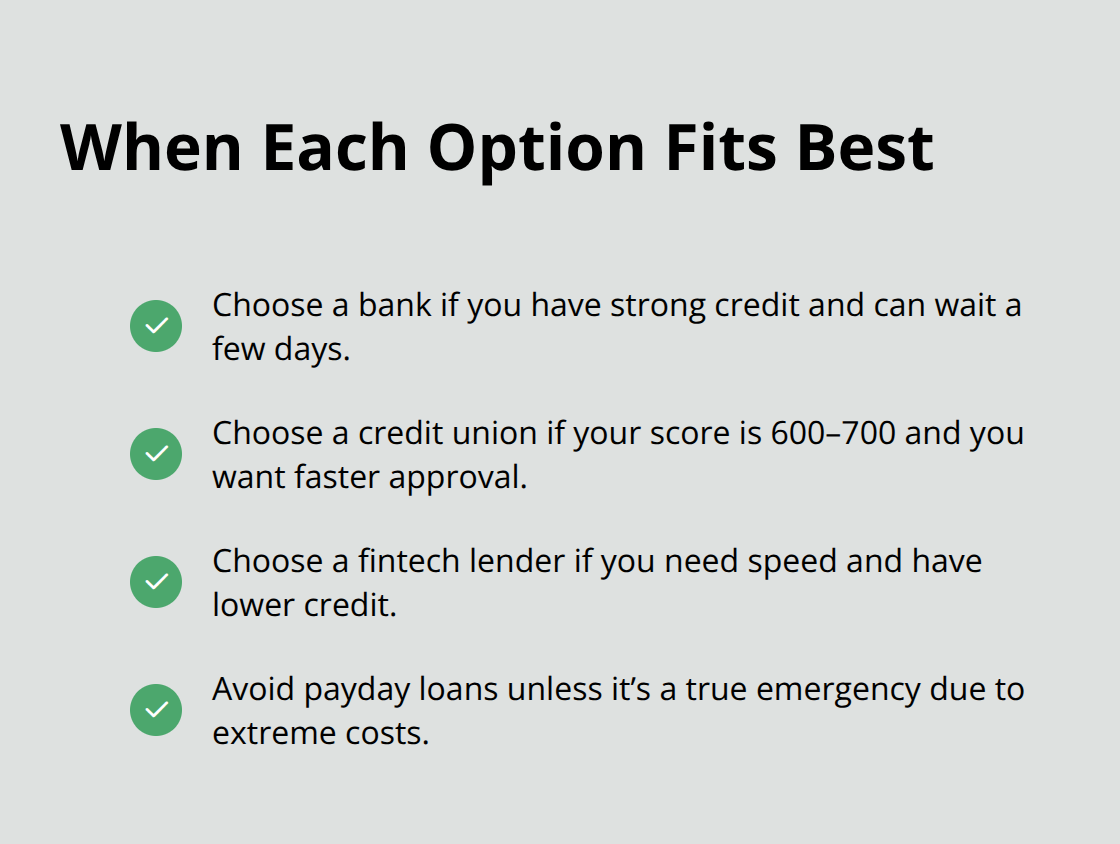
Your choice between Canada online loan options ultimately depends on three concrete factors: how fast you need the money, what interest rate you can afford, and whether your credit score qualifies you for the lowest rates available. If you have solid credit and can wait three to five business days, traditional banks like RBC and TD deliver the lowest interest rates on the market, typically between 6% and 10% APR. A $10,000 loan at 8% costs roughly $1,700 in interest over five years, while the same loan at 15% costs $4,100-that difference matters when you pay it back monthly.
If your credit sits between 600 and 700, credit unions offer the middle ground with faster approval than banks (usually within 24 to 48 hours) and rates comparable to traditional lenders. Coast Capital and Tangerine both process applications online without forcing you into a branch. If you need money within hours or your credit score falls below 660, fintech lenders like Borrowell and Mogo will approve you when banks won’t, though you’ll pay 3 to 5 percentage points higher interest for this speed and flexibility.
Before applying anywhere, calculate the actual dollar amount you’ll pay back using online calculators, not just the advertised APR, and write down your monthly budget to confirm the payment fits without cutting essentials. Check Trustpilot and your provincial regulator’s website for complaint patterns, since a lender that answers your questions clearly during the sales process usually treats you fairly afterward. We at Financial Canadian help you make informed financial decisions through practical guides and resources that cut through the noise.










Leave a comment