
Carrying multiple debts drains your finances and mental energy. At Financial Canadian, we know that debt consolidation options in Canada can simplify your situation, but picking the right one matters.
This guide walks you through the main consolidation methods available to Canadian borrowers, how to compare them fairly, and the pitfalls that derail most people.
Debt Consolidation Options Available in Canada
Personal Loans Offer Straightforward Consolidation
Personal consolidation loans remain the most straightforward path for most Canadians. You borrow a lump sum at a fixed rate, then repay it over a set term-typically two to seven years. One monthly payment replaces multiple debts, which simplifies your budget significantly. If your existing debts carry interest rates above 15 percent, a consolidation loan at just over 6 percent cuts your total interest cost substantially.
Approval hinges on credit score, income verification, and debt-to-income ratio. Lenders typically want a score above 650, though rates improve at 700 and above. A critical mistake many borrowers make: comparing only monthly payments rather than total cost. A five-year loan at 10 percent costs far more than a three-year loan at the same rate, even if monthly payments feel manageable. Run the full numbers before you apply.
Balance Transfer Cards Demand Aggressive Repayment
Balance transfer credit cards offer a 0 percent introductory interest rate for six to 21 months, depending on the card. You can clear your balance before the promotional period ends if you have strong repayment discipline. The catch? Transfer fees typically run 1 to 3 percent of the amount moved, and the standard interest rate after the promo-often 19 to 22 percent-kicks in hard on any remaining balance.
The average Canadian owes $3,929 on their credit cards, making balance transfers appealing for those with smaller balances. This method suits someone who can aggressively pay down debt within the promotional window. If you cannot commit to clearing the balance before rates reset, skip this option entirely.
Home Equity Options Transform Your Risk Profile
Home equity lines of credit and second mortgages tap your home’s value as collateral. They typically offer lower rates than unsecured loans-sometimes 6 to 9 percent-because the lender holds security. However, this arrangement transforms unsecured debt into secured debt backed by your home. Default means risking foreclosure.
Second mortgages require a separate application and come with legal fees, appraisals, and closing costs that can total 1,500 to 3,000 dollars. Home equity lines of credit offer more flexibility, letting you borrow as needed up to your limit, but variable rates expose you to Bank of Canada rate increases. These options make sense only if you own significant home equity, have stable income, and can handle the risk of losing your property if circumstances change.
Comparing These Routes Requires Honest Assessment
Each option carries different costs, risks, and timelines. Personal loans work best when you want predictability and have decent credit. Balance transfer cards suit smaller debts and disciplined borrowers. Home equity solutions demand that you accept real collateral risk in exchange for lower rates.
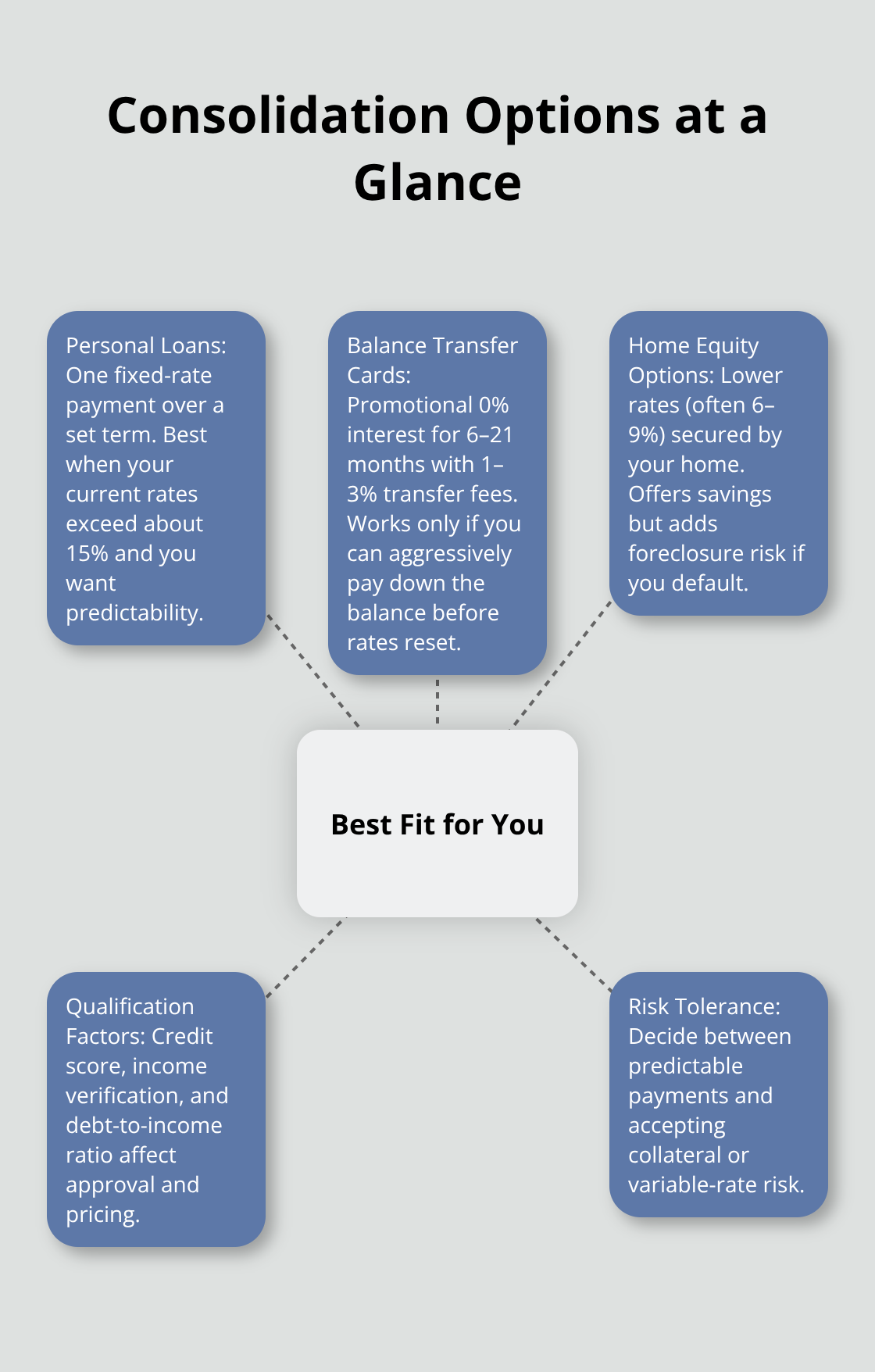
Your next step involves evaluating which option aligns with your financial situation, credit profile, and risk tolerance-factors we’ll examine in detail.
How to Compare Consolidation Options That Actually Fit Your Situation
List Your Debts and Calculate Total Cost
Picking the right consolidation method requires running real numbers, not just eyeballing monthly payments. Start by listing every debt you currently owe: the balance, interest rate, and minimum payment. This list becomes your baseline for comparison. Next, calculate the total cost under each consolidation option you’re considering.
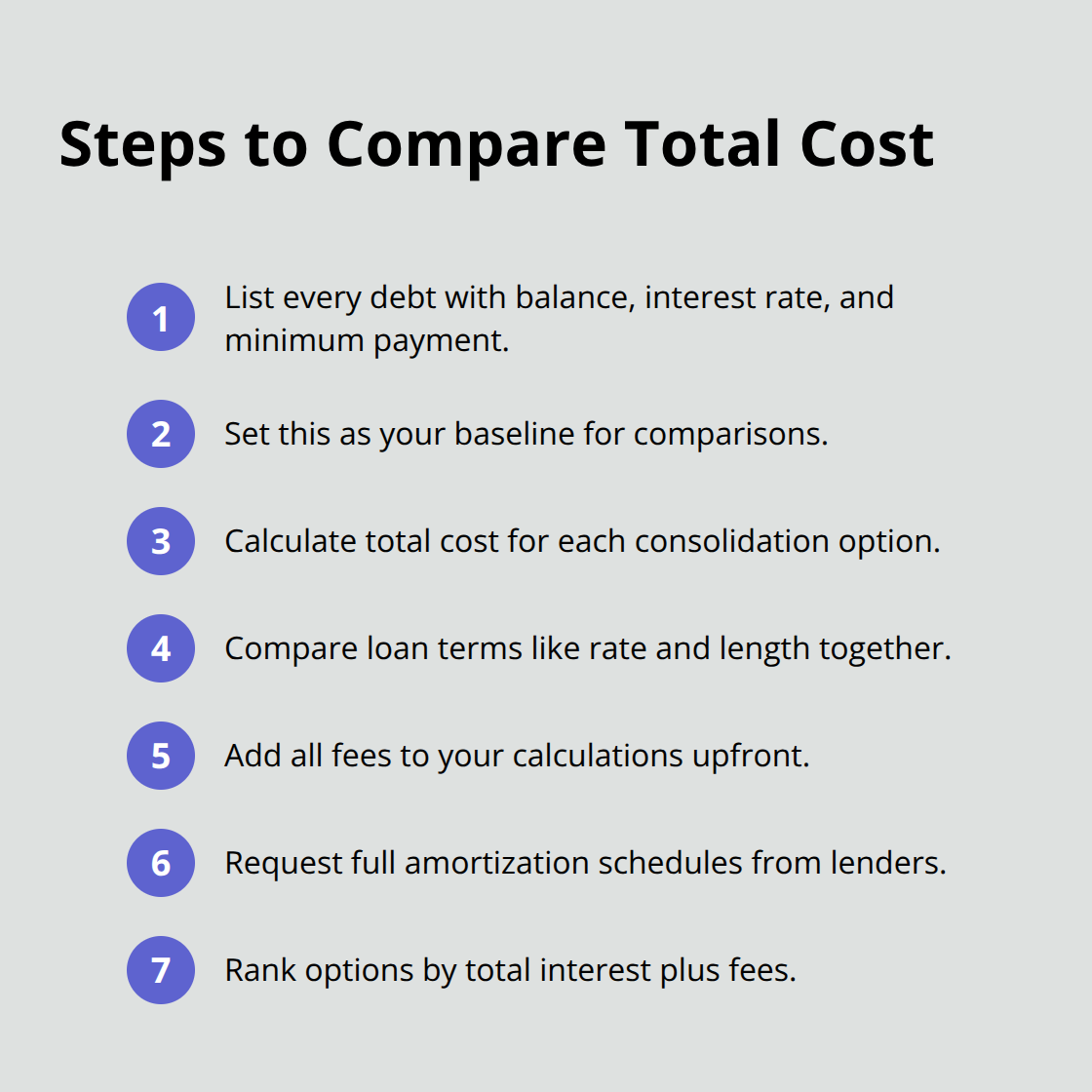
A personal loan at 8 percent over five years costs significantly more in total interest than the same loan over three years, even though monthly payments drop. The Financial Consumer Agency of Canada emphasizes comparing total payoff amount, loan term, monthly payment, and any upfront or ongoing fees together, not separately. Many borrowers fixate on the lowest monthly payment and miss that they’re paying thousands more in total interest.
Account for Hidden Fees Before You Apply
Interest rates matter, but hidden costs pile up fast. A balance transfer card charges 1 to 3 percent upfront just to move your balance, which means a $10,000 transfer costs $100 to $300 before you’ve paid down a single dollar. A second mortgage involves legal fees, appraisals, and closing costs estimated at 3 to 5 percent of the home’s purchase price. Personal consolidation loans typically charge origination fees between 0 and 5 percent of the loan amount. Add these fees to your interest calculations, not after. When comparing offers from lenders, request the full amortization schedule and total interest payable, then rank options by total cost, not monthly payment.
Understand Your Credit Score and Income Requirements
Your credit score and income stability determine which options you actually qualify for. Lenders want a credit score above 650 for unsecured personal loans, though rates improve at 700 and above according to the Financial Consumer Agency of Canada. Home equity options demand significant equity in your property and stable employment history. A new consolidation loan triggers a hard credit inquiry that temporarily dips your score by a few points, but timely payments afterward rebuild it faster than carrying multiple debts.
Protect Your Progress After Consolidation
The real risk emerges after consolidation: taking on new debt while paying down your consolidation loan extends the whole process and defeats the purpose. Avoid applying for new credit cards or loans during your payoff period, and build a realistic budget that accounts for living expenses without relying on credit. Once you’ve chosen your consolidation route and locked in your terms, the next challenge involves executing your repayment strategy without backsliding into old spending habits.
Common Mistakes That Wreck Your Consolidation Plan
New Debt Sabotages Your Progress
Most people who consolidate debt successfully stay debt-free. The ones who fail repeat the same errors. The biggest trap: taking on new debt while paying down your consolidation loan. You’ve just freed up monthly cash flow by combining multiple payments into one, and that breathing room feels like permission to spend. It isn’t. New debt during consolidation may extend your payoff timeline and defeats the entire purpose. If you consolidate $30,000 in credit card debt into a five-year personal loan, then rack up another $8,000 in new credit card charges within two years, you’ve essentially extended your debt journey by years. Freeze new credit applications for the entire consolidation period. Don’t apply for new cards, car loans, or lines of credit. Your credit score will improve faster through on-time payments on your consolidation loan than through any new borrowing activity.
Monthly Payment Blindness Costs Thousands
The second mistake sounds obvious but catches most people off guard: choosing your consolidation option based solely on the lowest monthly payment. A $30,000 debt consolidated over seven years costs far more in total interest than the same debt consolidated over four years, even though the monthly payment drops significantly.
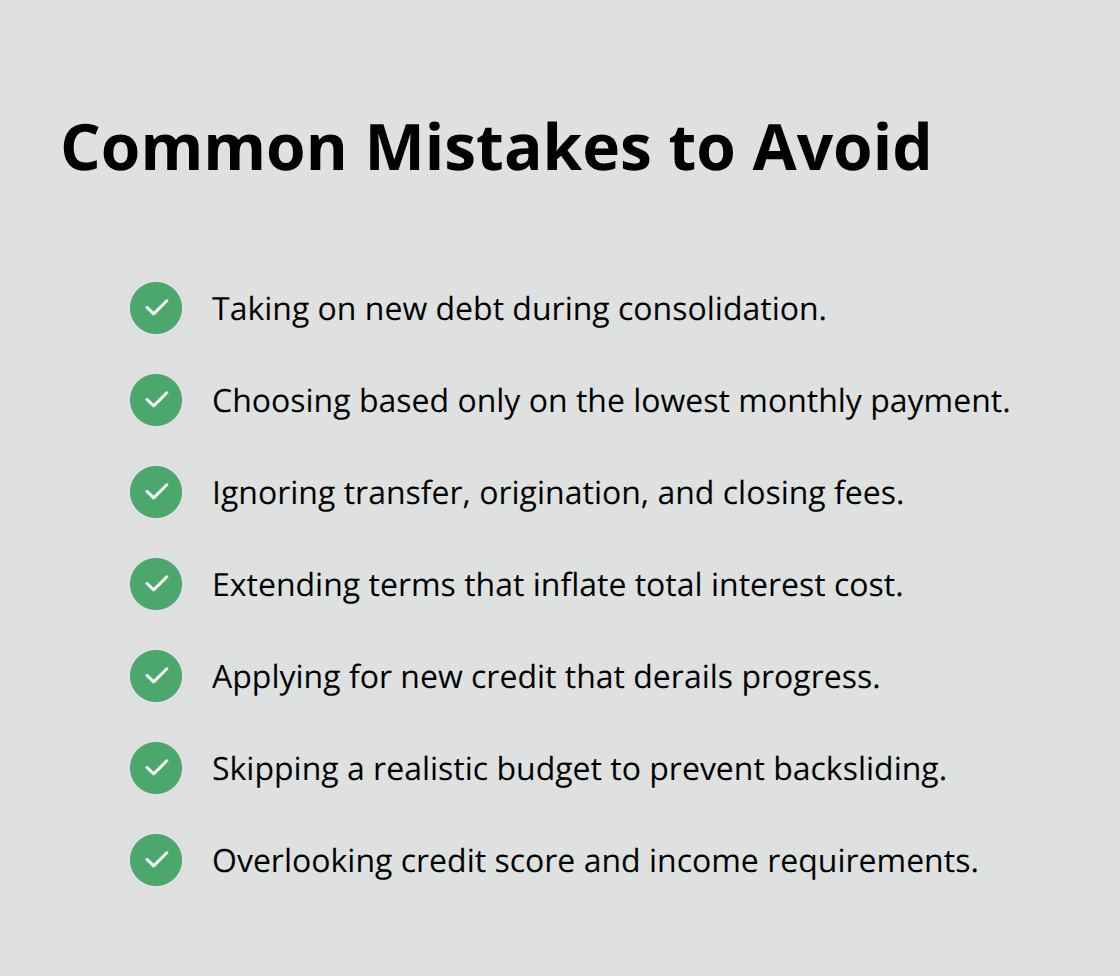
Run the full amortization schedule for every option you’re considering, then compare total interest paid plus all fees, not just the monthly bill. This distinction matters enormously when you’re comparing a three-year loan against a seven-year loan at identical rates.
Hidden Fees Add Up Faster Than You Think
The third and most expensive mistake involves ignoring hidden fees entirely. Balance transfer cards charge 1 to 3 percent upfront just to move your balance, so a $15,000 transfer costs $150 to $450 before you’ve paid a cent toward principal. Second mortgages pile on legal fees, appraisals, and closing costs that easily exceed $2,000. Personal consolidation loans typically charge origination fees between 0 and 5 percent of the borrowed amount. Add every fee to your interest calculations before you commit. When lenders present offers, request the complete amortization schedule showing total interest payable over the loan term, then rank all options by total cost. Monthly payment is irrelevant if you’re paying thousands more overall.
Final Thoughts
Debt consolidation options in Canada range from personal loans to balance transfer cards to home equity solutions, each carrying distinct costs and risks. Your credit score, income stability, and total debt amount determine which option fits your situation best. A personal loan works when you want predictability and have decent credit, while a balance transfer card suits smaller balances and disciplined borrowers who can aggressively pay down debt within the promotional window.
Run the full numbers on total cost before you commit to any option. Compare interest rates, fees, and loan terms side by side, then request complete amortization schedules from lenders and rank options by total interest paid plus all fees combined. This approach prevents the costly mistake of choosing based on the lowest monthly payment alone, which can cost you thousands in extra interest over time.
Start today by listing every debt you owe, including balances, interest rates, and minimum payments. Check your credit report for errors, then compare offers from reputable lenders and calculate total cost under each scenario. If you’re considering a consumer proposal or bankruptcy, consult a Licensed Insolvency Trustee to understand your options and protections.











Leave a comment