
Buying a home in Canada means navigating mortgage options that can feel overwhelming. The difference between a fixed-rate and variable-rate mortgage, or understanding how your credit score affects your rate, matters more than most people realize.
At Financial Canadian, we’ve created this mortgages Canada guide to break down what actually impacts your mortgage rate and how to negotiate better terms. By the end, you’ll know exactly what to look for when comparing lenders and securing a deal that works for your situation.
What Mortgage Types Should You Choose
Fixed-Rate Mortgages Lock Your Payment in Place
Fixed-rate mortgages lock your interest rate for the entire term, typically ranging from one to ten years in Canada. Your monthly payment stays the same regardless of what happens to the prime rate. Fixed-rate mortgages with terms of 3 to less than 5 years remained popular, accounting for 35% of extended mortgages at chartered banks in February 2026. The advantage is straightforward: predictability. You know exactly what your payment will be in five years, ten years, or whenever your term ends.
The trade-off matters, though. Fixed rates are usually higher than variable rates at the time you sign. If interest rates drop significantly during your term, you’re locked in at the higher rate unless you break your mortgage, which typically costs three months of interest or an interest rate differential penalty.
Variable-Rate Mortgages Move With the Prime Rate
Variable-rate mortgages fluctuate with the prime rate, so your payment or amortization period changes as rates move. When the prime rate drops, your mortgage rate and often your payment drop too. When it rises, your payment increases. This sounds risky, but the numbers tell a different story: variable rates start lower than fixed rates, often by as much as a whole percentage point. A homeowner who locked in a fixed rate at 5.5% in 2023 paid significantly more than someone with a variable rate at 4.5%.
Variable-rate mortgages require discipline, though. You must prepare for payment increases when rates rise, which is why lenders stress-test applicants at higher rates before approval.
Open and Closed Mortgages Offer Different Flexibility
Open mortgages allow you to pay down your balance or break the mortgage without penalty, but they charge a premium for this flexibility-usually 0.5% to 1% higher than closed mortgages. Closed mortgages restrict prepayment but offer lower rates. Most Canadian homebuyers choose closed mortgages because the rate savings outweigh the flexibility they lose.
The practical choice between fixed and variable depends on your risk tolerance and financial situation, not on predictions about where rates are heading. Once you’ve selected your mortgage type, your credit score and down payment size become the next critical factors that shape what rate lenders actually offer you.
Key Factors That Affect Your Mortgage Rate
Your Credit Score Determines Your Starting Point
Your credit score is the single most important factor lenders evaluate, and the numbers matter significantly. A borrower with a good credit score qualifies for better rates than someone with a lower score. That difference compounds significantly over a 25-year mortgage. On a $400,000 mortgage, a meaningful rate difference can cost you substantially more in interest payments.
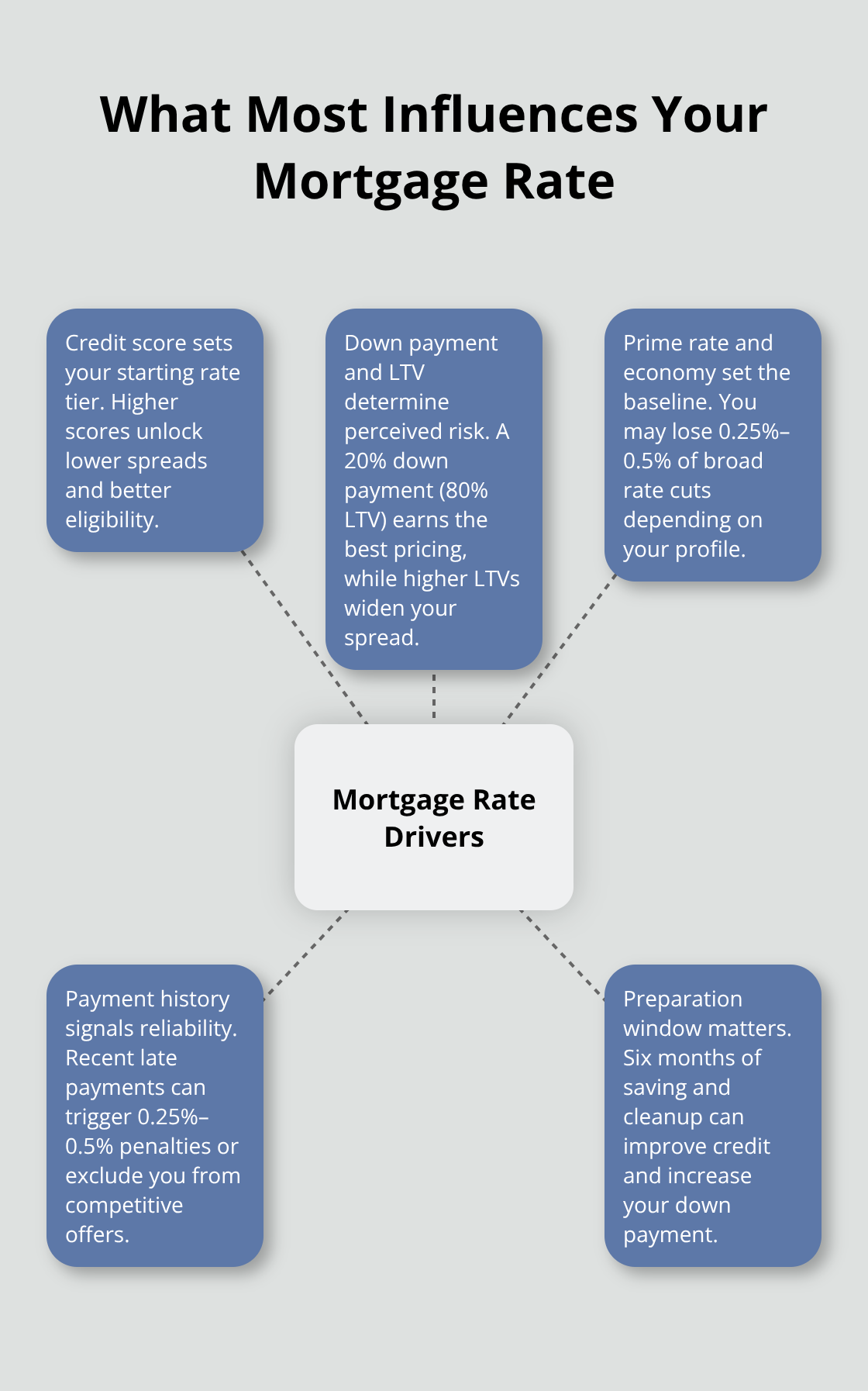
Lenders scrutinize your payment history aggressively because missed payments predict future defaults. A single late payment within the past two years triggers a rate penalty of 0.25% to 0.5%, and multiple late payments can disqualify you entirely from competitive rates. If your credit score falls below 680, expect to pay substantially more or face denial from traditional lenders.
Pull your credit report from Equifax or TransUnion before applying for a mortgage. Fix errors immediately and tackle outstanding debts aggressively. Paying down credit card balances to below 30% of your limit boosts your score by 40 to 50 points within months.
Your Down Payment Size Controls Your Loan-to-Value Ratio
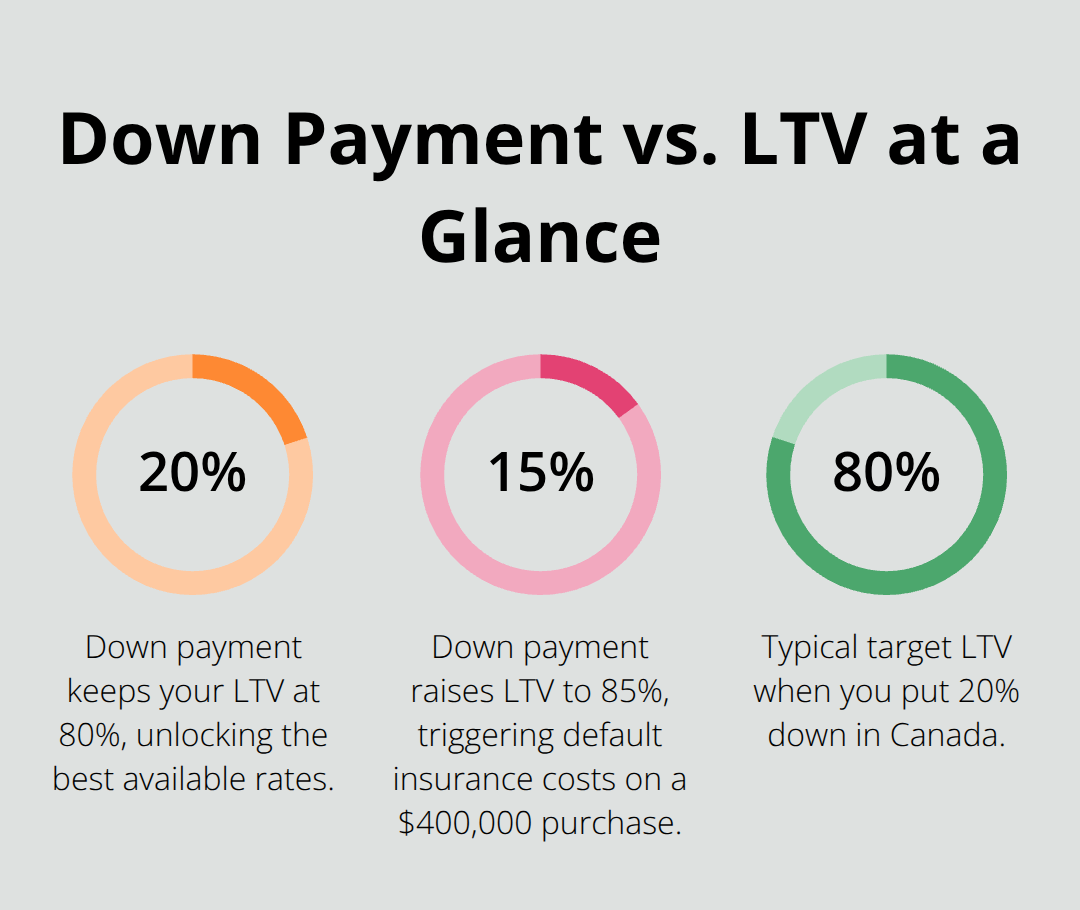
Your down payment size directly determines your loan-to-value ratio, which is the amount you borrow divided by the home’s value. A 20% down payment keeps your LTV at 80%, which unlocks the best rates available. Drop to 15% down and your LTV rises to 85%, triggering mortgage default insurance costs that add to your total borrowing on a $400,000 purchase.
Go below 20% and lenders charge higher rates to compensate for increased risk. The gap between what you pay at 15% down versus 20% down extends far beyond insurance premiums-it affects your rate itself. Lenders view higher LTV ratios as riskier, so they widen your spread above the prime rate.
The Prime Rate Sets the Baseline for Everything
The prime rate and broader economic conditions set the baseline for all mortgage rates, but your personal factors determine your spread above that baseline. When the Bank of Canada cuts rates, all lenders drop their offers, but your credit score and down payment determine whether you get the full benefit or lose 0.25% to 0.5% of those cuts.
Economic uncertainty typically pushes lenders to tighten rates, meaning they widen the gap between prime and mortgage rates even when central banks cut. This happens because lenders become more cautious about risk during uncertain periods. Your ability to control your rate depends far more on what you control than on what happens in the broader economy.
If you’re six months away from buying, prioritize increasing your down payment and improving your credit score. These two factors give you far more control over your final rate than trying to time economic cycles. Once you understand what moves your rate, the next step involves knowing how to shop for lenders and negotiate terms that actually work in your favor.
How to Get the Best Mortgage Deal
Compare Rates Across Multiple Lenders
Most Canadian homebuyers contact one or two lenders and accept whatever rate they’re offered. This approach costs money. Shopping across multiple lenders typically reveals rate differences of 0.25% or less, which on a $400,000 mortgage can translate to meaningful savings.
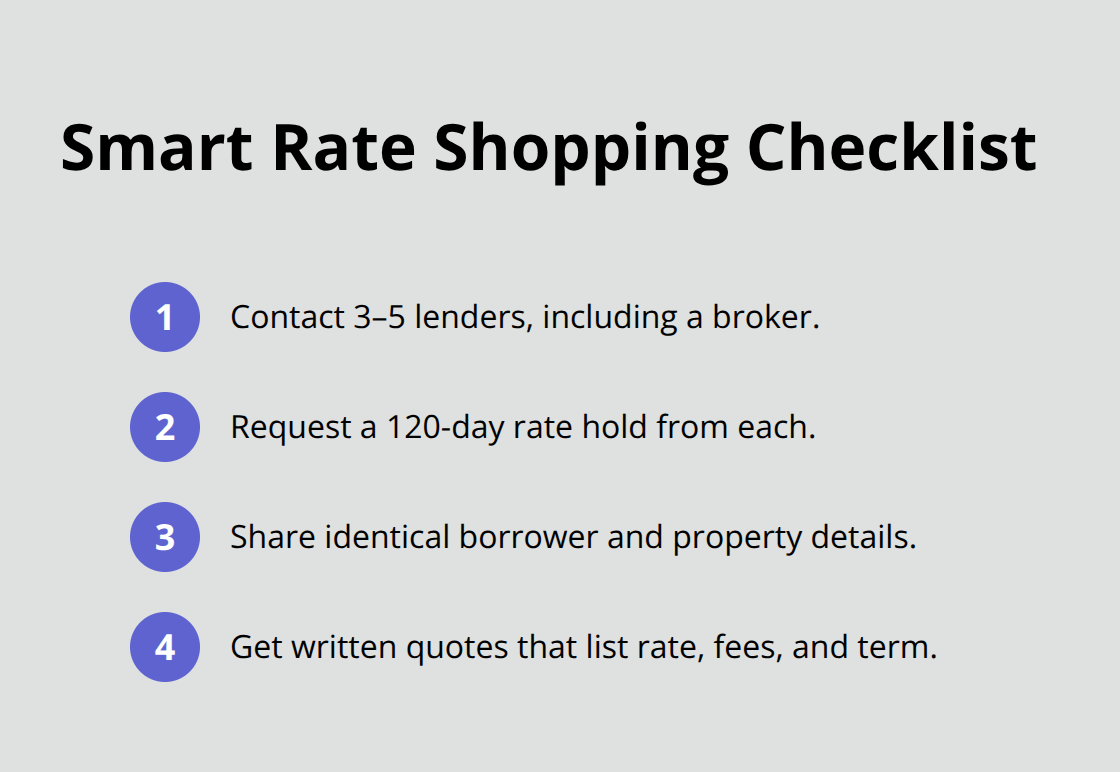
Start by contacting at least three to five lenders: your current bank, two other big banks, and one or two mortgage brokers. Request a rate hold, which most lenders provide for 120 days at no cost. This gives you time to compare without pressure.
When you request quotes, provide identical information to each lender so rates are actually comparable. Specify your down payment amount, property price, desired amortization, and whether you want fixed or variable.
Different information produces different quotes, making comparison impossible.
Most lenders quote rates valid for 120 days, giving you a genuine window to decide. Request written quotes from each lender, not verbal estimates. Written quotes specify exactly what rate you qualify for, any fees involved, and the term length. Verbal quotes mean nothing when you’re ready to commit.
Understand Hidden Fees and Charges
Many homebuyers assume all lenders charge similar fees, but this assumption costs them hundreds of dollars. Lenders charge different amounts for appraisals, legal fees, title insurance, and administrative costs. Some lenders bundle these into their quoted rate while others itemize them separately.
Request a full fee breakdown from each lender before committing. A lender quoting a slightly lower rate might charge $2,000 more in fees, making them more expensive overall. Calculate your total cost, not just the interest rate.
On a $400,000 purchase with less than 20% down, mortgage default insurance costs vary depending on your lender and insurer. Request insurance quotes from your lender explicitly. Some lenders partner with specific insurers offering better rates than others.
Negotiate Terms and Prepayment Options
Negotiating mortgage terms matters more than most people realize, particularly around prepayment options and rate holds. Ask each lender what prepayment privileges they offer on their closed mortgages. Most allow you to pay down 15% to 20% of your mortgage balance annually without penalty, but some allow more.
If you receive annual bonuses or expect inheritance, request higher prepayment limits. These privileges cost lenders nothing to grant but save you thousands in interest if you use them.
Request a longer rate hold, particularly if you’re not purchasing immediately. Standard holds last 120 days, but some lenders extend to 180 days at no cost. A longer hold protects you if rates rise while you’re finalizing your purchase.
Also negotiate the specific closing date. Some lenders charge higher rates for longer closing periods because they face more rate risk. If you can close quickly, use this as leverage to request a lower rate.
Protect Your Rate With Portability
Ask whether your lender allows you to port your mortgage to a new property if you sell before your term ends. Portability lets you transfer your rate to a new home without penalty, which protects you if rates rise before your term expires. This feature matters most for homebuyers who anticipate moving within five to seven years (the most common mortgage term length in Canada).
Before finalizing any mortgage agreement, carefully review all documents to ensure they are complete and accurate. Take time to understand every term and condition you’re committing to.
Final Thoughts
Choosing the right mortgage comes down to understanding three core elements: the mortgage type that matches your risk tolerance, the personal factors that determine your rate, and the negotiation strategies that save you money. Your credit score and down payment size matter far more than economic predictions, since a 20% down payment unlocks the best rates available while a credit score above 720 qualifies you for competitive offers across lenders. These two factors sit within your control, unlike the prime rate or broader economic conditions.
Shopping across multiple lenders reveals rate differences that compound into thousands of dollars over your mortgage term. Request written quotes from at least three to five lenders, specify identical information for each, and calculate total costs including fees, not just interest rates. Negotiate prepayment privileges and rate holds-lenders grant these at no cost but they save you substantially if you use them.
Start by pulling your credit report, calculating how much you can save for a down payment, and contacting multiple lenders for quotes. This mortgages Canada guide covers what matters most, but your specific situation requires personalized attention from someone who understands your financial picture. The difference between a rushed decision and a thoughtful one extends across decades of payments, so contact our team at Financial Canadian to get personalized guidance on your mortgage options.











Leave a comment