
Debt weighs on millions of Canadians. The average Canadian household carries over $27,000 in non-mortgage debt, according to Statistics Canada data.
At Financial Canadian, we’ve created practical debt management Canada tips to help you take control. This guide walks you through assessing your situation, building a realistic repayment strategy, and using tools that actually work.
Assess Your Current Debt Situation
Understanding exactly what you owe is the first step to getting out of debt, yet most Canadians skip this entirely. They know they have debt, but they don’t know the full picture: total amounts, interest rates, minimum payments, or which debts cost them the most. This lack of clarity keeps them stuck. Start by listing every single debt you have, from credit cards to personal loans to car payments. Write down the balance, interest rate, and minimum monthly payment for each one. This takes an hour, maybe two, but it transforms vague worry into concrete facts you can actually work with.
Calculate Your Total Debt and Interest Rates
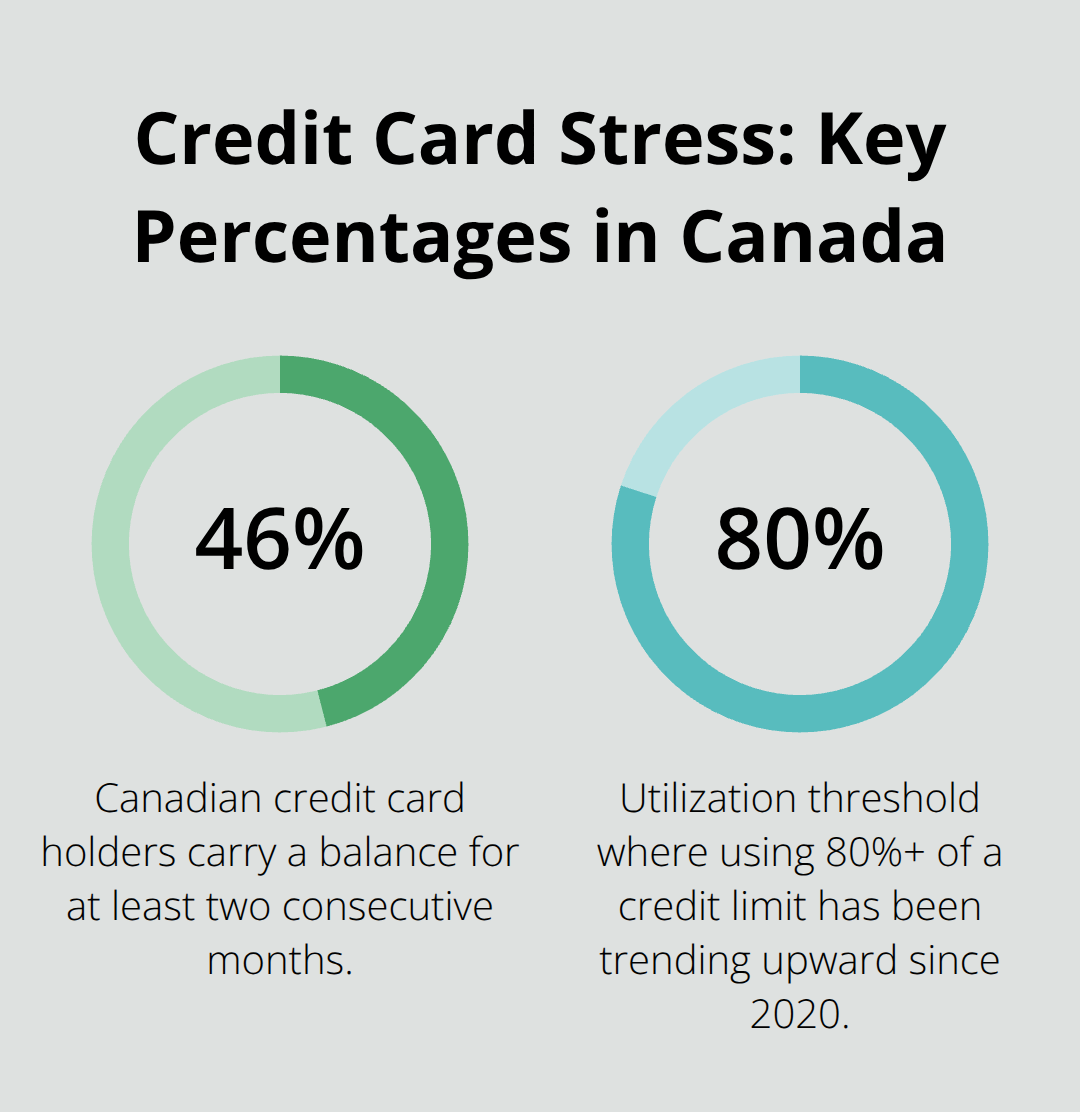
Credit card debt is particularly destructive because of interest rates. According to Bank of Canada research, about 46% of Canadian credit card holders carry a balance for at least two consecutive months, and among those carrying balances, the share using 80% or more of their credit limit has been trending upward since 2020. This high utilization matters because it signals financial stress and increases your risk of missing payments.
If you carry a balance on multiple cards, calculate the total interest you pay annually. Most people are shocked by this number, and that shock motivates real change. Use online debt calculators to see how long it would take to pay off each debt if you only made minimum payments versus if you paid extra each month. This comparison often reveals that minimum payments are a trap.
Identify High-Priority Debts
Not all debt is equal. High-interest credit card debt should be your priority because it bleeds money. A mortgage at 5% is fundamentally different from a credit card at 20%. However, if you have debts in collections or accounts that are severely delinquent, those require attention too because they damage your credit score and can lead to legal action.
Research from the Bank of Canada shows that non-mortgagors who carry a balance are about five times more likely to fall behind on debt payments than those who pay their balance in full. This risk escalates further if you carry a balance for more than six consecutive months. The longer you carry debt, the higher your risk of future delinquencies.
Understand Your Monthly Cash Flow
Calculate your monthly cash flow: total income minus all essential expenses like housing, food, utilities, and transportation. This number tells you exactly how much you have available each month to attack your debt. If that number is negative or nearly zero, you have a spending problem before you have a debt problem.
Cut discretionary expenses first, or your repayment plan will fail. The goal is to find every dollar you can redirect toward debt payoff, starting with the highest-interest accounts. For many Canadians, this means tackling credit cards before addressing lower-interest debts, even if those lower-interest debts have larger balances. Once you have this clarity on what you owe and what you can actually pay, you’re ready to compare debt consolidation options and build a strategy that works.
Create a Realistic Debt Repayment Strategy
Choose Between Debt Snowball and Debt Avalanche Methods
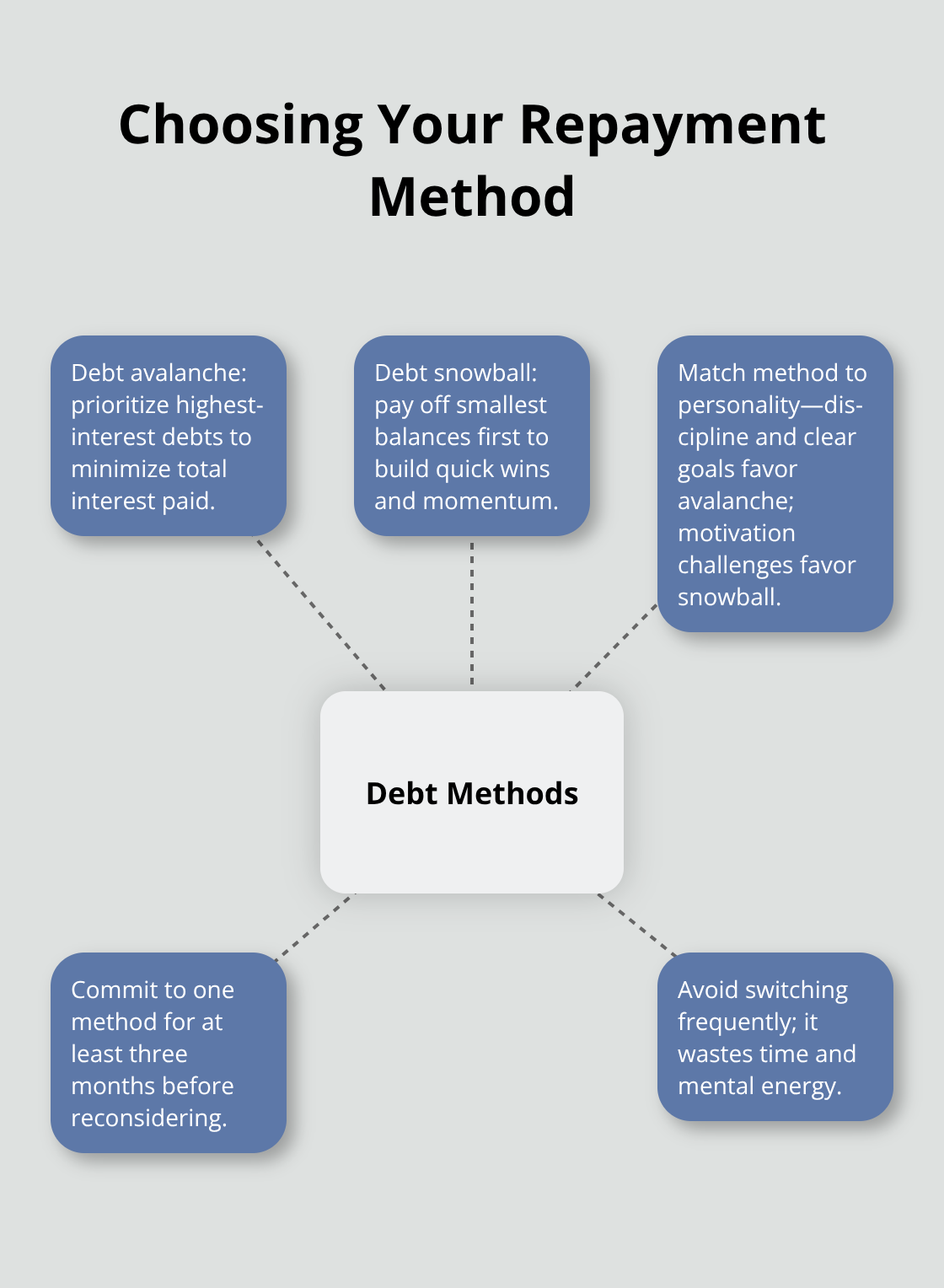
The two most popular repayment methods are debt snowball and debt avalanche, and the choice between them matters more than people think. Debt snowball means you pay off your smallest debts first while you make minimum payments on everything else. Debt avalanche means you attack your highest-interest debts first, regardless of balance size. Mathematically, debt avalanche wins every time because you pay less total interest. A credit card at 21% costs you significantly more than a car loan at 6%, so you tackle the credit card first and save money. However, snowball wins psychologically because you get quick wins, and momentum builds your confidence. We recommend avalanche for people with strong discipline and clear financial goals, and snowball for people who struggle with motivation or have multiple debts that feel overwhelming. The key is choosing one method and sticking with it for at least three months before reconsidering. Switching between methods wastes time and mental energy.
Set Achievable Monthly Payment Goals
Once you choose your method, you set a specific monthly payment amount that actually fits your budget. Do not set a target based on what you wish you could pay. You set it based on what you can pay consistently without cutting essential expenses or sacrificing your emergency fund. Research from the Bank of Canada indicates that carrying a credit card balance increases your likelihood of experiencing financial stress within the next six months, so sustainable payments matter more than aggressive ones. If you can afford $500 monthly but commit to $800, you will miss payments within two months and your plan collapses. You start with a realistic number, even if it means your debt takes longer to clear. As your income grows or expenses drop, you increase payments incrementally. When evaluating repayment options, assess the terms and fees carefully to ensure they align with your financial goals.
Build a Budget That Supports Your Plan
You build your monthly budget by listing all income sources, then fixed expenses like rent and insurance, then variable expenses like groceries and transportation. You subtract everything from your income and allocate whatever remains to debt payoff. If nothing remains, you need to cut expenses or increase income before your repayment plan can work. This is not optional.
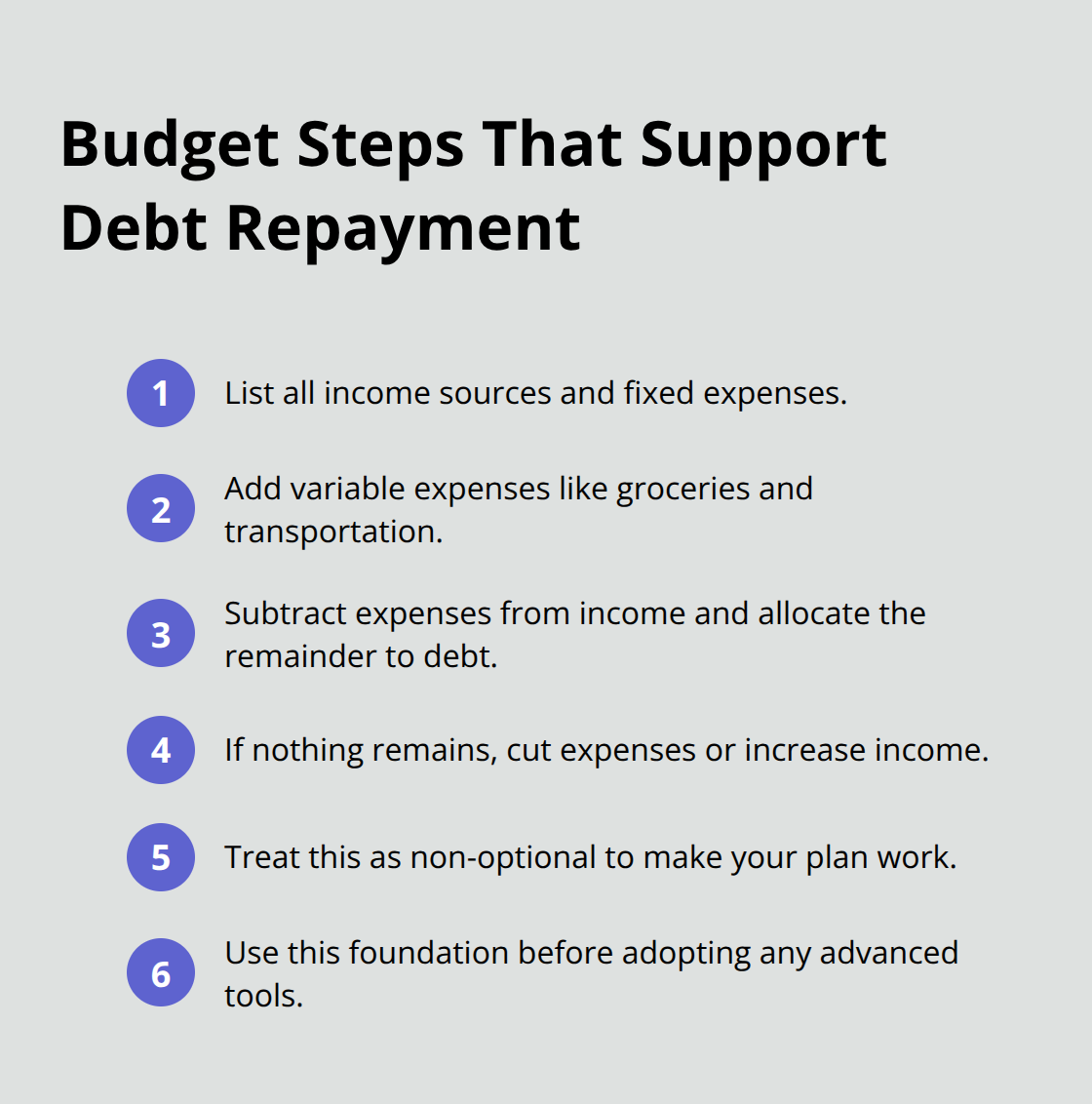
Without this foundation, even the best strategy fails. The next step is identifying the specific tools and resources that help you track progress and stay accountable to your plan.
Tools and Resources to Manage Your Debt
Use Debt Consolidation or Balance Transfer Options
The right tools separate people who pay off debt from people who talk about paying off debt. Start with debt consolidation or balance transfers only if they genuinely reduce your interest rate and simplify your repayment timeline. A balance transfer to a 0% card for 12 months makes sense if you can pay off the transferred balance before that period ends, but only then.
Calculate the math: if you owe $5,000 at 21% on a credit card, you pay roughly $1,050 in interest annually. A balance transfer card with a 3% transfer fee costs $150 upfront but saves you that $1,050 if you clear the balance within 12 months. That is a net win. However, consolidation loans often trap people because they extend the repayment term, meaning you pay less monthly but significantly more in total interest. A consolidation loan that stretches your debt from three years to seven years feels like relief until you realize you have just doubled your total interest cost.
Your real goal is eliminating the debt faster, not making monthly payments easier.
Track Progress with Spreadsheets and Budgeting Apps
Spreadsheets work better than apps for most Canadians because you control the data and see exactly where money goes. Create a simple sheet with each debt listed, current balance, interest rate, and minimum payment. Update it monthly and watch balances drop. This visibility matters psychologically and keeps you honest about spending.
If apps appeal to you, choose one that connects to your bank account and shows your total debt picture in one place, but do not pay for premium features. The free versions of most budgeting apps provide everything you need. You need three things running simultaneously: a way to consolidate or restructure your debt if it makes financial sense, a system to track your progress without guessing, and professional guidance if your situation is complex enough to warrant it.
Work with a Certified Credit Counselor
The real game-changer is working with a credit counselor, particularly a nonprofit certified counselor. A certified credit counselor reviews your complete financial situation, negotiates lower interest rates with your creditors, consolidates multiple payments into one monthly amount, and removes hidden fees that drain your account.
This costs far less than paying high interest rates indefinitely, and counseling remains confidential and non-judgmental. If you carry multiple debts and feel overwhelmed, a debt management plan through a nonprofit counselor is genuinely worth exploring because it addresses the root problem, not just the symptoms.
Final Thoughts
Debt management Canada tips only work when you act on them consistently. You have assessed your situation, chosen a repayment strategy, and identified the tools that fit your life-now execution determines your success. Review your progress monthly by pulling up your spreadsheet or app and checking your balances, then adjust your payment amounts as your circumstances shift.
Your debt freedom goals stay real only when you write them down and share them with someone you trust. A job loss, unexpected expense, or income increase all warrant a reassessment of your plan, because the best strategy is one you can sustain rather than one that looks perfect on paper but collapses under real-world pressure. Build an emergency fund alongside your debt payoff (even three months of essential expenses prevents you from returning to credit cards when life happens) so you protect your progress.
If your situation feels overwhelming or your debts span multiple accounts with varying interest rates, work with a certified credit counselor who can negotiate lower rates and consolidate your payments into one manageable monthly amount. Your debt did not appear overnight, and it will not disappear overnight either, but with a clear plan and consistent effort, you will reach the other side.









Leave a comment