
When you apply for a mortgage, car loan, or credit card in Canada, lenders pull your credit report to assess your financial reliability. Your credit score is the number that determines whether you get approved and what interest rate you’ll pay.
At Financial Canadian, we believe understanding credit score checks in Canada is essential before you borrow. This guide walks you through what lenders examine, how often they check your credit, and how to protect your score during the lending process.
What Lenders Actually Examine in Your Credit Score
Lenders in Canada focus on three measurable factors when they review your credit score, and understanding these specifics helps you strengthen your financial profile before applying for credit. Payment history carries the heaviest weight at 35% of your credit score.
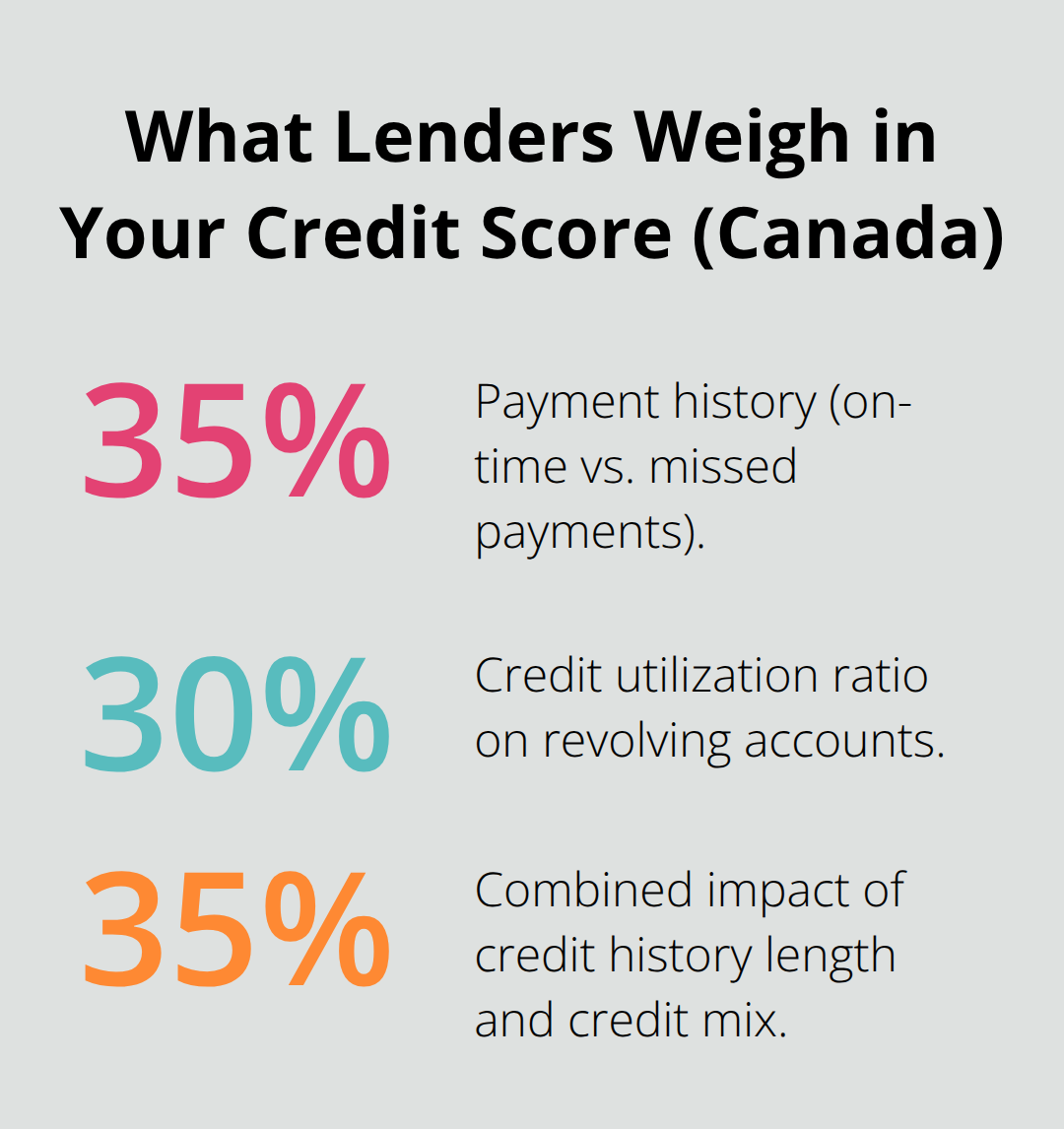
This means every missed or late payment significantly damages your score, with payments 30 days overdue causing roughly 100-point drops on a 300-900 scale. Lenders view consistent on-time payments as proof you’ll repay borrowed money, which is why a single missed payment can take months to recover from. If you’ve missed payments, prioritize paying all future bills on time starting immediately, as recent payment behavior matters more than older delinquencies.
Your Credit Utilization Tells Lenders How You Manage Debt
Credit utilization ratio accounts for 30% of your score and measures how much of your available credit you currently use. If you have a $5,000 credit limit and carry a $3,500 balance, your utilization sits at 70%, which lenders consider risky. Financial experts recommend keeping utilization below 30%, meaning you’d want to maintain a balance under $1,500 on that same card. The practical strategy here is straightforward: request credit limit increases from your card issuers without taking on new debt, which instantly lowers your utilization ratio. Alternatively, pay down balances before applying for major credit like mortgages, since lenders pull your report during underwriting and see your exact utilization at that moment.
Length of History and Credit Mix Matter More Than Most Realize
The remaining 35% of your credit score splits between length of credit history (15%) and credit mix (10%). Length of history rewards you for maintaining accounts over years, which is why closing old credit cards harms your score even if you never use them. A 12-year-old card with zero balance helps your score far more than closing it and applying for a newer card. Credit mix means you have different types of credit accounts, such as credit cards, car loans, and mortgages, which demonstrates you can manage multiple credit responsibilities. Lenders see diverse credit as lower risk than someone who only has credit cards, so if you have the opportunity to responsibly take on a car loan or line of credit, it strengthens your profile for future mortgage applications.
Now that you know what lenders examine, the next step is understanding how often they actually check your credit and what impact those checks have on your score.
How Often Lenders Pull Your Credit
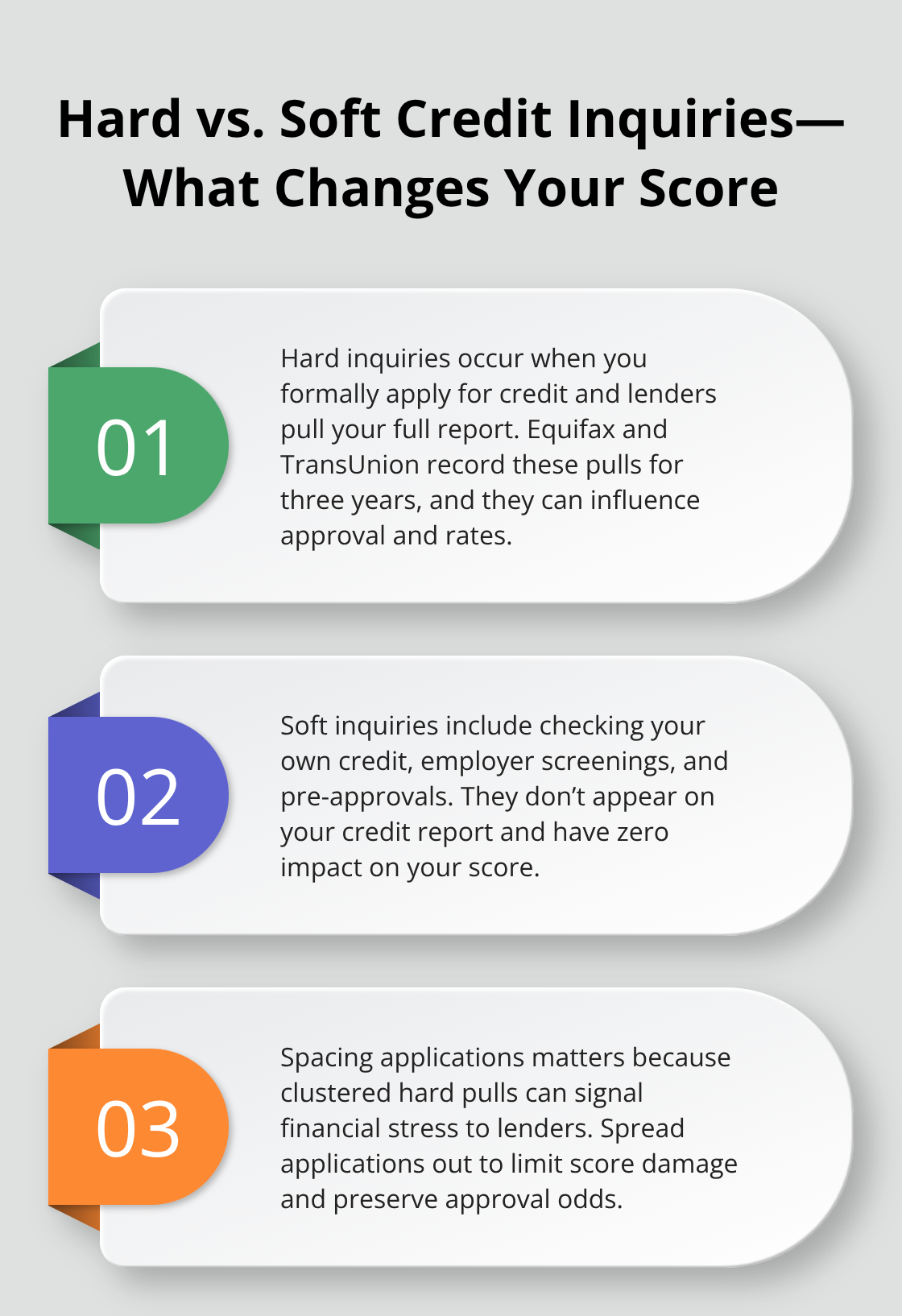
When you apply for credit in Canada, lenders don’t all check your credit the same way or at the same frequency. The distinction between hard and soft inquiries matters significantly because one damages your score while the other doesn’t. A hard inquiry occurs when you formally apply for credit like a mortgage, auto loan, or credit card, and the lender pulls your full credit report to make a lending decision. Equifax and TransUnion, Canada’s two major credit bureaus, record these inquiries on your file for three years. A soft inquiry happens when you check your own credit, when an employer screens your background, or when a lender pre-approves you for an offer without your formal application. Soft inquiries never appear on your credit report and carry zero impact on your score, making them safe to run as often as you want. The critical detail is that multiple hard inquiries within a short window signal financial desperation to lenders, which is why spacing out major credit applications matters.
Hard Inquiries Temporarily Lower Your Score
Each hard inquiry typically reduces your credit score by 5 to 10 points according to Equifax Canada, and the damage compounds if you apply for multiple credit products simultaneously. A person who applies for three credit cards within two weeks might see a 15 to 30 point drop, whereas spacing applications across two months reduces the impact significantly. The good news is that hard inquiries have a short lifespan in lender calculations. Credit scoring models weight recent inquiries more heavily, so an inquiry from six months ago matters far less than one from last week. Hard inquiries remain on your credit report for three years with Equifax or six years with TransUnion. This means if you needed a car loan three months ago, that inquiry won’t substantially harm your mortgage application today. Mortgage lenders in Canada typically allow multiple mortgage rate shopping inquiries within 14 to 45 days to count as a single inquiry, recognizing that borrowers need to compare rates across institutions. Auto lenders offer similar flexibility, usually treating inquiries within 14 days as one combined inquiry for scoring purposes.
Different Lenders Check at Different Stages
Mortgage lenders pull your credit multiple times throughout the application process, not just once at the beginning. The initial pre-qualification check is often a soft inquiry that doesn’t hurt your score, but the formal mortgage application triggers a hard inquiry. Most critically, lenders pull your credit again just before closing to verify nothing has changed, which means a hard inquiry occurs days before you finalize the mortgage. This final pull is why financial advisors strongly recommend avoiding new credit applications, major purchases on credit, or balance transfers during the mortgage underwriting period. Banks and credit unions typically pull credit once per application, while alternative lenders and online platforms sometimes conduct multiple hard inquiries without clearly stating this practice. Credit card companies frequently conduct soft inquiries to pre-screen customers for promotional offers, which is why you receive unsolicited credit card applications in the mail. If you want to stop these soft inquiries, you can opt out through Equifax or TransUnion, which stops pre-screened offers without affecting your credit score or ability to apply for credit yourself.
Timing Your Applications Strategically
The spacing between credit applications directly influences how lenders perceive your creditworthiness. When you apply for a mortgage, the lender sees every hard inquiry from the past three years, and multiple recent inquiries suggest you’ve been rejected elsewhere or you’re taking on excessive debt. Try spacing major credit applications at least 30 to 60 days apart to minimize the appearance of financial stress. If you need multiple types of credit (a car loan and a credit card, for example), prioritize the larger loan first, then wait before applying for the credit card. This approach limits the number of hard inquiries visible to future lenders and reduces the cumulative score damage. The mortgage rate shopping window (14 to 45 days) is your one exception to this rule-lenders treat multiple mortgage inquiries within this period as a single inquiry, so you can safely compare rates across several institutions without penalty.
Understanding how lenders check your credit sets the stage for the next critical step: protecting your score during the lending process itself.
Safeguard Your Credit Before Applying for Major Loans
Your credit score determines the lender options and interest rates available to you. The three years before you apply for a mortgage or car loan determine whether you get approved and what interest rate you’ll receive. Treat this period as your credit protection window, where every action either strengthens or weakens your position with lenders. The first actionable step is pulling your credit report from both Equifax and TransUnion directly, not through third-party services that may charge fees. Canadian residents can access free credit reports annually from both bureaus through their official websites, and this step takes 15 minutes but reveals exactly what lenders will see.
Many people find errors on their reports that actively harm their scores-paid collections still showing as unpaid, accounts listed twice, or inquiries attributed to the wrong institutions. These errors are more common than most realize, with studies showing roughly one in five credit reports contain mistakes significant enough to affect lending decisions. Once you identify errors, contact the credit bureau in writing and request corrections, which they must investigate within 30 days according to Canadian regulations.
Check Your Report Before Major Applications
Pull your credit report at least six months before applying for a mortgage, giving yourself time to dispute errors and watch your score recover. During this six-month window, avoid applying for new credit entirely unless absolutely necessary, since hard inquiries compound and signal desperation to mortgage lenders. If you currently carry high credit card balances, this is the time to pay them down aggressively rather than applying for new cards to transfer balances.
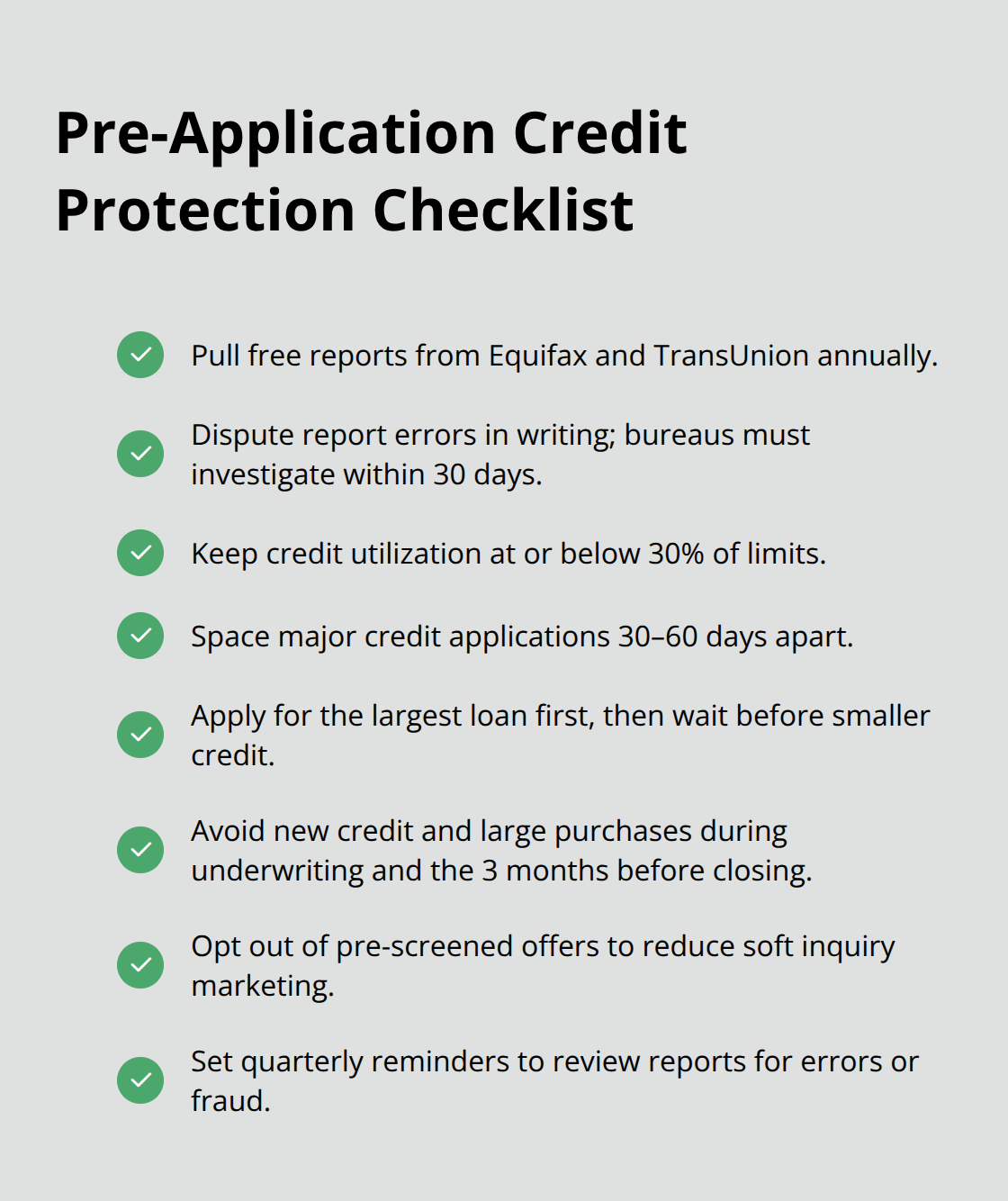
A credit utilization ratio at or below 30% can be an asset to your credit scores and help open doors to a bright financial future. This score improvement happens faster than dispute corrections or waiting out old inquiries, making balance reduction your most powerful pre-application strategy. Set calendar reminders to check your credit report quarterly during your protection window, watching for new errors or fraudulent accounts that could appear at any time.
Space Credit Applications Strategically Over Months
If you need multiple types of credit before applying for a mortgage, space applications across at least two to three months rather than clustering them together. Apply for the largest loan first (auto loan), wait 60 days, then apply for secondary credit (credit card), ensuring each hard inquiry has time to age before the next one lands on your report. This spacing reduces the cumulative damage and prevents lenders from seeing a pattern of recent desperate borrowing.
During your protection window, decline pre-approved credit card offers in the mail and opt out of soft inquiries through Equifax and TransUnion if you’re not actively seeking new credit. Avoid any major purchases on credit during the three months immediately before your mortgage closing, since lenders pull your credit report again just before finalizing the mortgage to verify your financial situation hasn’t changed.
Final Thoughts
Lenders in Canada prioritize three measurable factors when reviewing your credit: payment history at 35%, credit utilization at 30%, and a combination of credit history length and credit mix at the remaining 35%. These percentages reflect decades of lending data showing which behaviors predict whether borrowers repay their debts. When you understand what lenders examine during credit score checks in Canada, you can strategically strengthen your profile before applying for major credit.
Maintaining a healthy credit score requires consistent action across several fronts. You must pay every bill on time, keep credit card balances below 30% of your limits, and avoid closing old accounts even if you don’t use them. You should space credit applications at least 30 to 60 days apart to prevent multiple hard inquiries from damaging your score simultaneously, and you must pull your credit report from Equifax and TransUnion annually to catch errors before they harm your prospects.
We at Financial Canadian help you build financial credibility through professional web design services that establish trust with your customers and clients. Whether you’re a financial advisor, lender, or credit counselor, a well-designed website demonstrates your commitment to transparency and customer service. A strong digital presence communicates your financial expertise and helps you connect with people who need your guidance.











Leave a comment