
Your credit score directly affects your ability to borrow money, the interest rates you’ll pay, and even your chances of renting an apartment in Canada. Most Canadians don’t realize that small daily habits compound into major score improvements over months.
At Financial Canadian, we’ve put together credit score tips for Canada that focus on what actually works. This guide shows you the habits that move your number, starting today.
How Your Credit Score Actually Works in Canada
Understanding Your Score Range
Canada’s two major credit bureaus, Equifax and TransUnion, track your borrowing behavior and assign you a three-digit score between 300 and 900. Most lenders consider scores above 660 acceptable, but scores above 740 qualify you for significantly better interest rates and approval odds. The difference between a 650 score and a 750 score can cost you thousands in extra interest on a mortgage or car loan over time. Your score isn’t static-it updates monthly as new information flows to the bureaus from lenders, credit card companies, and other creditors you work with. This means the habits you start today show up on your report within 30 to 60 days.
What Actually Moves Your Score
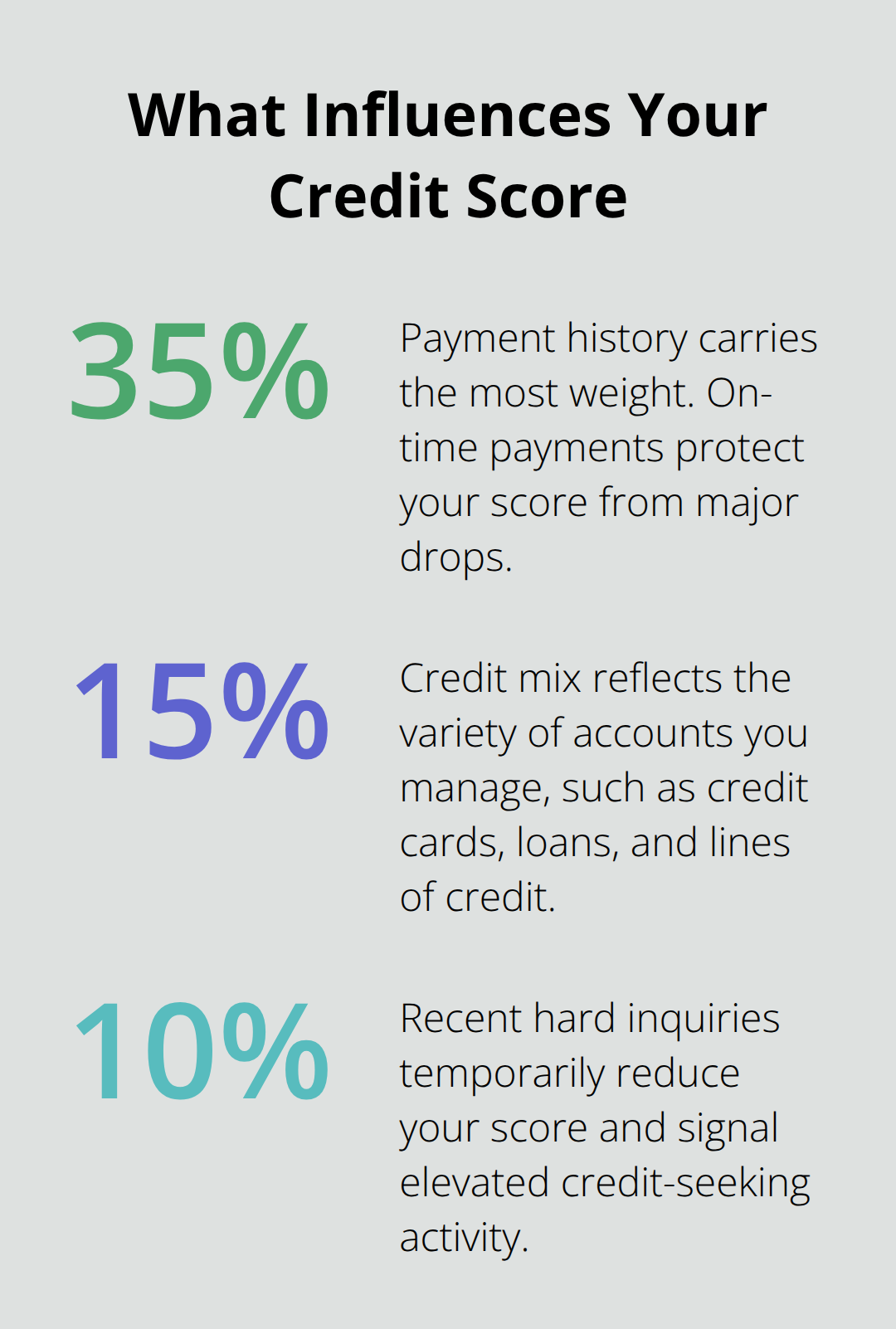
Payment history accounts for 35 percent of your score, making it the single largest factor. One missed payment can drop your score by 50 to 100 points, and that negative mark stays on your report for six years in Canada. Credit utilization-the percentage of your available credit you’re actually using-accounts for another 20% to 30%. If you have a 5,000 dollar credit limit and carry a 2,000 dollar balance, you’re using 40 percent of your available credit, which hurts your score. Dropping that same balance to 500 dollars immediately improves your ratio to 10 percent, and lenders view this as a sign you’re not dependent on credit. The remaining 35 percent comes from credit mix (15 percent), length of credit history (15 percent), and recent credit inquiries (10 percent). Hard inquiries happen when you formally apply for credit-a mortgage, car loan, or new credit card-and each one temporarily dips your score by a few points. Multiple hard inquiries within a short window signal to lenders that you’re desperate for credit, which raises red flags.
Why Lenders Care About Your Number
Lenders use your credit score to predict whether you’ll repay them on time. A higher score means lower risk, so you qualify for better interest rates and higher borrowing limits. A borrower with a 750 score might qualify for a mortgage at 4.5 percent, while someone with a 650 score pays 5.5 percent on the same loan-that’s an extra 50,000 dollars in interest over 25 years on a 400,000 dollar mortgage. Landlords also pull credit reports before approving rental applications, and utility companies sometimes check your score before setting deposit requirements. Your score influences decisions far beyond just borrowing money, which is why the daily habits you adopt starting now matter so much for your financial future.
Three Daily Habits That Actually Improve Your Credit Score
Set Up Automatic Payments to Stop Missing Deadlines
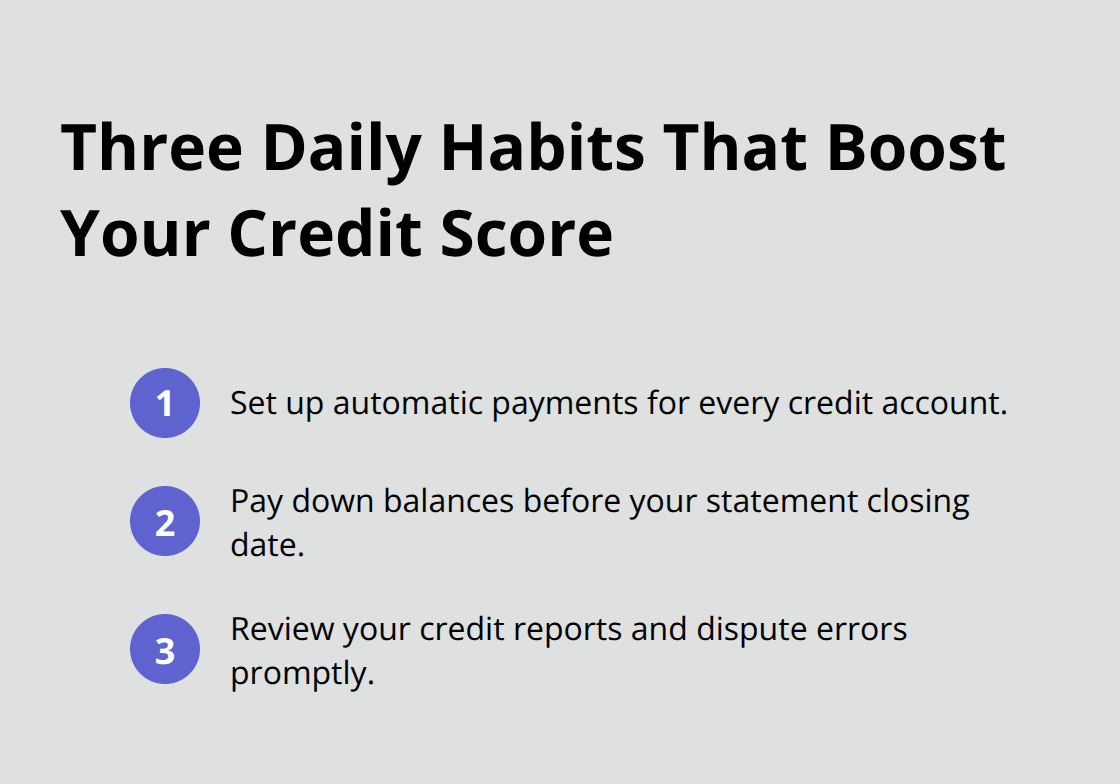
The gap between knowing what hurts your credit and actually changing your behavior is where most Canadians fail. You already understand that payment history accounts for 35 percent of your score. The real challenge is turning that knowledge into consistent daily actions. Set up automatic payments for at least the minimum amount on every credit obligation you carry. This single change eliminates the most expensive mistake you can make-a missed payment that drops your score by 50 to 100 points and lingers for six years.
If you have five different creditors, set up five different automatic payments on the days your paychecks arrive or shortly after. The cost to set this up is zero, and the protection is permanent. Many people resist automation because they want to stay in control, but this mindset costs them thousands in higher interest rates over their lifetime.
Automation doesn’t remove your control-it removes your ability to forget.
Lower Your Credit Utilization Mid-Cycle
Next, tackle your credit utilization by paying down balances before your statement closing date, not after. Most people wait until they receive their bill, then pay it. Your credit bureau reports your balance on your statement closing date, which means you can lower what gets reported by paying down balances mid-cycle.
If you have a 5,000 dollar credit limit and typically carry a 2,000 dollar balance, make a payment on day 15 of your billing cycle to drop that balance to 500 dollars. When your statement closes on day 25, the bureaus see a 500 dollar balance, which is 10 percent utilization instead of 40 percent. This single tactical change improves your score without changing your actual spending habits.
Review Your Credit Report for Errors
Finally, pull your credit report from both Equifax and TransUnion through their official websites and spend 30 minutes reviewing it for errors. Mistakes happen-accounts opened in your name without authorization, payment dates recorded incorrectly, or balances that don’t match your records. Canadians who catch and dispute errors often see score improvements of 20 to 50 points within 30 days. These three habits cost nothing to implement and deliver measurable results within 60 days.
Once you establish these daily habits, you’re ready to build a stronger foundation for long-term credit health. The next section shows you how to construct a diverse credit mix and avoid the mistakes that undo your progress.
Building Credit That Lasts Beyond Quick Wins
Why Credit Diversity Matters to Lenders
Credit diversity sounds like financial jargon, but it’s actually straightforward: lenders want to see you can manage different types of credit responsibly. Credit mix accounts for 15 percent of your score, and this is where most Canadians leave money on the table. You don’t need to open accounts you don’t need, but if you already carry a credit card, a car loan or line of credit over time demonstrates you can handle multiple payment obligations. The Government of Canada notes that credit types include credit cards, lines of credit, personal loans, and car loans, and each one builds a stronger profile than credit cards alone.
Building Your Credit Mix Strategically
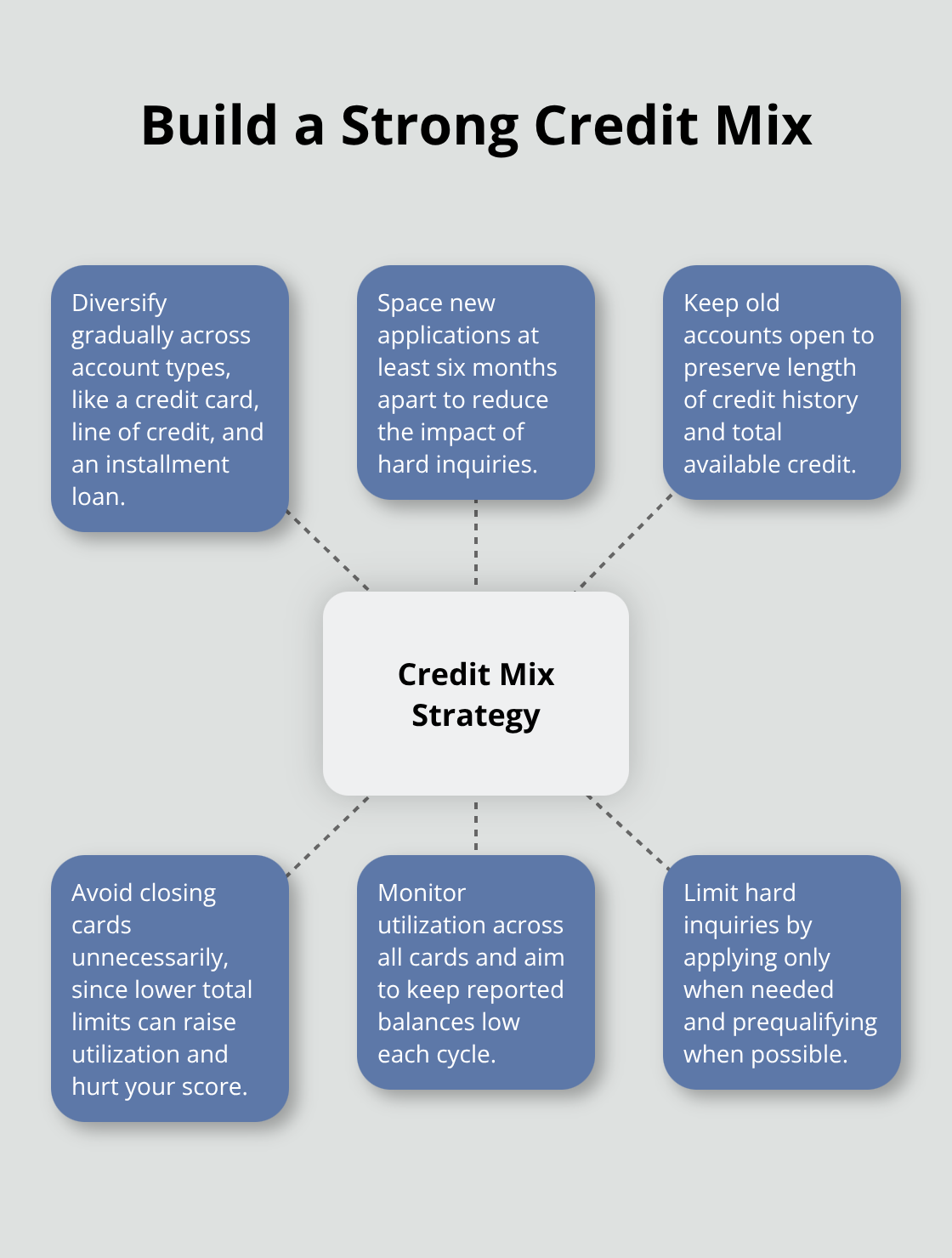
If you’re new to Canada with a thin credit file, start with one manageable product that fits your finances, then add another after 12 months of perfect payment history. This gradual approach works better than applying for multiple products at once, which triggers multiple hard inquiries and signals desperation to lenders. Space applications at least six months apart so each inquiry ages and stops affecting your score as heavily. Hard inquiries stay on your report for years, but lenders weight recent inquiries more heavily, meaning a hard inquiry from six months ago matters far less than one from last week.
The Hidden Cost of Closing Old Accounts
Closing old credit accounts ranks among the worst moves you can make, yet thousands of Canadians do it every year. Your length of credit history accounts for 15 percent of your score, and closing an account erases that history from your active profile. If you opened a credit card in 2015 and close it in 2026, you lose 11 years of positive payment history on that account. Instead, keep old accounts open and use them occasionally for small purchases you’d make anyway, then pay them off immediately. This keeps the accounts active without increasing your utilization.
How Account Closures Hurt Your Utilization Ratio
The second benefit of keeping old accounts open is that you maintain your total available credit limit. If you have three credit cards with 5,000 dollar limits each, your total available credit is 15,000 dollars. Closing one card drops this to 10,000 dollars, which immediately raises your utilization ratio on the remaining cards even if your balances stay the same. A borrower with a 2,000 dollar balance across two cards has 10 percent utilization when they have three cards open, but 20 percent utilization if they close one card.
That single closure can drop your score by 10 to 20 points without you changing your actual spending or payment habits. Before you close any account, ask yourself whether the annual fee justifies keeping it open or whether you can request a fee waiver from the issuer.
Final Thoughts
You now have three daily habits that move your credit score and long-term strategies that protect your progress. Start today with one change: set up automatic payments for your minimum balances, which eliminates missed payments-the costliest mistake you can make. Within 30 days, add the second habit by paying down your credit card balance mid-cycle before your statement closes, then within 60 days, pull your credit reports from Equifax and TransUnion and dispute any errors you find.
Your score won’t jump 100 points overnight, but consistent execution compounds into real results. Most Canadians see 20 to 50 point improvements within 60 days of implementing these habits, then another 50 to 100 points within six months as payment history strengthens. After 12 months of perfect on-time payments and low utilization, you’re looking at a 100 to 150 point improvement from where you started.
Track your progress by checking your credit report quarterly instead of obsessively monitoring it monthly. Pull reports from both bureaus since data can differ between them, and set calendar reminders for automatic payment dates and mid-cycle balance payments so these credit score tips Canada become automatic. We at Financial Canadian help you build the digital foundation to manage your finances effectively, so start implementing these habits today and watch your score move.











Leave a comment