
Your credit score is the number that lenders check before approving you for a mortgage, car loan, or credit card. In Canada, a strong credit score can save you thousands in interest payments over your lifetime.
At Financial Canadian, we’ve created this guide to help you build credit scores in Canada through actionable steps that actually work. Whether you’re starting from scratch or recovering from past mistakes, the strategies here will move your score in the right direction.
What Makes Up Your Credit Score in Canada
The Five Factors That Build Your Score
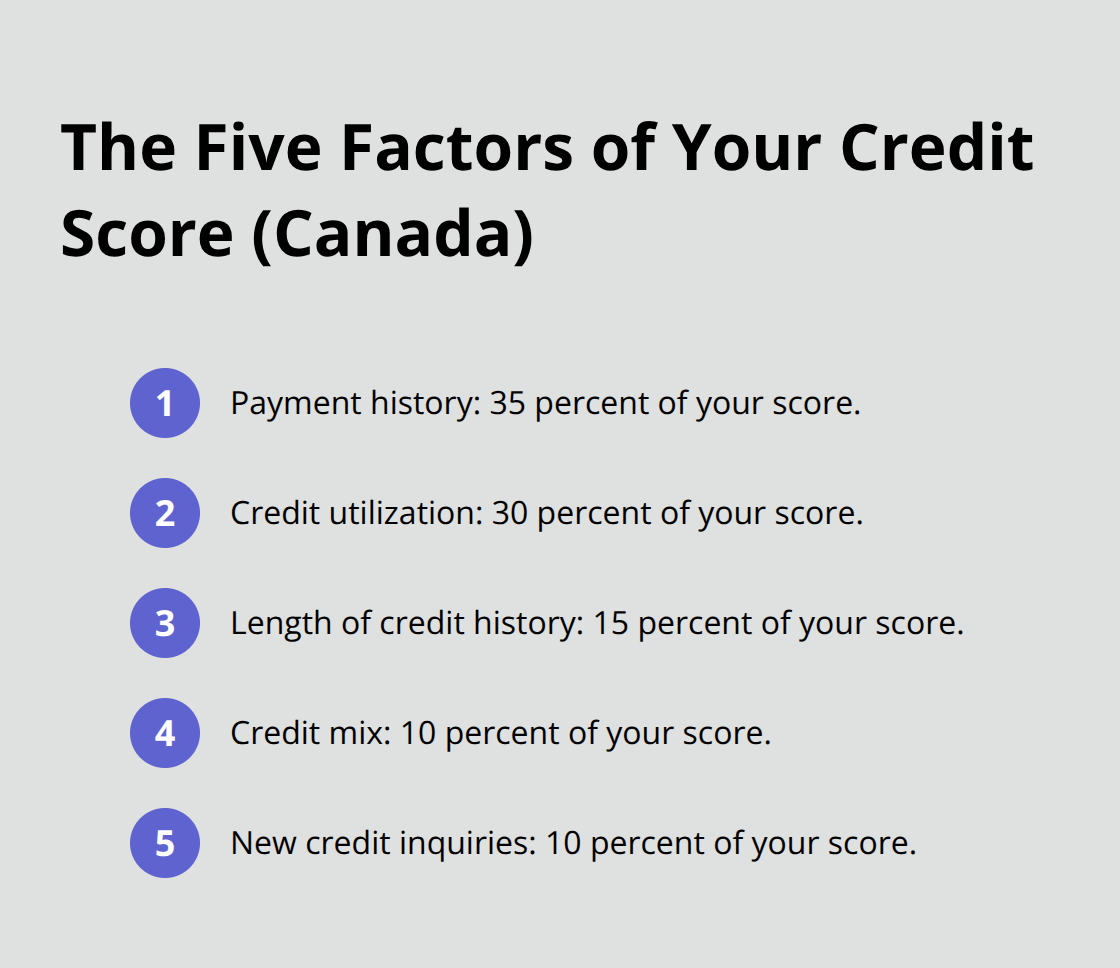
In Canada, your credit score rests on five key factors that lenders assess to determine your creditworthiness. Payment history accounts for 35 percent of your score, making it the single most influential component. One late payment can damage your score significantly, while consistent on-time payments build it steadily. Credit utilization makes up 30 percent of your score and measures how much of your available credit you actually use. If you have a $5,000 credit limit and carry a $4,500 balance, you use 90 percent of your available credit, which signals financial stress to lenders.
The length of your credit history counts for 15 percent, which is why closing old accounts actually hurts your score. Credit mix represents 10 percent and includes different types of credit like credit cards, car loans, and mortgages. The final 10 percent comes from new credit inquiries, and applying for multiple products within a short timeframe lowers your score temporarily.
Understanding Canada’s Credit Score Range
In Canada, credit scores range from 300 to 900, with most lenders viewing scores above 660 as acceptable and scores above 740 as excellent. Equifax and TransUnion are Canada’s two major credit reporting bureaus, and they may calculate your score slightly differently, so checking both is smart. A score between 300 and 579 makes borrowing extremely difficult and expensive. Between 580 and 669, you qualify for credit but at higher interest rates. Between 670 and 739, you stand in good standing with most lenders. Above 740, you access the best interest rates available.
How Your Score Impacts Your Wallet
A higher score translates directly to lower borrowing costs. Over a 25-year mortgage, the difference between a 660 score and a 780 score amounts to tens of thousands of dollars in interest payments. This gap makes building your score worth the effort, especially when you’re planning major purchases like a home or vehicle.
Now that you understand what makes up your score, the next section walks you through the practical steps that actually move your score upward.
Build Your Credit Faster With These Four Moves
Secured Credit Cards Launch Your Credit History
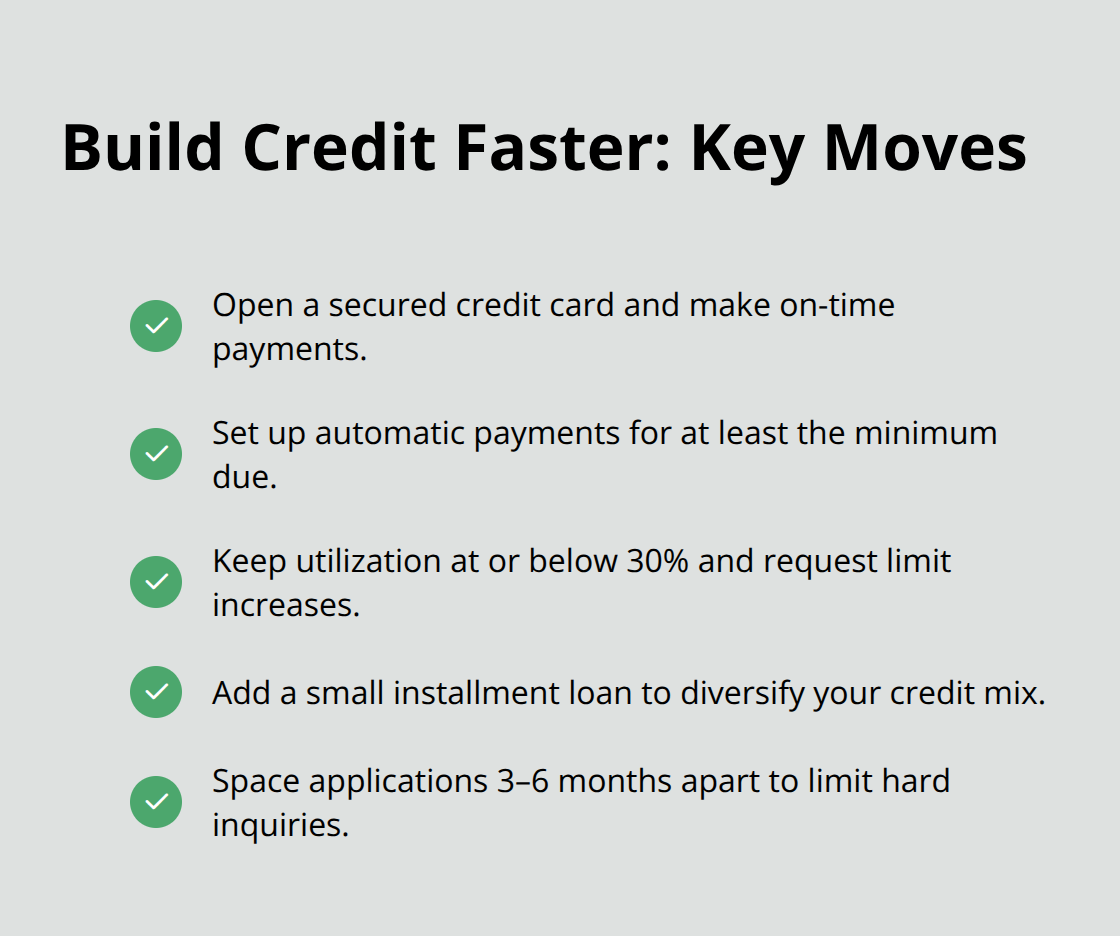
Starting with a secured credit card is the fastest way to establish credit if you have little to no history. A secured card requires a cash deposit, typically between $500 and $2,500, which becomes your credit limit. Tangerine and Canadian Tire offer secured cards with reasonable fees. The key advantage is that secured cards report to both Equifax and TransUnion, meaning your responsible use builds history across both bureaus.
After 12 to 18 months of perfect payments, most lenders will upgrade you to an unsecured card and return your deposit. This pathway works because lenders see actual proof of your ability to manage credit, not just a promise.
Payment Timing Is Everything
Payment history accounts for 35 percent of your score, which means this single factor outweighs everything else combined. Missing even one payment by 30 days damages your score by 100 points or more, depending on where you started. Late payments stay on your credit report for seven years in Canada, creating a long shadow over your borrowing power.
Set up automatic payments for at least the minimum on every credit product you hold, scheduled for the day after you receive income. Many Canadians think they can catch up on payments later, but that approach costs them thousands in lost credit opportunities. Treating payment deadlines as non-negotiable builds momentum and protects your score from preventable harm.
The 30 Percent Rule Matters More Than Most Think
Credit utilization directly influences how lenders perceive your financial stability. If you carry a $3,000 balance on a $10,000 credit limit, you’re using 30 percent, which is the threshold most lenders accept without penalty. Going above 30 percent signals financial strain, even if you pay on time.
Request credit limit increases from your existing card issuers every six to twelve months. A higher limit without spending more money instantly lowers your utilization ratio. For example, increasing your limit from $5,000 to $8,000 while keeping your balance at $2,000 drops your utilization from 40 percent to 25 percent overnight. This single action costs nothing and moves your score upward within one to two billing cycles.
Mix Different Types of Credit Strategically
Credit mix represents only 10 percent of your score, but it separates good scores from excellent ones. Lenders want to see you managing revolving credit like credit cards alongside installment loans like car payments or lines of credit. If you only have credit cards, consider a small personal loan from your bank and pay it off consistently. This diversity proves you can handle different credit structures responsibly.
Don’t apply for multiple products simultaneously, as each application triggers a hard inquiry that temporarily lowers your score by a few points. Space applications at least three to six months apart to avoid the appearance of credit-seeking desperation. This measured approach builds a stronger profile without the temporary score damage that comes from aggressive applications.
With these four moves in place, you’re positioned to avoid the common mistakes that derail most credit-building efforts.
What Credit Mistakes Actually Cost You
Late Payments Create Seven-Year Damage
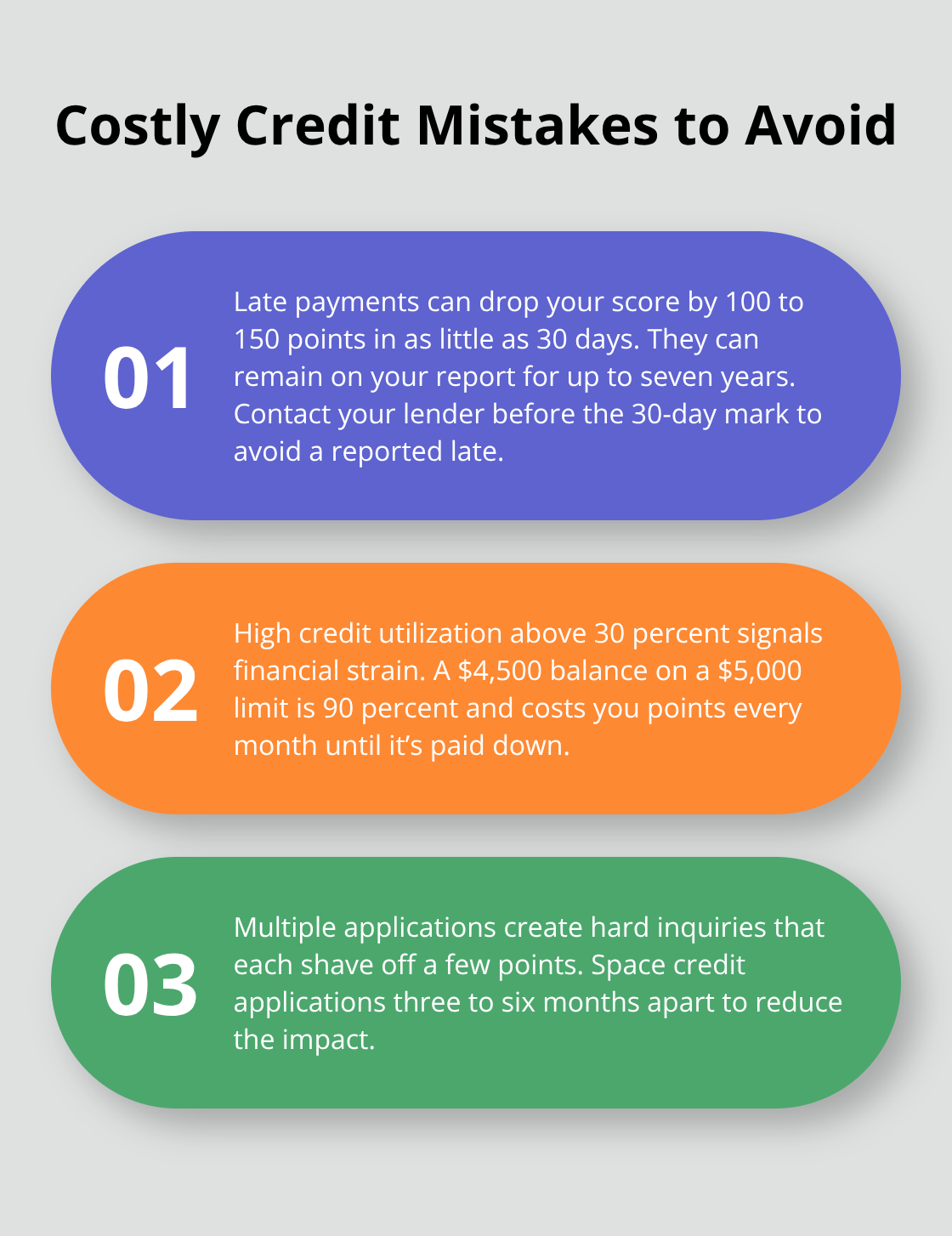
Late payments wreck your credit score faster than any other mistake, and the damage hits immediately. A single payment missed by 30 days can drop your score by 100 to 150 points, depending on your starting position. Equifax and TransUnion both report payments to credit bureaus within one billing cycle, so lenders see the miss almost instantly. The real problem is that late payments may remain on your report for up to seven years, meaning one mistake from today follows you until 2033.
Many Canadians assume they can catch up later without consequences, but that approach costs thousands in rejected mortgage applications or higher interest rates on approved loans. If you’re already behind on a payment, contact your lender immediately. Most banks offer hardship programs or payment deferrals that prevent the late payment from being reported if you act before the 30-day mark hits. Waiting until after the damage occurs guarantees a seven-year penalty on your credit file.
Maxed-Out Credit Cards Signal Financial Stress
Maxed-out credit cards rank as the second most damaging habit, yet it’s also the most fixable. When you carry balances above 30 percent of your available credit, lenders interpret this as financial desperation, and your score drops accordingly. The problem compounds because high utilization stays on your report every single month you carry the balance. If you have a $5,000 card maxed out at $4,500, you’re using 90 percent and losing points monthly until you pay it down.
The fix is straightforward but requires discipline: pay down balances aggressively or request credit limit increases from your card issuers. A higher limit without increased spending instantly improves your ratio. For example, increasing your limit to $8,000 while keeping your $4,500 balance drops your utilization to 56 percent, which still hurts but improves your score within one billing cycle.
Multiple Applications Trigger Hard Inquiries
Applying for multiple credit products within three to six months signals desperation to lenders and triggers multiple hard inquiries that each lower your score temporarily. If you need credit, space applications far apart and prioritize securing one product at a time. Each hard inquiry can reduce your score by a few points, and multiple inquiries compound the damage. This measured approach protects your score while you build your credit profile.
Closing Old Accounts Destroys Your Credit History
Closing old credit accounts seems logical when you pay them off, but it’s actually one of the most costly mistakes possible. Closing an account removes available credit from your denominator, instantly raising your utilization ratio on remaining cards. If you close a card with a $10,000 limit, your total available credit drops by $10,000, making your existing balances appear larger proportionally.
Additionally, closed accounts stop building your credit history length, and that 15 percent factor matters significantly over time. Keep old cards open even after paying them off, and use them occasionally for small purchases to maintain active status with the issuer. This strategy costs nothing and protects two major scoring factors simultaneously.
Final Thoughts
Building credit scores in Canada requires consistency, not perfection. The strategies outlined here work because they address the factors lenders actually care about: payment history, credit utilization, and credit mix. Start with one action this week, whether that’s setting up automatic payments or requesting a credit limit increase-both moves cost nothing and produce measurable results within 30 to 60 days.
Expect your score to improve gradually rather than overnight. If you’re starting from scratch with a secured credit card, you’ll see meaningful movement within 6 to 12 months of perfect payments. If you’re recovering from past mistakes, the timeline extends longer, but consistent action still moves your score upward month after month. Late payments fade from your report after seven years, and every on-time payment strengthens your position immediately.
The real power comes from treating credit building as a permanent habit, not a temporary project. Keep old accounts open, maintain low utilization, and never miss a payment deadline. These three actions alone separate people with excellent credit from those stuck in the fair range. Your credit score directly controls how much you pay for mortgages, car loans, and insurance over your lifetime, making this effort worth far more than the time it requires. We at Financial Canadian believe every Canadian deserves access to clear, actionable financial guidance, and our web design service helps you build your online presence with responsive designs and SEO best practices.











Leave a comment