
Canadians carry an average of $22,837 in personal debt, excluding mortgages, according to recent data. If you’re struggling with multiple debts, high interest rates, or unclear repayment options, you’re not alone.
We at Financial Canadian have created this guide to help you take control. You’ll learn how to assess your situation, choose the right repayment strategy, and access professional support when needed.
Know Your Exact Debt Position
List every debt you owe
Start by listing every debt you owe, no matter how small it seems. Write down credit card balances, student loans, car loans, personal loans, and any other outstanding amounts. Next to each one, record the interest rate and minimum monthly payment. This takes 30 minutes but gives you clarity that most Canadians lack. Your specific situation matters more than comparing yourself to national averages, since your interest rates and payment terms are unique to your agreements.
Calculate what you actually pay in interest
Interest rates determine how much extra money flows out of your pocket. A credit card at 21% annually costs far more than a personal loan at 7%. Calculate what you actually pay in interest by taking your credit card balance and multiplying it by the interest rate, then dividing by 12 to see monthly interest charges. On a $5,000 balance at 21%, you pay roughly $87 per month just in interest before touching the principal.
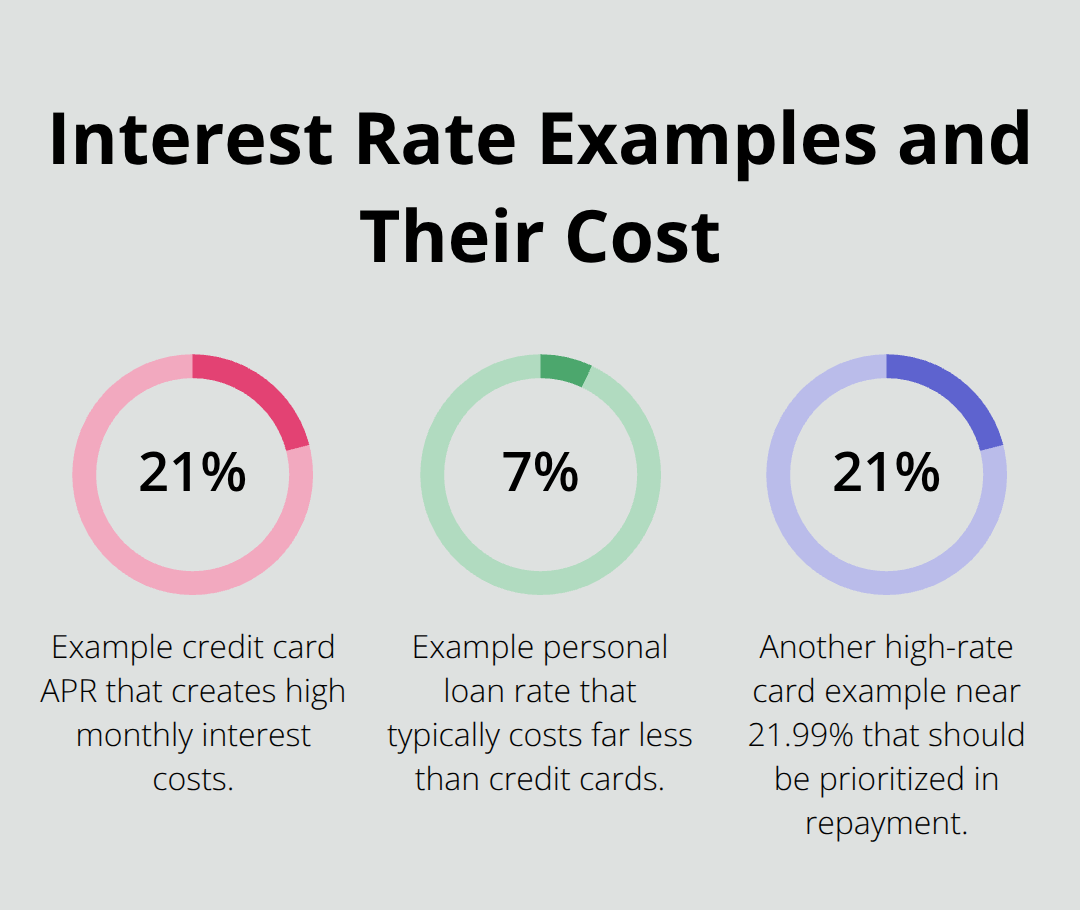
This is why high-interest debt demands immediate attention. If you have multiple cards, the one with the highest rate bleeds your finances the fastest.
Map your monthly cash flow against debt obligations
List your take-home income, then subtract all necessary expenses: rent or mortgage, utilities, groceries, insurance, transportation. What remains is your discretionary income-the money available for debt repayment beyond minimum payments. If this number is negative or near zero, you have a cash flow problem that prevents debt reduction regardless of strategy. If it’s positive, you have room to accelerate repayment.
Track your actual spending for one month using bank statements and credit card bills rather than estimating. Many people discover they spend $200 to $400 monthly on subscriptions, dining out, or small purchases they forgot about. These gaps represent real opportunities to redirect funds toward debt elimination.
Once you understand your credit score impact and interest burden, you’re ready to choose a repayment strategy that actually works for your situation.
How to Choose Your Debt Reduction Strategy
Consolidate multiple debts into one payment
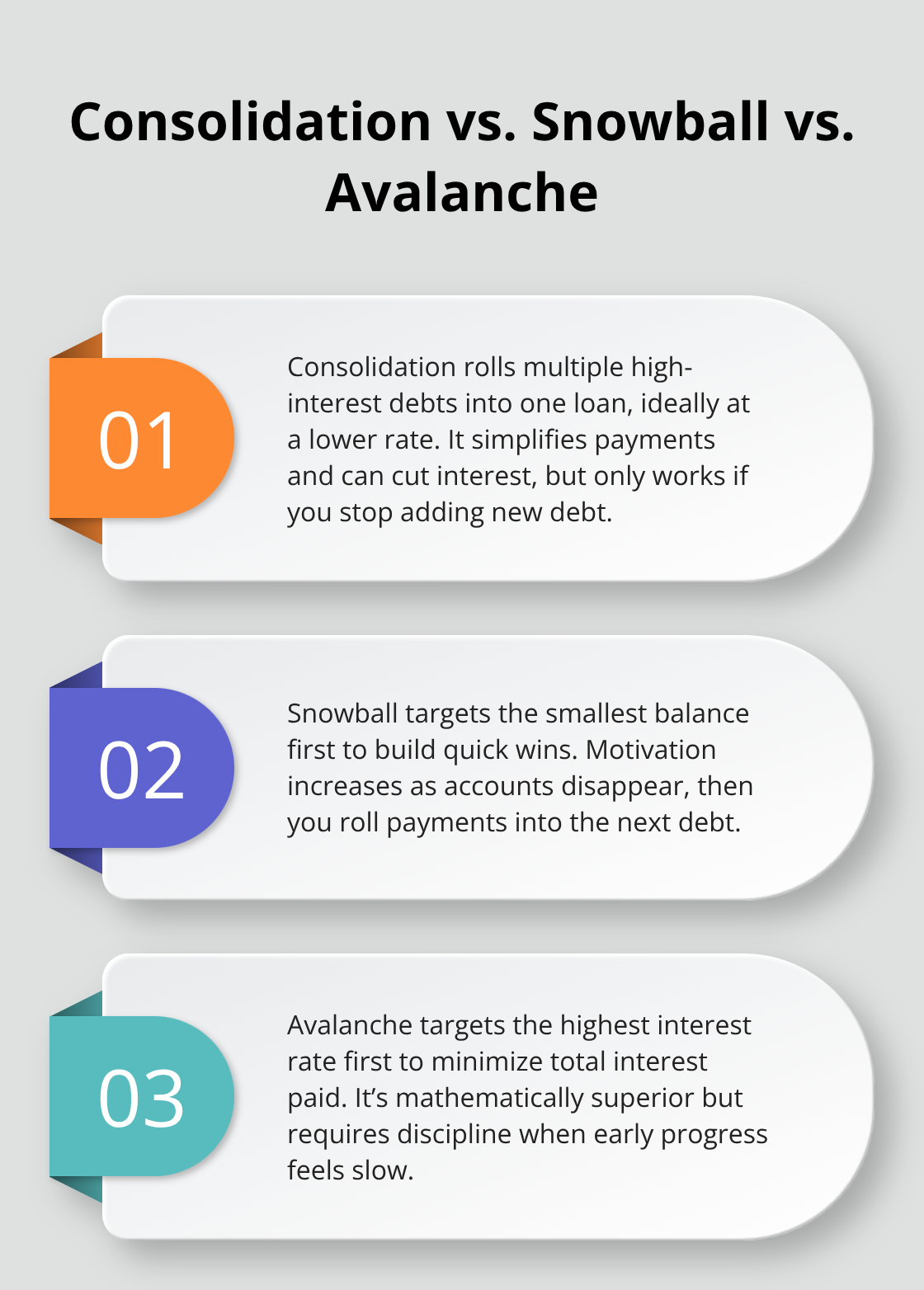
Consolidation works best when you have multiple high-interest debts and can secure a lower rate than what you’re currently paying. A debt consolidation loan combines several debts into one monthly payment, typically at a better interest rate than credit cards. Canadian banks and credit unions offer these loans, though approval depends on your credit score and income. The catch is straightforward: consolidation only works if you stop accumulating new debt. If you consolidate credit cards and then rebuild balances on those same cards, you’ve made your situation worse.
Calculate the total interest you’ll pay over the full loan term before you sign anything. A consolidation loan at 9% over five years costs significantly less than carrying $10,000 across multiple cards at 19.99%, but only if you commit to not using those cards again.
Choose between snowball and avalanche methods
Debt repayment strategy matters more than most people realize, and the two most effective methods produce different psychological results. The snowball method targets your smallest debt first regardless of interest rate, giving you quick wins that build momentum. If you owe $1,200 on one card, $3,500 on another, and $8,000 on a line of credit, you attack the $1,200 first while making minimum payments on the others. You eliminate that debt in two to three months, then roll that payment amount into the next smallest debt. This approach works for people who need visible progress to stay motivated.
The avalanche method targets the highest interest rate first, mathematically costing you less in total interest. You’d attack the 21.99% card before the 9% line of credit, even if the balance is larger. The avalanche saves you hundreds or thousands in interest charges over time, making it the mathematically superior choice. We recommend the avalanche method because it reduces your actual debt burden faster, but only if you have the discipline to stick with it when progress feels slow.
Negotiate directly with your creditors
Creditors often produce results that people overlook when they negotiate directly. Credit card companies would rather accept a lower payment plan than send your account to collections, since they recover more money from working with you than from a collection agency. Call your credit card issuer and ask for a lower interest rate, especially if you have a decent payment history. Many people get reductions of 2 to 4 percentage points just by asking.
If you’re struggling with payments, explain your situation and ask about hardship programs that temporarily lower your monthly obligation. These programs exist but creditors won’t advertise them. For older debts or accounts in arrears, creditors sometimes accept a settlement for less than the full amount owed. You might settle a $5,000 debt for $3,000 if you can pay it in a lump sum, though this damages your credit score.
Document every conversation with creditors in writing by following up phone calls with emails that summarize what was discussed and agreed upon. This creates a paper trail that protects you if disputes arise later. Once you’ve selected your strategy and negotiated where possible, you’re ready to explore the professional support and tools that can accelerate your progress.
When Professional Help Makes Sense
Find legitimate credit counseling services
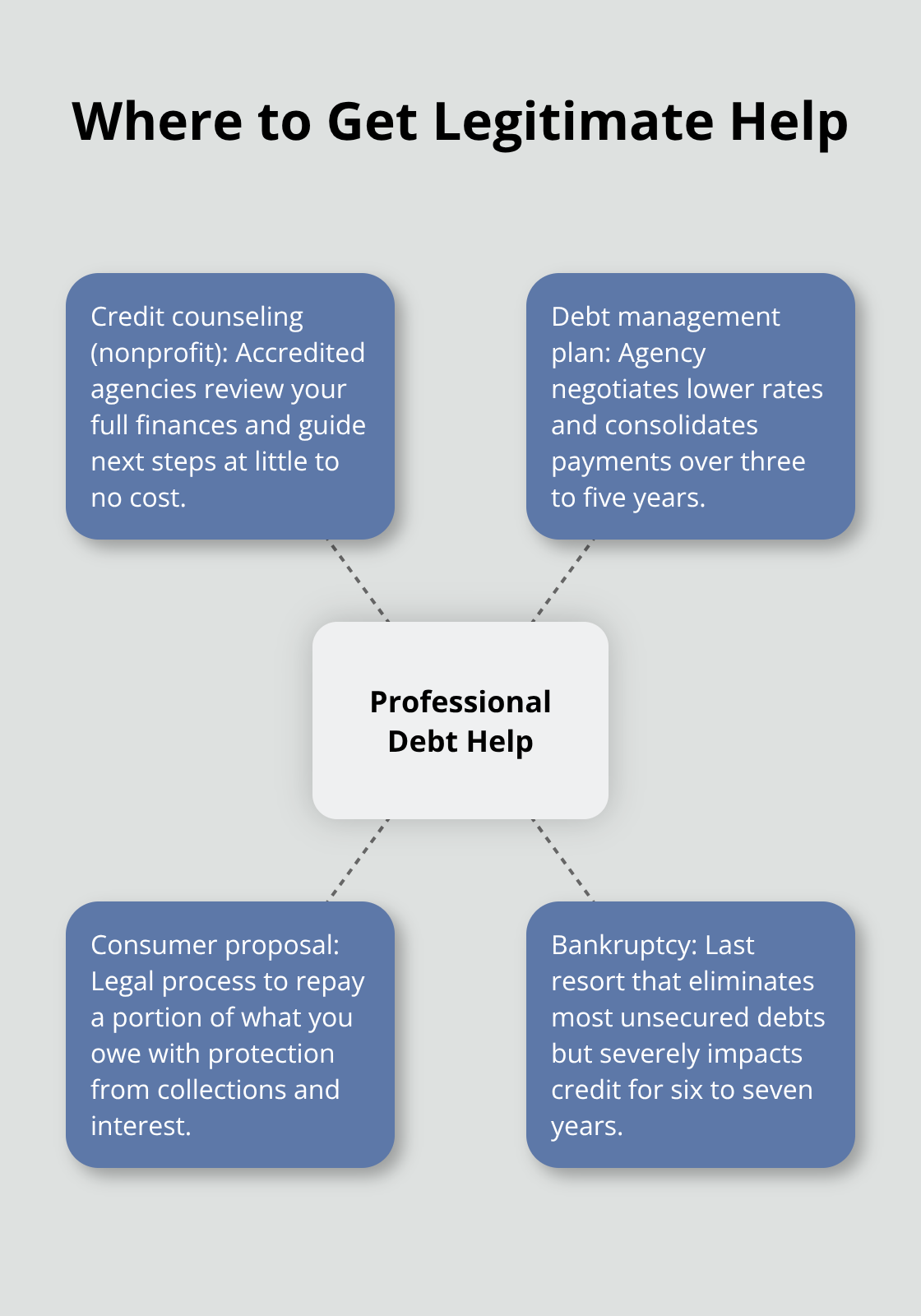
Credit counseling services exist across Canada, and they range from legitimate nonprofits to predatory operations that worsen your financial position. Nonprofit credit counseling agencies accredited by the Credit Counselling Canada network offer free or low-cost sessions where a counselor reviews your full financial picture and recommends next steps. These counselors work for organizations funded by government and community support, not commission-based sales. A session typically costs nothing or under $50, and they help you understand whether consolidation, a debt management plan, or another approach fits your situation. The Financial Consumer Agency of Canada lists accredited counselors on their website, which is your safest starting point.
You can also connect with legitimate credit counseling services in Canada through trusted nonprofit networks that operate across the country. Avoid for-profit debt companies that charge upfront fees or promise to eliminate debt through settlement programs. These operations often damage your credit score and cost thousands more than working directly with creditors. Legitimate counselors never guarantee debt elimination or charge fees before providing services.
Use a debt management plan to avoid legal processes
A debt management plan through a nonprofit agency is fundamentally different from a consumer proposal or bankruptcy, and it’s the option we recommend first if you want to avoid legal processes. The agency negotiates with your creditors to reduce interest rates and consolidate payments into one monthly amount you can afford. You make payments to the agency, which distributes funds to creditors, typically over three to five years.
This approach appears on your credit report as a debt management plan, which is less damaging than bankruptcy but still affects your ability to access new credit during repayment. The process takes time, but it keeps you out of the insolvency system entirely.
Consider a consumer proposal as a legal alternative
Consumer proposals, governed by the Bankruptcy and Insolvency Act, are a legal process where you propose paying creditors a percentage of what you owe, often 30 to 50 cents on the dollar, over a set period. A Licensed Insolvency Practitioner files the proposal on your behalf, and creditors vote to accept or reject it. If accepted, you’re legally protected from collection actions and interest charges.
To file a consumer proposal as a legal debt relief option, your total debts must not exceed $250,000 as outlined by the Bankruptcy and Insolvency Act. A Licensed Insolvency Practitioner can assess whether a consumer proposal is viable before you pursue bankruptcy, which is why consulting one costs $200 to $500 for an initial assessment and often saves you money compared to filing bankruptcy directly.
Understand bankruptcy as your last resort
Bankruptcy should be your absolute last resort when you have no realistic path to repayment and your debt exceeds your income by a significant margin. Bankruptcy eliminates most unsecured debts but damages your credit for six to seven years and requires selling non-exempt assets. The process is irreversible, so explore every other option first (debt management plans, consumer proposals, and creditor negotiations all come before bankruptcy).
Final Thoughts
Debt reduction requires consistent action over weeks and months, not a single decision made once. You now understand how to calculate your exact debt position, select a repayment strategy that fits your situation, and access professional support when you need it. The debt advice Canada provides through government resources and nonprofit agencies costs nothing or very little, yet most people never use it because they lack direction on where to start.
Your first action this week should be straightforward: list every debt you owe with its interest rate, calculate your monthly cash flow, or contact a nonprofit credit counselor. Don’t wait for perfect financial clarity or the ideal moment. Starting with incomplete information beats waiting indefinitely for perfect conditions. Financial Canadian offers web design services with responsive layouts, SEO optimization, and user-friendly navigation that help your message reach more people.
The strategy you select matters far less than the consistency you apply to it. Whether you use the snowball method for motivation or the avalanche method for mathematical efficiency, the people who succeed make one extra payment monthly or redirect found money toward their highest-priority debt. Your debt didn’t accumulate overnight, and it won’t disappear overnight either, but with a clear plan and professional support when needed, you can move from feeling trapped by debt to building real financial progress.










Leave a comment