
Getting a small business loan in Canada doesn’t have to be complicated. The right financing can transform your business, but finding it requires knowing your options and avoiding costly mistakes.
We at Financial Canadian have created this guide to help you navigate online lending platforms, compare rates, and secure the best deal for your situation.
Your Loan Options in Canada
Government-Backed Programs Lead the Way
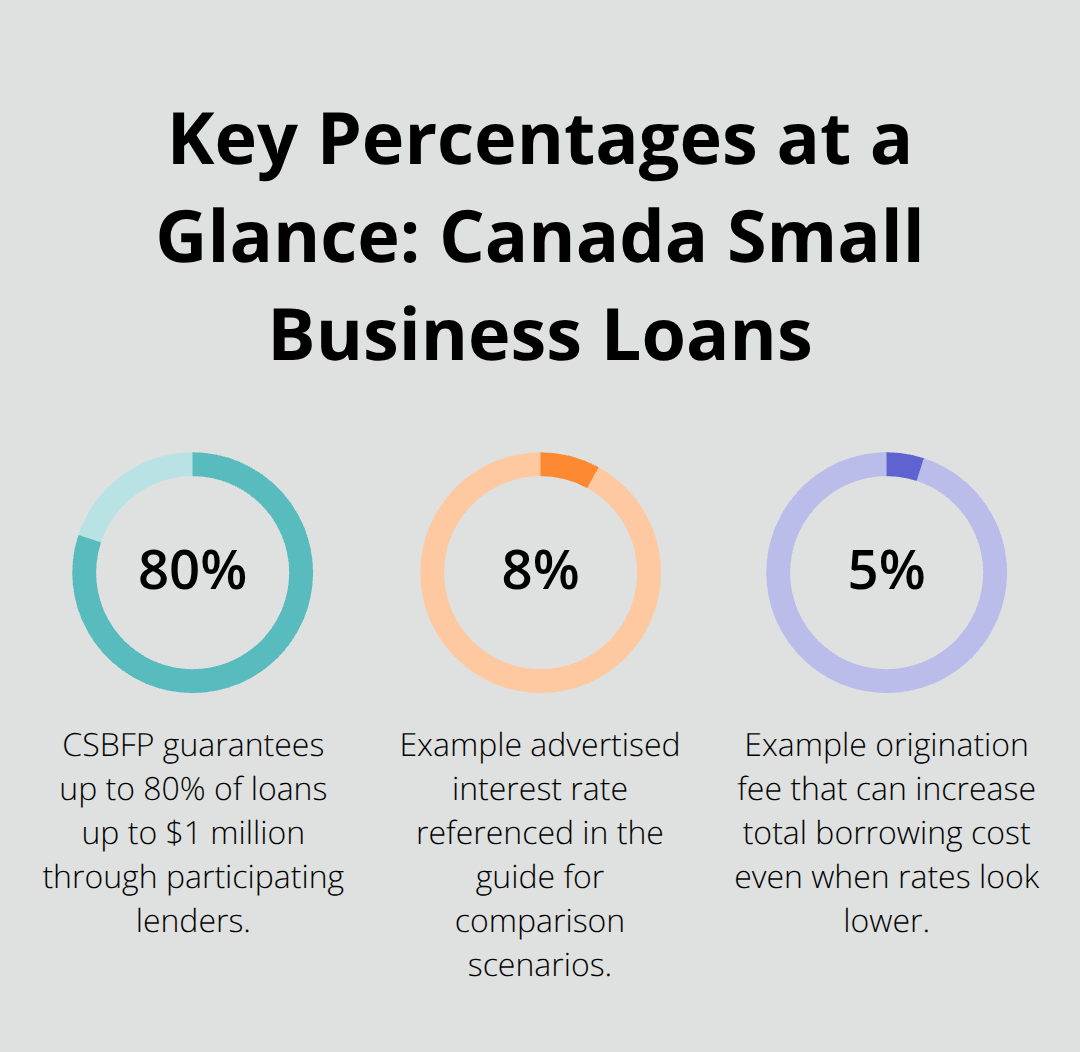
Canada’s small business lending market has fragmented significantly over the past five years, creating genuine alternatives to traditional banks. The Canada Small Business Financing Program stands as the most accessible entry point for new businesses, guaranteeing up to 80% of loans up to $1 million through participating lenders. The federal government backs these loans, so lenders take less risk and pass that savings to you through lower rates, typically ranging from prime plus 1-3%. Approval timelines stretch 4-8 weeks, and you’ll need a solid business plan and personal credit score above 650.
Traditional Banks: Higher Standards, Competitive Rates
Traditional banks offer larger loan amounts and competitive rates if you qualify, but they’ve tightened standards significantly since 2020. Most banks now require 2-3 years of operating history, minimum annual revenue of $250,000, and personal guarantees. Interest rates sit around prime plus 2-4%, though you’ll face extensive documentation requirements and relationship managers who demand detailed financial projections. Banks move slowly through their approval processes, which can stretch several weeks depending on your application complexity.
Online Lenders: Speed Over Cost
Alternative lenders and online platforms operate with faster approval cycles, often 48-72 hours, and more flexible criteria focusing on cash flow rather than credit scores. Online lenders charge higher rates, typically 8-15% annually, but they’ll fund businesses with less than one year of history or irregular income patterns. The trade-off is straightforward: speed and accessibility come at a cost. Small business owners generating consistent revenue above $100,000 annually should pursue government programs or traditional banks first. Those with weaker credit histories, newer operations, or seasonal income patterns benefit from online alternatives despite higher costs (since rejection from traditional lenders costs you nothing but time).
Matching Your Business to the Right Lender
Your business profile determines which option makes sense. Established companies with strong financials and good credit should apply to government programs or banks-the lower rates justify the longer wait. Newer businesses or those with irregular cash flow should consider online lenders, accepting higher rates in exchange for quick funding and flexible approval standards. The key is understanding that each lender type serves a different business stage, and your job is matching your situation to the right fit.
When you’ve identified which loan type suits your business, the next step involves comparing specific offers to find the best rates and terms available.
Comparing Small Business Loan Offers
Calculate Your True Borrowing Cost
Once you’ve narrowed down your lender type, the real work begins: comparing actual offers to find the best deal for your business. Most business owners focus only on interest rates, but that’s just one piece of the puzzle. The annual percentage rate matters, yes, but you also need to examine the loan term, origination fees, prepayment penalties, and monthly payment amounts. A loan at 10% over three years costs significantly more in total interest than a loan at 12% over two years, yet many borrowers miss this calculation.
Start by requesting loan estimates from at least three lenders, and ask each one for the same information formatted consistently: the total amount borrowed, interest rate, loan term, monthly payment, total interest paid over the life of the loan, origination fees, and any prepayment penalties. Online lenders typically charge origination fees between 1-10%, while banks charge 0-3%, so these fees can add hundreds or thousands to your actual borrowing costs. Calculate your total cost of borrowing by adding the interest paid plus all fees, then divide by the loan term to understand your true annual cost.
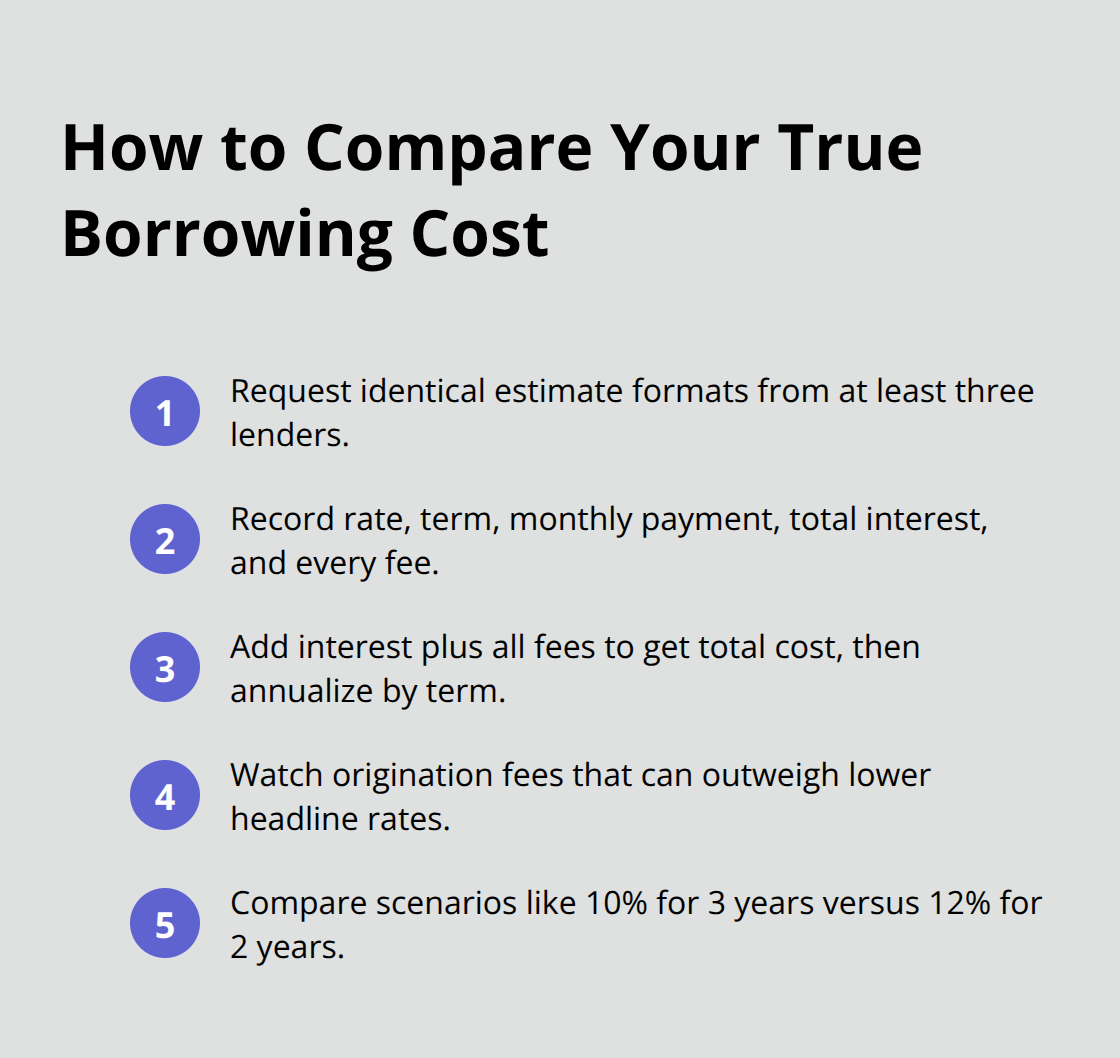
Most lenders now provide this information in loan disclosure documents, though the formatting varies widely. A lender charging 8% with a 5% origination fee might cost more than one charging 9.5% with no origination fee.
Gather Your Documentation Early
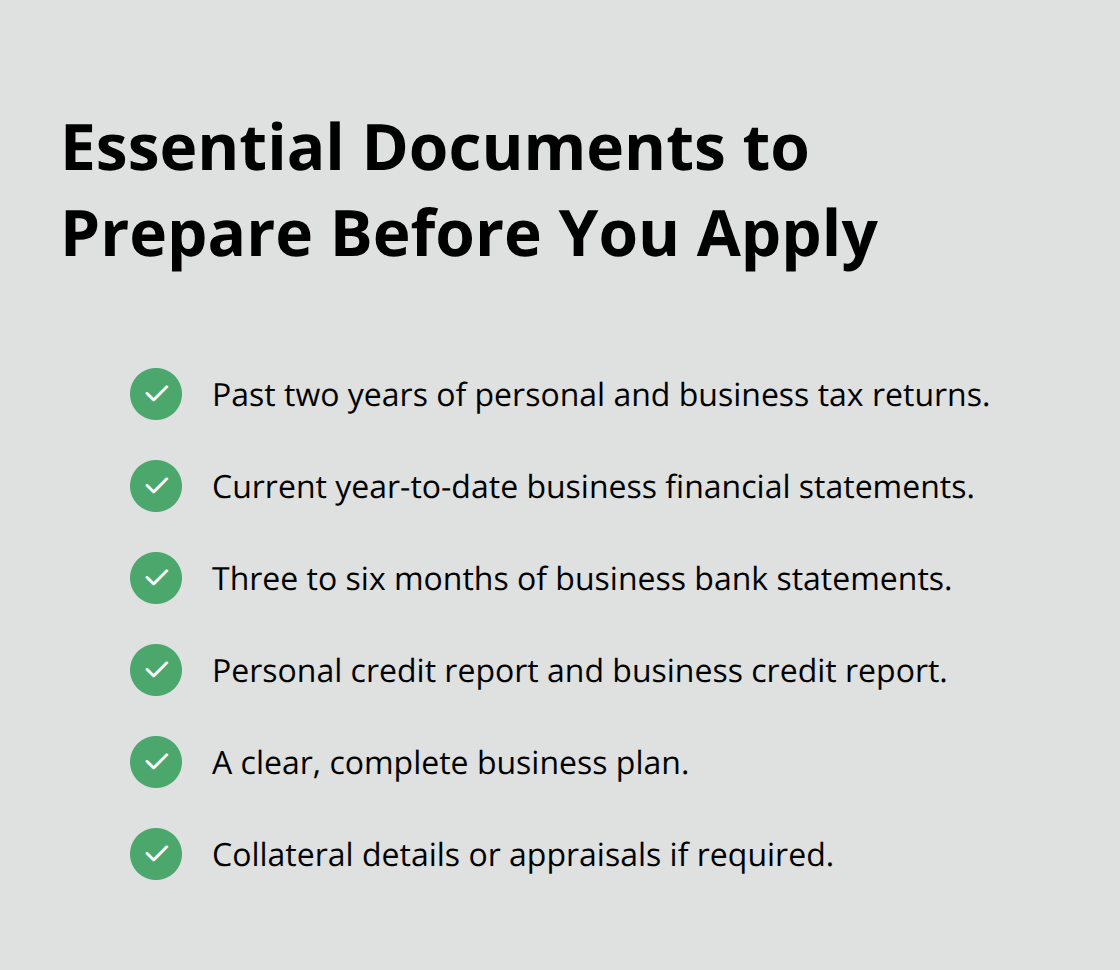
Your eligibility requirements and application timeline matter just as much as pricing, especially if you need funding quickly. Government-backed programs and traditional banks require extensive documentation: tax returns from the past two years, business financial statements, personal credit reports, business plans, and sometimes collateral appraisals. You’ll spend 10-15 hours gathering and organizing these documents before you even submit an application. Online lenders typically demand less documentation but move faster through underwriting, often providing approval within 48 hours. The trade-off is real: faster funding comes with higher costs, so you need to decide whether speed justifies the premium.
Before applying anywhere, verify your business credit score through Equifax or TransUnion, as many lenders check this before even reviewing your application. Your personal credit score matters too, and checking it costs nothing through government-approved services like Equifax Canada.
Submit Multiple Applications Strategically
Apply to your preferred lenders simultaneously rather than sequentially, since multiple applications within a short timeframe typically count as a single inquiry on your credit report. Hard inquiries only impact your score by a few points and the impact disappears within months, so clustering your applications matters far less than getting multiple offers to compare. Track every application deadline, required documents, and lender contact information in a spreadsheet, because managing five simultaneous applications without organization guarantees mistakes and missed deadlines.
Once you’ve submitted your applications and received multiple offers, you’ll face decisions about which lender to choose and what terms actually work for your cash flow situation.
Common Mistakes When Applying for Small Business Loans
Incomplete Financial Documentation Kills Applications Fast
Most small business owners sabotage their loan applications before lenders even review them. Incomplete financial documentation tops the rejection list because lenders reject applications immediately when tax returns, bank statements, or business financial records are missing or don’t match. You need the past two years of personal and business tax returns, current year-to-date financial statements, and 3-6 months of business bank statements. Many owners submit outdated documents or provide incomplete records, forcing lenders to request clarifications that delay decisions by weeks.
If your tax returns show losses or irregular income, prepare explanations in advance rather than hoping lenders overlook them. Government-backed programs through the Canada Small Business Financing Program are particularly strict about documentation accuracy, so verify every number matches across all submitted documents before hitting send. Mismatched figures between your tax returns and bank statements signal poor financial management to underwriters, triggering additional scrutiny or outright rejection.
Borrowing More Than You Need Weakens Your Application
Borrowing more than you actually need creates a second major problem that undermines your entire loan strategy. New business owners often calculate their immediate needs and then request extra as a safety buffer, thinking more money equals more security. This approach backfires because larger loans mean higher monthly payments, and if your revenue drops unexpectedly, those payments become crushing obligations.
Calculate your exact need by listing every expense for the next 12 months, then add a small contingency buffer. If your business generates $150,000 in annual revenue, a $50,000 loan might feel conservative, but an oversized loan could create debt service problems if revenue fluctuates. Lenders actually view over-borrowing as a red flag indicating poor financial planning, so requesting only what you need strengthens your application credibility.
Hidden Fees Destroy Your True Cost Calculation
The third mistake involves ignoring fees and prepayment penalties that dramatically increase your actual borrowing cost. Online lenders often advertise rates like 8% without mentioning origination fees ranging from 3-10%, which means a $50,000 loan costs you $1,500-$5,000 before you receive a single dollar. Prepayment penalties trap you in expensive loans because paying off your debt early triggers additional charges, sometimes 1-3% of the remaining balance.
Traditional banks charge lower fees but often require personal guarantees or collateral you might not realize you’re pledging. Request the complete loan disclosure document from every lender and calculate total interest plus all fees divided by your loan term to find your true annual cost. A lender charging 9% with no fees often costs less than one charging 7% with a 5% origination fee, yet most borrowers focus only on the headline rate. Read prepayment penalty clauses carefully because some lenders charge nothing for early repayment while others penalize you substantially, making it impossible to refinance if rates drop.
Final Thoughts
Finding the right small business loan Canada requires matching your business profile to the appropriate lender type, then comparing actual offers rather than headline rates. Government-backed programs deliver the lowest costs for established businesses willing to wait 4-8 weeks, traditional banks offer competitive rates for companies with strong financials and operating history, and online lenders provide speed and flexibility for newer operations or those with irregular cash flow. Your job is understanding which category fits your situation, then executing a disciplined comparison process that accounts for interest rates, fees, loan terms, and prepayment penalties.
Before submitting applications, you should gather your financial documentation and verify your business and personal credit scores. You can apply to multiple lenders simultaneously to receive comparable offers, then calculate your true borrowing cost by adding total interest plus all fees. This calculation reveals which lender actually costs less, since headline rates often hide expensive origination fees or prepayment penalties that destroy your financial advantage.
The mistakes that kill applications happen before lenders even review your request. Incomplete documentation, over-borrowing beyond your actual needs, and ignoring hidden fees represent the three most common errors that either trigger rejection or lock you into expensive debt. Verify every number matches across your tax returns and bank statements, borrow only what you need for the next 12 months, and read prepayment penalty clauses carefully before signing anything-then visit Financial Canadian to explore how we can strengthen your online presence while you focus on securing the financing your business needs.










Leave a comment