
Buying your first home in Canada is one of the biggest financial decisions you’ll make. At Financial Canadian, we know the mortgage process can feel overwhelming with all the rates, terms, and paperwork involved.
This guide walks you through every stage of getting a first time mortgage in Canada, from understanding your options to closing day. You’ll learn exactly what lenders expect and how to position yourself for approval.
Mortgage Types and Amortization Periods for First-Time Buyers
Fixed-Rate vs. Variable-Rate Mortgages
Canada’s mortgage market offers first-time buyers three main structures, and your choice directly impacts your monthly payments and long-term costs. The most common option is a fixed-rate mortgage, where your interest rate stays the same for your entire term, typically 5 years. Your payment never changes, which makes budgeting predictable. Variable-rate mortgages tie your interest rate to the Bank of Canada’s prime rate, so when prime moves, your rate moves with it. Your payment can increase or decrease monthly, which works well if rates fall but creates risk if they climb. The third option is a hybrid mortgage, combining a fixed period with a variable period, though this is less common for first-time buyers.
Why Fixed-Rate Mortgages Win for First-Time Buyers
Fixed-rate mortgages eliminate payment surprises and let you plan your finances with confidence. When you lock in a rate, you know exactly what you’ll pay each month for the entire term. This predictability matters most when you’re new to homeownership and managing other costs like property taxes, insurance, and maintenance.
Choosing Your Amortization Period
Amortization periods determine how long you’ll take to pay off your mortgage. Most first-time buyers choose 25 years, which balances affordable monthly payments with reasonable total interest costs. A 20-year amortization increases your monthly payment by roughly 15–20% compared to 25 years, but you’ll pay significantly less interest overall.
A 30-year amortization lowers monthly payments but costs substantially more in total interest. If your budget allows, accelerating your amortization saves real money.
Accelerated Payment Options
Many lenders offer accelerated bi-weekly payments, which effectively reduce your amortization by about 4 years without increasing monthly costs significantly. This strategy works because you make 26 bi-weekly payments per year instead of 12 monthly payments, resulting in one extra payment annually. The difference compounds over time and cuts years off your mortgage.
Your lender requirements and qualification standards determine what payment frequency options they’ll approve, so understanding these standards before you apply positions you for the best terms.
Getting Pre-Approved for Your First Mortgage
Your Credit Score Sets the Foundation
Your credit score is the first thing lenders examine, and it matters far more than most first-time buyers realize. Equifax and TransUnion track your payment history, credit utilization, and length of credit accounts in Canada. A score above 680 gets you approved with standard rates, but scores between 620 and 679 trigger higher interest rates that can cost you tens of thousands over 25 years. Below 620, most lenders reject your application outright.
Pull your free credit report from Equifax or TransUnion before applying anywhere, because errors appear regularly and can tank your score unfairly. You’re entitled to one free report annually from each bureau. If you spot mistakes, dispute them immediately-this takes weeks to resolve, so start early. Beyond your score, lenders scrutinize your payment history over the past two years. A single missed payment, even from years ago, signals risk to underwriters. Late payments stay on your report for six years, so if you’ve had recent ones, wait before applying.
How Lenders Calculate Your Debt-to-Income Ratio
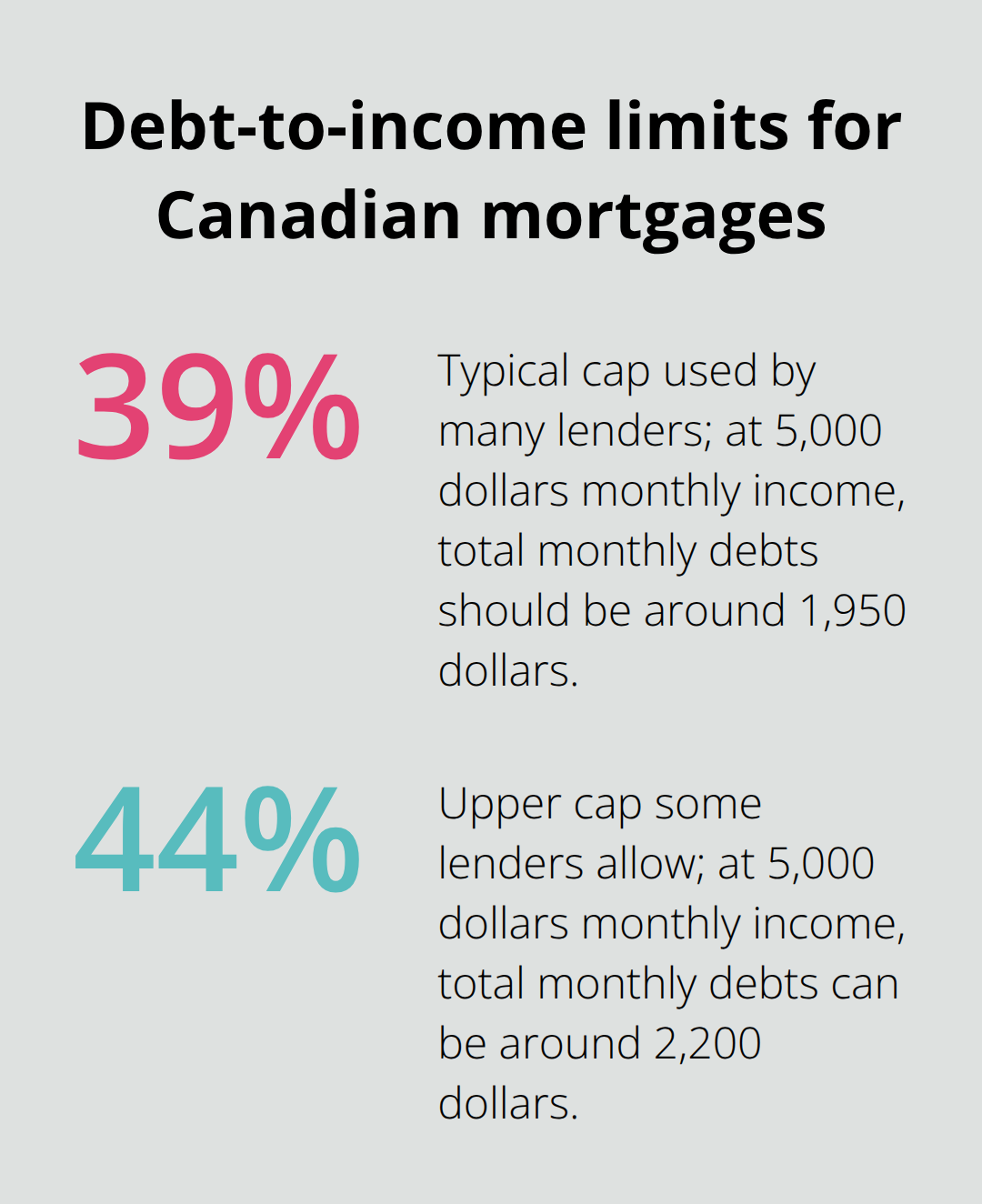
Lenders use a strict formula called your debt-to-income ratio to decide how much they’ll lend. Your gross monthly income gets divided by your total monthly debt payments, including credit cards, car loans, student loans, and the new mortgage payment. Most Canadian lenders cap this ratio at 39 to 44 percent, meaning if you earn 5,000 dollars monthly, your total debt payments including the new mortgage cannot exceed 1,950 to 2,200 dollars.
This is where many first-time buyers stumble. A 15,000 dollar car loan with 350 dollar monthly payments directly reduces how much house you can afford. If you carry credit card balances, paying them down before applying increases your qualifying power immediately. One 5,000 dollar credit card at 20 percent interest costs you roughly 83 dollars monthly in minimum payments-eliminating this alone could qualify you for an additional 50,000 to 75,000 dollars in home price.
Gathering Documentation Lenders Require
Lenders verify your income through tax returns, employment letters, and bank statements covering the past two months. Self-employed applicants face stricter scrutiny and need two years of tax returns, profit and loss statements, and notice of assessments from the Canada Revenue Agency. Gather these documents before contacting lenders, because delays cost you time in a competitive market. Once you have your credit score cleaned up and your debt-to-income ratio optimized, you’re ready to move forward with the pre-approval process and start looking at properties that fit your budget.
Finding Your Budget and Making an Offer
Calculate Your True Budget, Not Your Maximum
Your pre-approval letter states the maximum you can borrow, but that’s not your actual budget. Lenders will approve you for amounts that stretch your finances dangerously thin. If you qualify for a 500,000 dollar mortgage, that doesn’t mean you should spend it. Work backwards from your monthly expenses to find your real number. Add up rent, utilities, groceries, insurance, transportation, and discretionary spending for a typical month. Subtract this from your gross monthly income, then multiply by 0.39 to find your safe debt-to-income ceiling. This number is your real budget, and it’s almost always lower than what lenders will approve.
Down Payment Strategy: Why 20 Percent Matters
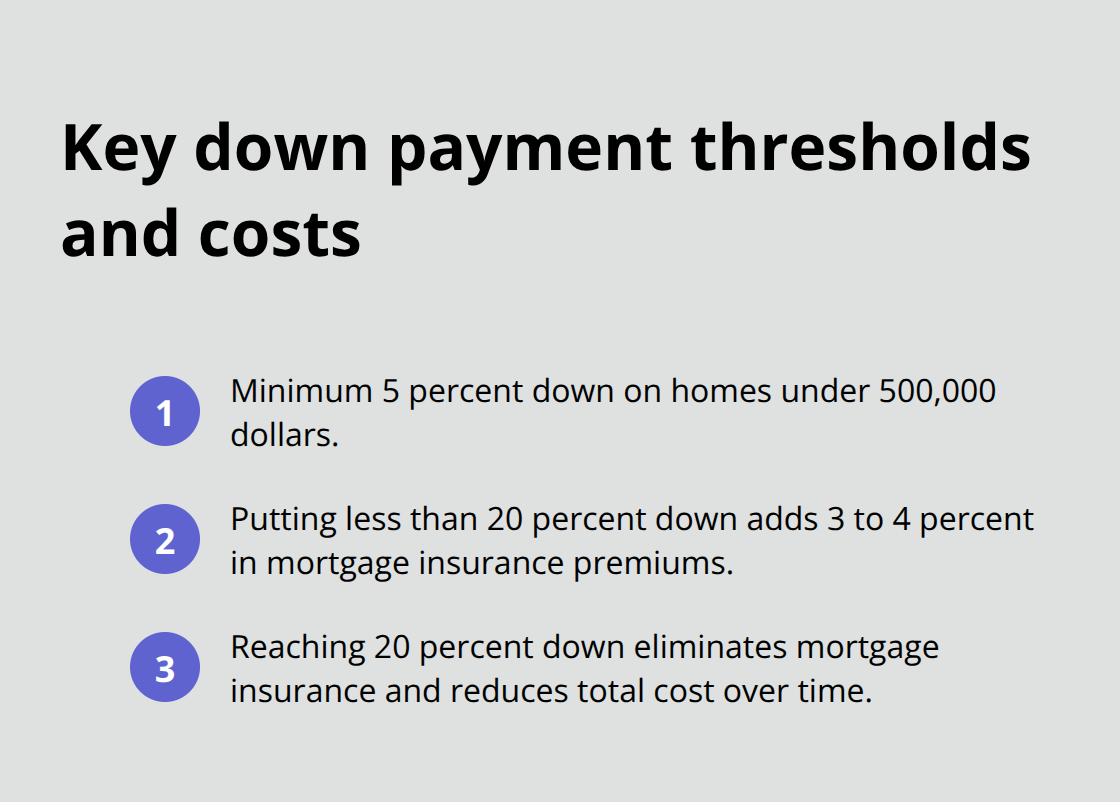
Down payment requirements have shifted in Canada. The Canada Mortgage and Housing Corporation requires 5 percent down on homes under 500,000 dollars, but you’ll face mortgage insurance costs that add 3 to 4 percent to your total loan amount if you put down less than 20 percent. A 10 percent down payment on a 400,000 dollar home means you’re borrowing 360,000 dollars plus roughly 14,400 dollars in insurance premiums, raising your actual mortgage to 374,400 dollars. Saving an extra 40,000 dollars to reach 20 percent down eliminates this insurance entirely and saves you tens of thousands over 25 years. First-time buyers should prioritize reaching 20 percent down rather than rushing into ownership with minimal equity.
Work with Agents Who Respect Your Budget
Real estate agents push you toward properties at the top of your budget because their commission depends on sale price. This is their conflict of interest, and you need to acknowledge it openly. Work with agents who ask detailed questions about your financial situation and comfort level rather than agents who immediately show homes at maximum price points.
Protect Yourself with Inspections and Appraisals
When you find a property you want, your offer needs to account for inspection costs, appraisal gaps, and closing expenses. Home inspections in Canada cost between 300 and 500 dollars and reveal foundation issues, roof damage, electrical problems, and mechanical failures that lenders and appraisers miss. Never waive an inspection to make your offer more competitive. If the inspection uncovers 15,000 dollars in repairs, you can renegotiate the price or walk away.
Properties often appraise lower than purchase price, especially in competitive markets. If you’re buying at 450,000 dollars but the appraisal comes in at 440,000 dollars, you either pay the 10,000 dollar gap in cash or renegotiate. Include appraisal contingencies in your offer to protect yourself.
Account for Closing Costs in Your Offer
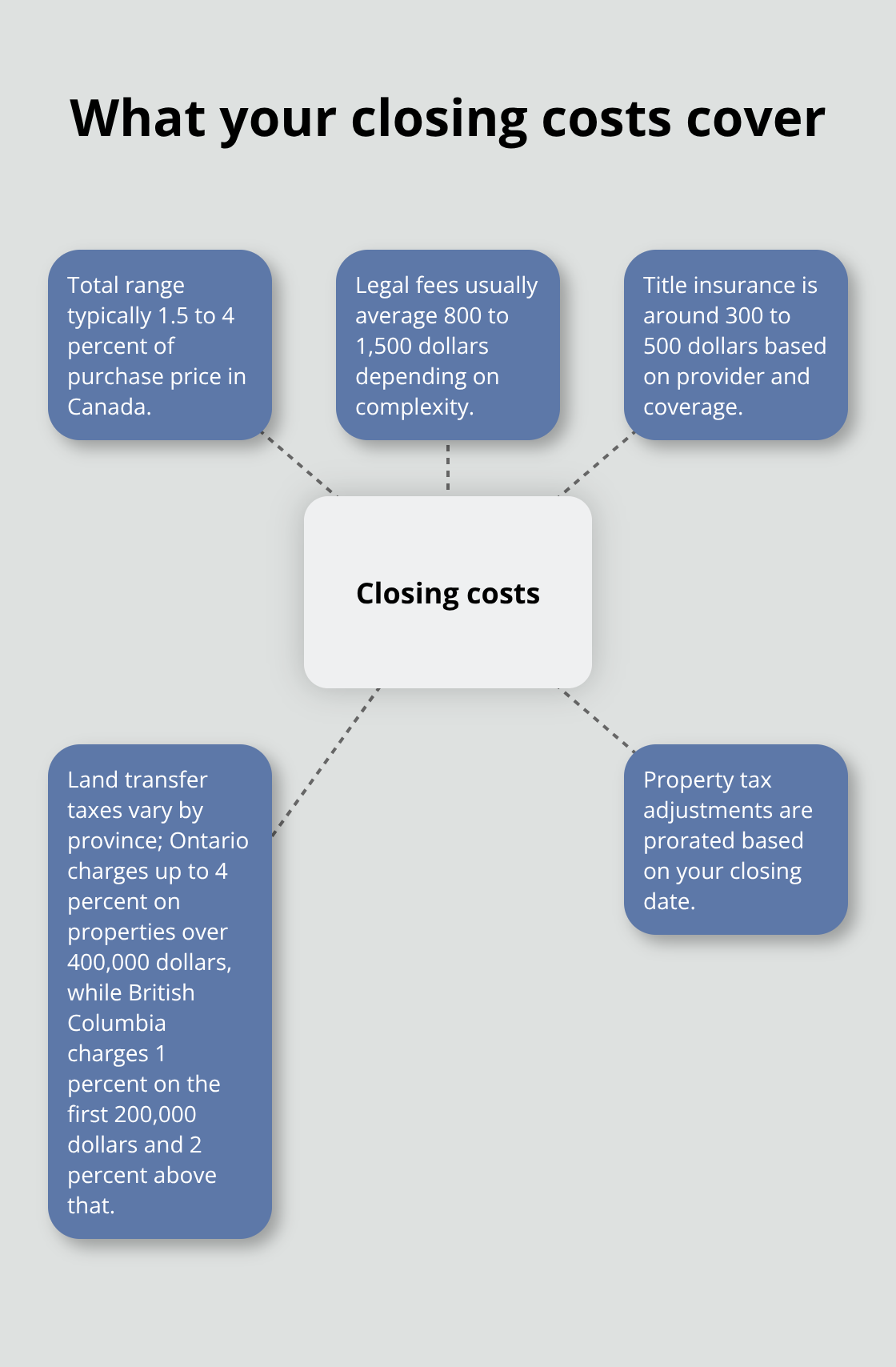
Closing costs in Canada run 1.5 to 4 percent of purchase price, covering legal fees, title insurance, property taxes, and land transfer taxes. On a 400,000 dollar home, expect 6,000 to 16,000 dollars in closing costs depending on your province. Your offer should reflect realistic numbers, not just the purchase price.
Final Thoughts
Closing day arrives faster than most first-time buyers expect, and the final weeks before signing require attention to detail. Your lender will order a final appraisal and title search to confirm the property value and ownership history. You’ll receive a closing disclosure statement 3 business days before closing, detailing your exact loan amount, interest rate, monthly payment, and all fees. Review this document line by line against your pre-approval letter, because discrepancies happen and you have time to challenge them before signing.
Closing costs typically range from 1.5 to 4 percent of your purchase price in Canada, depending on your province and whether you’re paying land transfer taxes. These costs cover legal fees averaging 800 to 1,500 dollars, title insurance around 300 to 500 dollars, property tax adjustments, and provincial transfer taxes that vary significantly (Ontario charges up to 4 percent on properties over 400,000 dollars, while British Columbia charges 1 percent on the first 200,000 dollars and 2 percent above that).
Know your province’s specific rates before closing day so you’re not surprised by the final bill.
After closing, your first-time mortgage Canada enters the management phase where your decisions compound over decades. Adding just 100 dollars monthly to a 25-year amortization cuts roughly 3 years off your mortgage and saves tens of thousands in interest. When rates drop significantly, refinancing becomes an option, though you’ll pay legal fees and potentially a penalty to break your current term-calculate whether the interest savings justify these costs before refinancing. Your mortgage term typically renews every 5 years in Canada, giving you the opportunity to shop for better rates rather than accepting your lender’s renewal offer, and starting your search 120 days before your term ends secures the best available rates. We at Financial Canadian offer professional web design services with responsive designs and SEO best practices to establish your strong online footprint as you build your digital presence.











Leave a comment