
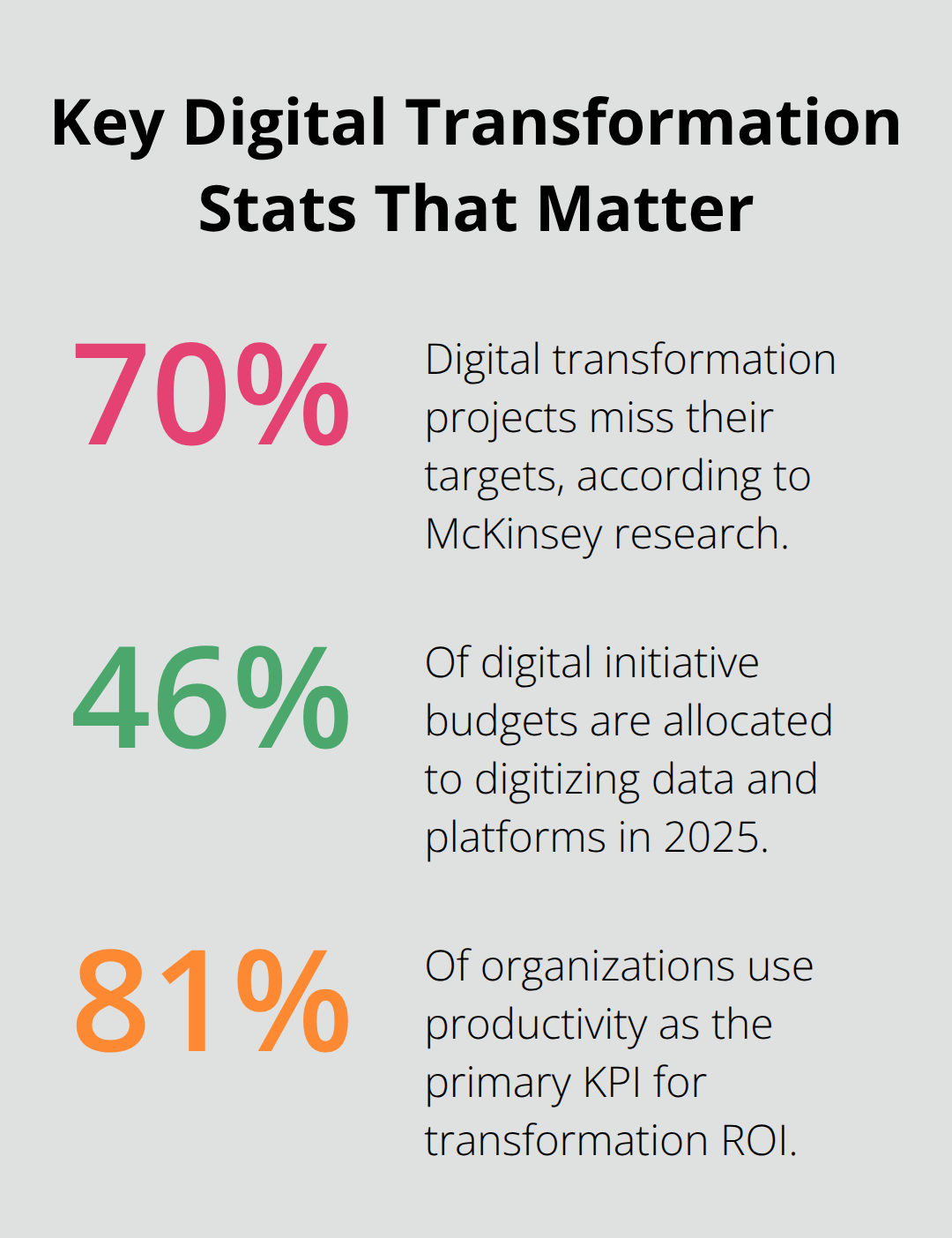
Digital transformation projects fail at alarming rates, with 70% missing their targets according to McKinsey research. The difference between success and failure often comes down to one factor: strategic financial leadership.
At Financial Canadian, we’ve analyzed hundreds of transformation initiatives. Companies that integrate finance and digital transformation from day one achieve 2.5x better ROI than those treating technology as a separate investment.
Smart financial planning turns digital dreams into measurable business results.
The Financial Foundation of Digital Transformation
Finance teams control digital transformation success through strategic budget decisions. In 2025, 46% of digital initiative budgets are allocated to digitizing data and platforms. The approach that wins starts with ring-fenced digital funds separate from operational IT costs. This prevents digital initiatives from competition with maintenance expenses and creates protected investment pools for transformation projects.
Smart Resource Allocation Beats Big Budgets
Successful digital transformations require front-loaded investments with significant portions of total project costs in year one. Companies that spread digital costs evenly across multiple years achieve lower ROI than those that concentrate initial investments. The math is simple: digital tools compound value over time, which makes early heavy investment the financially smart play. Resource plans must account for hidden costs like training, data migration, and process redesign (these typically add substantial percentages to base technology costs).
ROI Measurement Drives Success
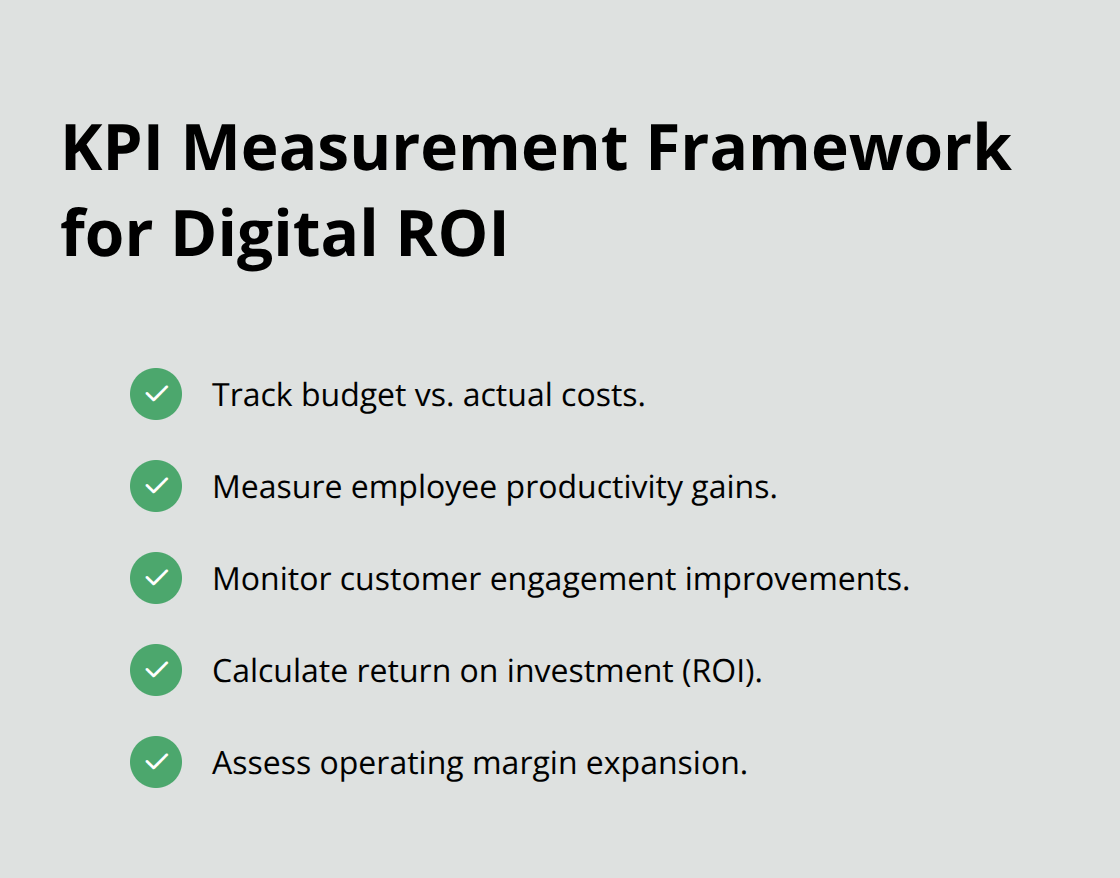
Finance departments that measure digital ROI frequently outperform less frequent trackers in project success rates. The key metrics focus on productivity gains, cost reduction, and revenue acceleration rather than traditional IT measures. Research identifies productivity as the top KPI for successful transformations, followed by customer engagement improvements and operating margin expansion. Real-time financial dashboards that show transformation impact become the difference between projects that deliver and those that drain budgets without results.
Cost-Benefit Analysis Prevents Expensive Mistakes
Technology investments demand rigorous financial analysis before approval. Companies that conduct detailed cost-benefit studies achieve better project outcomes than those that rely on vendor promises alone. The analysis must include total cost of ownership (TCO) calculations spanning five years, not just initial purchase prices. Hidden expenses like integration costs, staff training, and system maintenance often double the advertised price tags. Smart finance teams also factor in opportunity costs and competitive risks of delayed digital adoption.
These financial foundations set the stage for strategic funding models that turn digital initiatives into sustainable competitive advantages.
Financial Strategies That Enable Digital Success
Digital transformation funding determines project outcomes more than technology choices. Companies that establish dedicated digital investment funds separate from IT budgets create stronger foundations for success. The winning approach combines three funding streams: core transformation budgets for platform changes, innovation funds for experimental technologies, and operational budgets for process automation.
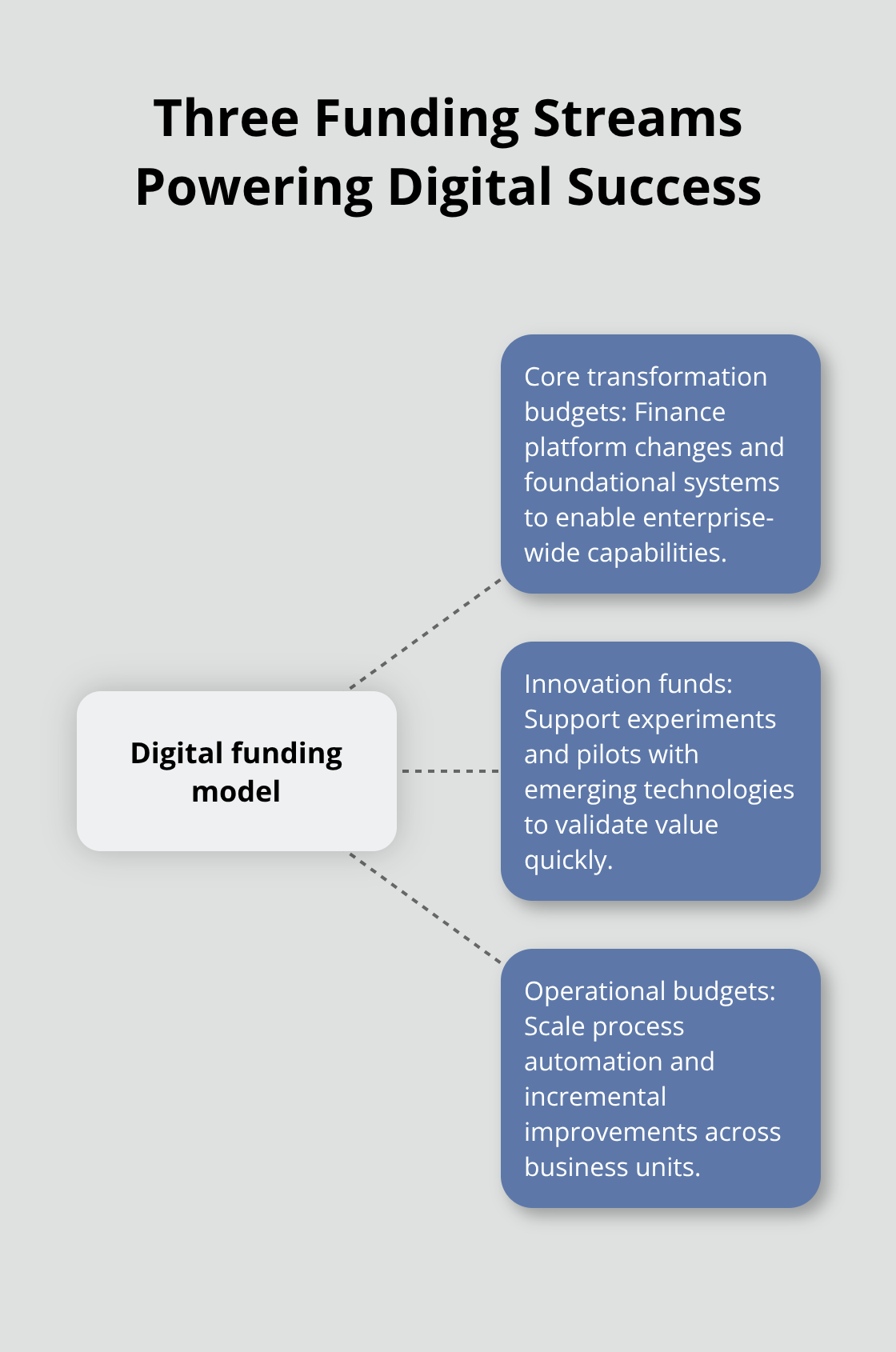
Finance teams should allocate 60% of digital funds to proven technologies, 30% to emerging solutions, and 10% to experimental initiatives. This portfolio approach balances risk while maintaining innovation momentum across all digital projects.
Stage-Gate Funding Controls Project Risk
Digital projects require different risk frameworks than traditional IT investments. Smart finance teams implement stage-gate funding that releases capital only after hitting specific milestones. Each project phase gets maximum 90-day funding cycles with mandatory progress reviews before additional capital release.
This approach prevents runaway costs while maintaining project velocity. Risk controls must include vendor financial health assessments, technology obsolescence planning, and data security compliance costs. Companies that implement these controls experience better cost management compared to those using standard IT procurement processes.
Performance-Based Vendor Contracts Drive Results
Vendor management becomes a competitive advantage when finance teams negotiate outcome-based contracts instead of traditional licensing deals. Performance-based agreements tie vendor payments to measurable business results like productivity gains or cost reductions (this shifts risk to vendors while aligning incentives for project success).
Multi-year partnerships with preferred vendors reduce procurement cycles and secure better pricing through volume commitments. Finance departments that manage vendor relationships strategically achieve 25% lower total transformation costs while getting faster implementation timelines and better ongoing support.
The financial foundation and strategic funding models create the framework for measuring transformation impact through concrete performance metrics.
Measuring Financial Impact of Digital Transformation
Digital transformation success depends on tracking the right financial metrics from project launch through long-term impact assessment. Productivity remains the most reliable KPI according to Deloitte research, with 81% of organizations using this metric to measure transformation ROI. Companies that track diverse KPI sets across financial, customer, process, and workforce categories achieve higher enterprise value attribution from their digital investments.
The measurement framework must include budget versus actual costs, employee productivity gains, customer engagement improvements, return on investment calculations, and operating margin expansion. Organizations that measure transformation value holistically report medium-to-high enterprise value impact at higher rates than those with limited metrics.
Key Performance Indicators That Drive Success
Finance teams need comprehensive KPI frameworks that span multiple business dimensions. Deloitte research identifies 46 distinct KPIs for digital transformation measurement, yet most organizations use fewer than half of these metrics. The most effective companies track financial metrics like ROI and operating margins alongside customer engagement scores and workforce productivity measures.
Budget variance analysis becomes critical for transformation projects (these initiatives often exceed initial cost estimates without proper controls). Employee productivity metrics should focus on task completion rates and process efficiency gains rather than simple output measures.
Three-Year Financial Impact Assessment
Digital transformation delivers compound returns that peak in years two and three after implementation. J.P. Morgan’s COIN platform cut document analysis times by 75% while generating substantial operational cost savings within 18 months of deployment. BBVA reported 50% increases in active mobile users post-transformation, demonstrating revenue acceleration through digital channels.
Long-term cost savings emerge from automation that reduces manual processes, improved data accuracy that prevents costly errors, and streamlined operations that eliminate redundant systems. Finance teams should track cumulative savings across three-year periods rather than annual snapshots to capture true transformation value.
Revenue Growth Through Digital Innovation
Digital transformation drives revenue growth through enhanced customer experiences and operational efficiency gains. Goldman Sachs Marcus platform attracted over $50 billion in deposits within several years through customer-centric digital design. Companies that implement real-time data processing see transaction volume increases of 35-40% within the first year of deployment.
Revenue growth metrics should focus on customer acquisition costs, lifetime value improvements, cross-selling success rates, and market share expansion in digital channels. Organizations that prioritize revenue-focused digital metrics outperform cost-focused approaches in total enterprise value creation.
Final Thoughts
Finance and digital transformation success demands strategic leadership that extends beyond budget approval. The data reveals clear patterns: companies that integrate financial planning with digital initiatives from project inception achieve 2.5x better returns than those that treat technology as isolated investments. Financial leaders must establish dedicated transformation funds, implement stage-gate funding controls, and negotiate performance-based vendor contracts.
The measurement framework needs comprehensive KPIs that span productivity, customer engagement, and revenue growth rather than simple cost tracking. Organizations that track diverse metrics across financial, customer, process, and workforce categories achieve higher enterprise value attribution from their digital investments. The future belongs to finance teams that drive transformation through data-driven decision making and holistic value measurement.
Organizations that master this integration will capture compound returns while competitors struggle with failed initiatives. At Financial Canadian, we understand that digital success starts with strong financial foundations (our comprehensive web design service helps businesses establish powerful digital footprints through responsive designs and SEO optimization that drive measurable growth). Finance departments that embrace their role as transformation leaders will shape the next decade of business success through strategic technology investments and rigorous performance measurement.










Leave a comment