
Getting approved for a personal loan in Canada involves more than just filling out a form. Lenders evaluate your credit score, income, and debt levels before making a decision.
At Financial Canadian, we’ve created this guide to walk you through exactly what happens during the personal loan approval process. You’ll learn the timeline, key factors that influence approval, and practical steps to strengthen your application.
What Lenders Actually Check During Approval
Credit Score and Payment History
Lenders in Canada assess three core components when you apply for a personal loan, and understanding exactly what they’re looking for gives you a real advantage. Your credit score matters, but it’s not the only factor that determines approval. According to Experian, you generally need a credit score of 580 or higher to qualify for a personal loan, though scores below 600 face steeper challenges with higher rates and smaller borrowing limits. A score of 600 or higher opens significantly better options. Even a modest improvement in your credit score can meaningfully affect both approval odds and your interest costs over the loan’s life.
Banks commonly advertise starting personal loan APRs around 6 to 10 percent for well-qualified borrowers, but your actual rate depends heavily on credit history, income, and your banking relationship. Beyond the score itself, lenders examine your payment history-specifically whether you made payments on time over the past months and years. A single missed payment can tank approval chances, so timing matters when you apply. The Bank of Canada held the overnight rate at 2.25 percent as of April 29, 2026, signaling a stable rate environment that keeps personal loan rates from moving upward quickly right now.
Income Verification and Employment Stability
Income verification and employment stability form the second pillar of approval. Lenders want proof that you earn enough to repay the loan and that your job is stable enough to count on that income. You typically submit recent pay stubs, tax returns, or employment letters showing your position and tenure. Self-employed applicants face tighter scrutiny and often need two years of financial statements to demonstrate consistent earnings.
Debt-to-Income Ratio Assessment
Your debt-to-income ratio-the percentage of your gross monthly income consumed by existing debt payments-is the third critical metric. Lenders generally prefer a DTI ratio of no more than 36%, though some accept higher ratios for strong candidates. If you carry $800 in monthly debt payments on a $4,000 gross income, your ratio is 20 percent, which strengthens your case significantly.
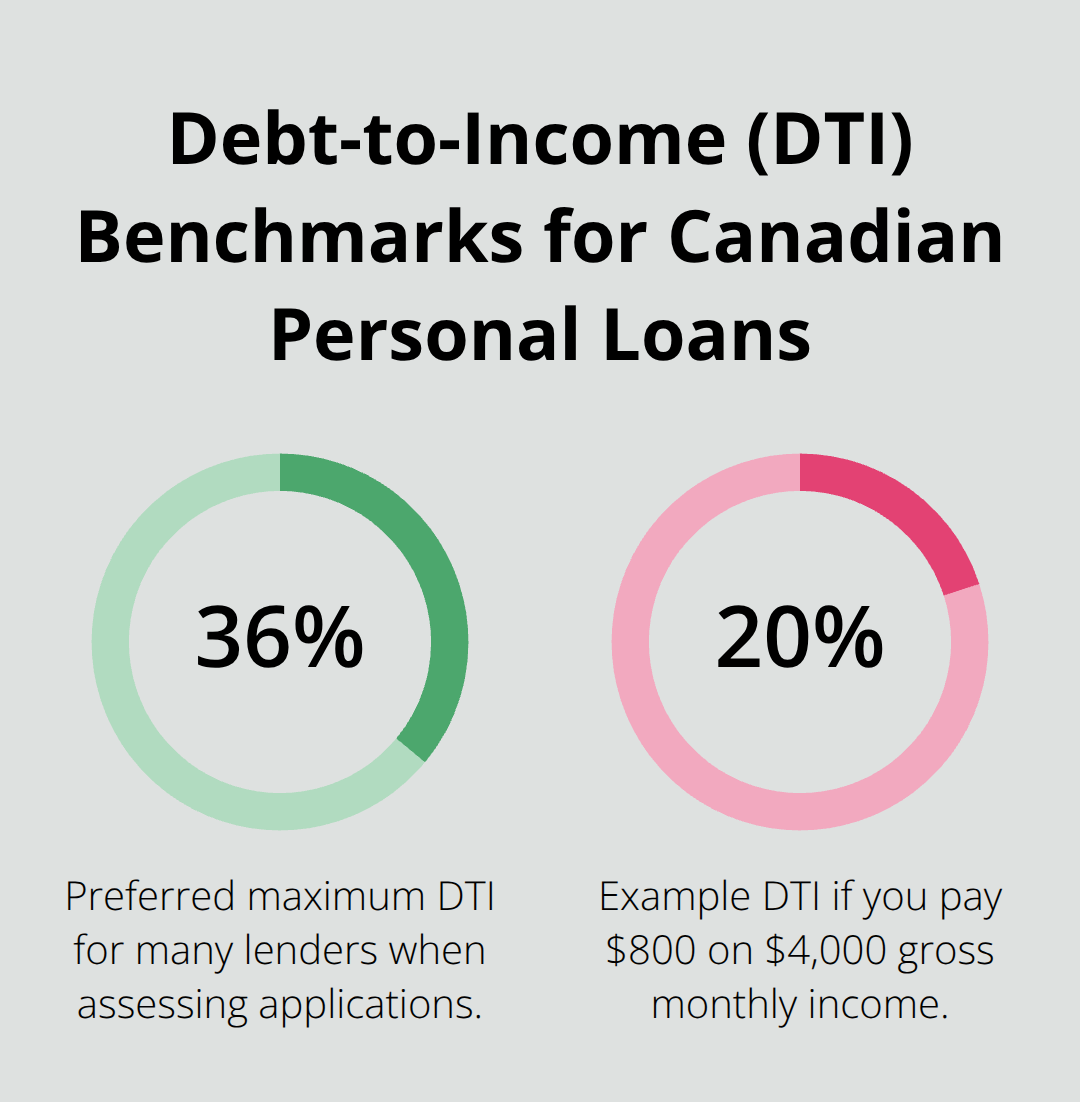
Before you apply, pay down credit card balances to lower your credit utilization and reduce this ratio.
Preparing Your Application
Check your credit report with Equifax Canada or TransUnion Canada for errors that could trigger an unfair denial. Avoid opening new credit accounts or applying for other loans in the weeks before your application, as multiple hard inquiries can lower your score and hurt approval chances. The typical application process moves fast: you submit documents online, by phone, or in person, receive a decision within minutes to a few days, then access funds via direct deposit. With these three pillars in place, you’re ready to understand what happens next in the approval timeline.
How Fast Personal Loan Approval Happens in Canada
The Approval Timeline Moves Faster Than You Think
Personal loan approval in Canada happens much quicker than most people expect, but speed depends entirely on how prepared you are when you submit your application. Ratehub data shows that well-organized applicants receive decisions within 4-8 hours, while incomplete applications stall for weeks. The moment you hit submit, lenders begin their review process simultaneously across multiple fronts. Your credit check happens instantly through Equifax Canada or TransUnion Canada, income verification follows within 24 to 48 hours, and debt assessment runs in parallel.
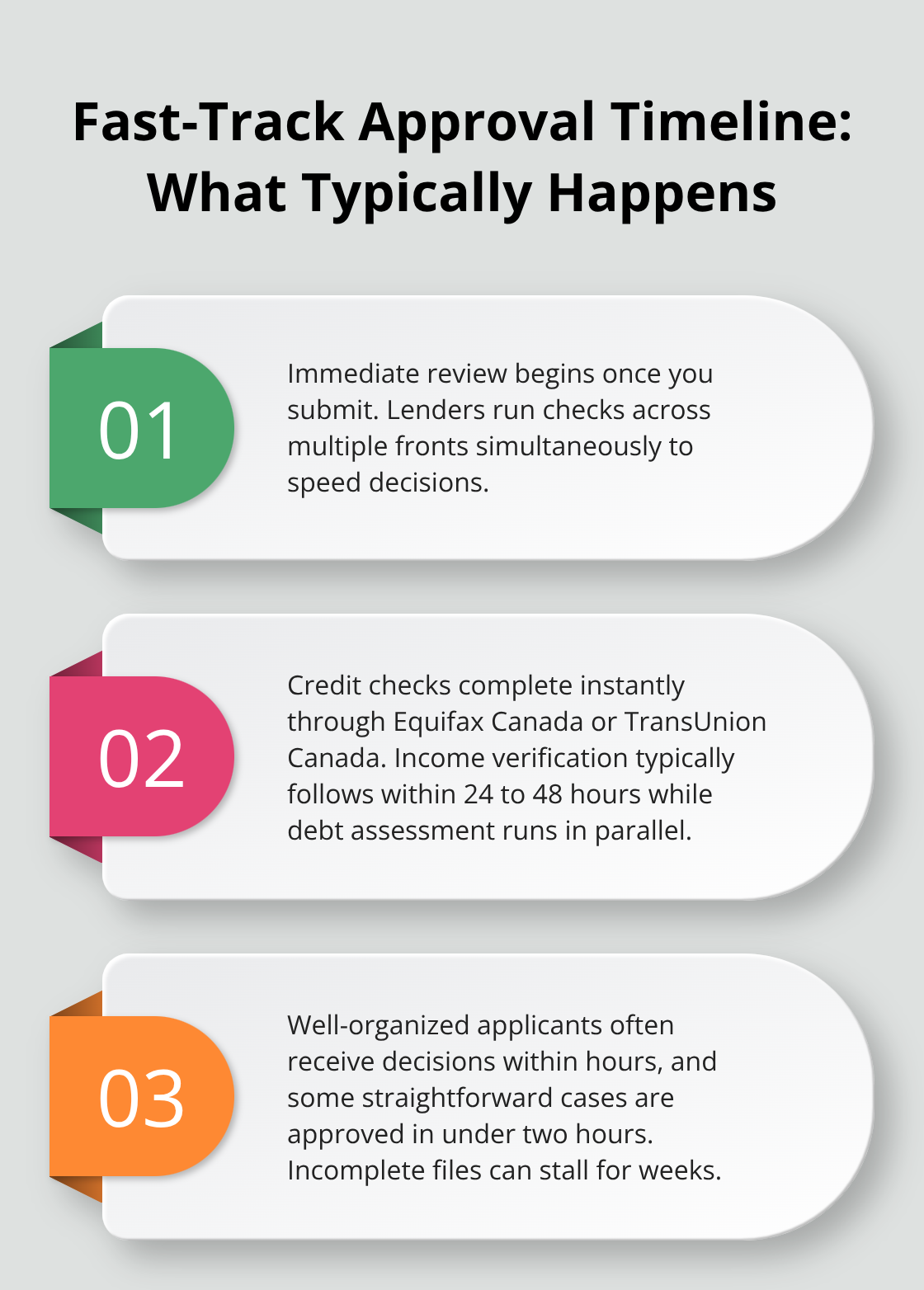
Banks commonly approve straightforward applications in under two hours if you provide all documents upfront, though more complex cases involving self-employment or unusual income sources take longer.
What Slows Down Your Application
The key friction point isn’t the lender’s speed-it’s your preparation. Missing a single document forces the lender to request it, which adds days to your timeline. Before applying, gather your government ID, recent pay stubs covering the last two months, last year’s tax return, and a list of your current debts with monthly payment amounts.
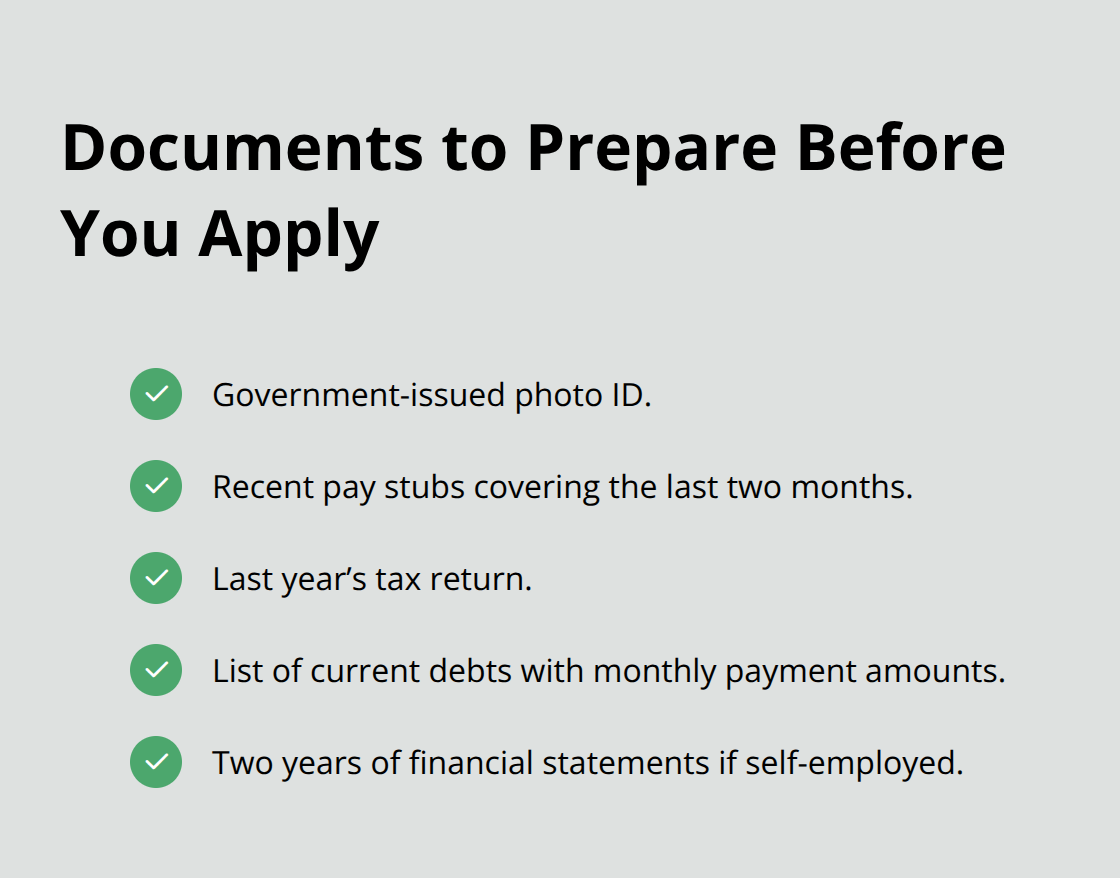
Self-employed applicants face tighter scrutiny and need financial statements ready to prove consistent earnings, so don’t expect approval within hours if you fall into this category.
How Quickly You Access Your Funds
Once approval comes through, funding speed separates the serious lenders from the rest. Ratehub indicates that most lenders deposit funds via direct deposit within one to three business days after you sign the loan agreement. Some online lenders push funds the same day, though this remains the exception rather than the rule. A few lenders offer the option to send payment directly to your creditors instead of depositing into your account, which matters if you’re consolidating debt. This approach eliminates the temptation to spend the money elsewhere and accelerates your debt payoff timeline.
Origination Fees and What You Actually Receive
Don’t assume every lender offers direct creditor payment-ask during your application process. The origination fee, which typically runs 0.5 to 8 percent according to Ratehub, either gets deducted from your loan amount or added to your balance. This distinction matters enormously. If you borrow $10,000 at a 3 percent origination fee, you either receive $9,700 or owe $10,300 depending on the lender’s structure. Always clarify this before signing, as it directly affects how much cash you actually access. Understanding these fee structures prepares you for the next critical step: evaluating which factors lenders weight most heavily when they make their final decision.
What Really Stops Loan Approvals in Canada
Payment History Matters More Than Your Score
Your payment history and payment record matter far more than your credit score alone, and this is where most applicants stumble without realizing it. Lenders scrutinize whether you paid bills on time consistently over the past two to three years, not just whether you have a 650 score today. A single late payment within the last six months can trigger automatic rejection from major banks, even if your overall score sits above 600. TransUnion data shows that payment patterns carry more weight than score alone because they reveal your actual behavior under financial pressure.
If you missed a payment three years ago but have been perfect since, mention this context in your application letter and explain what changed. Lenders also examine the age of your credit accounts and credit mix-a combination of credit cards, car loans, and lines of credit demonstrates you can manage multiple debt types responsibly. The practical takeaway is straightforward: if your payment record stays clean for the last 12 months, your approval odds improve dramatically regardless of past mistakes.
Secured Loans Open Different Approval Paths
Secured personal loans use collateral like your car or home equity and offer a completely different approval path. These loans carry lower interest rates because the lender’s risk drops when they hold collateral against default. The tradeoff is obvious-you risk losing your asset if you default.
This option works well if you own a home with equity or a paid-off vehicle and want significantly better rates, but only pursue it if you’re confident in repayment. The collateral requirement eliminates many applicants, but it transforms approval odds for those who qualify.
Different Lenders Use Different Standards
Online lenders and credit unions operate under completely different approval criteria than traditional banks, which is why your application might succeed with one lender and fail with another. Credit unions often accept lower credit scores and weigh community relationships more heavily than algorithms. Online lenders specializing in lower-credit borrowers approve applicants scoring below 600 regularly, though rates reflect that risk.
Each lender publishes their specific debt-to-income limits, minimum income requirements, and collateral preferences-information you must verify before submitting applications. Research thoroughly and apply strategically to your top two or three choices only.
Strategic Application Timing Protects Your Score
The difference between lenders matters more than you think, and finding the right match for your specific situation beats chasing the lowest advertised rate. Hard inquiries from multiple lenders stack up quickly and hurt your creditworthiness when you need it most. Space your applications across different lenders over several weeks rather than submitting them all at once. This approach protects your score while still allowing you to compare multiple offers and find the best fit for your financial situation.
Final Thoughts
Personal loan approval in Canada hinges on three core factors: your credit score and payment history, income stability, and debt-to-income ratio. The timeline moves fast when you organize your documents beforehand-lenders make decisions within hours to days if you submit complete paperwork upfront. Missing documents or incomplete information stretches the process unnecessarily, so gather your government ID, recent pay stubs, tax returns, and debt details before you apply.
Your next step after approval requires careful attention to the loan agreement, the origination fee structure, and whether you want funds deposited to your account or sent directly to creditors for debt consolidation. Direct creditor payment eliminates temptation and accelerates your payoff when you consolidate debt. Once funds arrive, stick to your repayment plan and make payments on time-this builds the payment history that matters most for future borrowing and strengthens your profile for personal loan approval Canada.
Improving your chances for future applications starts now, regardless of whether your current application succeeds or fails. Pay down credit card balances to lower your debt-to-income ratio, make every payment on time for the next 12 months, and check your credit report annually with Equifax Canada or TransUnion Canada to dispute any errors immediately. We at Financial Canadian help you build a strong digital presence to manage your financial information securely and navigate the approval process with confidence.











Leave a comment