
Mortgage rates in Canada fluctuate based on economic conditions, and even a small difference can cost you thousands over the life of your loan. At Financial Canadian, we know that comparing mortgage rates Canada is one of the smartest moves you can make before signing with a lender.
The right tools and strategies can help you find a rate that actually fits your financial situation. This guide walks you through everything you need to know.
How Mortgage Rates Work in Canada
Fixed vs. Variable Rates
Fixed-rate mortgages lock your interest rate for the entire term, so your payment stays the same whether rates rise or fall. Variable-rate mortgages tie your rate to the prime rate, which means your payment fluctuates when the Bank of Canada adjusts its policy rate. According to CMHC’s 2024 Mortgage Consumer Survey, 69% of Canadian mortgages are fixed-rate, showing that most borrowers prefer payment certainty over the potential savings of variable rates. The choice between them depends on your risk tolerance and financial situation, not on which one is objectively better.

If you can’t stomach payment increases, fixed is your answer. If you’re betting on rate cuts and can handle volatility, variable might work.
What Drives Your Mortgage Rate
Your rate isn’t plucked from thin air. Funding costs are the dominant factor-the cost Canadian banks pay to borrow money domestically and internationally. When the economy grows strongly, funding costs rise because demand for money increases, which pushes mortgage rates up. When growth weakens, the opposite happens. The Bank of Canada influences mortgage rates indirectly through its policy rate, which sat at 2.25% in January 2026 with the prime rate at 4.45%. Fixed rates respond differently; they track bond yields, which currently hover around 2.6% to 2.8%, limiting how far fixed rates can fall regardless of what the Bank of Canada does.
Your credit score matters too-borrowers with scores above 680 qualify for the best rates, while lower scores mean higher rates or access only to sub-prime lenders. Down payment size affects pricing as well; putting down less than 20% triggers mortgage default insurance, which can actually work in your favor by opening insured mortgage rates that are sometimes lower than uninsured ones.
Current Rate Environment
As of February 2026, the best insured 5-year fixed rate available in Canada is 3.69%, with 5-year variable rates at 3.35%. These represent a significant climb from pandemic lows-the lowest 5-year fixed ever recorded was 1.39% in early 2021, and the lowest variable was 0.85% in December 2021. Current rates reflect elevated bond yields and a more normalized economic environment. Rates change every few days as bond yields shift, so comparing options today doesn’t guarantee the same rates tomorrow.
If you’re serious about buying, a rate hold for up to 120 days protects you against near-term increases before closing, which gives you breathing room to finalize your purchase without watching rates climb. Understanding these dynamics positions you to make smarter decisions when you start comparing actual mortgage products and lenders.
Tools and Resources for Comparing Mortgage Rates
Online Comparison Platforms
Ratehub.ca and WOWA.ca stand out as the two platforms that deliver the fastest access to current mortgage rates across Canada. Ratehub updates rates in real-time across major banks and lenders, while WOWA aggregates rates three times daily from over 50 federal and provincial lenders and brokerages. As of February 2026, WOWA shows the lowest insured 5-year fixed rate at 3.69% and the lowest 5-year variable at 3.34%, while conventional rates sit slightly higher. Both platforms let you filter by province, down payment size, and mortgage type (insured, insurable, or uninsurable), so you avoid wasting time on irrelevant options.
Ratehub’s mortgage payment calculator, affordability calculator, and mortgage renewal calculator help you model different scenarios before you commit to anything. WOWA’s strength lies in its speed and breadth-updating three times daily means you catch rate drops faster than competitors. Neither platform charges you directly; they make money from lenders through referrals and advertising, which means the rate information is free and the comparison tools cost nothing.

Direct Bank Quotes and Negotiations
Going directly to banks for quotes gives you leverage in negotiations, but it’s inefficient without doing the legwork first. TD, RBC, Scotiabank, BMO, and CIBC all publish rates online, but shopping all five individually takes hours. A mortgage broker saves this time by accessing multiple lenders at once and often negotiating better rates through volume discounts. Brokers typically don’t charge you upfront; lenders pay them, though some brokers buy down rates further with their own discounts on prime mortgages.
Many borrowers skip the broker step entirely and accept whatever rate a bank quotes them, which often leaves thousands of dollars on the table. If your credit score exceeds 680 and your down payment is at least 20%, brokers will compete hard for your business. Start with WOWA or Ratehub to see current market rates, then contact a broker or call your bank directly to request a quote for your specific situation.
Securing Your Rate with a Hold
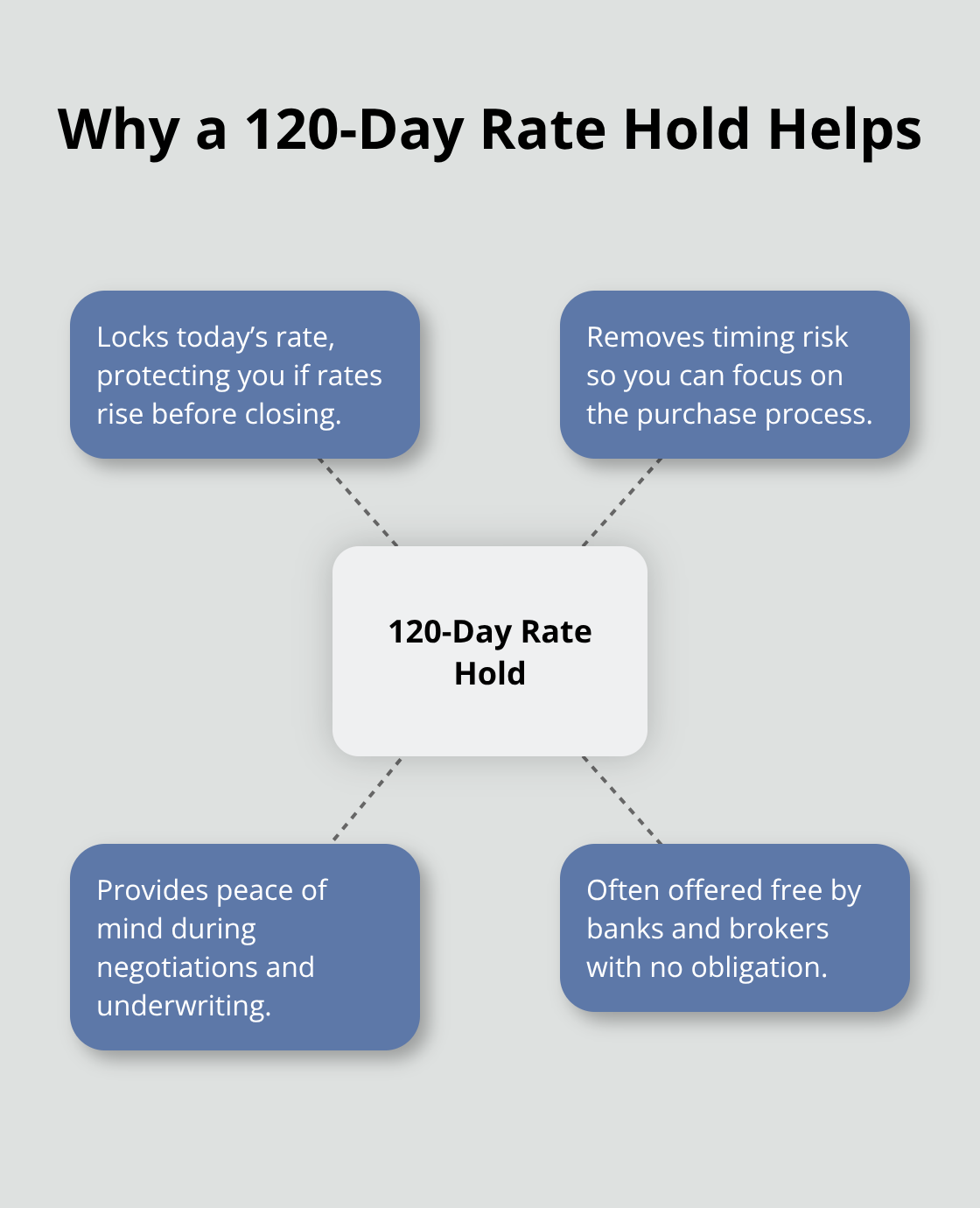
Request a rate hold of 120 days if you’re serious about moving forward-this locks your rate and gives you time to close without watching it climb. Most brokers and banks offer this for free, and it removes timing risk from the equation. Once you’ve compared platforms, gathered quotes, and secured a rate hold, you’re positioned to evaluate which lender actually delivers the best overall deal for your situation.
How to Lock in a Better Mortgage Rate
Build Your Credit Score First
Your credit score directly determines whether you qualify for the best rates available or get stuck paying a premium. Lenders view scores above 680 as low-risk borrowers and reward them with the lowest rates; a score between 620 and 679 means higher rates, while anything below 620 severely limits your options to sub-prime lenders charging significantly more. If your score sits below 680, spend three to six months improving it before you apply.
Pay down existing credit card balances to lower your credit utilization ratio. Make all payments on time without exception, and avoid opening new credit accounts during this period. These steps cost nothing and can save you tens of thousands in interest over a 25-year mortgage. Check your credit report for errors through Equifax or TransUnion; mistakes happen, and fixing them takes weeks but can boost your score instantly. Once your score hits 680 or higher, you qualify for prime mortgage rates instead of sub-prime alternatives.
Compare Multiple Lenders
Shopping around isn’t optional if you want the best deal-it’s the only way to find it. Contact at least three different lenders and request quotes for your exact situation: your down payment amount, purchase price, and desired amortization. Rates vary between lenders, and five-year fixed mortgage rates are typically 1.5% above the 5-year yield, though this spread can vary between 1% and 2%.
Mortgage brokers access 50 or more lenders simultaneously, so one broker conversation often beats calling five banks individually. They negotiate on your behalf and can sometimes buy down rates further using volume discounts, and you pay nothing upfront since lenders compensate them. Once you’ve gathered three quotes, use that information to negotiate directly with your bank if you prefer working with them; mention the lower rates you’ve found elsewhere and ask them to match or beat the offer.
Lock Your Rate Immediately
Request a rate hold of up to 120 days immediately after you choose your lender-this locks your rate at no cost and removes the risk of rates climbing before you close. A rate hold gives you genuine peace of mind through the purchase process and protects you against market volatility during the final stages of your transaction.
Final Thoughts
Finding the best mortgage rate in Canada requires three concrete actions: compare mortgage rates across multiple lenders, improve your credit score to qualify for prime rates, and lock your rate immediately once you’ve chosen your lender. The difference between shopping around and accepting the first offer you receive can easily exceed $50,000 over the life of your mortgage. Comparison tools and brokers make this process far less time-consuming than it once was.
Start with WOWA or Ratehub to see current market rates in your province, then request quotes from at least three different sources-whether that’s banks, brokers, or both. A mortgage broker accesses 50 or more lenders simultaneously, which often beats calling banks one by one. Your credit score determines whether you qualify for the best rates available or pay a premium; if your score sits below 680, spend three to six months improving it before you apply (pay down credit card balances, make all payments on time, and check your credit report for errors).
Once you’ve gathered quotes and chosen your lender, request a rate hold of 120 days immediately to lock your rate at no cost and remove timing risk from your purchase process. We at Financial Canadian believe that taking control of your mortgage search through comparison and negotiation is one of the smartest financial decisions you can make. Visit Financial Canadian to explore more resources that support your financial journey.










Leave a comment