
Foreign property buyers face complex tax obligations that can add thousands to their purchase costs. Tax on foreigners buying property in Canada varies significantly by province and municipality.
We at Financial Canadian break down these requirements to help you avoid costly mistakes. Understanding these rules before you buy can save you substantial money and legal complications.
What Taxes Do Foreign Property Buyers Pay in Canada
Canada imposes a three-tier tax structure on foreign property buyers that can add 60% or more to your purchase price. The federal government banned most foreign residential property purchases through January 1, 2027, but exemptions exist for work permit holders with permits valid for 183 days or more and international students who meet specific criteria.
Provincial Tax Rates Hit Foreign Buyers Hard
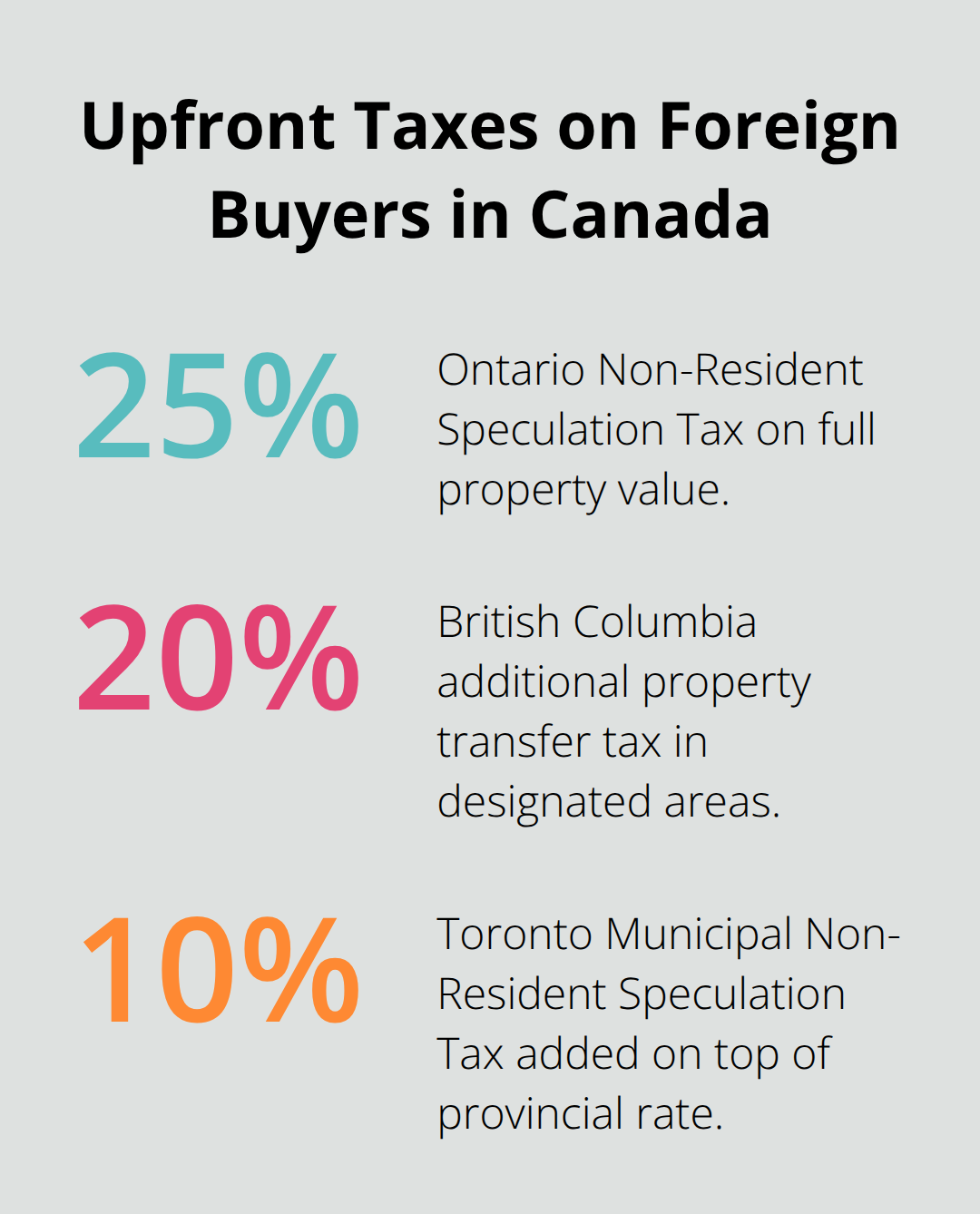
Ontario charges a 25% Non-Resident Speculation Tax on the entire property value, regardless of your ownership percentage. If you buy a $1 million property with a Canadian partner who owns 50%, you still pay the full $250,000 tax. British Columbia imposes a 20% property transfer tax in designated areas, but only on your proportionate share.
You can receive rebates in both provinces if you become a permanent resident within specific timeframes (four years in Ontario and one year in BC). The rebate application process requires you to occupy the property as your principal residence and meet strict documentation requirements.
Municipal Taxes Add Another Layer
Toronto adds a 10% Municipal Non-Resident Speculation Tax on top of the provincial rate, creating a combined 35% tax burden. Vancouver and other BC municipalities may impose additional fees. These municipal taxes apply immediately at closing and cannot be deferred.
Exit Taxes Make Sales More Expensive
The withholding tax for non-resident sellers increased to 35% of the gross sale price as of January 1, 2025. This tax applies to the full sales price unless you obtain a Certificate of Compliance in advance (which can take over six months to process). Non-residents must file Canadian tax returns to report property sales and potentially recover excess withholding amounts.
Down Payment Requirements Strain Cash Flow
Non-residents need minimum 35% down payments compared to 5-20% for residents, further increasing upfront costs. Canadian lenders require extensive documentation and typically offer higher interest rates to foreign buyers. These financing restrictions significantly impact your purchasing power and investment returns.
Tax planning strategies can help you minimize these substantial costs and navigate the complex compliance requirements that foreign buyers face.
How Can Foreign Buyers Reduce Property Taxes
Smart timing and structure choices cut your tax burden by tens of thousands of dollars. Purchase timing matters most for international students who must file five years of tax returns before they buy property. Start this process immediately after you arrive in Canada to accelerate your eligibility timeline.
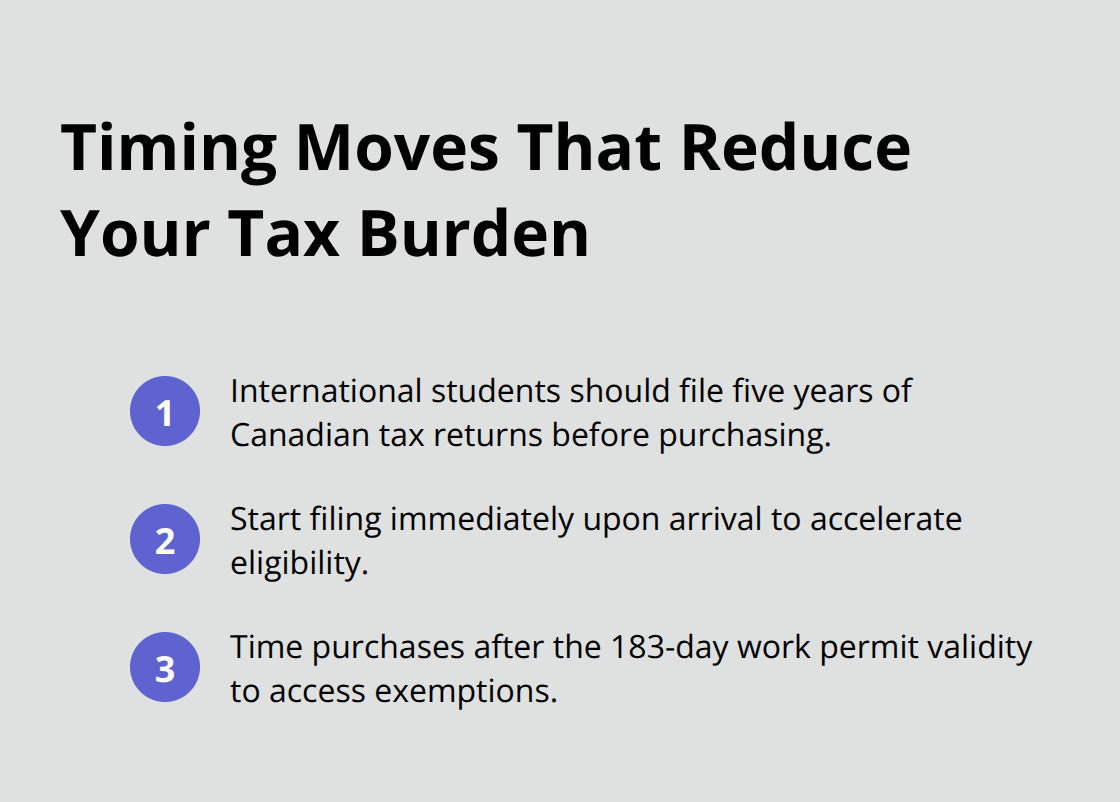
Work permit holders should time purchases after their 183-day validity threshold to access exemptions from the federal foreign buyer ban.
Corporate Ownership Structures Offer Limited Benefits
Canadian corporations provide no tax advantages for foreign property buyers and create additional compliance burdens. Corporate ownership triggers the same foreign buyer taxes as individual ownership, plus annual filing requirements and potential deemed disposition rules. Trusts face even stricter regulations under recent tax changes (making them unsuitable for most foreign buyers). The Canada Revenue Agency scrutinizes these structures heavily, often resulting in reassessments that eliminate any perceived benefits.
Cross-Border Tax Specialists Are Non-Negotiable
Generic tax advisors lack the specialized knowledge to handle foreign buyer situations effectively. Cross-border tax specialists understand the interaction between Canadian taxes and your home country’s tax system, which prevents double taxation scenarios that can cost you thousands. These professionals can obtain Certificates of Compliance before property sales to reduce withholding tax from 35% of the gross sale price to 35% of the capital gain (a difference that can save you hundreds of thousands on high-value properties). You should expect to pay approximately $4,000 for combined compliance services, but this investment typically saves 10 times that amount through proper structuring and timing strategies.
Documentation Requirements Create Common Pitfalls
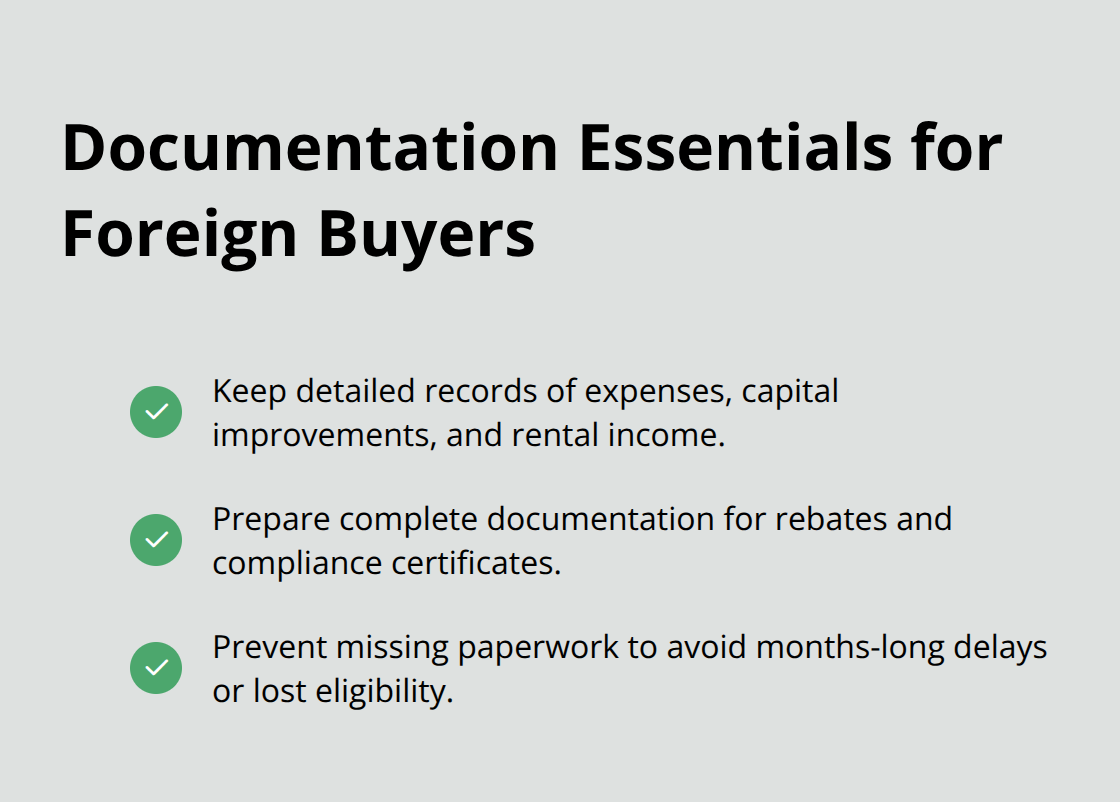
Foreign buyers who fail to maintain proper documentation face severe penalties and missed opportunities for tax relief. You must keep detailed records of all property-related expenses, capital improvements, and rental income from day one of ownership. The CRA requires extensive documentation for rebate applications and compliance certificates, and missing paperwork can delay processing by months or eliminate your eligibility entirely.
Most foreign buyers make critical errors that cost them thousands in unnecessary taxes and penalties, which we’ll examine in detail next.
What Tax Mistakes Cost Foreign Buyers the Most
Foreign buyers lose an average of $50,000 to $200,000 through preventable tax errors that the Canada Revenue Agency aggressively pursues. The most expensive mistake involves rental income failures that trigger automatic penalties of 25% of gross rental income plus compound interest from the first unreported payment.
Non-residents who rent their Canadian properties must remit withholding tax monthly and file annual returns, yet 73% fail to comply according to CRA audit data from 2023. This creates a snowball effect where penalties accumulate faster than the original tax debt, often doubling the amount owed within three years.
Residency Status Confusion Triggers Massive Tax Bills
The CRA uses a facts-based residency test that considers all relevant facts in your case, including residential ties with Canada and the length of time spent in the country. The agency focuses on residential ties like property ownership, family location, and time spent in Canada. Foreign buyers who spend more than 183 days annually in Canada often become tax residents without realizing it, which subjects their worldwide income to Canadian taxation.
International students face particular risk because their study permits create strong residential ties that can trigger tax residency even with minimal time in Canada. Work permit holders who maintain homes in both countries frequently misinterpret their status, which leads to years of unfiled returns and penalties that can exceed $25,000 per year.
Capital Gains Planning Failures Create Exit Tax Disasters
The 35% withholding tax on property sales catches foreign sellers off-guard because most assume they can handle taxes after closing. Properties that appreciate significantly create situations where sellers owe hundreds of thousands in withholding tax that must be paid at closing (often forcing rushed sales or emergency financing).
Sellers who fail to request Certificates of Compliance before closing lose their opportunity to reduce withholding tax to 35% of the gain rather than 35% of the gross sale price. The CRA now takes over six months to process these certificates, which makes advance planning absolutely essential for any foreign owner who considers a sale within the next year.
Final Thoughts
Tax on foreigners buying property in Canada creates substantial financial obligations that demand careful planning and professional guidance. The combined federal restrictions, provincial taxes up to 25%, municipal surcharges, and 35% withholding taxes on sales can add hundreds of thousands to your total costs. Professional tax advice from cross-border specialists becomes essential given the complexity of these regulations and severe penalties for non-compliance.
The $4,000 investment in proper guidance typically saves ten times that amount through strategic timing and documentation. You must verify your eligibility under current federal restrictions, calculate total tax obligations (including provincial and municipal rates), and establish relationships with qualified tax professionals. Document all expenses from day one and understand your ongoing compliance requirements for rental income and annual filings.
We at Financial Canadian provide comprehensive web design services that help businesses establish strong digital presence through responsive designs and SEO optimization. Success in Canadian real estate investment requires the same attention to professional guidance and strategic planning that drives effective business growth. Foreign property buyers who work with qualified professionals navigate these complex tax requirements more successfully than those who attempt to handle compliance alone.










Leave a comment