
Getting a personal loan in Canada means navigating different lenders, interest rates, and terms. The right choice depends on your financial situation and borrowing needs.
At Financial Canadian, we’ve created this personal loans Canada guide to help you compare your options side by side. You’ll learn what separates unsecured loans from secured ones, where to find competitive rates, and how to spot hidden fees before you commit.
Types of Personal Loans Available in Canada
Unsecured Personal Loans: No Collateral Required
Unsecured personal loans dominate Canada’s market because they don’t require collateral-your approval depends on credit score, income, and debt-to-income ratio. Major banks like Scotiabank, BMO, CIBC, TD, and RBC advertise competitive rates for well-qualified borrowers, while online lenders such as Spring Financial, goPeer, and Mogo offer broader ranges depending on risk profile. Origination fees typically range from 0.5% to 8% of the loan amount.
Unsecured loans work best if you have solid credit (600+ score) and stable income, but they carry higher interest costs than secured alternatives because lenders absorb more risk. Loan amounts vary significantly-Spring Financial caps at $35,000, Scotiabank reaches $75,000, and CIBC goes up to $200,000-so your borrowing capacity depends on the lender you choose. Most terms run 6 to 60 months, meaning a shorter term cuts total interest paid but raises your monthly payment.
Secured Personal Loans: Lower Rates With Collateral
Secured personal loans flip the equation by requiring collateral, typically a vehicle or home equity, which lets lenders offer lower rates and higher amounts. This structure appeals to borrowers with weaker credit or those seeking larger sums, but defaulting means you lose the asset you pledged. The trade-off is clear: you sacrifice security for better pricing and access to capital.
Lines of Credit: Flexibility for Variable Needs
A line of credit operates differently-it functions as ongoing access to funds rather than a lump sum, letting you draw what you need and pay interest only on the amount used. This flexibility makes lines of credit ideal for variable expenses or emergencies, though rates often float, meaning your payment shifts if the Bank of Canada adjusts its overnight rate. Rate movements directly affect floating-rate borrowing costs.
Choosing the Right Structure for Your Situation
When you select between these three structures, assess whether you can afford collateral risk, need a one-time lump sum or ongoing access, and whether fixed predictability matters more than flexibility. Non-mortgage debt in Canada reached $673 billion in Q3 2025 according to TransUnion Canada, with average non-mortgage balances climbing to $27,100 per consumer-context showing that personal loan demand remains strong as Canadians manage broader debt loads. Understanding which loan type matches your circumstances sets the foundation for the next critical step: comparing rates, fees, and terms across lenders to lock in the best deal.
How to Compare Personal Loans and Choose the Right One
Understanding Interest Rates and APR
The gap between a great personal loan deal and a mediocre one often comes down to how thoroughly you compare three specific numbers: the APR, the total fees, and the monthly payment under different term lengths. APR is the only figure that matters when comparing cost across lenders because it includes both interest and origination fees, giving you the true annual cost. Personal loan APR varies significantly across lenders, with major banks typically offering competitive rates for well-qualified borrowers, while online lenders show much wider ranges. The spread tells you something important: if you have solid credit and income, a bank loan beats an online lender almost every time. If your credit score sits below 600 or your debt-to-income ratio is high, online lenders become your realistic option, but you’ll pay substantially more.
Canada’s overnight rate held at 2.25% in January 2026 according to the Bank of Canada, which means floating-rate loans won’t shift dramatically in the near term. Fixed rates lock in predictability if you value budgeting certainty over potential savings from rate drops.

Evaluating Fees and Hidden Costs
Origination fees range from 0.5% to 8% of the loan amount, and some lenders deduct this from your proceeds while others add it to your balance-this distinction affects how much cash you actually receive. Ask each lender for a complete breakdown: origination fee, any prepayment penalties, and whether they charge fees for late payments. Some lenders allow prepayment without penalties, meaning you can pay extra whenever you have surplus cash to shrink the total interest bill, while others restrict this-always confirm the prepayment terms before signing. Refinancing becomes an option if your credit improves or rates drop significantly, but watch for prepayment penalties on your current loan and origination fees on the new one-sometimes the costs eliminate any savings.
Assessing Repayment Terms and Flexibility
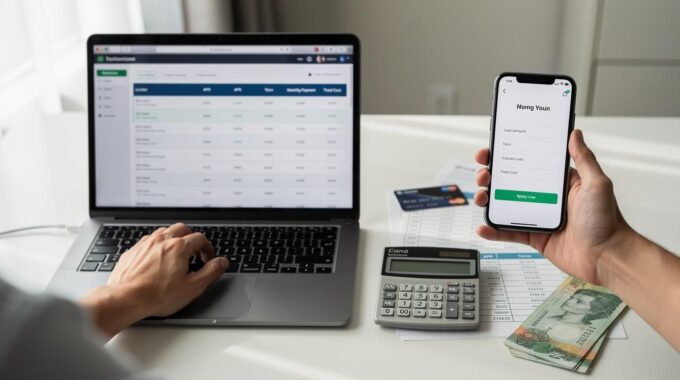
Term length directly controls your monthly payment and total interest paid, and this choice hinges on your cash flow situation rather than preference. A shorter term-say 24 months instead of 60 months-cuts total interest substantially but demands higher monthly payments, while a longer term eases monthly pressure but costs significantly more in aggregate interest. Use a loan comparison tool to generate personalized offers in roughly 60 seconds, which shows you actual APRs and monthly payments side by side rather than guessing.
Your debt-to-income ratio is the gatekeeping factor most lenders scrutinize: the lower this number, the better terms you’ll receive and the easier approval becomes. If you’re comparing secured versus unsecured options, remember that secured loans typically offer 2% to 5% lower APRs because the lender holds collateral, but that advantage vanishes if you default and lose your asset.
Preparing Your Application
Check your credit reports with Equifax Canada or TransUnion Canada before applying; hard credit inquiries cause small temporary score dips, so batch your applications within two weeks to minimize damage. The Bank of Canada’s rate environment and broader economic conditions affect what lenders offer, so locking in a fixed rate when you find competitive terms makes sense rather than waiting for a potentially better deal that may never arrive.
Once you’ve narrowed your options based on rates, fees, and terms that fit your budget, the next step involves identifying which lender type-banks, online platforms, or credit unions-aligns best with your approval odds and timeline.
Where to Get a Personal Loan in Canada
Banks: Lowest Rates for Qualified Borrowers
Banks dominate Canada’s lending landscape because they offer the lowest rates for borrowers with solid credit and income, but approval timelines stretch to 5-10 business days and underwriting follows rigid criteria that reject applicants falling outside their comfort zone. Scotiabank, BMO, CIBC, TD, and RBC all advertise starting rates between 6% and 10% APR for well-qualified borrowers, making them your first stop if your credit score exceeds 650 and your debt-to-income ratio stays below 40%. These institutions require minimum income thresholds-CIBC specifies 17,000 CAD gross annual income-and they scrutinize employment stability carefully. If you meet their standards, a bank loan beats alternatives on cost almost every time.

If you don’t fit their mold, applying wastes time and triggers a hard credit inquiry that temporarily damages your score. The rigid approval process means banks reject many applicants who would qualify elsewhere, so assess your eligibility honestly before submitting an application.
Online Lenders and Fintech Platforms: Speed Over Cost
Online lenders and fintech platforms operate on speed and flexibility rather than lowest rates. Spring Financial charges 9.99% to 34.95% APR, goPeer ranges 8.99% to 34.99%, Mogo spans 9.90% to 46.96%, and Fora Credit sits at 19.90% to 34.90%, meaning your actual rate depends entirely on credit history and risk profile-not on arbitrary income minimums. These platforms can approve you within 24 hours and fund within 2-3 business days, which matters when you face time-sensitive expenses.

The trade-off is brutal: you’ll pay substantially more in interest than a bank would charge, sometimes double or triple the rate. Use online lenders when banks reject you or when speed outweighs cost. The flexibility in underwriting opens doors for borrowers with weaker credit or unconventional income sources that traditional banks won’t touch.
Credit Unions and Alternative Lenders: Middle Ground Options
Credit unions occupy middle ground by offering rates between banks and online platforms while maintaining more flexible underwriting than major banks, though availability depends on your membership eligibility and which union you join. Private credit markets are expanding globally and Canada is no exception, with non-bank lenders projected to reach $3 trillion globally by 2028 according to industry forecasts. This growth means more alternatives exist for borrowers who don’t qualify for traditional bank products.
Research any non-bank lender’s reputation thoroughly, confirm they’re registered with provincial financial regulators, and avoid lenders charging above 35% APR-Canada’s criminal rate ceiling that took effect in 2025. More predatory operators lurk in the market as private credit expands, so due diligence protects you from exploitative terms.
Home Equity Lines of Credit: An Alternative for Homeowners
If you own a home and need flexibility, a home equity line of credit offers lower rates than personal loans because it’s secured by your property, but this option only works if you have built equity. This structure provides ongoing access to funds at rates typically 2-5 percentage points below unsecured personal loans, making it attractive for larger borrowing needs or ongoing expenses.
Your approval odds and loan cost ultimately depend on choosing the lender type that matches your credit profile and timeline rather than chasing the single lowest advertised rate.
Final Thoughts
Choosing the right personal loan requires you to balance cost, approval odds, and timeline simultaneously. Your credit score and debt-to-income ratio determine which lenders will accept you and what rates they’ll offer, so assess these numbers honestly before applying. If your credit exceeds 650 and your DTI stays below 40%, banks deliver the lowest rates-typically 6% to 10% APR, while online lenders and credit unions become realistic options for those outside these ranges, though you’ll pay more in interest.
Pull your credit reports from Equifax Canada or TransUnion Canada and calculate your exact debt-to-income ratio before submitting applications. Batch your applications within two weeks to minimize credit score damage from multiple hard inquiries, then compare APR figures across at least three lenders rather than advertised rates. Confirm prepayment terms, origination fees, and whether the lender allows extra payments without penalties, as these details shift your total borrowing cost significantly.
The Canadian lending landscape continues shifting as private credit expands and online platforms gain market share, creating more options for borrowers who don’t fit traditional bank criteria. We at Financial Canadian help you navigate this complexity through transparent loan comparison tools that display actual APRs and monthly payments side by side. Start your application process today with the lender type that matches your credit profile and timeline, then monitor your loan performance to identify refinancing opportunities if rates drop or your credit improves.









Leave a comment