
When you need cash fast in Canada, a same day loan calculator helps you see exactly what you’ll pay before you apply. Interest rates, fees, and repayment terms vary wildly between lenders, and most borrowers have no idea what they’re actually getting into.
At Financial Canadian, we built this guide to show you how these calculators work and what numbers actually matter. The right tool can save you hundreds of dollars.
What Goes Into a Same Day Loan Calculator
A same day loan calculator strips away the mystery by forcing you to input the exact numbers that determine what you’ll actually pay. Start with your loan amount-whether that’s $400 or $5,000-and the repayment period you’re considering. From there, the calculator multiplies your principal by the lender’s fee structure to show you the total cost before a single dollar changes hands.
How Fees Translate to Real Numbers
For payday loans specifically, fees are often expressed as a per-$100 borrowed amount. If a lender charges $15 per $100 borrowed on a $1,000 loan, that’s $150 in fees alone, bringing your total repayment to $1,150. The calculator then converts these fees into an annual percentage rate, which reveals the true cost-that same $400 borrowed for 14 days with $35 in fees translates to roughly 228% APR. This APR calculation happens because payday lenders charge an upfront fee on a short term, which annualizes to an astronomical rate.
Personal installment loans work differently. With terms typically spanning 6 months to 5 years, the calculator spreads costs across monthly payments, showing you both the monthly amount and total interest paid over the loan’s life. The key advantage is visibility: you see exactly how extending a 3-year loan to 5 years increases your total interest cost, letting you make trade-offs between affordability and savings.
How Credit Score Changes Your Numbers
Your credit score determines which interest rate the calculator applies to your estimate. Well-qualified borrowers at major banks typically qualify for personal loan rates starting around 6% to 10% APR, while typical rates across the market range from 6% to 35% APR depending on your profile. A credit score around 600 is often considered acceptable for reasonable rates, though higher scores unlock better terms.
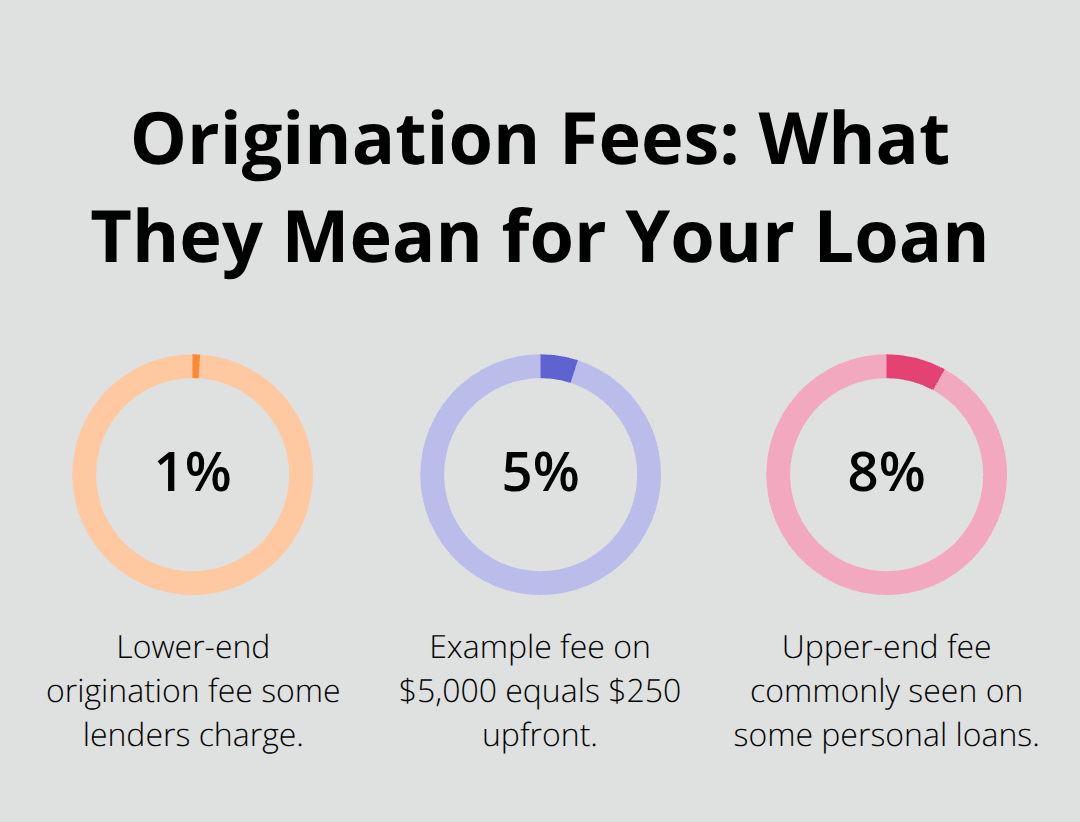
Before using any calculator, pull your credit score from Equifax Canada or TransUnion Canada so your estimate matches what lenders will actually offer. Many calculators also account for origination fees, which commonly run from 0.5% to 8% of the loan amount-this fee either reduces the cash you receive or gets added to your balance, significantly affecting your real costs. A $5,000 personal loan with a 5% origination fee means you pay $250 upfront, so the calculator should show you’re actually borrowing $5,250 in total cost.
Breaking Down What You’ll Actually Repay
The most valuable output from a same day loan calculator is the total cost comparison across different lender offers. Input the same loan amount and term into multiple lenders’ calculators and you’ll see vastly different totals. One lender might offer $1,000 at 8% APR over 3 years, totaling roughly $1,244 in interest and fees combined. Another might charge 15% APR on the same terms, pushing your total to $1,478. That $234 difference matters, and calculators make it visible instantly.
Some calculators also show you an estimated payoff date and what happens if you make extra payments toward principal-though prepayment terms vary by lender, and some impose penalties for paying early. Fixed-rate loans keep your monthly payment consistent throughout the term, while variable-rate loans move with the Bank of Canada prime rate and can change monthly. The calculator should reflect whether your estimate is fixed or variable, since that affects your long-term planning.
Comparing Loan Types Side by Side
Different loan products produce dramatically different calculator outputs. A payday loan shows you fees upfront and an astronomical APR that reflects the short term. A personal installment loan spreads costs across months, making the monthly payment feel manageable even though total interest compounds over time.
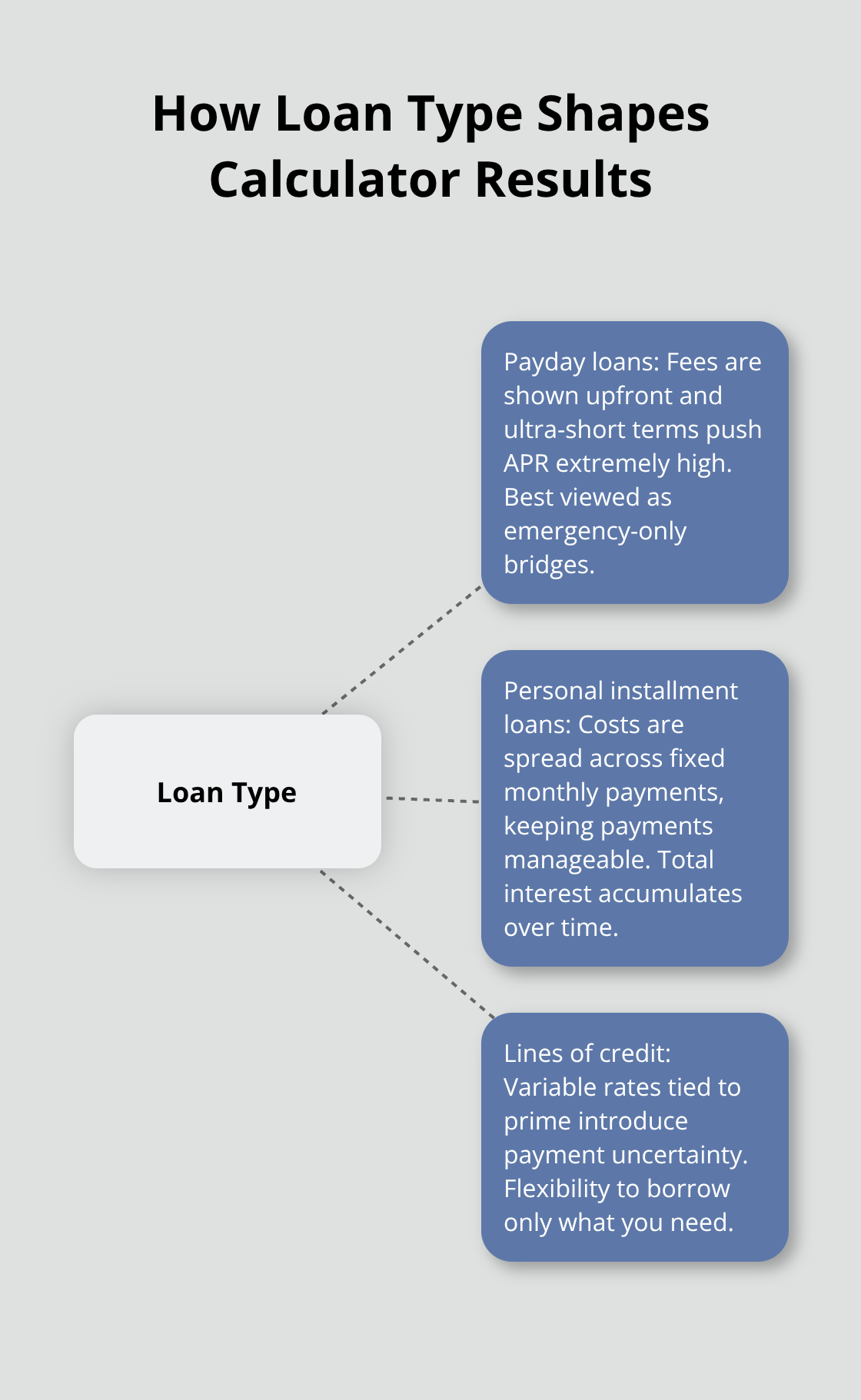
A line of credit calculator might show variable rates tied to prime, adding uncertainty to your projections. Understanding which calculator you’re using-and what loan type it represents-matters far more than the raw numbers alone. The next section examines the specific loan products available to Canadian borrowers and how each calculator handles their unique fee structures.
Same-Day Loan Products Available in Canada
Payday Loans: Speed Over Cost
Payday loans move fastest but cost the most. You can have cash in your account within hours, sometimes same-day, but the price is brutal. A payday loan calculator shows exactly why: borrow $400 for 14 days with $35 in fees and you’re looking at 228% APR. The calculator converts that upfront fee into an annualized rate, which reveals the true expense of ultra-short terms. Most payday lenders in Canada charge between $15 and $20 per $100 borrowed, meaning a $1,000 payday loan costs $150 to $200 in fees alone.
The calculator forces you to see the total repayment amount before you commit, not just the fee itself. Payday loans work only as emergency bridges, never as regular borrowing. If you’re considering one, the calculator should show you the total cost, then push you toward alternatives.
Personal Installment Loans: Reasonable Rates Over Time
Personal installment loans offer completely different math. You’ll wait a few business days for approval instead of hours, but your monthly payments stay manageable and the APR stays reasonable. Typical personal loan APRs in Canada range from 6% to 36%, with an average of 12.41%.
A $5,000 personal loan at 8% APR over 3 years costs roughly $1,244 in total interest, compared to a payday loan’s astronomical percentage. The calculator spreads this across 36 monthly payments, making the real cost visible month by month. Origination fees typically run from 0.5% to 8% of the loan amount, so a $5,000 loan with a 5% origination fee adds $250 upfront.
Lines of Credit: Flexibility With Variable Rates
Lines of credit work differently still, offering variable rates tied to the Bank of Canada prime rate. These calculators show you uncertainty-your payment could change if prime moves-but they also offer flexibility to borrow only what you need when you need it. The calculator should clearly label whether your estimate uses a fixed or variable rate, because that distinction changes everything about your long-term planning.
Each loan product produces dramatically different calculator outputs. A payday loan shows you fees upfront and an astronomical APR that reflects the short term. A personal installment loan spreads costs across months, making the monthly payment feel manageable even though total interest compounds over time. A line of credit calculator might show variable rates tied to prime, adding uncertainty to your projections. Understanding which calculator you’re using-and what loan type it represents-matters far more than the raw numbers alone. The next section examines the specific factors that shift your costs up or down, regardless of which loan product you select.
Key Factors That Affect Your Loan Costs
How Your Credit Score Shifts Interest Rates
Your credit score is the single biggest lever that moves your interest rate up or down, and most borrowers underestimate how dramatically it matters. A good credit score can give you better odds of approval on loans and help you secure better loan terms, like lower interest rates. Well-qualified borrowers at major banks typically qualify for personal loan rates starting around 6% to 10% APR, while the broader market spans 6% to 35% depending on your profile.
Pull your credit score from Equifax Canada or TransUnion Canada before using any calculator so your estimate matches what lenders will actually offer. The difference between a 6% and 12% APR on a $5,000 personal loan over 3 years amounts to roughly $468 in total interest-that’s money you keep by improving your score before applying.
Debt-to-income ratio also matters heavily; lenders scrutinize how much of your monthly income already goes to debt payments. A lower DTI generally yields better terms, which means paying down existing debt before applying for a same day loan can actually improve your approval odds and rates.
How Loan Duration Affects Total Interest
Loan duration creates a false trade-off that calculators expose immediately. Extending a 3-year personal loan to 5 years drops your monthly payment but increases total interest paid significantly-sometimes by 40% or more over the loan’s life. A $5,000 loan at 8% APR costs roughly $1,244 in total interest over 3 years but $2,072 over 5 years, a difference of $828 that most borrowers never see until they compare calculator outputs side by side.
Origination fees typically range from 1% to 10% of the total loan amount, and here’s where most people get blindsided: a $5,000 personal loan with a 5% origination fee means you pay $250 upfront, either reducing the cash you actually receive or adding to your balance. The calculator must show you the real amount you’ll borrow after fees apply, not just the principal you requested.
Fixed Rates, Variable Rates, and Prepayment Terms
Prepayment options vary wildly by lender, and some impose penalties for paying early while others allow extra payments without cost-this matters if your financial situation improves and you want to accelerate payoff. Fixed-rate loans keep your monthly payment consistent throughout the term, while variable-rate loans move with the Bank of Canada prime rate and can change monthly, adding uncertainty to your long-term planning.
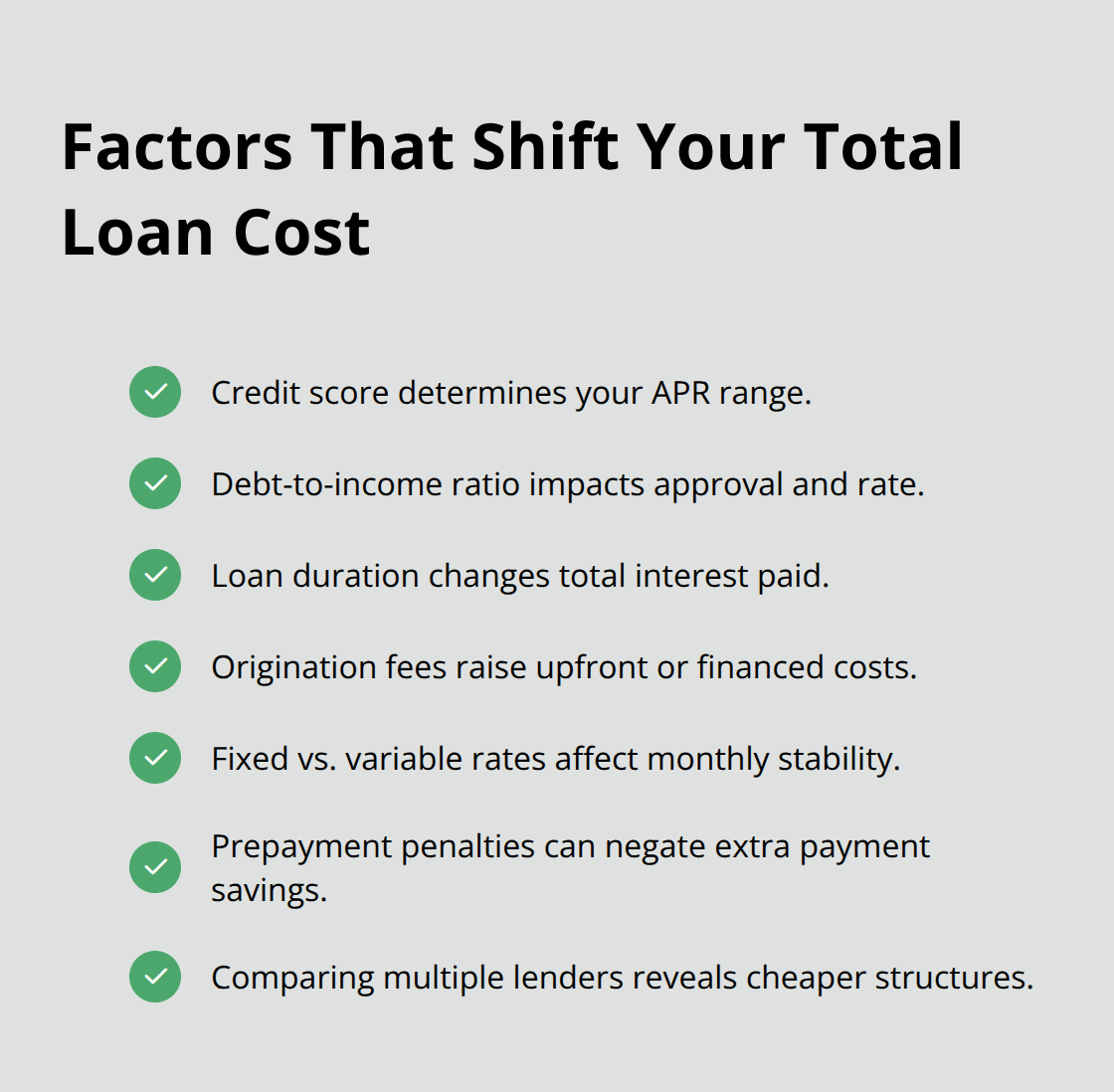
Run your estimate through multiple lenders’ calculators with the same loan amount and term, and you’ll see vastly different totals that reveal how duration and fee structures compound differently across products. The calculator output shows you exactly which loan structure fits your situation and which one costs significantly more.
Final Thoughts
A same day loan calculator Canada shows you the real cost before you commit, and that visibility changes everything. You’ve now seen how fees compound into APRs, how credit scores shift your rates, and how loan duration affects total interest. The calculator removes guesswork from borrowing decisions.
The right loan depends on your situation. If you need cash within hours and can handle brutal fees, a payday loan calculator shows you’ll pay roughly 228% APR on a two-week term. If you can wait a few business days, a personal installment loan calculator reveals rates between 6% and 35% APR spread across manageable monthly payments. A line of credit calculator offers flexibility but adds uncertainty through variable rates tied to the Bank of Canada prime.
Before applying anywhere, pull your credit score from Equifax Canada or TransUnion Canada and run your numbers through multiple lenders’ calculators using the same loan amount and term. You’ll see exactly which lender costs less and which terms fit your budget. Pay attention to origination fees, prepayment penalties, and whether rates are fixed or variable, because these details shift your total cost significantly. When you know the exact cost upfront, you can compare offers with confidence and reject anything that doesn’t match your financial reality-we at Financial Canadian built our loan comparison resources to help you make informed decisions across all your financial needs.










Leave a comment