
Buying property in Canada doesn’t automatically grant you the right to live there permanently. The question “if I buy property in Canada can I live there” requires understanding complex immigration pathways beyond real estate ownership.
We at Financial Canadian have guided countless property buyers through the transition from ownership to residency. This process involves specific documentation, timelines, and legal requirements that many new property owners overlook.
Understanding Immigration Pathways for Property Owners
Express Entry and Property Investment Strategy
Property ownership strengthens your Express Entry profile through the Comprehensive Ranking System but doesn’t grant direct points. The Federal Skilled Worker Program requires 67 points across education, language, work experience, age, arranged employment, and adaptability factors. Your Canadian property demonstrates local ties under adaptability criteria and adds 5 points maximum. Statistics Canada data shows Express Entry takes 6 months on average once you receive an invitation to apply. The Provincial Nominee Program offers faster pathways through provinces like Ontario and British Columbia, with nomination times from 2-6 months plus 6 months federal processing.
Family and Business Immigration Routes
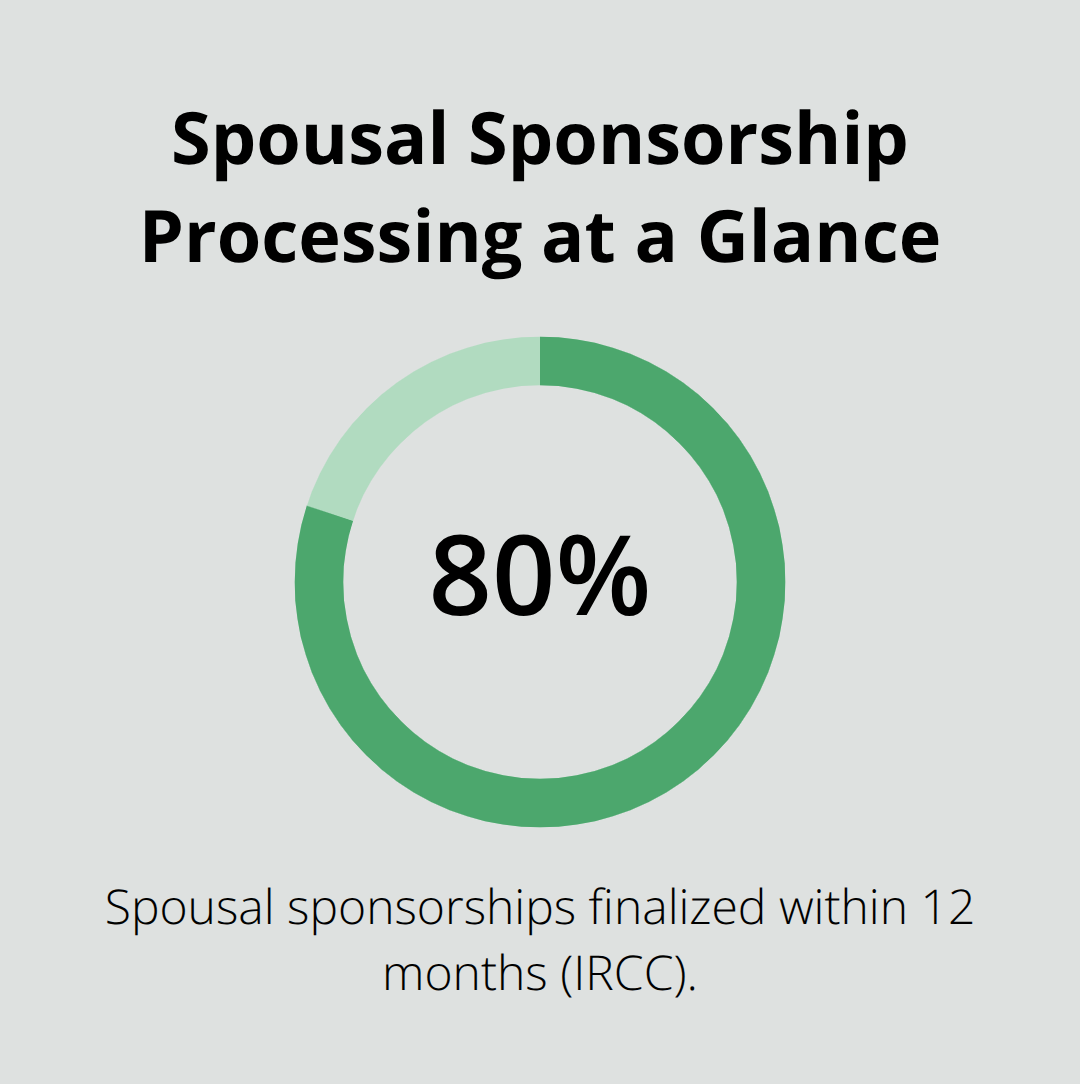
Family sponsorship remains the most direct path if your spouse or common-law partner holds Canadian citizenship or permanent residence. However, if a spouse or partner sponsored you, you can’t sponsor a new spouse or partner within five years of becoming a permanent resident. Immigration, Refugees and Citizenship Canada processes spousal sponsorship applications within 12 months for 80% of cases. The Start-Up Visa Program requires designated organization support but allows permanent residence for entrepreneurs with approved business concepts (processing takes 12-16 months on average).
Quebec’s Investor Immigration Program demands CAD 1.2 million investment plus CAD 200,000 non-refundable contribution, with French language proficiency at level 7 minimum. Self-employed persons programs target farmers, artists, and athletes with relevant experience and intent to create employment in Canada.
Documentation Requirements and Timeline Reality
Canadian immigration requires extensive documentation preparation that takes 3-6 months before application submission. Language tests through IELTS or CELPIP cost CAD 400-500 and remain valid for 2 years. Educational Credential Assessment through designated organizations costs CAD 200-500 and takes 7-20 weeks. Police certificates from every country where you lived 6+ months since age 18 require 2-16 weeks (depending on jurisdiction). Medical examinations by panel physicians cost CAD 300-1,500 per person. The withholding tax changed from 25% to 35% as of January 1, 2025 for non-resident property sellers, creating urgency for establishing residency before potential future sales.
Once you understand these immigration pathways, you’ll need to gather specific documents and meet legal requirements that vary by program type.
Setting Up Your New Life in Canada
Banking Requirements and Account Setup
Canadian banks require specific documentation from new residents that differs significantly from tourist accounts. RBC, TD, BMO, and Scotiabank accept recent immigrants with proper documentation, but each bank demands different minimum deposits. RBC requires CAD 100 minimum for newcomer accounts, while TD demands CAD 25 for their newcomer package. Your immigration documents, passport, and Canadian address proof suffice for account setup within the first year of arrival. Major banks waive monthly fees for 12 months on newcomer accounts (this saves CAD 180-360 annually). Credit unions like Vancity and Meridian offer competitive rates but operate regionally. Online banks such as Tangerine and Koodo provide higher interest rates but lack physical branches for complex transactions.
Healthcare Registration and Provincial Coverage
Provincial health insurance registration must occur within three months of residence establishment to avoid coverage gaps. Ontario’s OHIP has no waiting period for coverage, while British Columbia demands 90 days.
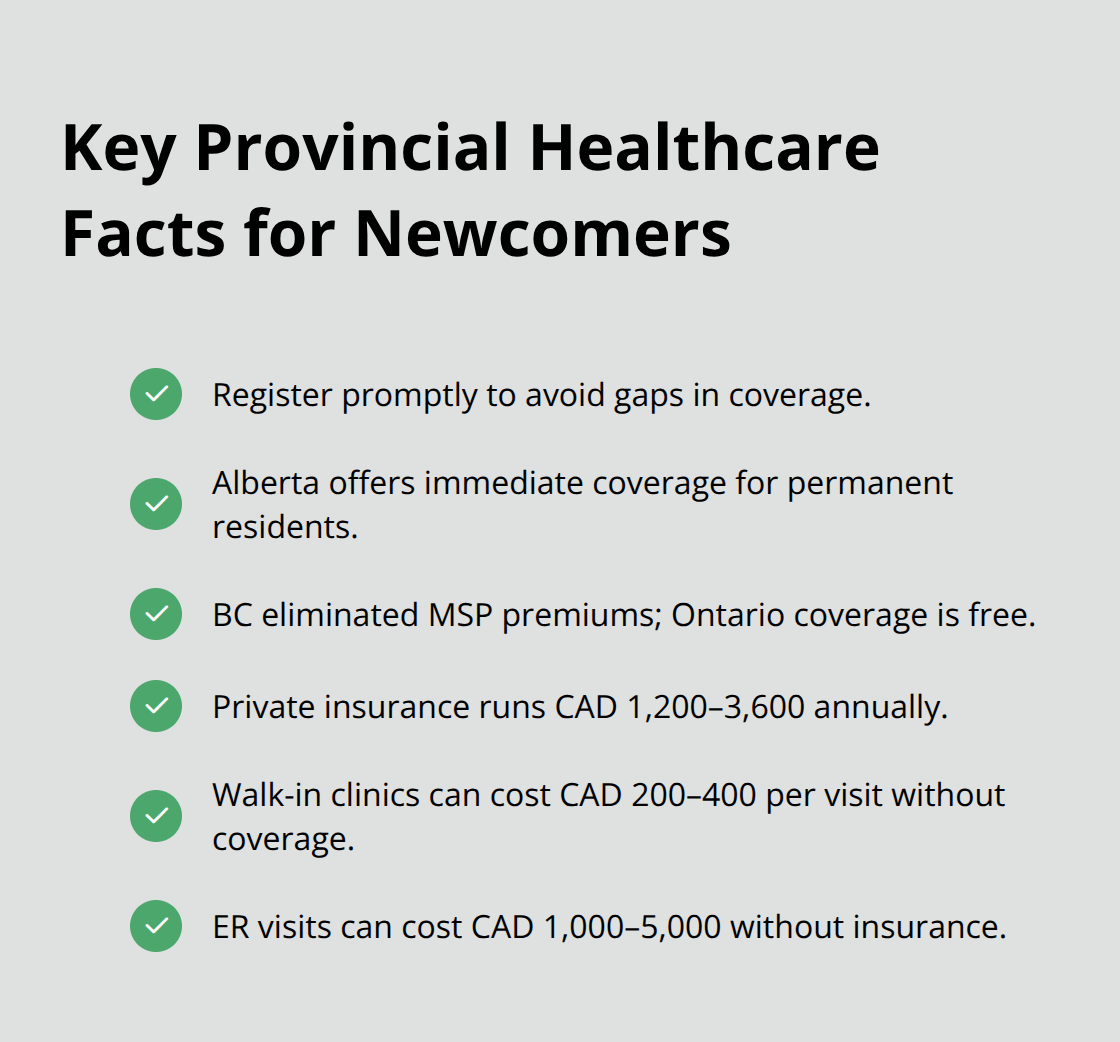
Alberta provides immediate coverage for permanent residents with proper documentation. Each province charges different premiums: British Columbia eliminated MSP premiums in 2020, while Ontario provides free coverage. Private health insurance costs CAD 1,200-3,600 annually to bridge coverage gaps during wait periods (walk-in clinics charge CAD 200-400 per visit without provincial coverage). Emergency room visits cost CAD 1,000-5,000 without insurance. Register immediately upon arrival because retroactive coverage doesn’t exist for missed registration periods.
Tax Registration and CRA Compliance
Canada Revenue Agency registration becomes mandatory once you establish Canadian tax residency through property ownership and physical presence. Social Insurance Number applications require proper documentation with proper immigration documents. File your first Canadian tax return by April 30th after your arrival year, even with zero Canadian income. Non-residents pay 25% withholding tax on rental income, but residents can claim expenses and pay regular tax rates. The principal residence exemption eliminates capital gains tax on your primary home sale (this saves thousands compared to investment properties). GST/HST registration becomes required when annual revenue exceeds CAD 30,000 from Canadian sources. Provincial tax rates vary dramatically: Alberta charges 10% while Quebec demands up to 25.75% combined federal and provincial rates.
With your financial foundation established, you’ll need to focus on employment opportunities and family integration to complete your transition to Canadian life.
How Do You Start Working and Living in Canada
Employment Strategies for New Canadian Residents
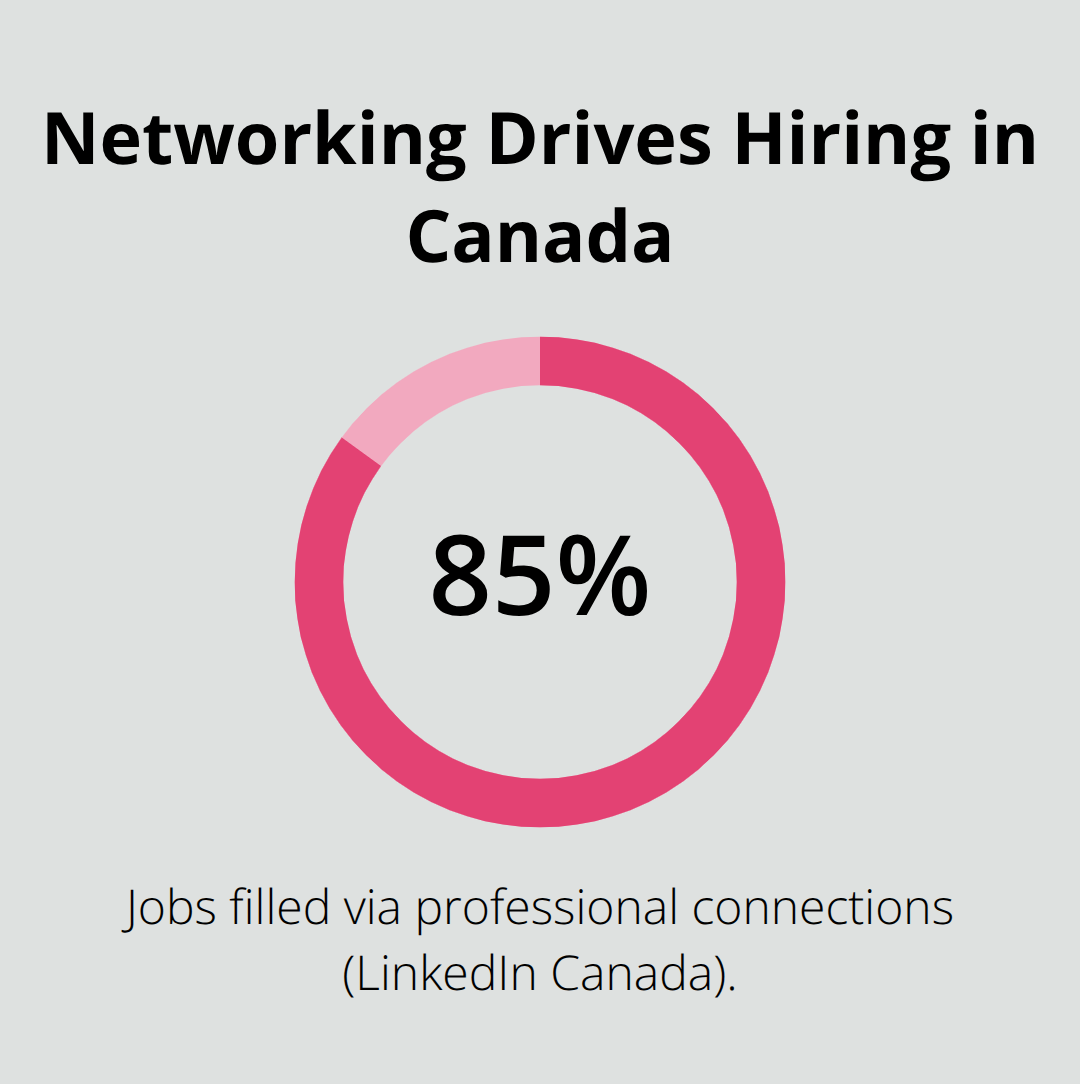
New residents must take immediate action within their first 30 days of arrival to secure employment. LinkedIn Canada reports that 85% of jobs get filled through professional connections, which makes networking more valuable than online applications. Government of Canada’s Job Bank shows average salaries by province: Ontario averages CAD 65,000 annually while Alberta reaches CAD 72,000 for skilled workers.
Professional licensing requirements vary dramatically between provinces. Engineers need P.Eng designation through Professional Engineers Ontario, which takes 4 years minimum experience plus examinations that cost CAD 1,500. Nurses require provincial registration through regulatory bodies like College of Nurses of Ontario, which demands language competency tests that cost CAD 500-800. Trades workers benefit from Red Seal certification, which gets recognized across provinces and territories.
Tech workers find faster employment through coding bootcamps and certifications rather than degree recognition processes. Remote work opportunities increased 300% since 2020 according to Statistics Canada, which offers immediate income while new residents establish Canadian presence.
School Registration Requirements
Public school enrollment requires proof of residence within 30 days of arrival, with no tuition costs for residents. Toronto District School Board and Vancouver School Board offer specialized ESL programs for newcomer children at no additional cost. Private schools charge CAD 15,000-40,000 annually but provide smaller class sizes and specialized programs.
Post-secondary education costs vary significantly: University of Toronto charges CAD 58,000 annually for international students but only CAD 6,100 for residents. Students must research provincial education requirements early because application deadlines occur months before school starts.
Credit History Foundation
Credit scores range from 300-900 in Canada, with 650 considered good and 750 excellent for mortgage qualification. New residents can build credit immediately through secured credit cards that require CAD 500-2,000 deposits. Capital One and Home Trust offer newcomer credit cards without Canadian credit history requirements.
Rent payments through services like PayYourRent and RentMoola report to credit bureaus, which builds credit scores within 6 months. Cell phone contracts with major carriers like Bell, Rogers, and Telus establish credit history faster than prepaid plans (this strategy works better than utility bills alone).
Final Thoughts
Property ownership alone never answers “if I buy property in Canada can I live there” because residence requires proper immigration status through Express Entry, family sponsorship, or business programs. New residents who take action within their first 30 days achieve better outcomes across employment, banking, and healthcare registration. You save CAD 180-360 annually when you open newcomer bank accounts immediately while you build credit history through secured cards and rent payments.
Provincial health insurance registration must happen within three months to avoid expensive coverage gaps that cost thousands in medical bills. Property ownership provides no work authorization, so you need separate permits for employment opportunities. Many newcomers assume real estate investment grants residence rights when immigration pathways remain completely separate processes.
We at Financial Canadian help property buyers understand the transition from ownership to residence status. Our team provides guidance on documentation requirements and timeline management for successful Canadian integration. Visit Financial Canadian to access resources that support your journey from property owner to permanent Canadian resident.










Leave a comment