
When you need cash fast, payday loan options in Canada can feel like your only way out. But before you sign on the dotted line, it’s worth understanding what’s actually available to you and how these loans compare to other solutions.
At Financial Canadian, we’ve put together this guide to help you navigate the different borrowing paths. Whether a payday loan makes sense for your situation depends on your province, your timeline, and what alternatives you might qualify for.
How Payday Loans Actually Work in Canada
Provincial Regulations Shape What You Can Borrow
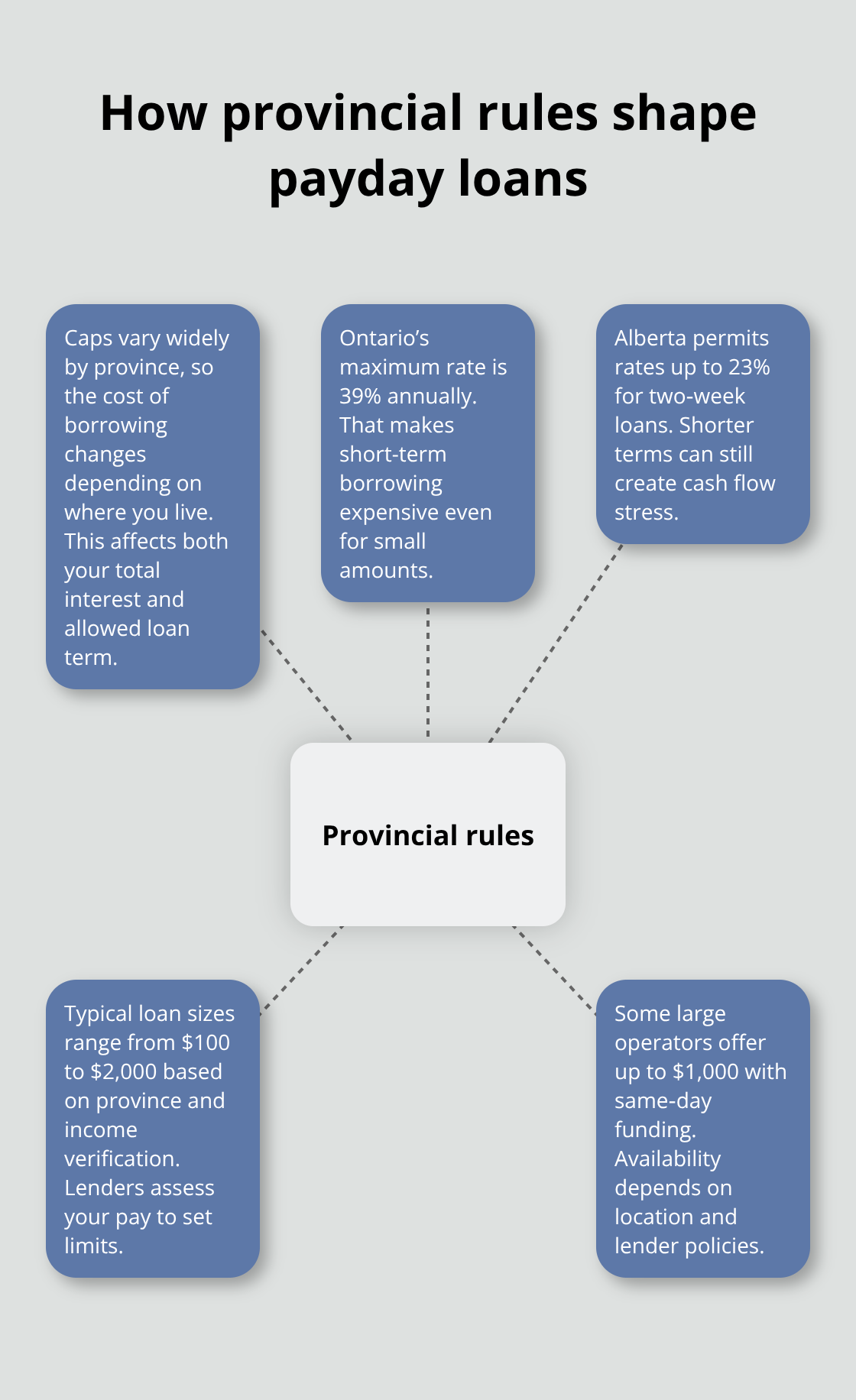
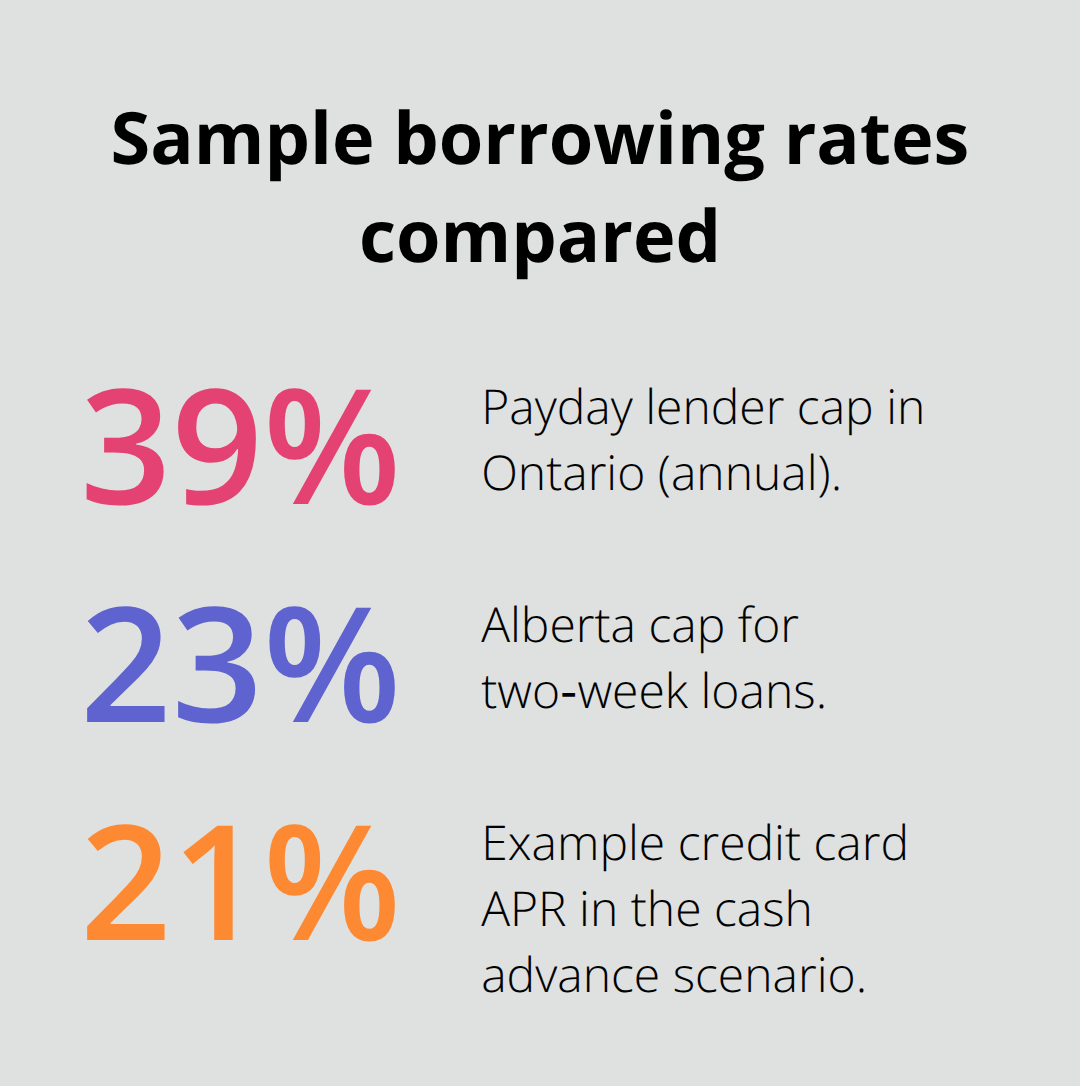
Payday loans in Canada operate within a heavily regulated framework that varies significantly by province, which means the loan you can access in Ontario differs from what’s available in Alberta or British Columbia. Most provinces cap interest rates between 15% and 39% annually, though some allow higher rates for shorter loan terms. In Ontario, the maximum rate sits at 39% annually, while Alberta permits rates up to 23% for two-week loans. The loan amounts themselves typically range from $100 to $2,000 depending on your province and the lender’s assessment of your income. One of the larger operators in Canada offers loans up to $1,000 with same-day funding, though availability varies.
Understanding Repayment Terms and Real Costs
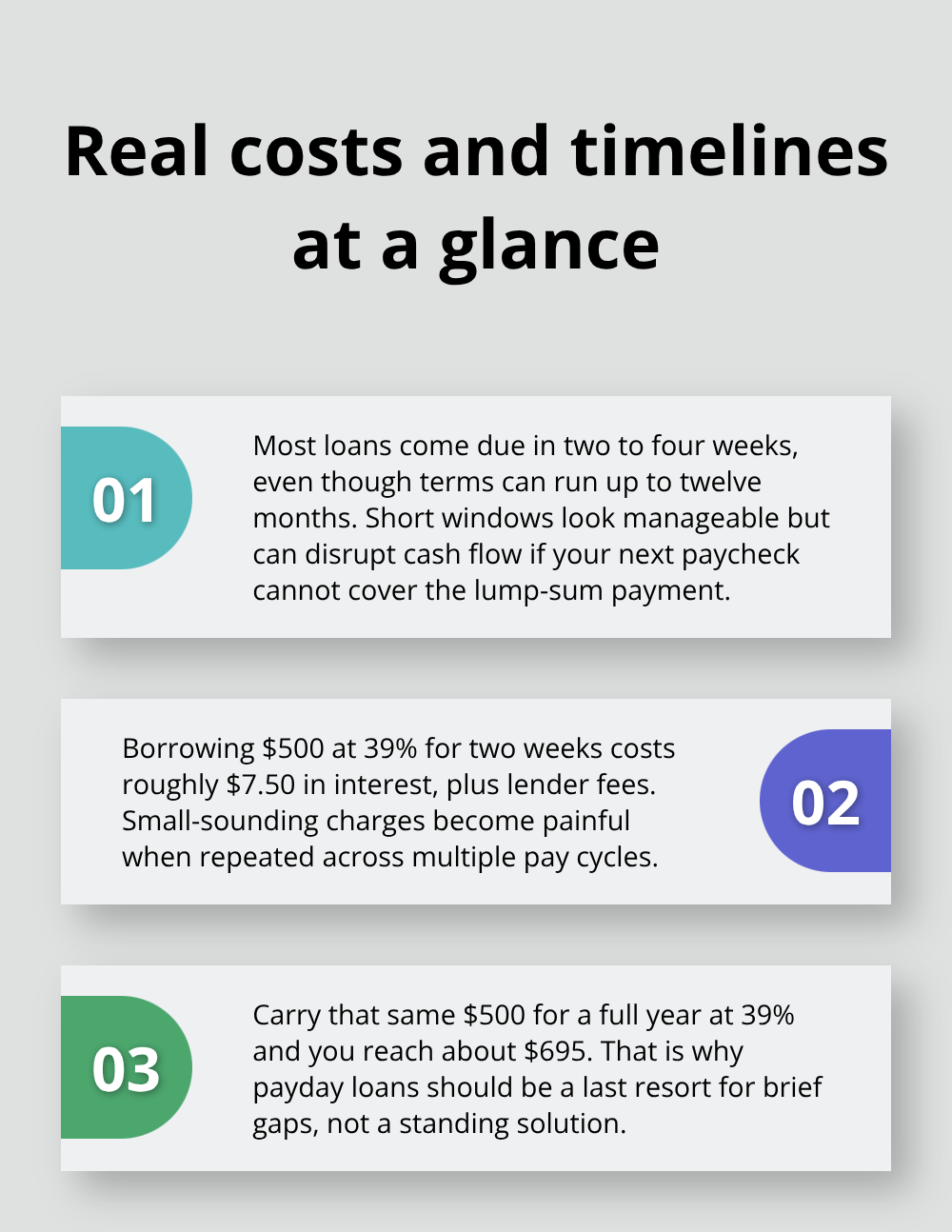
The repayment window usually spans two weeks to twelve months, with most borrowers expected to repay within two to four weeks. This matters because a shorter repayment period sounds attractive but creates cash flow problems if you lack the funds ready. If you borrow $500 at 39% annual interest over two weeks, you’ll pay roughly $7.50 in interest alone, plus any additional fees the lender charges. Over a full year at that rate, $500 becomes $695. This is why payday loans should never be your first choice-they’re expensive ways to bridge temporary gaps, not solutions for ongoing financial problems.
The Application Process Works Fast-But Why
Most lenders now approve applications within minutes without running a hard credit check that damages your credit score. The typical three-step process involves discovering loan options without affecting your credit, applying at a branch or online, and receiving funding quickly. However, the speed comes with a cost. Approval rates stay deliberately high because lenders focus on your income rather than your credit history. If you earn $2,000 monthly and request $500, most lenders approve you regardless of past defaults. This accessibility is why payday loans trap people in cycles of debt. You borrow $500, pay it back with interest, and two weeks later face another shortfall, so you borrow again. This pattern repeats until you’ve paid hundreds in interest on a small original loan.
Better Alternatives Exist for Most Situations
Government income support programs, available in most provinces, offer better alternatives for genuine emergencies. Alberta residents can call a 24-hour emergency line for income support, while food banks across Canada provide immediate assistance that reduces your expenses without adding debt. If you must borrow, ask your bank or credit union about personal loans or lines of credit first-these typically charge 7% to 15% interest, roughly half what payday lenders charge. A credit card cash advance, while not ideal, often costs less than a payday loan if you pay it off within a month.
Deciding Whether a Payday Loan Makes Sense
The key decision point is this: if you need money for more than one month, a payday loan is the wrong tool. If you genuinely need $300 for the next ten days and have no alternatives, then the $5 to $10 cost becomes acceptable. Beyond that scenario, the math works against you every time. Understanding these mechanics helps you evaluate whether other borrowing options might serve your situation better.
Types of Payday Loans Available to Canadian Borrowers
In-Store Payday Lenders Offer Speed and Certainty
In-store payday lenders remain the most common option across Canada, with operators like Money Mart maintaining branch networks that let you walk in, apply, and potentially receive cash the same day. The process is straightforward: you show proof of income, provide identification, and sign paperwork that outlines the fees and interest rate. Money Mart offers loans from $100 to $2,000 depending on your province and income verification, and has operated for over 40 years in North America. The advantage here is speed and certainty. You know exactly what you’re getting because the lender explains everything face-to-face, and you leave with cash in hand rather than waiting for a deposit. The downside is equally clear: walking into a physical location makes it harder to back out when you see the actual cost written on the contract. Operators emphasize high approval rates and claim to say yes when traditional banks say no, which sounds helpful until you realize this means they lend to people who genuinely cannot afford to repay on schedule.
Online Payday Lenders Trade Convenience for Shame Avoidance
Online payday lenders offer the same loans with less friction and more privacy. You apply from home, receive approval within minutes, and funds hit your account within hours or by the next business day. This convenience masks the identical problem: you still borrow at high rates with repayment expected within two to four weeks. The speed of online approval actually works against you because you make the decision faster, without the face-to-face moment that might cause you to reconsider. Most online lenders process applications through automated systems that verify your income and employment status, then approve or deny you based on algorithms rather than human judgment. This removes any opportunity for negotiation or explanation of your circumstances.
Credit Card Cash Advances Present a Third Path
Credit card cash advances present a third option that sometimes costs less if you repay quickly. If your card charges 21% annual interest and you repay a $300 advance within two weeks, you pay roughly $2.40 in interest. A payday lender charging high rates on the same amount over two weeks costs more. The math slightly favors the credit card, but only if you actually pay it back immediately.
Most people don’t, which is why cash advances become traps too. Your card issuer charges additional fees for the advance itself (typically 3 to 5 per cent of the amount), which adds another $9 to $15 to your $300 withdrawal.
Comparing the Three Options Reveals Identical Economics
The real distinction between these three options matters less than understanding they all share identical economics: short terms, high costs, and a structure designed to lock you in for repeat borrowing. Your choice between them should depend purely on logistics, not on any false belief that one type is fundamentally safer or cheaper than the others. In-store lenders work best if you need cash today and can handle the psychological weight of signing papers in person. Online lenders work best if you prefer privacy and can resist the temptation to borrow more because the process feels less real. Credit card advances work best if you already carry a card and can commit to repaying within days rather than weeks. None of these options solve the underlying problem that you lack sufficient cash flow to cover your expenses. That reality becomes clearer when you examine what alternatives actually exist for your specific situation.
Better Borrowing Options That Cost Less
Bank Personal Loans Offer Dramatically Lower Interest Rates
Bank personal loans and credit union loans operate in a completely different cost structure than payday lenders. A typical bank personal loan charges between 8% and 36%, with an average of 12.38% annual interest, which means you pay significantly less than the $195 you’d pay at a payday lender’s 39% rate. The catch is that banks require a credit check and proof of stable income, which eliminates people with damaged credit or irregular earnings. However, if you have even a modest credit score above 600, most banks will consider your application. TD Canada Trust, RBC, and Scotiabank all offer personal loans starting at $1,000 to $50,000 with terms ranging from one to seven years. The longer repayment window means lower monthly payments, which matters when you’re already stretched thin.
Credit Unions Provide More Flexible Approval Standards
Credit unions like Conexus or Coast Capital often have more flexible approval criteria than major banks and may lend to people with weaker credit histories. The application process takes three to five business days rather than minutes, which doesn’t work if you need cash today, but works perfectly if you need money within a week. This timeline allows you to explore alternatives before committing to high-cost payday loans.
Lines of Credit Offer Flexibility Without Overextension
Lines of credit from banks function similarly to personal loans but offer more flexibility because you only pay interest on the amount you actually use. If your bank approves you for a $5,000 line of credit and you draw only $500, you pay interest only on that $500, not the full amount. This structure prevents the psychological trap of borrowing the maximum available just because it’s there. Most lines of credit charge prime plus 1% to 3%, which currently sits around 8% to 11% depending on your bank and credit profile. The real advantage here is that once approved, you can access funds repeatedly without reapplying, which means you can borrow for this month’s shortfall and again next month if needed without triggering multiple credit inquiries that damage your score.
Government Programs Address Root Causes Without Debt
Government assistance programs exist specifically for situations where you lack money for basics. Alberta residents can call the provincial emergency income support line at 1-877-644-5135 to apply for temporary financial aid, with decisions made within 24 hours in genuine emergencies. Other provinces operate similar programs through their ministry of social services. Food banks across Canada provide immediate support that reduces your monthly food expenses, which frees up cash for other obligations without adding debt. If you’re behind on utility bills, contact your provincial utility regulator to explore payment deferral options before the company cuts service. Landlords often negotiate short-term payment arrangements if you communicate before the rent is due rather than waiting until eviction proceedings start.
Making the Right Choice for Your Timeline
These options require more effort than walking into a payday lender and require honesty about your financial situation, but they solve the actual problem instead of creating a more expensive one. The decision to pursue alternatives depends on your timeline and your ability to tolerate a slightly longer approval process in exchange for dramatically lower costs.
Final Thoughts
The payday loan options Canada offers range from expensive to slightly less expensive, but they all share one critical flaw: they treat symptoms instead of solving problems. Your choice between in-store lenders, online platforms, or credit card advances matters far less than understanding whether borrowing at all makes sense for your situation. Ask yourself three questions before you proceed. Is this a genuine one-time emergency or a recurring monthly shortfall? Can you realistically repay within two weeks? Have you explored every alternative first, including government assistance, food banks, payment deferrals with creditors, and temporary income increases through overtime?
When you do compare actual borrowing options, focus on three concrete factors: the total cost in dollars (not just the interest rate), the repayment timeline and whether it matches your actual cash flow, and whether the monthly payment fits your budget. A twelve-month bank loan with lower monthly payments beats a two-week payday loan if you’re already struggling to cover basics. The strongest position is avoiding borrowing entirely by building a small emergency fund and cutting unnecessary spending before you reach crisis point. If you’re already in crisis, contact your provincial government’s emergency assistance line before visiting a payday lender.
The right choice isn’t the fastest approval or the easiest application-it’s the option that costs the least and actually solves your underlying cash flow problem rather than postponing it. If you need help organizing your finances or understanding your options, Financial Canadian can help you access financial information more effectively.











Leave a comment