
When you need cash fast, payday loan options in Canada can feel like your only choice. But the terms, rates, and fees vary dramatically between lenders and provinces.
At Financial Canadian, we’ve broken down how payday loans actually work, compared the major providers, and identified when alternatives might save you money. This guide gives you the information you need to borrow smartly.
How Payday Loans Actually Work
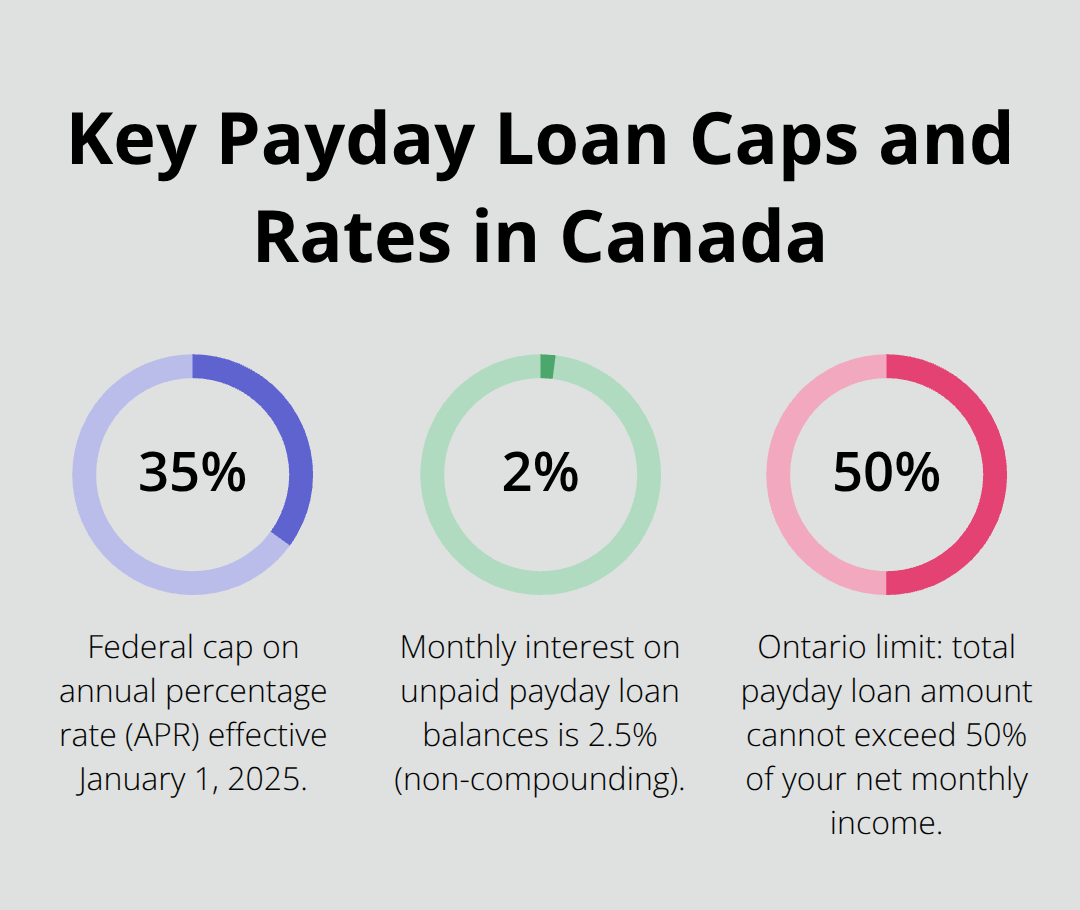
A payday loan in Canada is a small, short-term unsecured loan typically due by your next payday, issued either at a retail location or online without a credit check. In Ontario, the maximum cost is $14 per $100 borrowed according to the Payday Loans Act, 2008. For example, a $300 loan for two weeks costs roughly $42 in fees, making it one of the most expensive forms of consumer credit available. As of January 1, 2025, federal regulations now cap the annual percentage rate at 35%, aligning with changes to the Criminal Code. Most lenders require proof of three months continuous employment, a valid address, and an active chequing account. The application process is deliberately fast-many lenders approve and fund loans within hours, which explains why people turn to them during emergencies. However, this speed comes at a cost, and the fees compound quickly if you miss the repayment date or roll the loan over.
What Happens If You Miss a Payment
Default fees reach a maximum of $20 for dishonoured payments as of 2025, but the lender can charge interest at 2.5% per month on any unpaid balance, non-compounding. This might sound manageable until you realize that rolling over a payday loan into another two-week cycle means you pay another $14 per $100, plus the original amount still due. Ontario’s Payday Loans Act prohibits traditional rollovers with the same lender, but many borrowers simply take out a new loan elsewhere to cover the old one, creating a cycle that’s difficult to escape. If you take out three payday loans within 63 days, you’re automatically enrolled in an extended payment plan under Ontario regulations, which allows you to repay in equal installments spread over multiple pay periods. For frequent payers, each installment is capped at 35% of the loan plus borrowing cost; for less frequent payers, it’s capped at 50%. This protection exists because lenders know that payday borrowers often can’t afford the full amount on the original due date.
Three Questions to Ask Before You Borrow
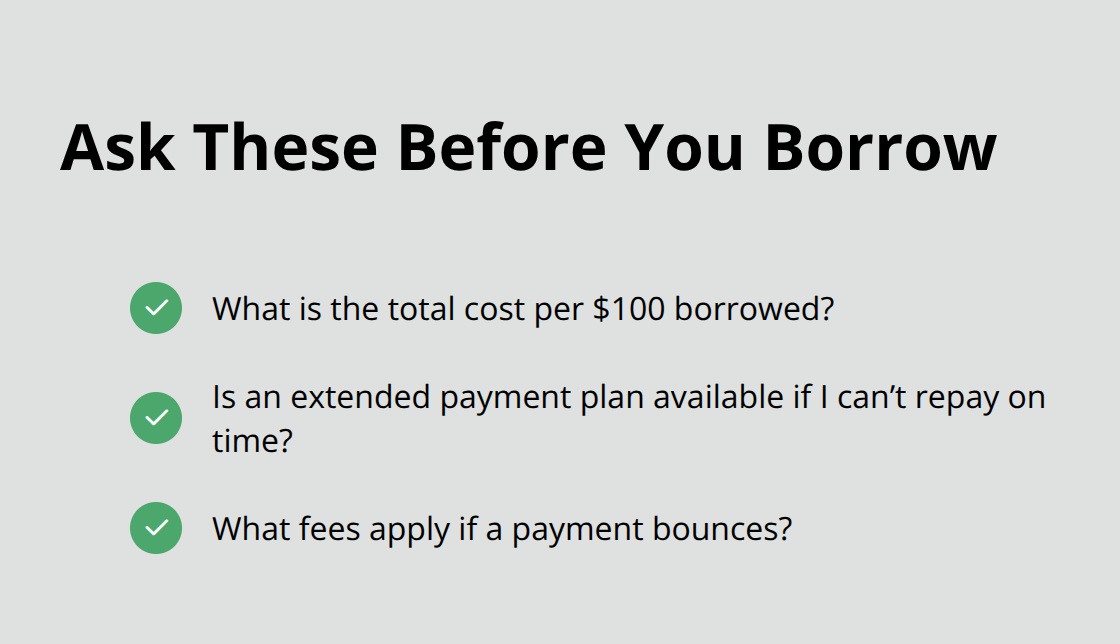
Lenders must disclose the annual percentage rate clearly on the first page of your contract, along with the total cost and loan term. Ask your lender three specific questions: the total cost per $100 borrowed, whether an extended payment plan is available, and what fees apply if a payment bounces. Verify that your lender holds a valid Ontario license if you’re borrowing in that province-unlicensed lenders operate outside consumer protections entirely.
The 50% net income cap means a lender cannot offer you a payday loan if the total amount would exceed half your net monthly income, a rule designed to prevent you from taking on amounts you cannot repay.
Explore Lower-Cost Alternatives First
Payday loans remain dangerous financial instruments for most people. Before you sign any contract, contact your bank about an unsecured line of credit or speak with your landlord, utility provider, or credit card issuer about payment deferrals or adjusted schedules. These alternatives cost far less and won’t trap you in a debt cycle. Understanding how payday lenders structure their offers helps you spot when a competitor product might serve you better-and it sets the stage for comparing what’s actually available across Canada.
Comparing Payday Loan Providers Across Canada
How Provincial Rules Shape What You Pay
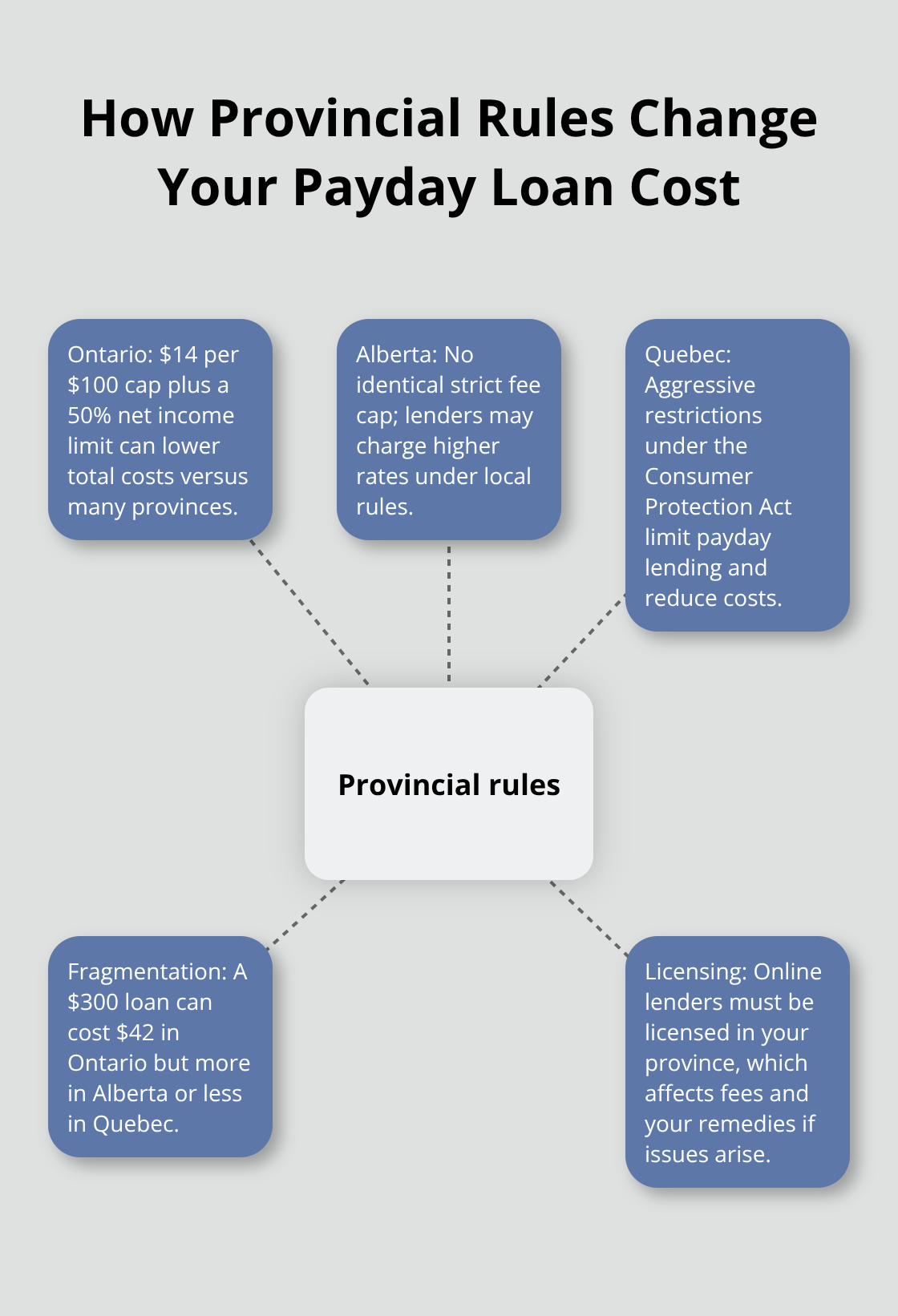
Payday lending is heavily regulated in Canada, but the rules shift dramatically by province. Ontario caps fees at $14 per $100 borrowed and enforces the 50% net income limit, while other provinces operate under different frameworks entirely. Alberta doesn’t have the same strict fee caps, meaning lenders there can charge higher rates. Quebec restricts payday lending more aggressively through its consumer protection laws. This fragmentation matters because a $300 loan that costs $42 in Ontario might cost significantly more in Alberta or less in Quebec.
When you compare lenders, you’re not just comparing companies-you’re comparing different regulatory environments.
Online lenders often claim they serve multiple provinces, but they must comply with the rules in your specific province. Before you apply, confirm your lender holds the proper license in your province. In Ontario, you can verify licensing through the Government of Ontario website. Alberta lenders must comply with the Fair Trading Act, while Quebec borrowers fall under the Consumer Protection Act. The differences aren’t minor technicalities; they directly affect your total cost and your rights if something goes wrong.
Online Lenders vs. Retail Locations
Online payday lenders operate faster than brick-and-mortar locations, but speed creates real risks. Many online platforms use lead generators collecting personal information to multiple lenders, leaving you vulnerable to aggressive marketing and identity theft. If you walk into a retail location instead, you speak directly with the lender and avoid this data-sharing problem. However, retail locations have limited hours and may pressure you into a quick decision.
Online lenders fund accounts within hours, sometimes minutes, which is why people choose them during emergencies-but this speed means you’re less likely to comparison shop or consider alternatives. If you must borrow online, research the lender’s reputation independently and avoid platforms that won’t clearly disclose their license number upfront. Retail lenders like Money Mart operate across Canada but charge different fees by province based on local regulations. The practical advantage of retail borrowing is accountability; you can return to the same location if problems arise.
What to Verify Before You Choose a Lender
Online borrowing offers convenience but requires more caution and verification work on your end. You should confirm that your lender holds a valid license in your province and check whether they clearly state their fees and APR upfront. Ask whether the lender uses lead generators or sells your data to third parties-this information matters for your privacy and financial security. Comparing lenders across provinces reveals that the cheapest option in one province may not be the cheapest in another, so your location determines which providers actually offer you the best terms. With these provincial differences and lender variations in mind, you can now evaluate whether a payday loan truly fits your situation or whether alternatives would protect your finances more effectively.
Better Options Than Payday Loans
Personal Loans Beat Payday Loan Costs
A payday loan should be your last resort, not your first choice. Banks and credit unions across Canada offer personal loans that cost far less, with interest rates typically between 6% and 36% depending on your credit score, compared to the 35% APR cap on payday loans or the $14 per $100 fee structure. TD Bank, RBC, and Scotiabank all offer unsecured personal loans to borrowers with poor credit, though approval takes longer than a payday lender’s two-hour turnaround. If you have any relationship with your bank, start there before you approach a payday lender. Most banks will discuss a line of credit as an alternative, which functions like a credit card but with lower interest rates, typically between 7% and 20%. You only pay interest on what you actually borrow, not the full approved amount, making a line of credit dramatically cheaper than rolling over a payday loan every two weeks.
Credit Unions Offer Real Alternatives
Credit unions in provinces like Ontario and British Columbia specifically market themselves as payday loan alternatives, offering small emergency loans with interest rates no higher than 19% APR and repayment terms of up to 24 months. The application process takes days instead of hours, but the savings are substantial. A $300 payday loan costs $42 in fees over two weeks; the same amount from a credit union at 12% interest costs roughly $2.30 for two weeks.
Government Programs and Non-Profit Help
Government and non-profit programs offer immediate help without borrowing at all. Alberta’s income support program provides emergency funds through a 24-hour hotline for residents facing urgent financial shortfalls, and you don’t repay these amounts like a loan. Provincial food banks eliminate grocery expenses during tight months, freeing up cash for other bills. Edmonton Food Bank at 11508-120 Street NW serves thousands monthly. Money Mentors in Red Deer, Alberta, and similar non-profit credit counseling services across Canada help you negotiate payment deferrals directly with landlords, utilities, and credit card issuers before you borrow anything. These negotiations often succeed because creditors prefer adjusted payment schedules to defaulted accounts.
Quick Cash Without Debt
Selling unused items on Facebook Marketplace or Kijiji generates quick cash without debt. If family or friends can help, a written agreement with a clear repayment plan protects both parties and costs nothing. The Ontario government’s Consumer Protection Office lists all licensed payday lenders and complaints filed against them, helping you avoid predatory operators entirely. If you’ve already borrowed multiple times, a debt consolidation loan merges all payday debt into one payment at a lower rate, typically offered by banks or credit unions once you’ve stabilized your income.
Final Thoughts
Payday loan options in Canada exist, but choosing one requires honest assessment of your actual situation. We at Financial Canadian believe most borrowers should exhaust alternatives first because the math is brutal-a $300 payday loan costs $42 in fees over two weeks, while the same amount from a credit union costs roughly $2.30. The difference compounds monthly if you roll over or take multiple loans.
If you’ve already decided a payday loan is necessary, verify your lender’s license in your province, confirm the total cost per $100 borrowed, and ask whether an extended payment plan is available if you can’t repay on time. Plan to have funds available on the due date and avoid online lenders using lead generators that sell your data to multiple companies. When payday loans make sense is rare-you’ve already borrowed multiple times within 63 days, you’ve exhausted bank options, and you need funds within hours.
Contact your bank about a line of credit, negotiate payment deferrals with your landlord or utility provider, or explore government assistance programs in your province before you sign any payday loan contract. Visit Financial Canadian to explore how responsive design and user-friendly navigation support your financial goals and business growth. Informed borrowing decisions protect your financial future far more than speed ever will.










Leave a comment