
Debt weighs on millions of Canadians, but the path forward doesn’t have to feel overwhelming. At Financial Canadian, we’ve created this guide to help you take control of your finances with concrete strategies that actually work.
Whether you’re juggling multiple debts or looking to optimize your repayment plan, the debt advice in Canada often misses the practical details. We’ll walk you through proven methods, common pitfalls to avoid, and actionable steps you can start today.
Understanding Your Debt Situation
Debt weighs on millions of Canadians, but the path forward doesn’t have to feel overwhelming. Getting a clear picture of what you owe is the first step toward actual progress, not just good intentions.
List Every Debt You Hold
Most Canadians carry multiple debts across credit cards, mortgages, car loans, and student loans, but Statistics Canada data shows many don’t have a precise total. Start by listing every debt you hold right now. Write down the creditor, current balance, interest rate, and minimum monthly payment for each one. This sounds basic, but most people skip it and lose money because of it.
Your interest rates matter more than anything else at this stage. A credit card balance at 19.99% costs you dramatically more than a car loan at 6.5%. The Financial Consumer Agency of Canada emphasizes that knowing your rates helps you prioritize payoff effectively. Once you have this list, calculate your total monthly debt payments and compare that figure to your monthly income.
Assess Your Debt Load
If your debt payments exceed 40% of your gross income, you’re carrying a heavy load. Canada’s household debt-to-income ratio ranks among the highest in the G7, according to the Bank of Canada, which means you’re not alone, but that doesn’t make the situation better.
The next move is identifying which debts drain your cash flow most aggressively. High-interest debts like credit cards and payday loans should get your attention first because they compound quickly. If you’re carrying a credit card balance, that interest accrues daily, making each month more expensive than the last. Lower-interest debts like mortgages move slower, so they can wait while you attack the expensive ones.
Use the FCAC Debt Calculator to map out your exact situation and see how different payoff approaches affect your timeline and total interest paid.
Build Your Monthly Budget
Your budget is where debt repayment actually happens or fails. Pull your last three months of bank and credit card statements and categorize every expense. Fixed costs like rent or mortgage, insurance, and utilities come first. Then track discretionary spending on food, transportation, entertainment, and subscriptions.
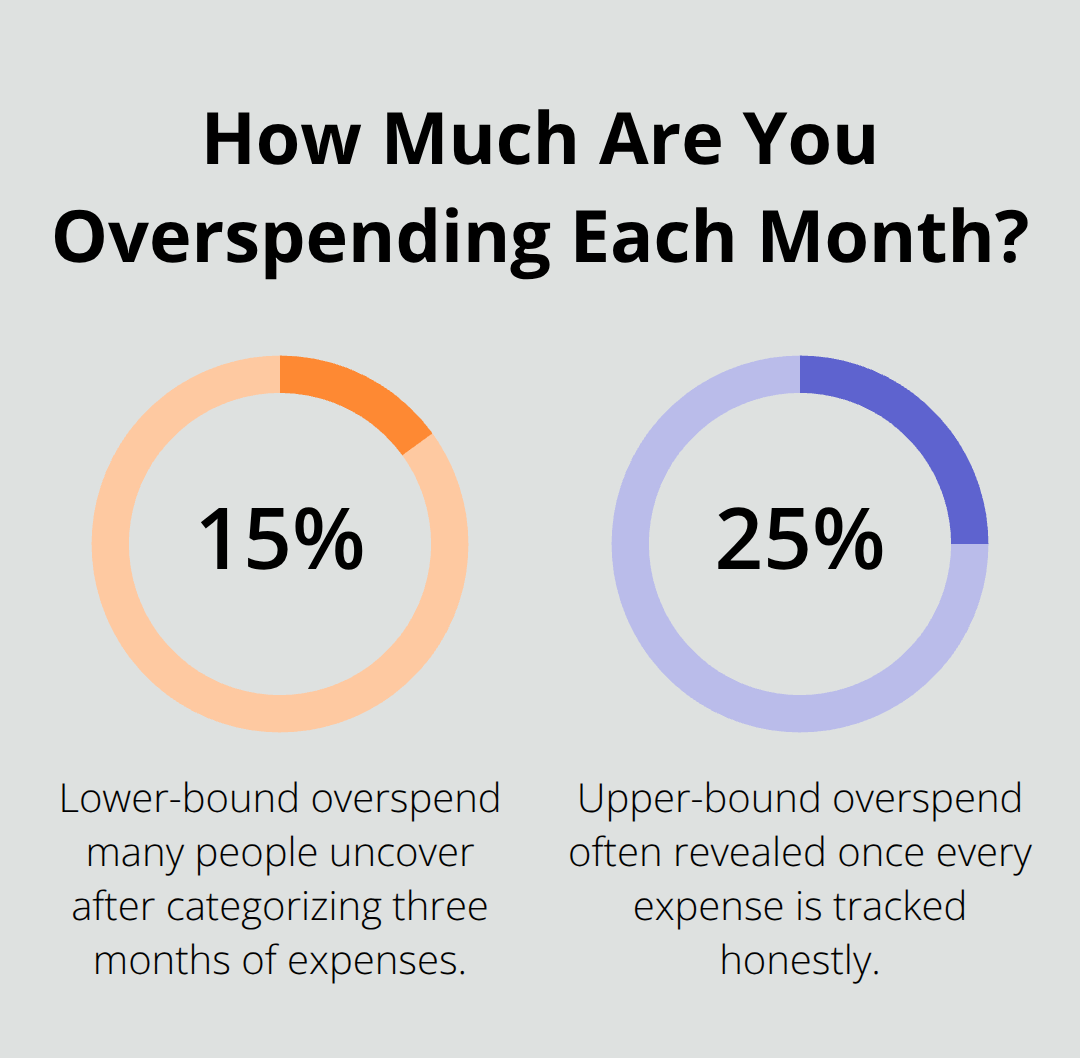
Many Canadians find they’re spending 15 to 25 percent more monthly than they realize once they complete this exercise. That gap is where your debt payoff money lives. The FCAC recommends setting aside an emergency fund of three to six months of essential expenses before aggressively attacking debt, but if you’re drowning, redirect that surplus toward high-interest balances first.
Find Your Payoff Capacity
Once you have your budget mapped, you’ll know exactly how much money you can realistically allocate to debt payoff each month. This number matters more than your total debt because it determines your actual payoff timeline. If you can only spare one hundred dollars monthly toward debt, a ten-thousand-dollar balance takes years, not months. Be honest about this figure.
If your budget shows no surplus, you need to cut expenses or increase income before debt payoff accelerates. Consider switching your mortgage or loan payments from monthly to bi-weekly, which reduces interest costs and shortens your payoff time according to the FCAC. This simple change compounds over years without requiring extra money out of pocket.
With your debts mapped and your budget clear, you now have the foundation to choose a repayment strategy that actually fits your situation. The method you select will determine how fast you eliminate debt and how much interest you ultimately pay.
Debt Repayment Strategies That Work
The Snowball Method for Quick Wins
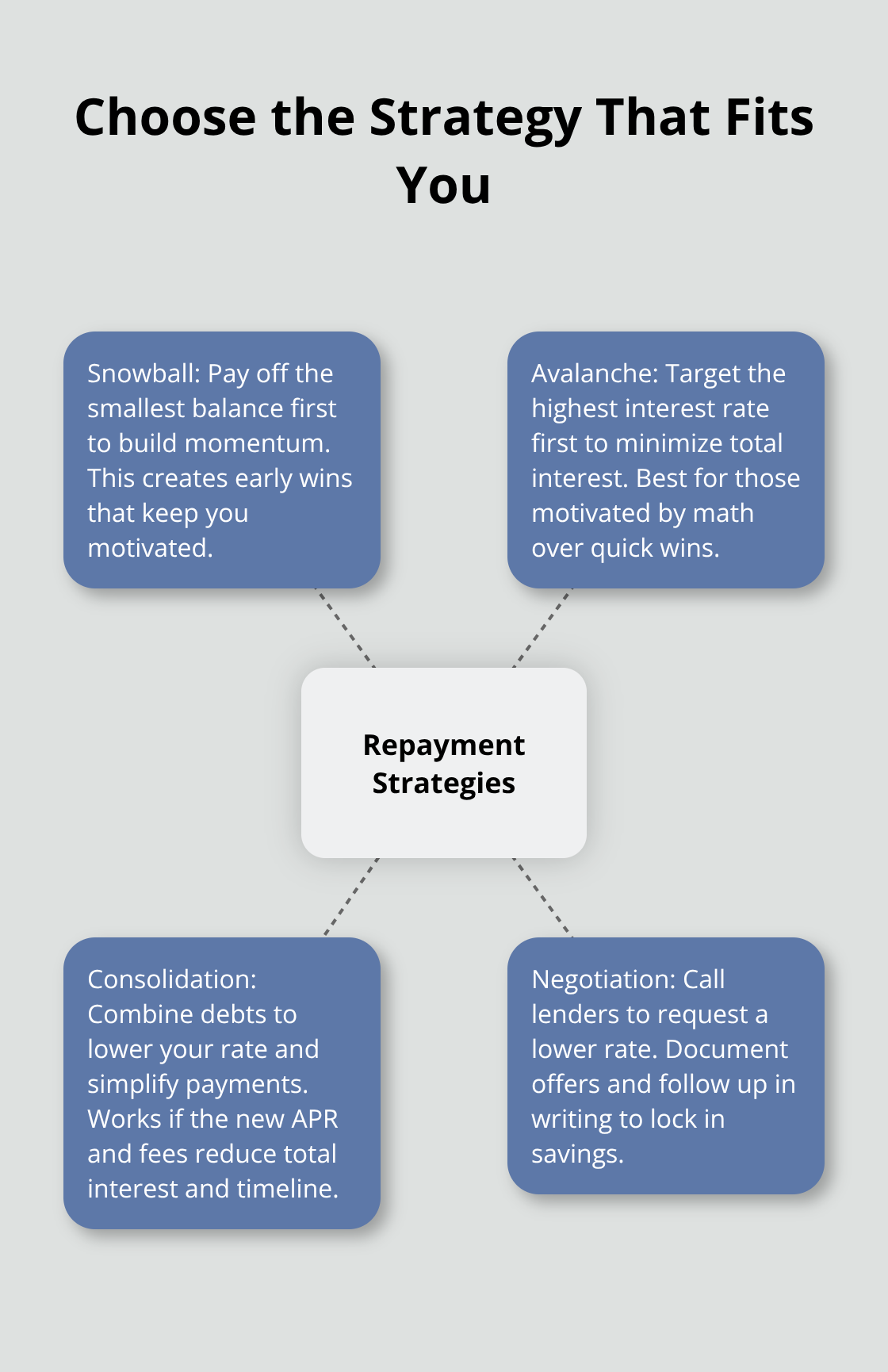
The snowball method targets your smallest debt balance first, regardless of interest rate. You pay minimums on everything else and throw extra money at that smallest balance until it vanishes, then move to the next smallest debt. This approach creates quick wins that feel tangible and motivate you to continue.
Research shows most people succeed with whichever method keeps them motivated long enough to finish. If you need momentum and emotional wins to stay on track, the snowball method works better for you despite costing slightly more interest. The psychological boost from eliminating a debt entirely often matters more than saving a few hundred dollars in interest over time.
The Avalanche Method to Save on Interest
The avalanche method targets your highest interest rate first, which mathematically saves the most money overall. You pay minimums on everything else and attack that expensive debt aggressively until it’s gone, then move to the next highest rate. The avalanche method costs you less in total interest, but the payoff timeline feels slower because you’re often tackling larger balances first.
If you’re motivated by math and can sustain effort without quick victories, the avalanche method saves thousands of dollars over time. Start by calculating the total interest you’d pay with each approach using the FCAC Debt Calculator. See the actual dollar difference, then decide based on your personality, not general advice. Many Canadians switch between methods mid-payoff, and that’s fine as long as you keep attacking debt consistently. The worst strategy is hesitating between methods and making no progress at all.
Debt Consolidation and Balance Transfer Options
Debt consolidation is when you combine multiple debts into one. This means instead of paying many different accounts, you make one payment. Your bank or credit union can offer a personal consolidation loan, or you can explore a balance transfer credit card that charges zero percent interest for a promotional period.
Consolidation works when your interest rate drops enough to offset any fees involved. A bank consolidation loan might charge a one to three percent origination fee, but if you move from eighteen percent credit card debt to eight percent loan debt, that fee pays for itself quickly. Balance transfers work only if you pay down the balance before the promotional rate expires and the regular rate kicks in.
Calculate the exact savings before consolidating because extending your payoff timeline can negate interest savings entirely. If consolidation stretches your payments across seven years instead of three years, you lose money despite the lower rate. The FCAC recommends comparing your current payoff timeline and total interest against the consolidation scenario before signing anything.
Negotiate Lower Rates With Your Lenders
One practical tactic most people miss is negotiating directly with your lenders. You may be able to negotiate a lower credit card interest rate by calling your issuer and asking for a reduction. Document your request and follow up in writing so you have proof of what was offered. This single phone call can save thousands on high-interest balances and costs nothing except ten minutes of your time.
With your repayment strategy selected and your rates potentially lowered, you now face the real challenge: staying disciplined while avoiding the mistakes that derail most debt payoff plans.
Avoiding Common Debt Mistakes
Missing Payments Destroys Your Progress
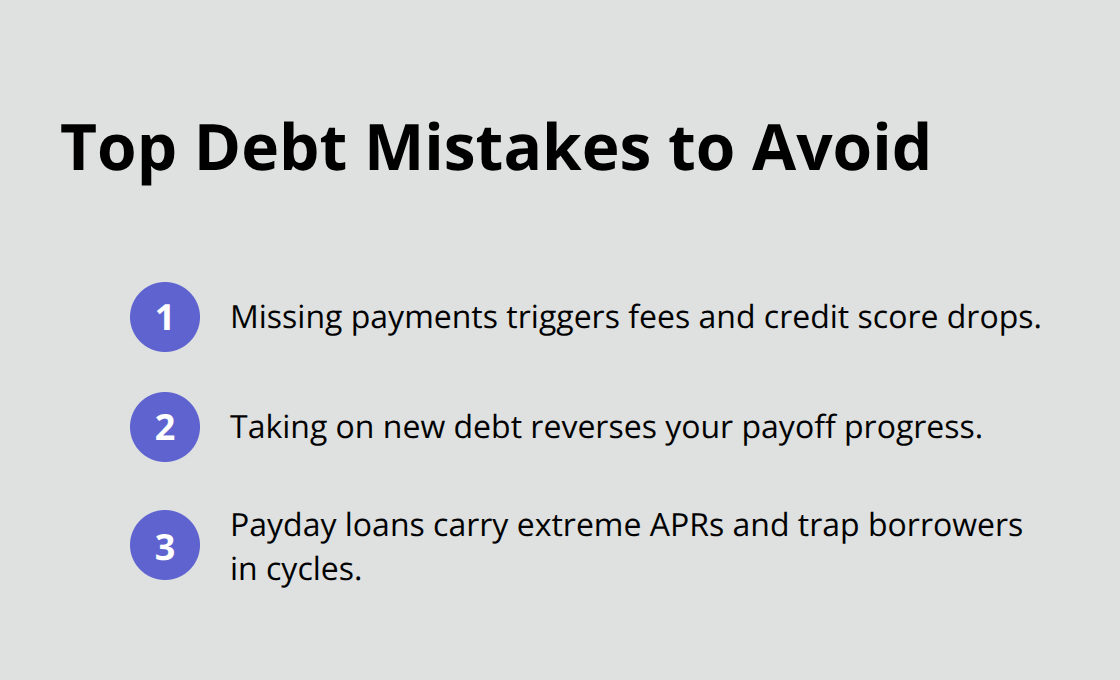
A single late payment costs you immediately through late fees, typically twenty-five to thirty-five dollars per missed payment according to the Financial Consumer Agency of Canada. More importantly, missing payments tank your credit score, which ranges from three hundred to nine hundred in Canada. A drop of fifty to one hundred points happens after one missed payment, and each additional miss compounds the damage. Once your score drops below six hundred, lenders see you as high-risk and charge higher interest rates on future borrowing, making everything more expensive for years.
Set up automatic payments on your minimum balances today, even if you can only afford the minimum. This single action prevents the catastrophic spiral that derails most debt payoff attempts. Your lender’s website allows automatic payments in minutes, and this removes the excuse of forgetting a due date entirely.
New Debt Reverses All Your Progress
Taking on new debt while repaying existing debt is financially self-sabotage. Many Canadians attack their debt aggressively for three months, then apply for a new car loan or credit card and immediately reverse all progress. The math is brutal: if you pay down a ten-thousand-dollar balance at fifteen percent interest while simultaneously carrying a five-thousand-dollar new car loan at seven percent, you fight against yourself.
The Financial Consumer Agency of Canada data shows most people who add new debt during repayment extend their total payoff timeline by two to four years. You need a hard freeze on new borrowing, period. If you must make a large purchase, delay it until your high-interest debts are eliminated.
Payday Loans Trap You in Cycles
Predatory lenders like payday loan companies deliberately target people in debt repayment mode because they know you’re desperate and less likely to shop around. Payday loans charge annual percentage rates exceeding four hundred percent, trapping borrowers in cycles where they borrow again to repay the previous loan. If you consider a payday loan, you’ve hit a crisis point where professional help matters more than any DIY strategy.
Contact the Credit Counselling Society or your provincial consumer affairs office immediately instead of signing predatory paperwork. These non-profit services offer free or low-cost guidance on debt consolidation, negotiation with lenders, and legal options like consumer proposals. This professional intervention costs nothing and saves you thousands compared to payday loan traps.
Final Thoughts
Debt payoff requires consistent action over months and years, not perfection or speed. You’ve mapped your debts, selected a repayment strategy, and identified the mistakes that derail most people-now execute this plan with discipline. Check your progress every three to six months, adjust for changes in income or interest rates, and stay flexible when life shifts your circumstances.
Professional help costs nothing if your debt situation feels overwhelming. The Credit Counselling Society and provincial consumer affairs offices offer free guidance on debt advice Canada residents can trust, helping you understand consolidation options, negotiate with lenders, and explore legal solutions if needed. These non-profit services exist specifically to help you move forward without judgment.
Once you eliminate your high-interest debts, maintain the habits that got you there-keep your emergency fund intact, track your spending, and avoid new debt. At Financial Canadian, we believe practical guidance beats generic advice every time, and our services help you establish a strong financial foundation. Start today with one concrete step: list your debts, calculate your rates, and commit to your first payment.










Leave a comment