
Debt weighs on millions of Canadians, but it doesn’t have to control your financial future. At Financial Canadian, we’ve created this debt management guide for Canada to help you take back control with a clear, actionable plan.
The right strategy can transform overwhelming debt into a manageable path forward. We’ll walk you through calculating what you owe, choosing the best repayment method, and accessing tools that actually work.
Understanding Your Debt Situation
Getting honest about your debt is the first step that separates people who escape debt from those who stay trapped in it. Most Canadians underestimate what they owe by 15 to 20 percent, according to financial counseling data, because they avoid statements or forget about smaller accounts. Start by listing every debt you have, not just the big ones. Include credit cards, personal loans, car payments, lines of credit, student loans, and even money borrowed from family.
Calculate What You Actually Owe
Write down the balance, interest rate, and minimum payment for each debt. Interest rates matter more than balances because they determine how much extra you’ll actually pay. A credit card at 21.99 percent interest costs you dramatically more than a car loan at 6.5 percent, even if the balances are similar. Calculate how much interest you pay monthly by multiplying each balance by the annual rate and dividing by 12. This number shocks most people into action.
Rank Your Debts by Priority
Not all debts are created equal, and you waste thousands of dollars if you tackle them in the wrong order. High-interest debt like credit cards should be your priority because the interest compounds quickly and devours your money. If you carry a 5,000 dollar balance on a credit card at 21 percent interest and only make minimum payments, you’ll pay roughly 3,400 dollars in interest alone before it’s gone.
Secured debts like mortgages and car loans are lower priority because the interest rates are lower and the consequences of missed payments are more severe, so you protect them first. Tax debt and government student loans cannot be included in most debt management plans, so you address these separately through payment arrangements with Canada Revenue Agency or your loan servicer. Unsecured debts like credit cards and personal loans are what debt solutions typically handle. Create a ranked list based on interest rate, not balance, and focus your extra payments on the highest-rate debt first.
Measure Your Monthly Cash Flow
You cannot build a realistic repayment plan without knowing exactly where your money goes each month. Most people guess their expenses and guess wrong. Track every dollar for 30 days using your bank statements and credit card bills. Separate expenses into fixed costs like rent, insurance, and loan payments, and variable costs like groceries, gas, and entertainment.
Fixed costs rarely change month to month, but variable costs reveal where you’re bleeding money. The average Canadian household spends 300 to 500 dollars monthly on discretionary items without realizing it. Once you see this clearly, you know how much money is actually available for debt repayment. The difference between your income and your total expenses is your debt repayment capacity. If you earn 4,000 dollars monthly and spend 3,500 dollars, you have 500 dollars to attack debt. If you have 50,000 dollars in total debt, that 500 dollars determines whether you can realistically pay it off in five years or whether you need a different solution entirely.

With your debt ranked and your cash flow mapped, you’re ready to choose the repayment strategy that actually fits your situation.
Creating Your Debt Repayment Strategy
Choose Your Repayment Method
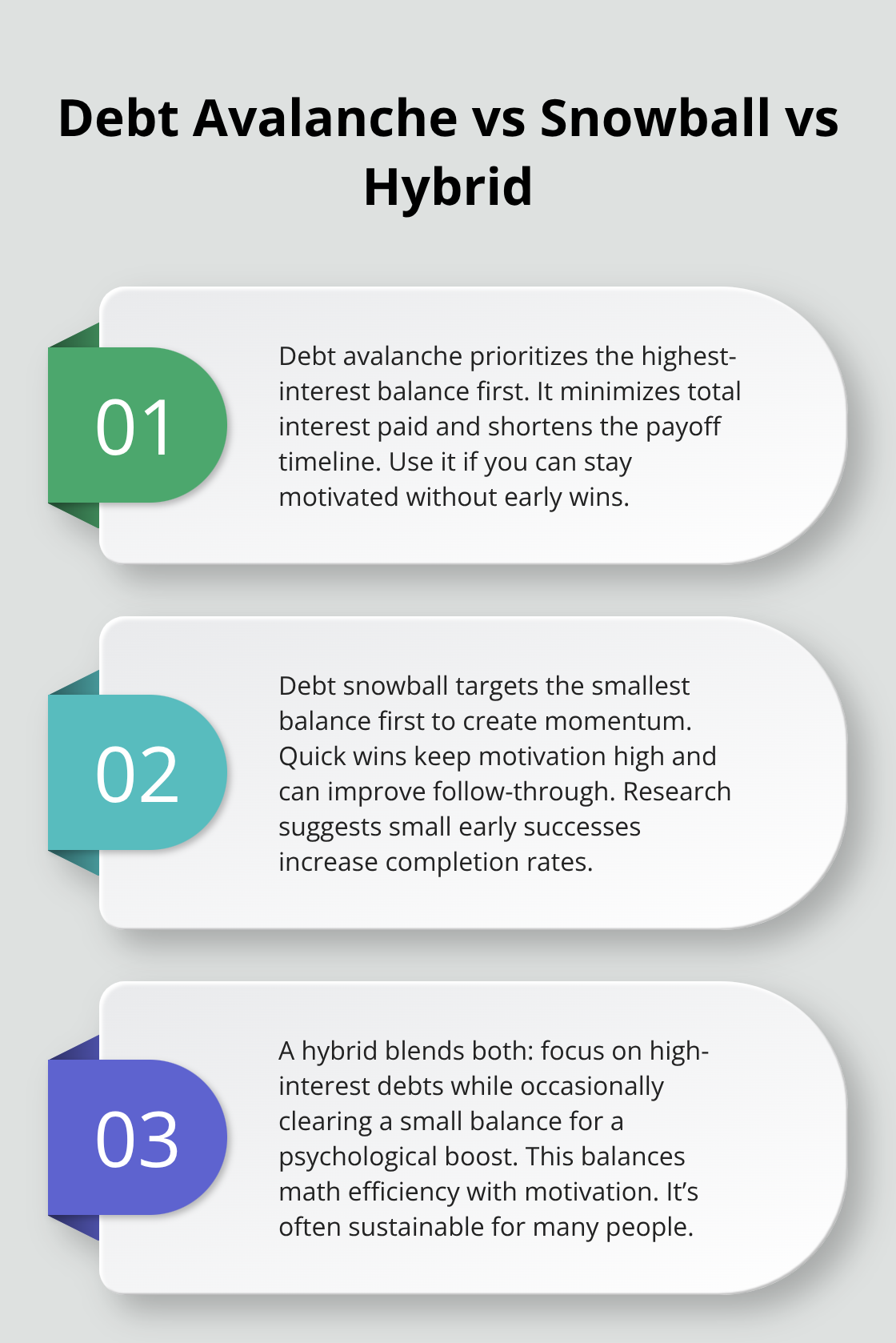
The debt snowball and debt avalanche methods represent two fundamentally different approaches, and we’re direct about this: the debt avalanche wins on math, but the debt snowball wins on psychology. The avalanche method targets your highest-interest debt first, which saves you the most money over time. If you have a credit card at 21 percent, a personal loan at 9 percent, and a car loan at 5 percent, the avalanche puts your extra payments toward that credit card. The math is straightforward-you’ll pay less total interest and escape debt faster. However, most people fail the avalanche because they don’t see quick wins.
Making progress on a 15,000 dollar credit card while ignoring smaller debts feels invisible for months.
The debt snowball method reverses this: you attack the smallest balance first regardless of interest rate. You pay off that 2,000 dollar personal loan completely, then move to the next smallest debt. This creates psychological momentum. Research from Northwestern University found that consumers who tackle small balances first are likelier to eliminate their overall debt. Our recommendation is brutal honesty about yourself. If you’re the type who needs visible progress to stay motivated, use the snowball. If you have the discipline to ignore small wins for larger savings, use the debt avalanche. Many Canadians actually succeed with a hybrid: attack the highest-interest debts but pause occasionally to eliminate a small balance completely for that psychological boost.
Build a Realistic Budget Around Debt Payments
A realistic budget around debt payments means cutting deeper than most people expect. You cannot simply allocate whatever money is left after expenses to debt-that approach fails because unexpected costs destroy your plan. Instead, create a budget that treats debt repayment as a non-negotiable fixed expense, like rent. If you determined you have 500 dollars monthly available for debt, commit to 500 dollars every single month, not 500 dollars plus whatever extra you find. This removes the temptation to spend windfalls on lifestyle inflation.
Negotiate Lower Interest Rates with Creditors
Negotiating lower interest rates with creditors actually works more often than people realize, especially if you have a decent payment history. Call your credit card company and ask directly for a rate reduction. Many banks will reduce your rate by 2 to 5 percent without requiring a balance transfer or threatening to switch providers. If you’ve missed payments, wait until your account shows at least three to six months of on-time payments before asking.
For secured debts like mortgages and car loans, refinancing makes more sense than negotiating, but call your lender anyway-some will match competitor rates without requiring a formal refinance application. The Credit Counselling Society reports that negotiation success rates increase significantly when you approach creditors with a concrete plan rather than a vague request.
When to Seek Professional Guidance
If negotiation fails or your situation is more complex, professional guidance from a Licensed Insolvency Trustee helps you understand whether a Consumer Proposal or other formal debt solution actually serves you better than trying to negotiate on your own. These professionals assess your complete financial picture and present options tailored to your circumstances. Your next step depends on what you’ve learned about your debt, your cash flow, and your ability to negotiate-but you don’t have to figure it out alone. The tools and resources available across Canada can transform your strategy from theoretical to actionable.
Debt Management Tools and Resources Available in Canada
The gap between knowing you need help and finding the right help is where most Canadians get stuck. Three types of resources can accelerate your debt payoff: non-profit credit counseling services, debt consolidation through banks, and budgeting apps that track your progress.
Non-Profit Credit Counseling Services
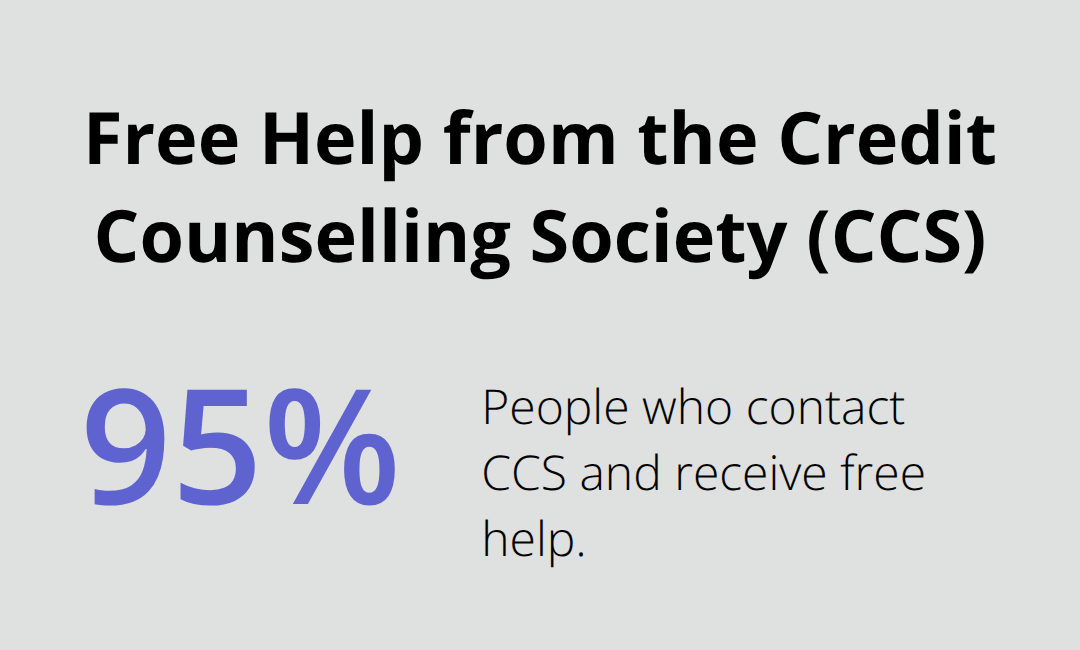
Non-profit credit counseling in Canada stands apart because these organizations operate without commission incentives that plague for-profit debt companies. The Credit Counselling Society has spent 29 years helping Canadians and reports that about 95 percent of people who contact them receive free counseling. They don’t push you toward expensive solutions because their staff earn salaries, not commissions.
When you call them at 1-888-527-8999, they start with quick assessments that identify whether a Debt Management Program, Consumer Proposal, or simple budgeting plan fits your situation. A Debt Management Program through CCS consolidates credit card payments into one monthly payment and can reduce or eliminate interest entirely, which saves thousands of dollars over time. The organization serves all Canadian provinces and territories, and their annual external audits mean you work with a transparent, accountable organization rather than a for-profit shop designed to maximize fees.
Debt Consolidation Loans and Balance Transfers
Debt consolidation loans from banks work differently and suit different situations. A consolidation loan bundles multiple debts into one with a single interest rate, typically lower than credit cards but higher than mortgages. Banks usually require decent credit to approve these loans, which excludes people in the worst situations.
Balance transfers to lower-interest credit cards work for some people, but the transfer fees eat 1 to 3 percent of the amount moved, and promotional rates expire quickly. These options require stronger credit profiles than many Canadians in debt actually have.
Budgeting Apps and Financial Tracking Tools
For budgeting apps, platforms like YNAB (You Need A Budget) and Wealthsimple Track help track spending and automate debt payments, but they’re tools that support your plan, not solutions that replace it. The harsh truth is that no app eliminates debt on its own. Your actual repayment capacity from the cash flow analysis you completed earlier determines what works.
Professional Guidance From Licensed Insolvency Trustees
Professional guidance from a Licensed Insolvency Trustee clarifies whether formal solutions like a Consumer Proposal offer better outcomes than DIY repayment. These trustees assess your complete situation and present realistic options based on your income, expenses, and total debt rather than what generates the highest fees. A trustee evaluates whether you can realistically stick to a repayment plan or whether a formal debt solution protects you more effectively.
Final Thoughts
A sustainable debt plan requires three concrete actions: calculate exactly what you owe, choose a repayment method that matches your personality and cash flow, and access the right resources to stay accountable. Most Canadians fail at debt repayment not because the math is hard, but because they abandon their plan when motivation fades. Your monthly cash flow determines what’s realistic, and your interest rates determine where to focus your effort.
Becoming debt-free takes time, and the timeline depends entirely on your situation. If you have 500 dollars monthly available and 25,000 dollars in total debt, you’re looking at roughly five years of consistent payments. The Credit Counselling Society helps thousands of Canadians map realistic timelines through their free assessments, and they’ll show you whether your current plan actually works or whether a formal solution like a Consumer Proposal saves you money and time.
Contact a Licensed Insolvency Trustee or call the Credit Counselling Society at 1-888-527-8999 if your situation feels too complex to handle alone. Professional guidance costs nothing upfront and clarifies whether you can succeed with a DIY approach or whether formal debt relief serves you better. Financial Canadian supports your journey with resources and guidance every step of the way.










Leave a comment