
Your credit score is the number that lenders check before they hand you money. It determines whether you get approved for a mortgage, what interest rate you’ll pay, and how much you can borrow.
At Financial Canadian, we believe credit score monitoring in Canada isn’t optional-it’s the foundation of smart financial management. Most people check their score once a year, if at all, and miss errors that cost them thousands in higher interest rates.
How Your Credit Score Actually Works
The Two Scores You Need to Know About
Your credit score is a three-digit number that represents your borrowing risk. Equifax and TransUnion, Canada’s two major credit bureaus, calculate these scores using different models, which means you’ll have multiple scores-not just one. Equifax uses a proprietary scoring model for its educational score shown on myEquifax, while TransUnion may use CreditVision Risk scoring. This matters because lenders don’t all use the same score. A lender might rely on TransUnion’s model while you monitor Equifax, creating a gap between what you see and what actually gets reviewed when you apply for credit.
The score ranges from 300 to 900, and anything above 750 is generally considered good. However, lenders have their own thresholds and may weight factors differently than the bureaus do. This is why your score on myEquifax won’t necessarily match what a mortgage lender sees when they pull your file.
The Five Components That Build Your Score
Both Equifax and TransUnion build your score from five main components: payment history (35% of your score), amounts owed relative to your credit limits (30%), length of credit history (15%), credit mix or types of accounts (10%), and new credit inquiries (10%). Each component carries different weight, and lenders scrutinize them all when they evaluate your application.
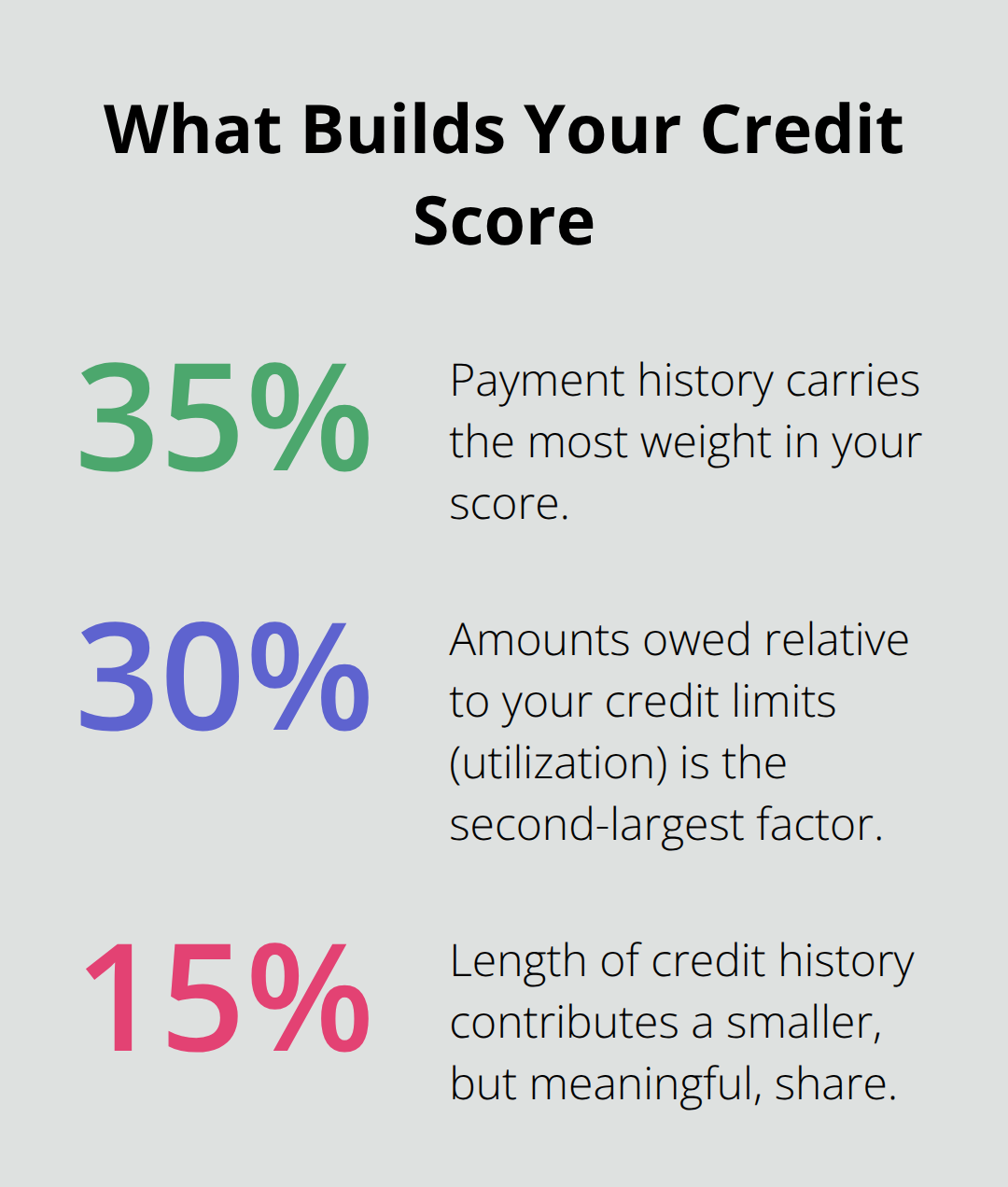
Payment history hits hardest. Credit scoring models generally look at how late your payments were, how much was owed, and how recently and how often you missed a payment. If you pay within 30 days of the original due date, a late payment will generally not show up on your credit reports.
What Lenders See That You Don’t
Carrying balances above 30% of your credit limits signals financial stress to lenders, even if you pay on time. Applying for multiple credit products within a short timeframe triggers multiple hard inquiries, each of which temporarily lowers your score. The payment profile data that lenders consider-which shows your payment and balance history for up to 25 months-doesn’t appear on your free Equifax report, so you won’t see everything lenders see when they evaluate you.
This gap between what you monitor and what lenders access creates real risk. You could think your credit looks solid based on your free report while missing critical information that affects your approval odds and rates.
The Real Cost of Score Gaps
Your credit score directly affects your mortgage rate, car loan rate, and whether you qualify at all. A difference of just 50 points between a 700 and 750 score can cost you thousands in extra interest over the life of a mortgage, making the difference between financial stability and unnecessary debt. These aren’t theoretical numbers-they’re the actual dollars that leave your pocket based on what lenders see in your file.
Understanding what components matter most and what information stays hidden from your free monitoring tools is the first step toward taking control. The next step is knowing which monitoring tools actually give you the visibility you need to catch problems before lenders do.
How to Monitor Your Credit Score Effectively
Choose Your Free Monitoring Tool
You have two solid free options to monitor your credit in Canada. Equifax Canada lets you access your credit report online through myEquifax, with your credit score updated monthly as part of that free report. Credit Karma Canada also offers a free credit score and report in one secure place, with regular updates and monitoring alerts that notify you when changes occur in your file. The key difference: Credit Karma surfaces credit card and loan offers tailored to your profile and shows you your likelihood of approval before you apply, while Equifax focuses on core credit monitoring and now offers Credit Lock in Ontario (starting July 1, 2026), which prevents new credit applications in your name. Neither service costs money to use, but understand that the scores they show may differ from the scores lenders actually see, since Equifax uses a proprietary model and TransUnion may use different scoring models.
Focus on Data, Not Just the Number
When you review your report, ignore the score for a moment and focus on the data lenders actually care about. Check whether your payment history shows any late payments you don’t recognize, verify that your credit limits are accurate, and scan for accounts you didn’t open. The payment profile data that shows up to 25 months of payment and balance history won’t appear on your free Equifax report but matters significantly to lenders, so request your complete report if you’re applying for a mortgage or large loan.
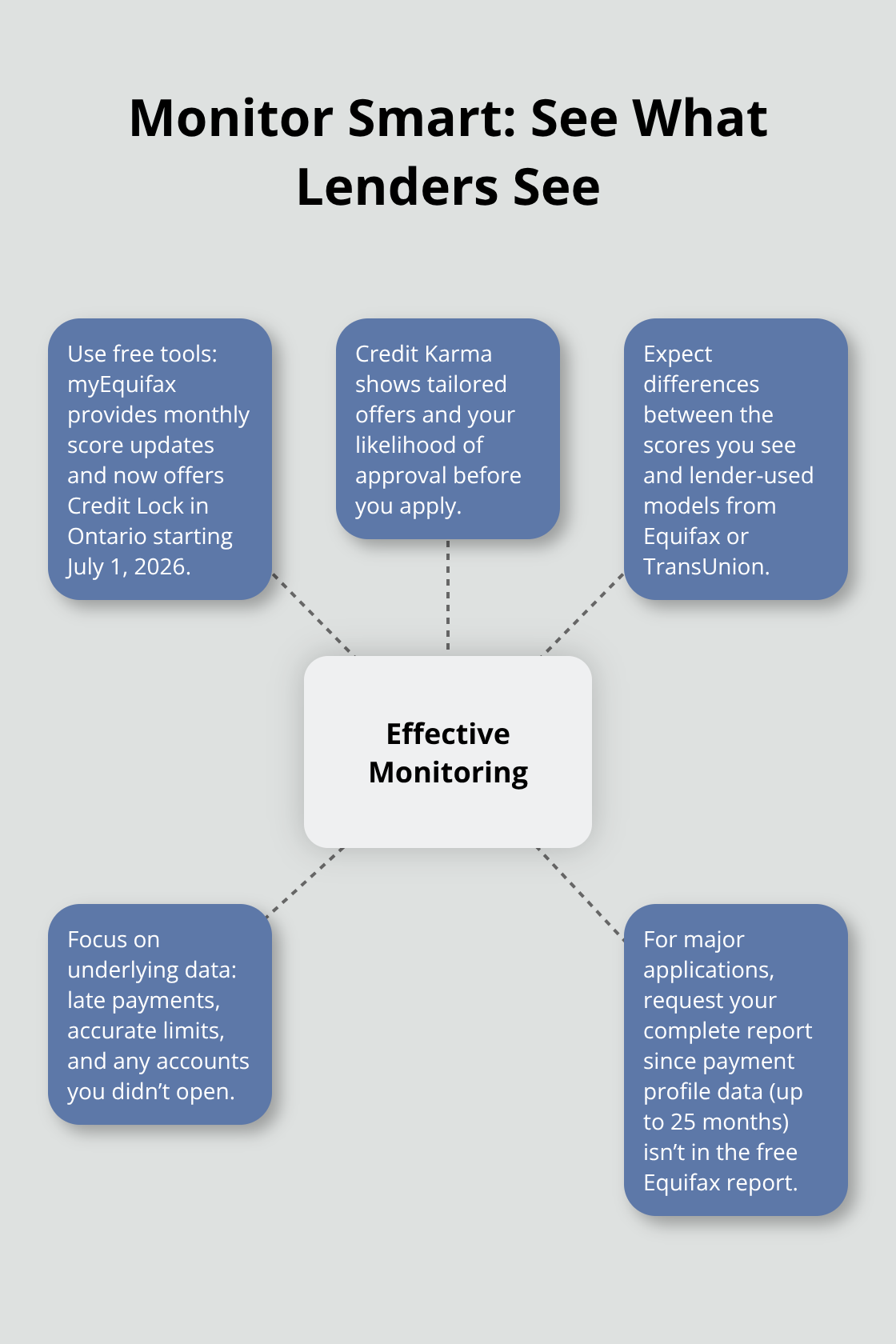
This gap between what you monitor and what lenders access creates real risk-you could think your credit looks solid while missing critical information that affects your approval odds.
Set a Monitoring Schedule That Works
Check your report every three months rather than annually, since catching fraud or errors within 90 days gives you time to dispute them before they damage your approval odds. If you spot inaccurate or incomplete information, file a dispute online or by mail with Equifax directly. Monitoring this frequently costs nothing and takes 15 minutes, yet most Canadians skip it entirely. When errors surface, act fast-the sooner you dispute them, the sooner lenders see corrected information in your file. This regular cadence catches problems before they compound and protects you from paying higher rates based on data that shouldn’t be there.
What Damages Your Credit Score Most
Late Payments: The Fastest Way to Destroy Your Score
Payment history destroys your credit faster than any other factor. If you pay within 30 days of the original due date, a late payment will generally not show up on your credit reports. Late payments may remain on your credit report, signaling to lenders that you missed an obligation. Equifax’s scoring model specifically tracks how late your payments were, how much was owed, and how recently the missed payment occurred. A single late payment can drop your score by 50 to 100 points depending on where you started.
If you’re already at 700, one missed payment pushes you into the 600s, where mortgage approval becomes difficult and interest rates spike. The damage compounds: a late payment from two months ago hurts less than one from last week, but lenders see the pattern and assume you’re a higher risk. Contact your lender immediately if you miss a payment rather than waiting. Many lenders offer hardship programs or allow you to catch up without reporting the missed payment if you act within 30 days.
High Credit Card Balances: The Silent Score Killer
Carrying credit card balances above 30% of your limits damages your score even when you pay on time, because lenders interpret high utilization as financial stress. If you have a $5,000 credit limit and carry a $2,000 balance, that’s 40% utilization and it actively lowers your score. This happens regardless of whether you pay your balance in full each month-revolving credit utilization affects around 20% to 30% of your credit score.
The solution is straightforward: pay down balances to below 30% of your limit before applying for credit. This single action improves your score without requiring you to change any other financial habits. Most people don’t realize that their high balances are the reason lenders reject them or offer worse rates, so they keep applying without fixing the underlying problem.
Multiple Credit Applications: The Desperation Signal
Applying for multiple credit products within 90 days triggers multiple hard inquiries, each temporarily reducing your score by a few points. The real damage comes from the appearance of desperation to lenders. When you apply for a car loan, then a credit card, then a personal loan within weeks, lenders see someone who suddenly needs cash and may deny you based on that pattern alone.
Space your applications at least three months apart if possible, and avoid shopping for credit immediately before applying for a mortgage. These mistakes aren’t theoretical-they directly determine whether you qualify for a $400,000 mortgage or get rejected, and whether your rate sits at 4.5% or 5.5%.
Final Thoughts
Active credit score monitoring in Canada requires you to treat your credit file as a financial asset that demands regular attention. Set up automatic payments for at least the minimum on every account, since payment history drives 35% of your score, and pay down credit card balances to below 30% of your limits before applying for new credit. Space applications at least three months apart to avoid triggering multiple hard inquiries that signal desperation to lenders.
When you spot errors during your quarterly credit report review, act immediately by filing a dispute online or by mail with Equifax if information is inaccurate or incomplete. Include documentation that supports your claim, whether that’s a payment confirmation, a letter from your lender, or proof that an account doesn’t belong to you. Equifax must investigate within 30 days and correct errors that are verified.

For comprehensive protection beyond free monitoring, consider paid identity theft insurance or credit lock services (Ontario residents can now activate Credit Lock through myEquifax at no cost starting July 1, 2026, which prevents new credit applications in your name). We at Financial Canadian recommend checking your report quarterly, disputing errors immediately, and building habits that prevent damage before it happens.











Leave a comment