
Choosing the right mortgage lender can save you thousands of dollars over the life of your loan. The mortgage lender comparison landscape in Canada has expanded dramatically, giving you more options than ever before.
At Financial Canadian, we’ve created this guide to help you navigate those choices with confidence. Whether you’re a first-time buyer or refinancing, understanding your options matters.
Where to Find Your Mortgage Lender in Canada
The Canadian mortgage market splits into three distinct channels, and your choice among them affects both your rate and your access to options. Banks dominate the market with about 60% of all mortgages, but they sell only their own products-meaning you see fewer choices when you walk into a branch.
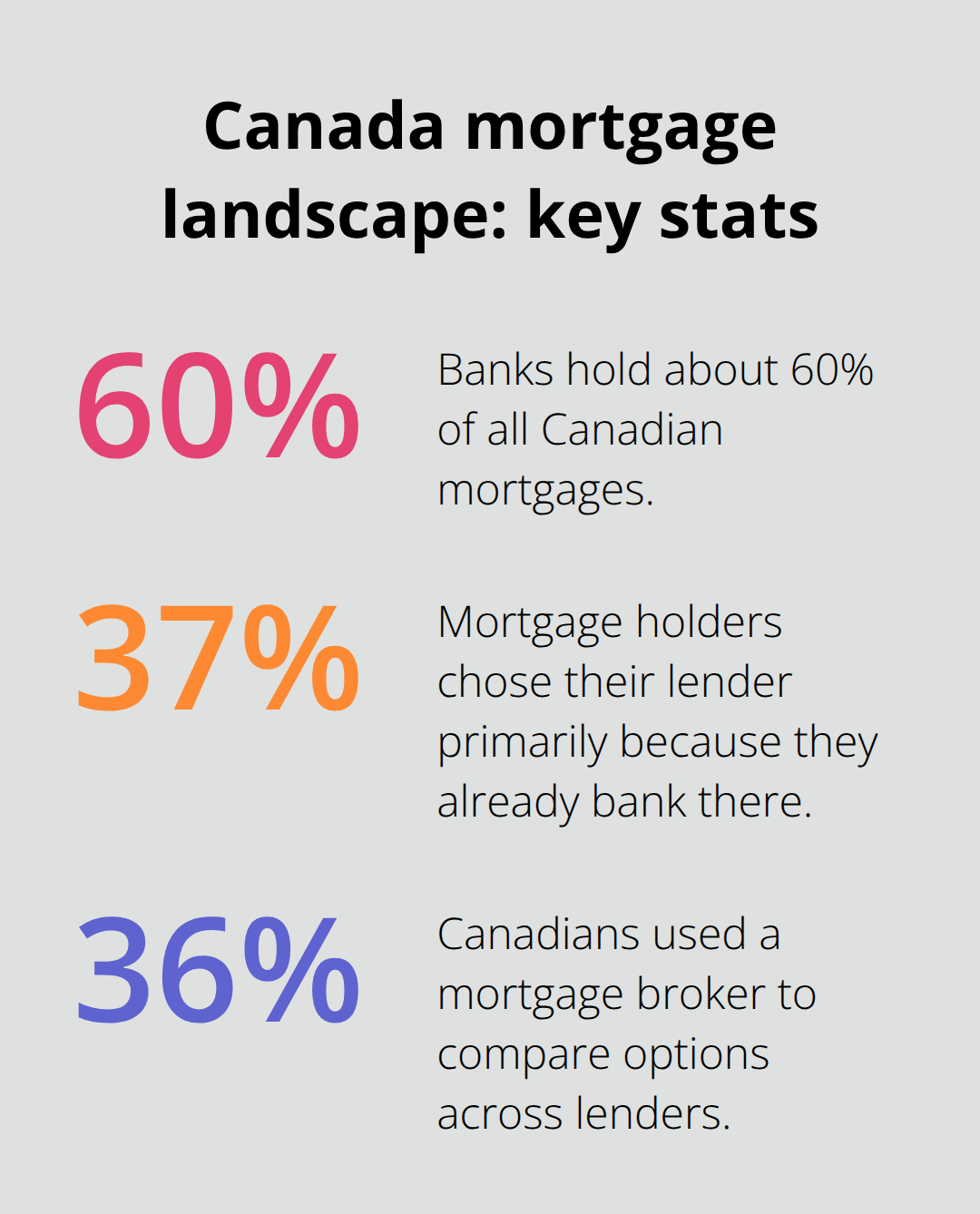
Traditional lenders like banks offer stability and established relationships; however, 37% of mortgage holders chose their lender primarily because they already bank with them. This inertia costs money.
Credit Unions and Monoline Lenders
Credit unions and monoline lenders operate differently. They often beat big-bank rates on posted terms, though their base rates sometimes run higher initially. The real advantage emerges in penalties and prepayment terms. Marathon and Meridian stand out as fair-penalty lenders, meaning you face lower costs if you break your mortgage early. Credit unions add another layer: personalized service and willingness to work with unconventional financial situations.
Mortgage Brokers: Access to 100+ Lenders
Mortgage brokers represent the third path, and they access roughly 100+ lenders across banks, credit unions, and monoline operators. Nearly 36% of Canadian mortgage holders use a broker to compare options, and brokers typically cost you nothing upfront since lenders pay their commission. The trade-off exists: broker-originated loans sometimes carry higher origination points, adding to your closing costs. Brokers also face financial incentives to steer you toward certain products, so transparency matters-ask how they’re compensated. The strongest move is to shop independently across all three channels. Bring competing quotes from a big bank, a credit union, and a broker to the table. Banks may offer deeper discounts to win your business when they see alternatives. One realistic scenario from the market: a 3-year fixed mortgage around 3.89% paired with a home equity product demonstrates typical competitive terms you can expect when you negotiate across lenders.
Why Lender Choice Shapes Your Long-Term Costs
Comparing rates alone misses the real picture. Scotia’s Rewards mortgage offers up to 20% annual prepayment privileges, while most competitors cap out at 15% per year. CIBC claws back cashback when you break the mortgage; TD doesn’t in some cases. TD mortgages register as collateral, which can limit your future HELOC options and cost savings. RBC’s blanket mortgage supports pre-construction financing differently than standard products. BMO offers Airbnb rental financing and a mortgage cash account-niche features that save money if they match your situation. These differences compound over five years.
Feature Mismatches That Cost You Money
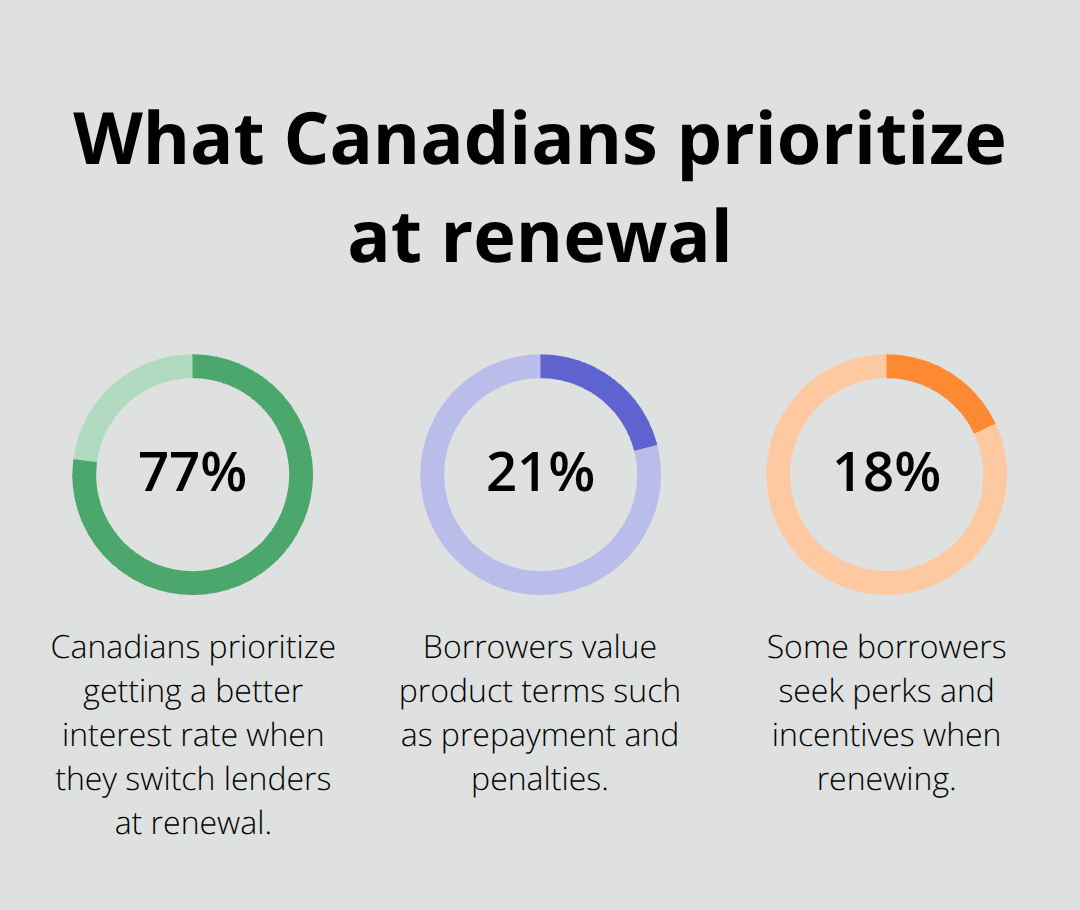
A borrower who needs flexibility should avoid Scotia STEP despite its refinancing appeal because frequent refinances trigger internal rating blocks that limit future access. Foreign income earners find CIBC and RBC more accommodating than TD, which caps LTV around 65% for certain features. Documentation also matters: Scotia-like products offer looser down-payment requirements, helping when your down payment source is unconventional. When you switch lenders at renewal, 77% of Canadians prioritize better interest rates, but 21% value product terms and 18% want perks. This split reveals a blind spot: rate shopping without evaluating features leaves money on the table.
Portability rules vary too-most mortgages port only if your new home’s loan-to-value stays around 80% or lower. Verify product-specific rules before committing. Understanding these nuances positions you to evaluate lenders on what actually matters for your situation, not just the headline rate.
What Actually Matters When Comparing Lenders
Rate shopping alone will cost you money. The Financial Consumer Agency of Canada found that mortgage holders face awareness gaps about available options. This knowledge gap matters because comparing lenders on rate while ignoring features leaves thousands on the table. When you pull quotes from multiple lenders, request a current loan estimate from each one that includes the rate, origination points, all fees, and the effective annual rate. This approach lets you compare apples to apples instead of chasing headline numbers.
Prepayment Privileges and Cashback Clawbacks
Most lenders cap prepayment privileges around 15% annually, but Scotia’s Rewards mortgage reaches 20%-a meaningful difference if you plan extra payments. Origination points vary too; broker-originated loans sometimes carry higher points than bank-direct mortgages, adding $2,000 to $5,000 in closing costs depending on your loan size. Some lenders clawback cashback offers when you break the mortgage early (CIBC does this), while others don’t (TD in some cases), so clarify this before you sign. Variable-rate products compound differently across lenders-Scotia’s semi-annual compounding can work in your favor compared to monthly compounding at other institutions.
Registration, Collateral, and Portability Rules
TD registers mortgages as collateral, which constrains your future HELOC options and refinancing flexibility in ways that cost real money later. When you need a second mortgage or home equity line, lenders factor in your existing debt structure and how it’s registered. Portability rules create another hidden cost layer; most mortgages port only if your new home’s loan-to-value stays around 80% or lower, but product-specific rules vary. A borrower with a $500,000 mortgage on a $625,000 home (80% LTV) can port freely, but move to a $550,000 property and suddenly you cannot port that mortgage-forcing a costly break and refinance. Verify portability thresholds before you commit to any lender.
Documentation Requirements and Foreign Income
Documentation requirements shift your costs significantly. Scotia-like products accept looser down-payment documentation, which saves time and stress if your down payment comes from an unconventional source like a gift or recent inheritance. Foreign income earners face rate penalties at TD (capped around 65% LTV for certain features) but find CIBC and RBC more accommodating-potentially 10 to 15 basis points better on your rate. These specifics determine whether a lender actually works for your situation, not the posted rate they advertise.
Collecting Competing Offers and Negotiating Terms
Bring at least two competing quotes to any lender conversation. Banks may offer deeper discounts when they see alternatives. Request that lenders put their best offer in writing; verbal quotes mean nothing at closing. If you work with a mortgage broker, ask explicitly how they’re compensated and which lenders pay them higher commissions. This transparency prevents steering toward products that benefit the broker more than you.

Credit unions and monoline lenders like Marathon and Meridian deserve inclusion in your comparison because they often beat big-bank rates on penalties if you break the mortgage early. Coordinate all hard credit inquiries within a 30-day window; multiple pulls in this timeframe count as one inquiry and minimize score impact. Track rate, points, fees, amortization term, and product features side by side on a spreadsheet. This forces you to see total cost, not just the headline rate.
Your next step involves moving beyond quotes and into the actual evaluation process-understanding which lender’s features align with your financial goals and timeline.
Finding and Evaluating Lenders Beyond the Surface
Check Your Credit Before You Apply
Pull your credit report from Equifax or TransUnion before you approach any lender. You can access your report free through the official channels. Know your actual credit score because lenders quote rates based on it, and a 50-point difference in your score affects your rate. Once you know where you stand, request pre-approval from at least three sources: a big bank, a credit union, and a mortgage broker. Coordinate these requests within a 30-day window so multiple hard inquiries count as one pull and minimize score impact.
Compare Pre-Approval Letters Side by Side
Each pre-approval should include the rate, term options, maximum borrowing amount, and any conditions tied to your employment or down payment. Write these down side by side on a spreadsheet. This forces you to see real numbers, not marketing language. When lenders send pre-approval letters, they vary wildly in what they reveal. Some hide origination points in fine print; others bury portability restrictions in product documentation. Demand a loan estimate from each lender that breaks down rate, points, appraisal fees, legal fees, title insurance, and any lender-specific charges. Compare the effective annual rate across all three, not just the posted rate. A lender quoting 4.89% with 0.5 points costs more than one quoting 4.99% with 0 points when you calculate total closing costs.
Use Online Tools as a Starting Point, Not Your Final Answer
Online comparison tools exist, but they rarely show the full picture. RateSpy highlights fair-penalty lenders, which matters if you might break your mortgage early, but the tool doesn’t compare prepayment privileges or portability rules that we covered earlier. Use RateSpy as a starting point to identify which lenders merit deeper investigation, not as your final answer. Customer reviews on Google, Trustpilot, and lender websites reveal patterns about service quality and closing timelines, but treat them with skepticism. A borrower complaining that closing took eight weeks might have provided documents late; another praising fast closing might have had a straightforward file. Look instead for recurring complaints about specific issues: lenders who frequently deny portability claims, brokers who disappear after funding, or credit unions with slow response times. Search for the lender name plus the words penalty, clawback, or complaint to surface real problems.
Talk to Multiple Brokers and Spot Conflicts of Interest
Talk directly to three mortgage brokers and ask each one to show you quotes from at least five different lenders. Brokers who show you only two or three options aren’t working hard enough. Ask each broker explicitly which lenders pay them the highest commission and which ones they personally recommend. If their top recommendations match their highest-paying lenders, you’ve spotted a conflict of interest. The best brokers recommend based on your situation, not their commission. Once you have competing offers in hand, call the lender’s rate desk directly. Tell them you have a competing quote at a better rate and ask what they can do. Banks regularly drop rates or waive fees when they see alternatives. Put any verbal improvement in writing before you commit. Many borrowers skip this negotiation step because they assume rates are fixed. They are not.
Final Thoughts
Mortgage lender comparison in Canada requires you to move beyond rate shopping and evaluate the full picture. Scotia’s prepayment privileges, TD’s collateral registration, CIBC’s cashback clawbacks, and portability thresholds all matter as much as the headline rate. Feature mismatches cost real money when you need flexibility or face unconventional circumstances like foreign income or loose down-payment documentation.
Nearly 48% of Canadian mortgage holders personally compared lenders, while 36% used a broker to do it. The remaining 16% did not compare at all, and that inertia likely cost them thousands. When you bring competing quotes from a bank, a credit union, and a mortgage broker to the negotiation table, lenders respond with better offers-banks drop rates and waive fees when they see alternatives, while credit unions and monoline lenders like Marathon and Meridian often beat big-bank penalties if you break your mortgage early.
Pull your credit report, request pre-approval from at least three lenders within a 30-day window, and collect loan estimates that show rate, points, fees, and effective annual rate side by side. Call the rate desk directly and negotiate once you have competing offers, then put any verbal improvements in writing. At Financial Canadian, we help you build the digital foundation to make informed financial decisions-explore our resources to support your journey toward smarter borrowing and stronger financial outcomes.











Leave a comment