
Your credit score directly affects your ability to borrow money, get approved for mortgages, and secure better interest rates in Canada. A strong score can save you thousands of dollars over your lifetime, while a weak one locks you out of financial opportunities.
We at Financial Canadian have put together practical build credit Canada tips that work. This guide shows you exactly how to boost your score, fix errors on your report, and maintain excellent credit long-term.
How Your Credit Score Actually Works in Canada
The 0-900 Scale and What Drives Your Score
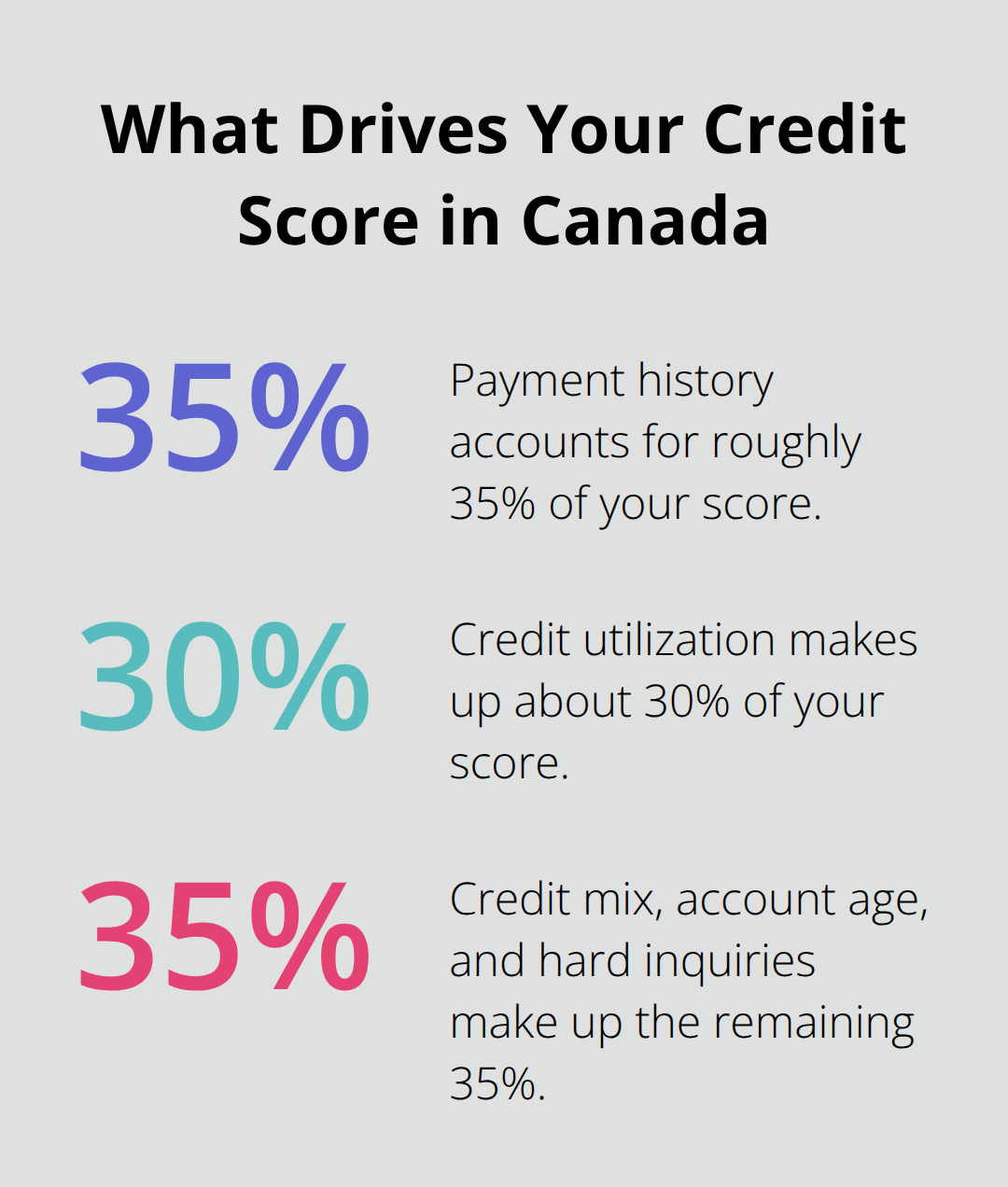
Your credit score in Canada ranges from 0 to 900, and TransUnion and Equifax calculate it based on payment history, outstanding debt, credit mix, and account age. These two bureaus collect data from lenders and report it monthly, meaning your score can shift significantly within 30 to 45 days after you take action. Payment history accounts for roughly 35% of your score, which is why a single late payment can drop your score by 50 to 100 points depending on how recent it is and how delinquent the account becomes.
Credit Utilization: The 30% Rule That Works
Your credit utilization ratio-the percentage of available credit you actually use-makes up about 30% of your score, and lenders prefer to see you using less than 30% of your limits. If you have a $5,000 credit limit across all cards, try to keep your total balance under $1,500 to stay competitive. This single factor influences lender decisions more than most people realize, and lowering your balances before your lender reports to the bureaus produces faster score improvement.
Credit Mix, Account Age, and Hard Inquiries
The remaining 35% comes from credit mix (revolving accounts like credit cards plus installment loans like car payments), the age of your oldest account, and hard inquiries from recent applications. Hard inquiries stay on your report for three years but typically stop affecting your score after about six months, so timing matters when you apply for multiple products. Keeping older accounts open and active maintains the average age of your credit, which strengthens your profile over time.
Why Your Score Directly Controls Your Financial Options
A score of 760 or higher qualifies you for the best mortgage rates and lowest interest rates on loans, potentially saving you tens of thousands over a 25-year mortgage. Scores between 650 and 749 still get approved but face higher rates, while anything below 650 triggers rejections or requires a co-signer. Landlords increasingly check credit scores too-many reject tenants with scores below 600 or demand higher deposits. Insurance companies in Canada also use credit information to calculate premiums, so a weak score raises your costs across multiple financial products.
The Real Cost of a Lower Score
The difference between a 650 score and a 750 score on a $300,000 mortgage could mean paying $50,000 to $100,000 more in interest over the life of the loan, making score improvement one of the highest-return financial moves you can make. Checking your reports from both TransUnion and Equifax costs nothing and takes 15 minutes-errors appear on roughly 1 in 5 reports according to consumer reports, and disputing inaccuracies can boost your score by 50 to 100 points when the bureau removes false late payments or accounts that aren’t yours. With this foundation in place, you’re ready to take concrete steps that produce measurable results.
How to Actually Improve Your Credit Score This Month
Set Up Automatic Payments to Stop Late Payments
Payment history matters most, and automatic payments on every bill you owe produce the fastest results. One 30-day late payment can hurt your credit scores, even if it only happens once. Set autopay for at least the minimum amount on credit cards and the full amount on other bills so you never miss a deadline.
If you’ve already missed a payment, contact your lender immediately to arrange a plan. Paying off an overdue account stops further damage and starts the recovery clock. Most lenders report to TransUnion and Equifax monthly, so consistent on-time payments over 30 to 45 days show up as score improvements that compound over time.
Lower Your Credit Utilization Before Your Lender Reports
Lowering your credit utilization ratio produces faster results than almost any other action because lenders report balances monthly. If you have a $5,000 credit limit and a $3,500 balance, you’re using 70% of your available credit-lenders see this as financial stress and flag you as risky. Dropping that balance to $1,500 or less moves you into the optimal 30% range and signals responsible credit use.
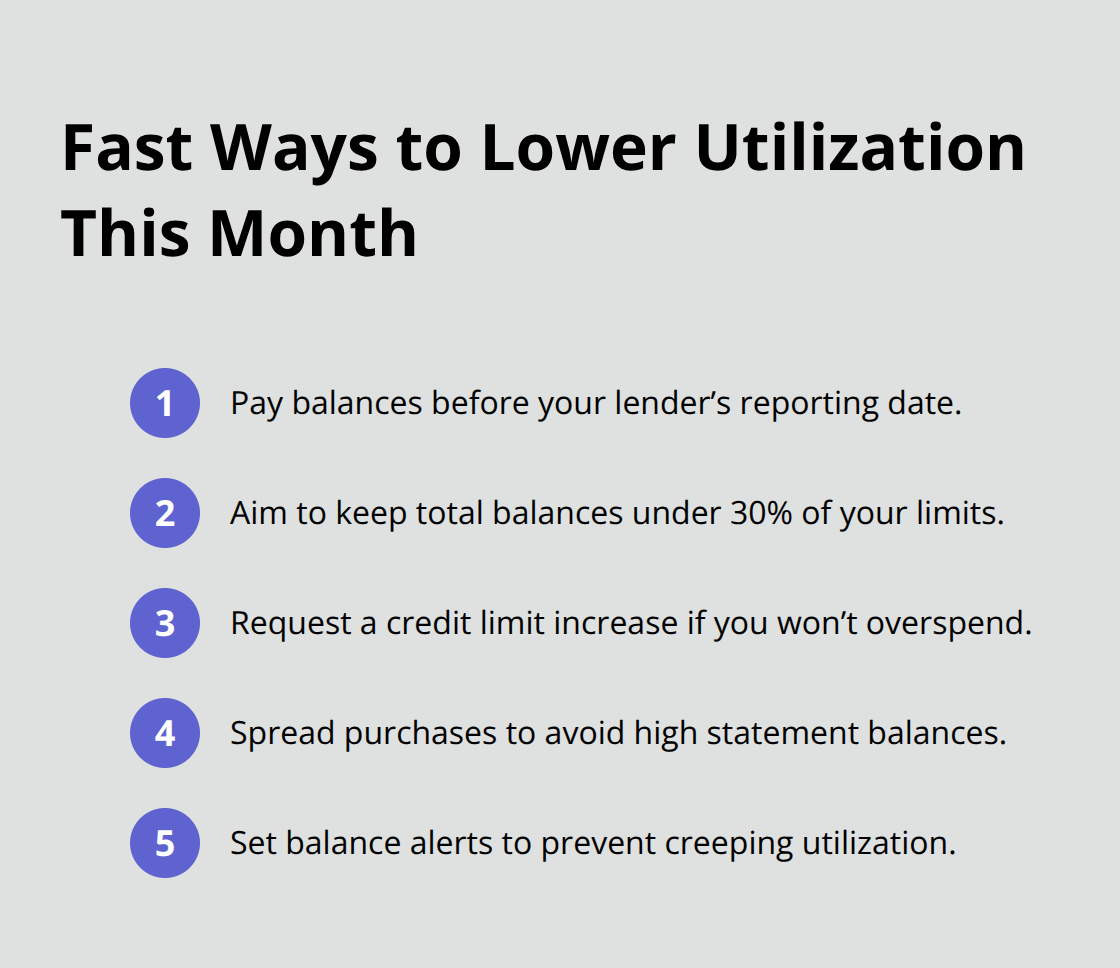
The most aggressive approach works by paying down balances a few days before your lender reports to the bureaus, which produces a noticeable score jump within weeks rather than months. Contact your card issuer to find out their exact reporting date, then time your payments to hit just before they send data to TransUnion and Equifax. You can also request a credit limit increase on existing cards to lower your utilization percentage without changing your actual balance (though only pursue this if you won’t overspend with more available credit).
Find and Fix Errors on Your Credit Report
One in five consumers had an error that was corrected by a credit reporting agency after it was disputed. Pull your free reports from both TransUnion and Equifax-checking them costs nothing and takes 15 minutes. Look for accounts you don’t recognize, incorrect payment statuses marked as late when you paid on time, duplicate entries, or old negative items that should have fallen off.
Disputing inaccuracies is free and straightforward; the bureau has 30 days to investigate and must remove information that cannot be verified. Removing a false late payment or fraudulent account boosts your score immediately, making this one of the highest-impact actions available. Don’t wait for errors to disappear on their own-dispute them as soon as you find them. With these three strategies in place, you’ve tackled the factors that move your score fastest. The next step involves building a stronger credit foundation that protects your score over years, not just months.
Build Credit That Lasts
Improving your credit score in the short term feels good, but the real test comes when you maintain that progress for years. A score that jumps 50 points in two months means nothing if it crashes back down because you returned to old habits. The foundation you build now determines whether lenders trust you in five years when you apply for a mortgage or whether you stay trapped paying higher rates.
Why Your Credit Mix Actually Matters More Than Most People Think
Most Canadians focus entirely on payment history and utilization, completely ignoring the fact that lenders want to see you handling different types of credit successfully. Revolving credit like credit cards shows you can manage flexible borrowing, while installment loans like car payments or lines of credit prove you can stick to fixed payment schedules. If you only have credit cards, lenders see incomplete financial maturity. If you have zero credit history, a secured credit card paired with a small credit-builder loan from your bank creates the diversification that scores reward. The difference between a 680 score and a 720 score often comes down to whether you’ve demonstrated competence across multiple credit types. Add an installment loan deliberately if your profile consists entirely of revolving accounts, but only if you can afford the payments without stretching yourself thin. Your bank can recommend products designed specifically for credit building that won’t damage your finances.
The Mistakes That Undo Years of Progress in Weeks
Closing old credit card accounts feels responsible but devastates your score because it reduces your available credit and eliminates the age benefit those accounts provide. Keep every credit card open indefinitely, even cards you no longer use actively. Charge small purchases occasionally and pay them off immediately to maintain activity and show lenders the accounts remain useful. Opening multiple new credit cards in rapid succession triggers multiple hard inquiries that each drop your score by five to ten points, and lenders interpret this pattern as desperation. Space credit applications at least three to six months apart. Carrying high balances on multiple cards simultaneously damages your score far more than a single card at 70% utilization because total utilization across all accounts matters most. If you have five cards with $500 balances each, that’s a $2,500 total balance that counts against you even if each individual card has a high limit. Consolidate balances onto one card strategically, then pay aggressively to get below 30% utilization across your entire profile. Missing even one payment after years of perfection can drop your score by 100 points or more, which is why autopay becomes non-negotiable once you’ve climbed above 700. Set it and forget it on every single account.
Tracking Progress Means Adjusting Before Problems Develop
Pull your credit reports from both TransUnion and Equifax every four months instead of waiting until you need a mortgage. This cadence catches fraud early, identifies reporting errors before they compound, and shows you exactly which actions produce score movement. When you see your utilization drop after you pay down a balance, you know that strategy works for your specific lender. When your score doesn’t move after a payment, you know your lender reports on a different schedule than you expected.
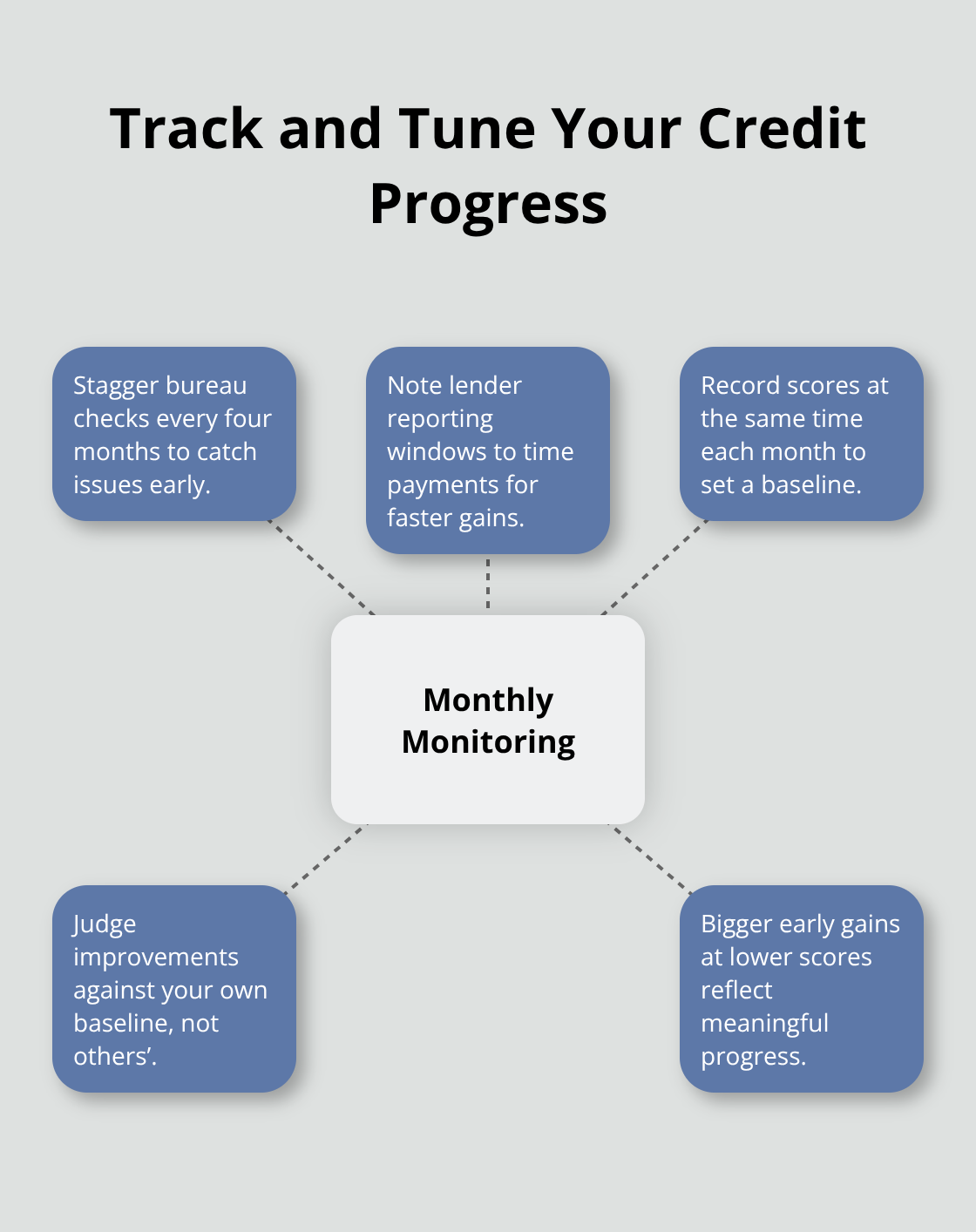
Most lenders report between the 1st and 15th of each month, so timing major payments just before that window accelerates visible progress. Document your score at the same time each month for three months to establish your personal baseline, then measure improvements against that number rather than comparing yourself to others. A 30-point improvement for someone starting at 580 represents massive progress, while the same 30 points means nothing for someone at 750. Your only competitor is your previous self.
Final Thoughts
Building credit in Canada requires consistent action, not perfection. You now have the build credit Canada tips that actually work: set up autopay to eliminate late payments, lower your utilization ratio before reporting dates, and dispute errors on your credit reports immediately. These three actions produce measurable results within 30 to 45 days and form the foundation for long-term financial strength. A 100-point improvement from 650 to 750 could save you $50,000 or more on a mortgage alone.
Start this week by pulling your free reports from TransUnion and Equifax, then set up automatic payments on every bill. Contact your credit card issuer to learn their reporting date, and time a balance payment to hit just before they report (this timing triggers the score improvements that compound over months). These three steps cost nothing and take less than an hour, yet they deliver the results that matter most.
Monitor your progress every four months by checking both bureaus again. We at Financial Canadian understand that building financial strength requires reliable tools and clear guidance, which is why we’ve created resources to support your financial growth. Take action today, stay consistent, and watch your opportunities expand.











Leave a comment