
Your credit score shapes your financial life in Canada. It determines whether you’ll get approved for a mortgage, what interest rate you’ll pay, and even affects your insurance premiums.
At Financial Canadian, we’ve created this Canada credit scores guide to walk you through everything you need to know. From understanding how scores are calculated to fixing errors and boosting your rating, we cover the strategies that actually work.
What Your Credit Score Actually Means in Canada
The Three-Digit Number That Controls Your Financial Access
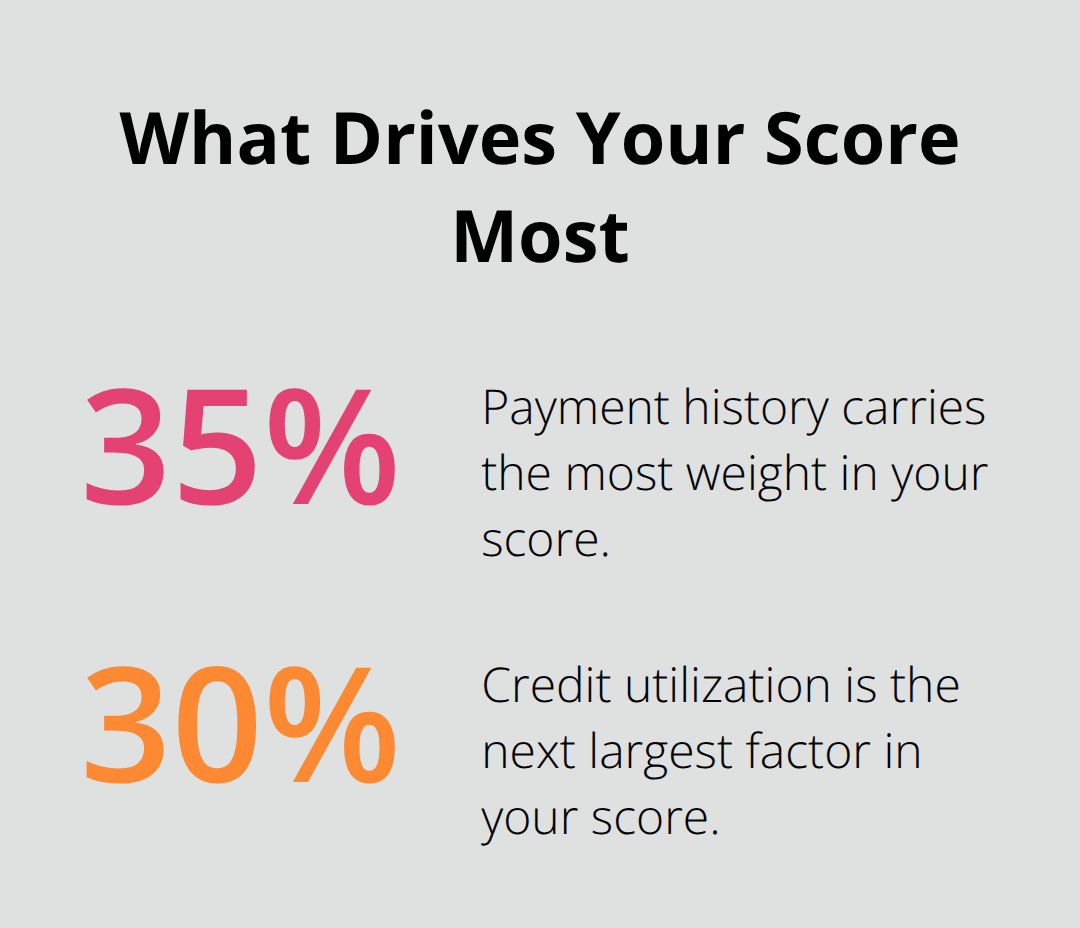
A credit score is a three-digit number that tells lenders how likely you are to repay borrowed money. In Canada, lenders use scores ranging from 300 to 900, with higher numbers indicating lower risk. Your score gets calculated based on your payment history, how much credit you’re using, the length of your credit accounts, the mix of credit types you hold, and recent credit inquiries. Payment history carries the most weight at roughly 35% of your score, while credit utilization accounts for about 30%. This means missed payments or maxed-out credit cards will hurt you far more than opening a new account.
The difference between a score of 650 and 750 isn’t just a number-it’s the difference between paying 5.99% or 3.99% on a mortgage, which translates to tens of thousands of dollars over 25 years.
How Lenders Actually Use Your Score
Lenders don’t treat your score as a pass-or-fail test. A bank might approve you at 620 but charge you higher rates, while another lender won’t touch you until you hit 680. This is why knowing your exact score matters more than guessing. A strong score of 741 or higher typically qualifies you for the best mortgage rates, car loans, and credit card offers available in the market. Drop below 670 and you’ll face rejection from traditional lenders or approval only at rates that make borrowing expensive.
The Hidden Costs Beyond Loans
Your credit score affects far more than just loan approvals. Insurers pull credit information to assess risk, and a lower score can increase your auto or home insurance costs by 10-20% annually. Some employers also check credit reports for certain positions, particularly in financial services or roles involving cash handling (though they see your report rather than your actual score). Landlords increasingly review credit history before renting apartments, and utility companies might require deposits from applicants with poor scores. One missed payment can trigger higher borrowing costs, insurance premiums, and deposit requirements simultaneously, making recovery harder. Understanding these connections helps you see why your score demands attention now rather than later.
How Your Credit Score Moves Up and Down
Payment History: The Foundation of Your Score
Payment history accounts for approximately 35% of your credit score, making it the single most important factor in your rating. One late payment can drop your score by 50 to 100 points depending on how late it is and your overall credit history. A payment 30 days overdue causes far less damage than one 90 days late, but both hurt significantly. Lenders focus on recent behavior, so a late payment from two years ago matters less than one from last month. If you’ve missed payments, get current immediately and stay current for the next 12-24 months to demonstrate you’ve changed your habits.
Credit Utilization: The Balancing Act
Credit utilization represents roughly 30% of your score and measures how much of your available credit you actually use. If you have a credit card with a $5,000 limit and carry a $4,500 balance, your utilization sits at 90%, which damages your score significantly. Financial institutions view high utilization as a sign of financial stress, even if you pay on time. Try keeping utilization below 30%, meaning on that same $5,000 card you’d want to maintain a balance under $1,500. This doesn’t require paying off cards entirely, just managing balances strategically. One overlooked tactic works well: request higher credit limits from your card issuers, which lowers utilization instantly without paying down debt (though this works best if you don’t increase spending).
Length of History, Credit Mix, and Inquiries
The remaining 35% of your score comes from three factors: length of credit history, credit mix, and recent inquiries. Length of credit history contributes about 15% and rewards you simply for keeping old accounts open, even if you don’t use them actively. Closing your oldest credit card ranks among the worst moves you can make because it shortens your average account age and reduces total available credit simultaneously.
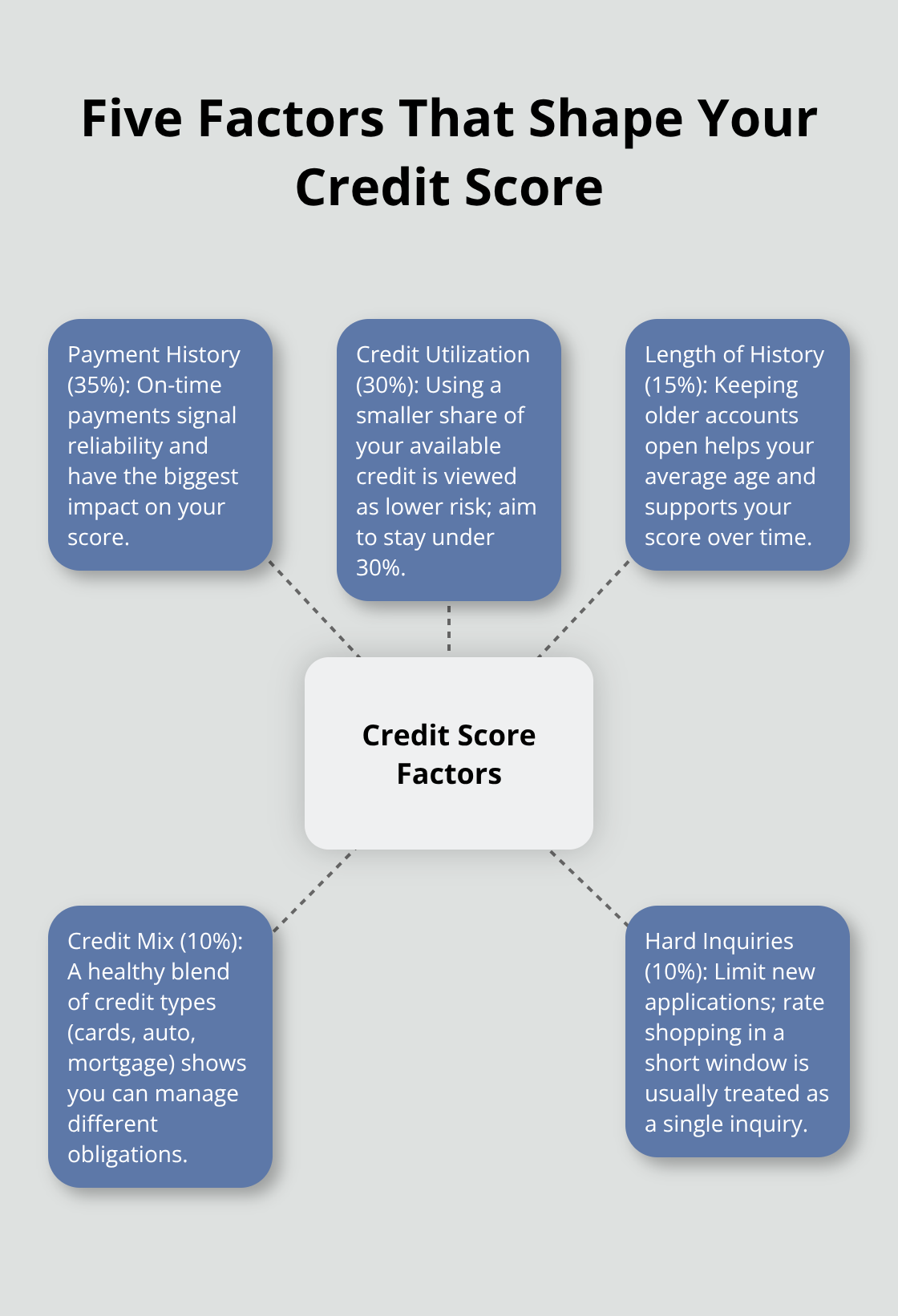
Credit mix, worth roughly 10%, means having different types of credit like mortgages, car loans, and credit cards shows lenders you can manage various obligations responsibly. Hard inquiries from credit applications make up the final 10%, and multiple inquiries within a short period signal financial desperation to lenders. Shopping for a mortgage or auto loan within 14-45 days typically counts as a single inquiry, but applying for multiple credit cards in one month creates separate hard inquiries that each ding your score slightly. Soft inquiries, like checking your own credit or receiving pre-approved offers, never impact your score.
Putting It All Together
Focus relentlessly on payment history first, then attack high credit utilization, and avoid opening multiple new accounts unless absolutely necessary. These three actions address the factors that carry the most weight in your score calculation. Once you understand what moves your score, the next step involves checking your actual number and identifying where errors might exist on your report.
How to Check Your Credit Score and Get Accurate Information
Access Your Credit Reports for Free
Getting your actual credit score takes minutes, but most Canadians never do it. You can access your credit report and score for free through Equifax or TransUnion, Canada’s two major credit reporting agencies. Equifax offers free monthly VantageScore reports through myEquifax, while TransUnion provides similar access through their online portal. The Financial Consumer Agency of Canada recommends checking both bureaus because they sometimes report different information, which means your score can vary between them. Start with myEquifax to grab your Equifax report, then visit TransUnion’s website to pull your second report. This takes 15 minutes total and costs nothing. Many people obsess over a single score without realizing lenders might use a different bureau’s data entirely, so checking both gives you the complete picture of what creditors actually see.
Spot and Fix Errors on Your Report
Once you have your reports, read them carefully for errors because mistakes happen frequently. Look for accounts you don’t recognize, incorrect payment dates, or balances that don’t match your records. If you spot an error, contact the bureau immediately with documentation supporting your claim. TransUnion and Equifax must investigate within 30 days and correct verified errors. This matters because a single reporting mistake can lower your credit score, leading lenders to charge higher interest rates. If your report shows a late payment from 2019 that you actually paid on time, disputing it could raise your score by 50 to 100 points instantly. Don’t assume the bureaus got it right just because they’re official agencies.
Lower Your Credit Utilization Quickly
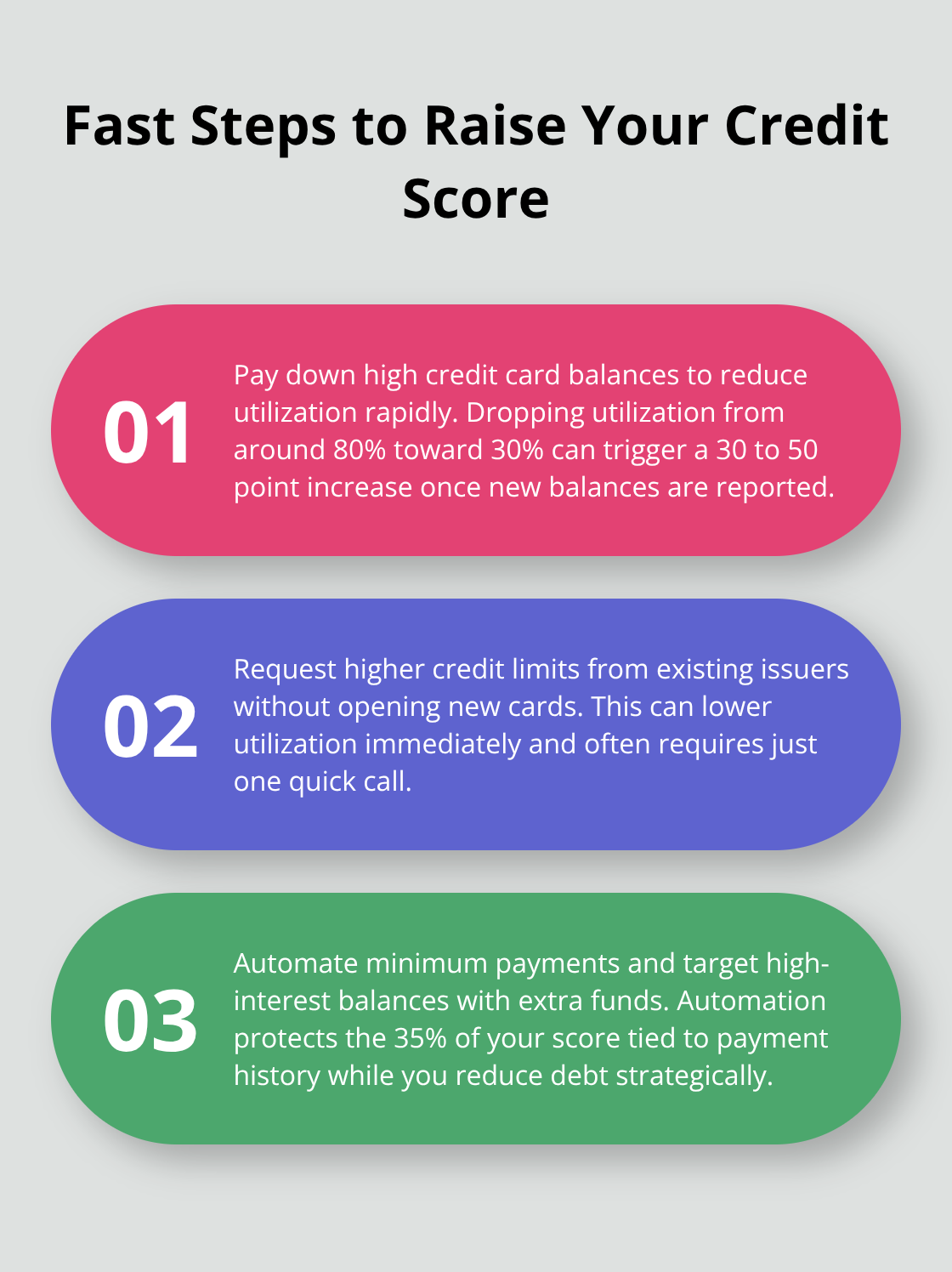
Now that you know your baseline score and have cleaned up any errors, focus on the actions that move the needle fastest. Pay down high credit card balances aggressively since utilization changes take effect immediately, unlike payment history which requires months of on-time payments to rebuild. If you carry $8,000 across three cards with $10,000 total limits, you’re at 80% utilization. Dropping that to $3,000 within 60 days moves your utilization to 30% and typically raises your score by 30 to 50 points once the card issuer reports the new balance.
Request Higher Credit Limits Without New Applications
Request credit limit increases from your existing card issuers without applying for new cards, which lowers utilization without hard inquiries. This single move works remarkably well because it improves your score numerically without requiring you to pay down debt immediately (though obviously paying down debt faster remains the best approach). You can contact your card issuer directly and ask for a limit increase, often completing the request in one phone call.
Automate Payments and Prioritize High-Interest Debt
Set up automatic payments for at least the minimum on every account to eliminate late payment risk, then tackle the highest-interest balances first with any extra money you have. Automation removes the possibility of missed payments, which protects the 35% of your score tied to payment history. This two-pronged approach addresses both immediate risk (late payments) and long-term score improvement (utilization reduction) simultaneously.
Final Thoughts
Your credit score moves every month based on your actions, which means improvement starts immediately once you understand what matters. We at Financial Canadian created this Canada credit scores guide because most people waste years without knowing their score or how to fix it. The reality remains simple: focus on payment history first, then attack credit utilization, and avoid unnecessary hard inquiries.
The biggest mistake Canadians make involves ignoring their credit report entirely. You wouldn’t overlook a bank statement showing fraudulent charges, yet most people never check the data that lenders actually use to make decisions about them. Equifax and TransUnion report different information sometimes, which means your score varies between bureaus, so checking both takes 15 minutes and costs nothing.
Automate your minimum payments to eliminate late payment risk, then direct extra money toward high-interest balances. Request credit limit increases from existing issuers without applying for new cards, and check your reports twice yearly to catch errors early. These actions require no special knowledge or expensive services, just consistent execution of the strategies outlined in this guide.











Leave a comment