
Your credit score shapes your financial life in Canada. Lenders use it to decide whether you qualify for mortgages, car loans, and credit cards-and what interest rates you’ll pay.
We at Financial Canadian created this Canada credit score guide to show you exactly how scores work, what moves them, and how to build yours strategically. Whether you’re starting from scratch or fixing past mistakes, the steps ahead are concrete and actionable.
Understanding Canada’s Credit Score System
Your credit score in Canada falls between 300 and 900, with higher numbers indicating lower risk to lenders. Equifax and TransUnion, Canada’s two major credit bureaus, calculate these scores differently, but both rely on similar underlying data. A score above 760 typically qualifies you for the best interest rates on mortgages and loans, while anything below 620 makes borrowing expensive or impossible. Most Canadians maintain scores between 650 and 750, according to Equifax data. The difference between a 650 and 750 score can cost you thousands in extra interest on a mortgage over 25 years.
What Actually Moves Your Score
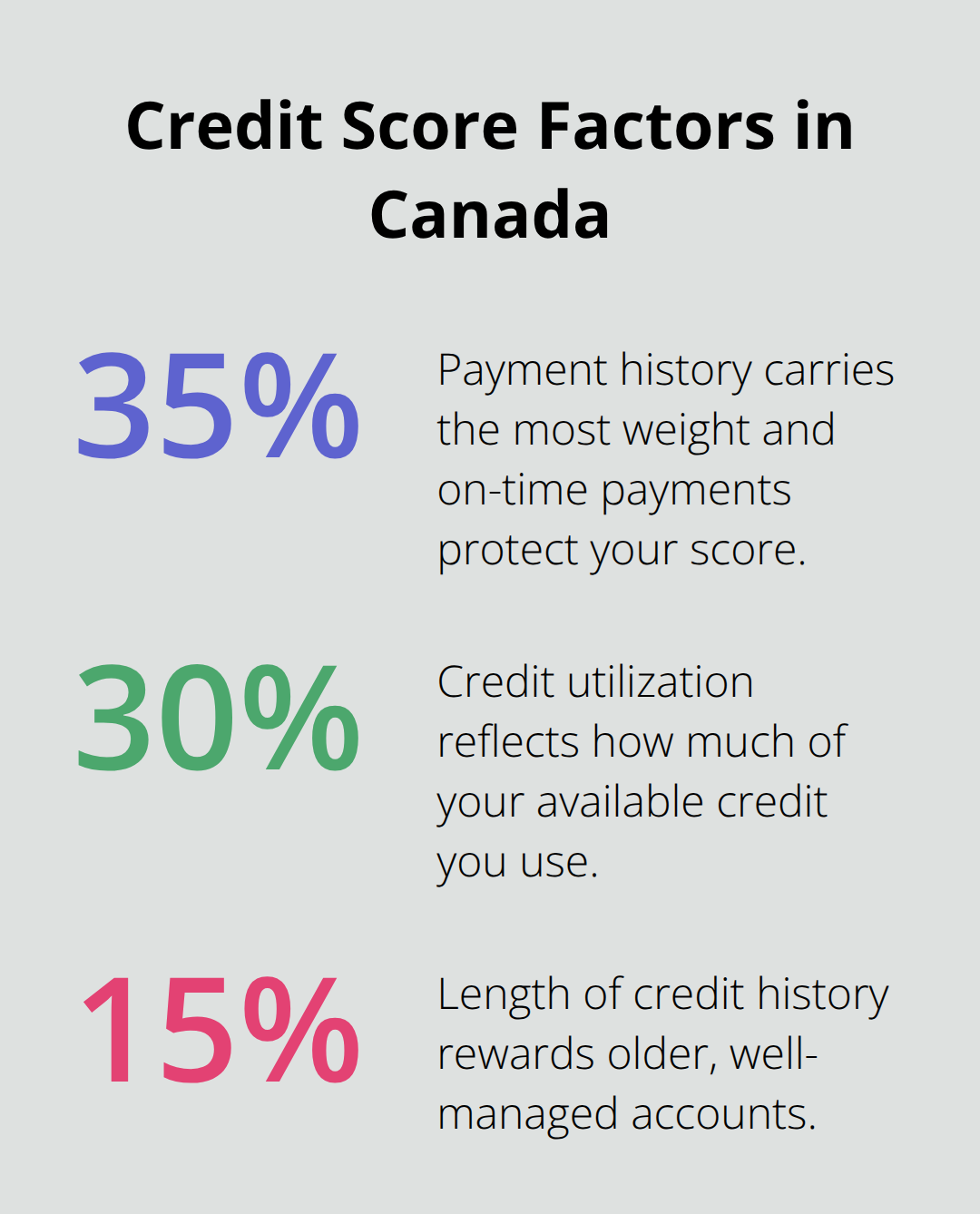
Payment history accounts for 35% of your score, making it the single largest factor. Missing even one payment can drop your score by 50 to 100 points, and the damage lingers for six years on your credit report. Credit utilization makes up 30% of your score-how much of your available credit you use matters enormously. Lenders typically prefer that you use no more than 30% of your available credit. Credit history length accounts for 15%, so older accounts help your score even if you rarely use them. The remaining 20% splits between credit inquiries (when you apply for new credit) and your credit mix of mortgages, car loans, and credit cards.
How to Read Your Actual Report
Equifax and TransUnion calculate scores using different models, so you might see different numbers from each bureau. You can access your free credit report annually from both bureaus through their official websites without impacting your score. The report shows every account, payment history, and inquiry, revealing exactly what lenders see. Errors happen frequently-approximately 1 in 5 Canadians find mistakes on their reports. Late payments, accounts opened in your name fraudulently, or incorrect balances can all tank your score unfairly. Disputing errors takes 30 to 45 days, but the payoff justifies the effort when errors disappear and your score recovers.
Taking Action on What You’ve Found
Once you understand your score and identify any errors, you’re ready to take concrete steps forward. The next section walks you through practical strategies that actually move your score higher, starting with the single most important action you can take.
How to Actually Improve Your Credit Score
Master Payment History First
Payment history dominates your score at 35%, which means one strategy towers above all others: never miss a payment. Set up automatic payments for at least the minimum amount due on every credit account, scheduled two days before the due date. This single step prevents the 50 to 100 point drop that accompanies even one late payment and eliminates the psychological burden of tracking multiple deadlines. Late payments stay on your report for six years, so the cost of a missed payment extends far beyond the immediate score damage. If you’ve already missed payments, the impact weakens over time-a missed payment from five years ago hurts far less than one from six months ago.
Lower Your Credit Utilization Ratio
Your credit utilization ratio affects credit score by 30%, responds immediately to action. If you’re using 80% of your available credit across all accounts, dropping to 30% can increase your score by 40 to 60 points within a billing cycle. This happens because lenders view high utilization as a sign of financial strain, while restraint signals control. Request credit limit increases on existing cards without applying for new ones, which avoids hard inquiries that temporarily lower your score. Alternatively, pay down balances before your statement closing date-the balance reported to credit bureaus is typically your statement balance, not your current balance. Some people strategically pay mid-cycle to ensure lower reported utilization.
Build a Diverse Credit Mix
Diversifying your credit mix matters less than the first two factors, but maintaining a mortgage, car loan, and one or two credit cards demonstrates you can handle different credit types responsibly. Adding new accounts just to improve mix backfires because each application triggers a hard inquiry, temporarily dropping your score by 5 to 10 points. Focus instead on managing what you already have rather than chasing new credit products.
Correct Errors on Your Credit Report
Errors on your credit report represent wasted opportunity. Pull your free report from both Equifax and TransUnion annually, then scrutinize every account and payment record. Dispute inaccuracies immediately-the bureaus must investigate within 30 to 45 days, and errors often disappear during investigation. A single corrected error can shift your score by 50 points or more if that error involved a false late payment or fraudulent account. Once you’ve cleaned up your report and implemented these core strategies, monitoring your progress becomes the next logical step to track what’s actually working.
Monitoring and Managing Your Credit Score
Improving your credit score means nothing if you never verify that improvements actually happened. After you implement payment strategies and dispute errors, you need a system to confirm your score is moving upward and identify what’s working. Your free annual credit reports from the three nationwide credit reporting agencies give you the baseline data, but relying solely on annual checks means missing nine months of progress. The most effective approach combines your free annual reports with regular monitoring through credit monitoring services that alert you to changes in real time. This dual-layer strategy costs almost nothing and catches problems before they damage your score further.
Access Your Free Annual Credit Reports
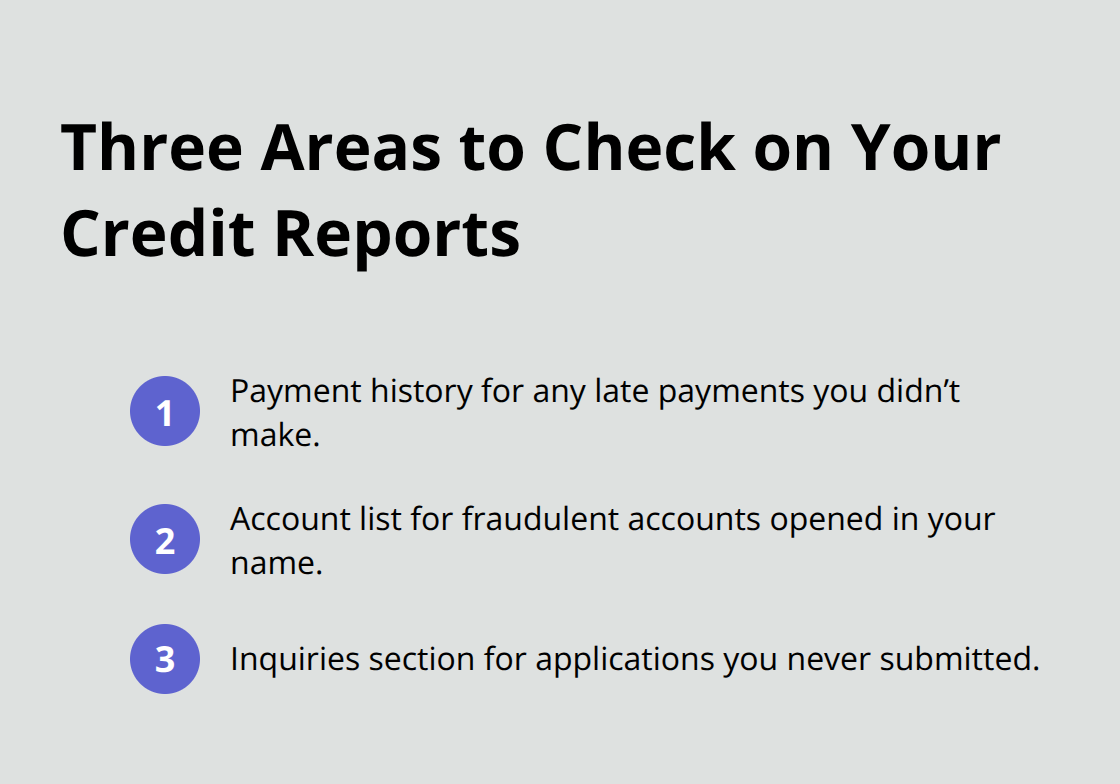
You can obtain your free credit report annually from the three nationwide credit reporting agencies through their official websites without triggering any inquiry that harms your score. Most Canadians skip this step entirely, which means they miss errors sitting on their report for years. When you pull your reports, examine three specific areas: payment history for any late payments you didn’t make, account list for fraudulent accounts opened in your name, and inquiries section for applications you never submitted. Hard inquiries from unauthorized credit applications happen surprisingly often, and catching them early prevents score damage from accumulating.
Document any discrepancies with dates and account numbers, then dispute them immediately through the bureau’s online portal or by mail. The investigation takes 30 to 45 days, and most errors disappear during this period because bureaus cannot verify false information.
Monitor Your Score Between Annual Reports
Annual reports miss critical changes happening in the other eleven months. Credit monitoring services alert you when new accounts open in your name, payment statuses change, or inquiries appear on your report. These services typically cost between 10 and 20 dollars monthly, but catching identity theft or unauthorized accounts within days rather than months justifies the expense. Some services provide your credit score monthly or even weekly, showing you exactly how your recent actions affected your rating. This immediate feedback loop accelerates learning about what actually moves your score versus what doesn’t. If monitoring feels expensive, use the free alert services that most bureaus offer, though these provide less frequent updates than paid versions.
Track Actions and Measure Their Results
The strongest way to improve your score is understanding which actions produced measurable results. After you lower your credit utilization ratio, note your score before and after the change, then compare your next monthly report to quantify the improvement. If you make multiple changes simultaneously, you cannot isolate what helped, so spacing out major actions by one billing cycle reveals cause and effect. Once a new, lower balance is reported to the credit bureaus, high credit card utilization typically stops hurting your credit score. If your score didn’t increase as expected, the problem likely lies elsewhere, such as a recent late payment outweighing your positive actions. This tracking method transforms credit improvement from guesswork into a data-driven process where you know exactly what moves your specific score.
Final Thoughts
A strong credit score in Canada requires three concrete actions: paying bills on time, keeping credit utilization below 30%, and monitoring your report for errors. These steps aren’t complicated, but they demand consistency over months and years. The payoff is substantial-a score above 760 qualifies you for the best mortgage rates, potentially saving tens of thousands of dollars over a 25-year loan term.
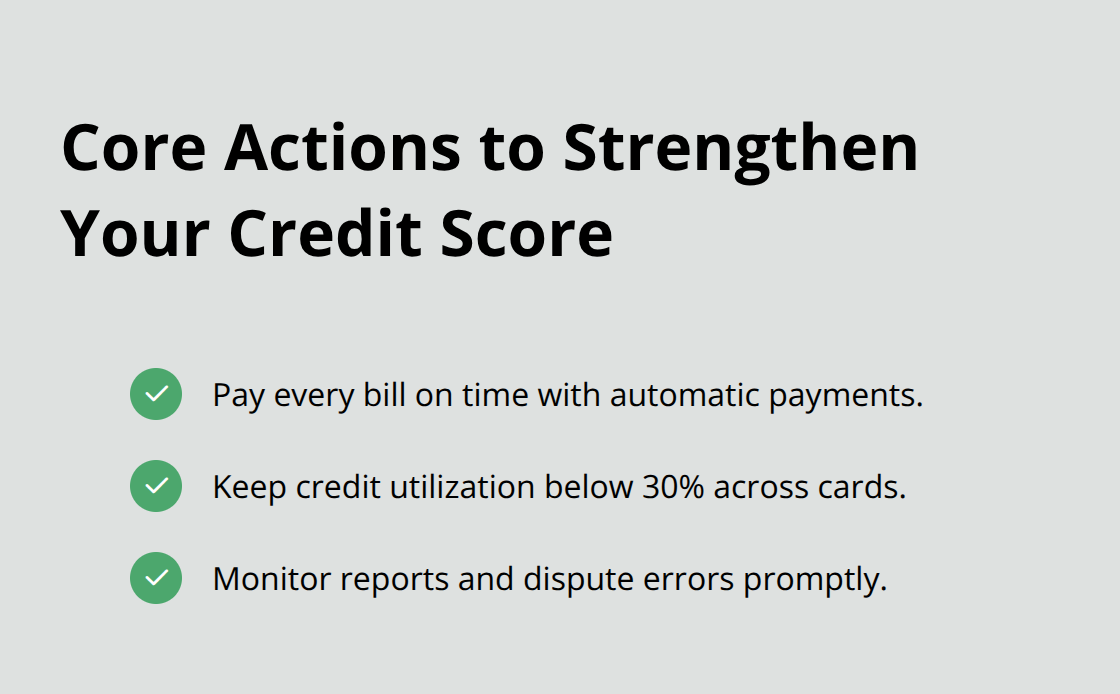
Payment history dominates at 35%, so automating minimum payments two days before due dates eliminates missed payments entirely. Credit utilization at 30% responds immediately-dropping from 80% to 30% can boost your score by 40 to 60 points within one billing cycle. Errors on your report represent wasted opportunity, and disputing them takes 30 to 45 days but often results in score increases of 50 points or more (making error correction one of the fastest ways to improve your rating).
Start by pulling your free annual credit reports from Equifax and TransUnion, then dispute any errors you find. Set up automatic payments for all accounts, then focus on lowering your credit utilization ratio. This Canada credit score guide provides the framework, but your consistent action over time builds the score that opens doors-and if you need help establishing your online presence to match your improved financial standing, our web design service helps businesses build credibility with responsive designs and SEO best practices.










Leave a comment