
Finding the best personal loans in Canada means comparing rates, terms, and lender options that actually fit your situation. We at Financial Canadian have reviewed the major banks, online lenders, and credit unions to help you understand what’s available.
Your credit score and debt-to-income ratio will shape both your approval odds and the rate you receive. This guide walks you through the key factors lenders consider and how to find the right loan for your needs.
Where to Find the Best Personal Loan Rates in Canada
Traditional Banks vs. Online Lenders
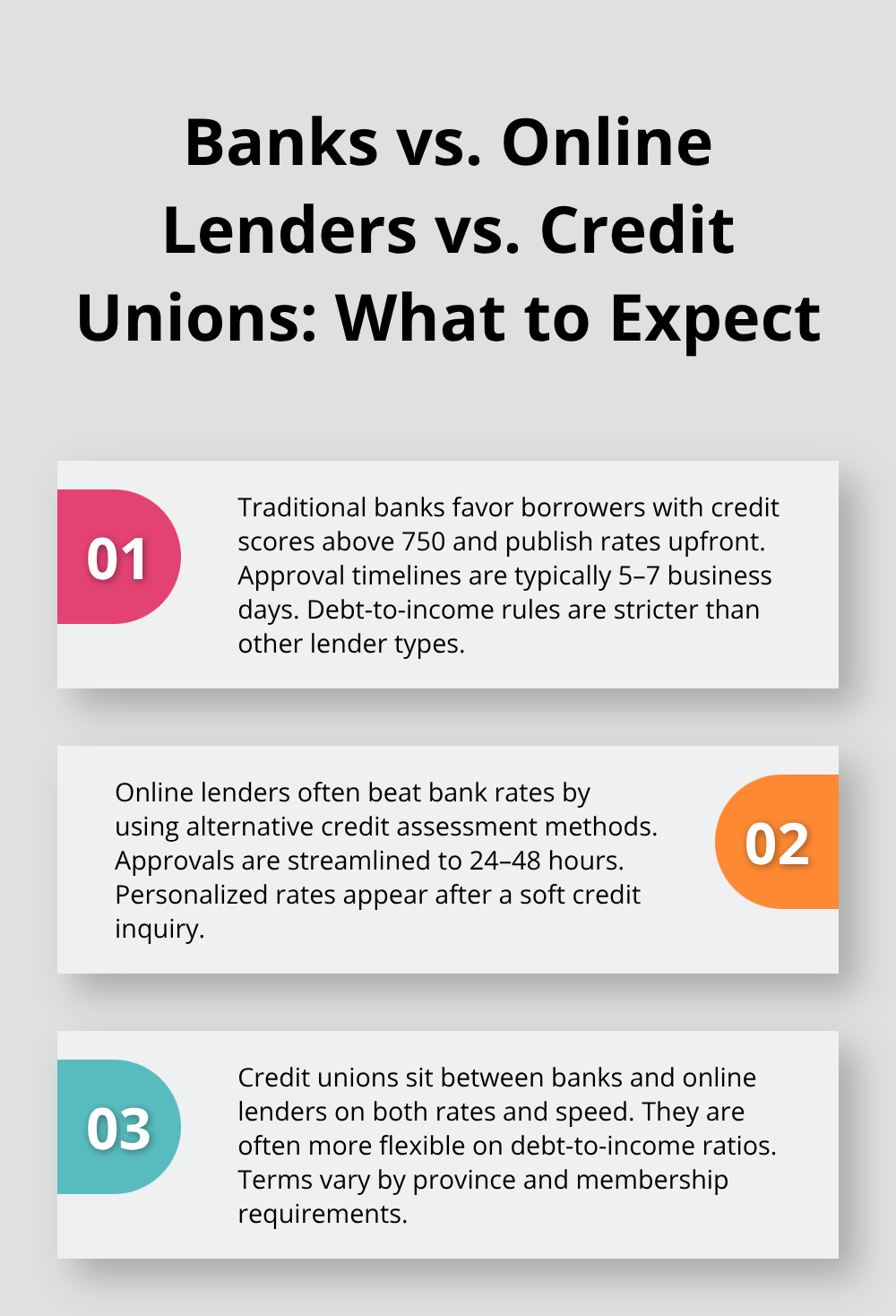
Canadian banks like TD, RBC, and Scotiabank offer personal loans with rates that favor borrowers holding credit scores above 750. Online lenders frequently beat traditional banks because they use alternative credit assessment methods beyond your credit score alone. Mogo, Borrowell, and LendingClub Canada streamline approval processes to 24-48 hours, whereas major banks typically require 5-7 business days. Major banks publish their rates upfront, while online lenders show you personalized rates only after a soft credit inquiry (which doesn’t damage your credit score).
Credit Unions: A Middle Ground
Credit unions across Canada, particularly larger ones like Coast Capital in BC and Meridian in Ontario, sit between traditional banks and online lenders in terms of rates and approval speed. They often provide more flexibility on debt-to-income ratios than major banks, making them valuable if you have stable employment but inconsistent income. Credit union rates and terms vary significantly by province and membership requirements, so comparing across multiple credit unions in your region takes extra effort.
Options for Poor Credit Borrowers
For borrowers with poor credit (scores below 600), online lenders remain your strongest option because major banks and most credit unions will decline your application outright. These lenders assess your application using factors beyond traditional credit scores, opening doors that traditional institutions close.
The Real Cost of Borrowing
Calculate the total cost of borrowing across at least three lenders before committing. A $10,000 loan at 8% over five years costs $2,187 in interest, while the same loan at 18% costs $4,925 (a difference that makes shopping around non-negotiable). Your next step involves understanding how lenders calculate these rates and what factors influence your personal approval odds.
How to Compare Personal Loan Rates and Terms
Understanding APR and What It Actually Costs You
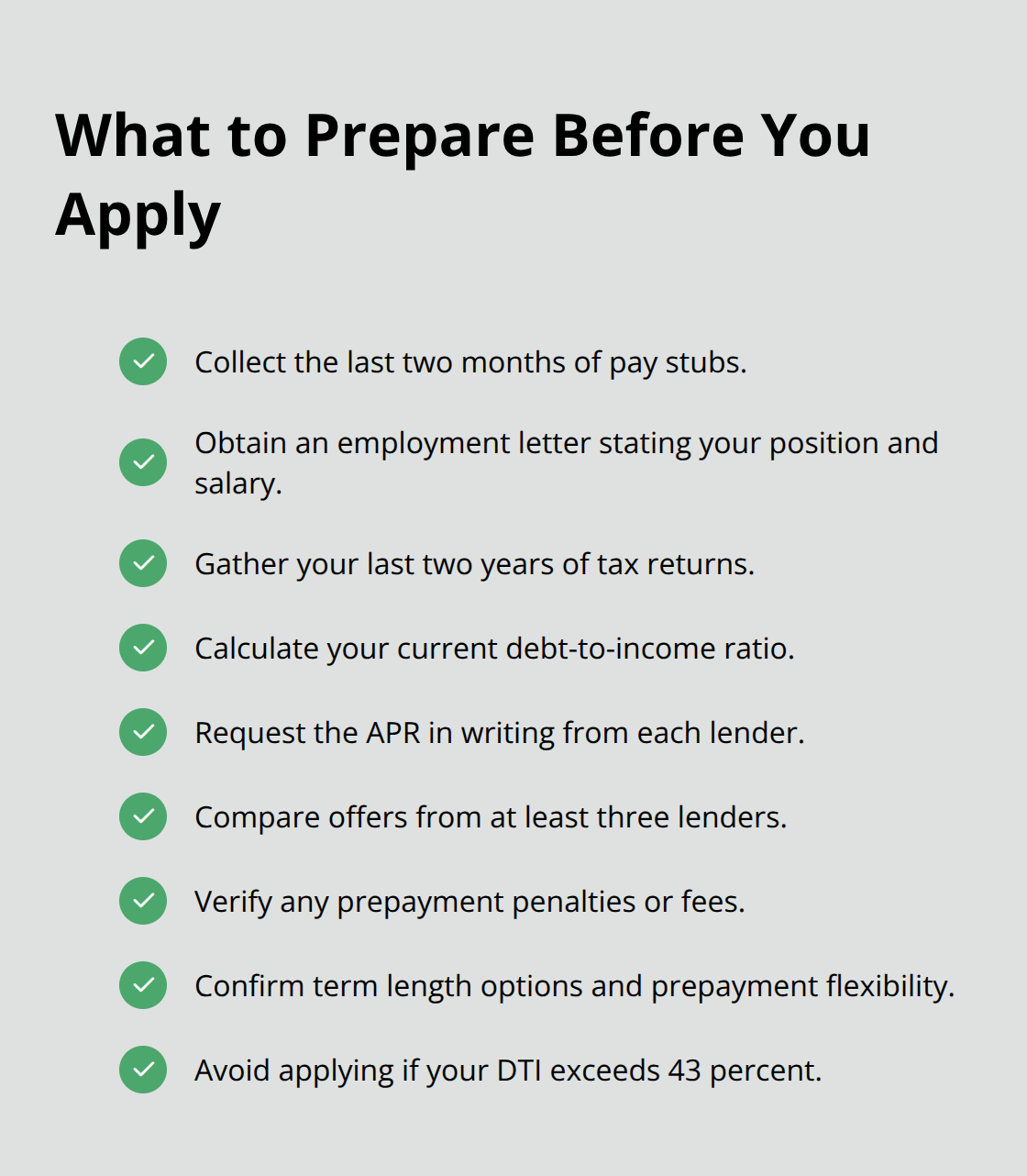
APR (Annual Percentage Rate) includes your interest rate plus lender fees, giving you the true yearly cost of borrowing. A lender advertising 7% interest might actually charge 8.5% APR once origination fees and insurance costs are factored in. This difference compounds over your loan term, turning what looks like a good deal into an expensive one. For a $15,000 loan over five years, the gap between 7% and 8.5% APR costs you roughly $1,125 extra in total interest.
Most Canadian lenders display APR prominently, but some online platforms bury it in fine print or show it only after you complete a full application. Always request the APR in writing before committing, and compare this figure across lenders rather than interest rates alone.
How Loan Terms Shape Your Monthly Payment and Total Cost
Repayment flexibility matters as much as the rate itself, yet most borrowers fixate on APR and ignore term options. A five-year term at 9% APR costs substantially more in total interest than a three-year term at the same rate, but the monthly payment jumps significantly higher. If your income fluctuates month to month, a longer term protects you from payment shock even if you pay more overall. Conversely, if your income is stable and substantial, a shorter term saves thousands in interest charges.
Some lenders offer prepayment without penalties, meaning you can pay off the loan early if your financial situation improves. Others charge early repayment fees ranging from 1% to 3% of your remaining balance, effectively penalizing faster payoff. Credit unions typically offer more flexibility on term length and prepayment than traditional banks, making them worth comparing if you anticipate income changes.
Employment Stability Matters More Than You Think
Your credit score determines your approval odds and influences the APR you receive, but lenders weight employment stability and debt-to-income ratio heavily as well. A borrower with a 680 credit score but stable full-time employment often qualifies for better rates than someone with a 720 score working contract positions. Lenders want proof you can handle additional debt, so your employment history matters as much as your credit history does.
Gathering documentation before you apply speeds up the process considerably. Lenders request recent pay stubs (typically the last two months), employment letters confirming your position and salary, and tax returns from the previous two years. Having these documents ready means you move faster through underwriting and receive your approval decision sooner. Your next step involves understanding which specific factors lenders examine most closely when they assess your application.
What Determines Your Personal Loan Approval and Rate
Credit Score and Payment History Set the Foundation
Your credit score alone doesn’t determine whether you’ll get approved or what rate you’ll pay. Lenders examine three distinct areas when they assess your application, and understanding each one helps you strengthen your position before you apply. Your credit score and payment history form the foundation, but your debt-to-income ratio and employment stability often carry equal weight in the lender’s decision.
Most Canadian lenders weight employment history and debt-to-income ratio more heavily than borrowers expect. A strong employment record can offset a moderate credit score. If you’ve been in the same job for three years with stable income, lenders view you as lower risk even if your credit score sits at 680.
Employment Stability Outweighs Credit Score Inconsistency
Someone with a 750 credit score working contract positions may face rejection if they can’t prove consistent income. This reality means your application strategy should emphasize employment stability and manageable debt levels rather than obsessing over your credit score alone.
Lenders want proof you can handle additional debt, so your employment history matters as much as your credit history does. Gathering documentation before you apply speeds up the process considerably. Lenders request recent pay stubs (typically the last two months), employment letters confirming your position and salary, and tax returns from the previous two years.
Debt-to-Income Ratio: The Metric Lenders Scrutinize Most
Your debt-to-income ratio is the metric lenders scrutinize most carefully, yet most borrowers never calculate it before applying. This ratio divides your total monthly debt payments by your gross monthly income, and Canadian lenders typically approve loans only when this ratio stays below 43 percent.
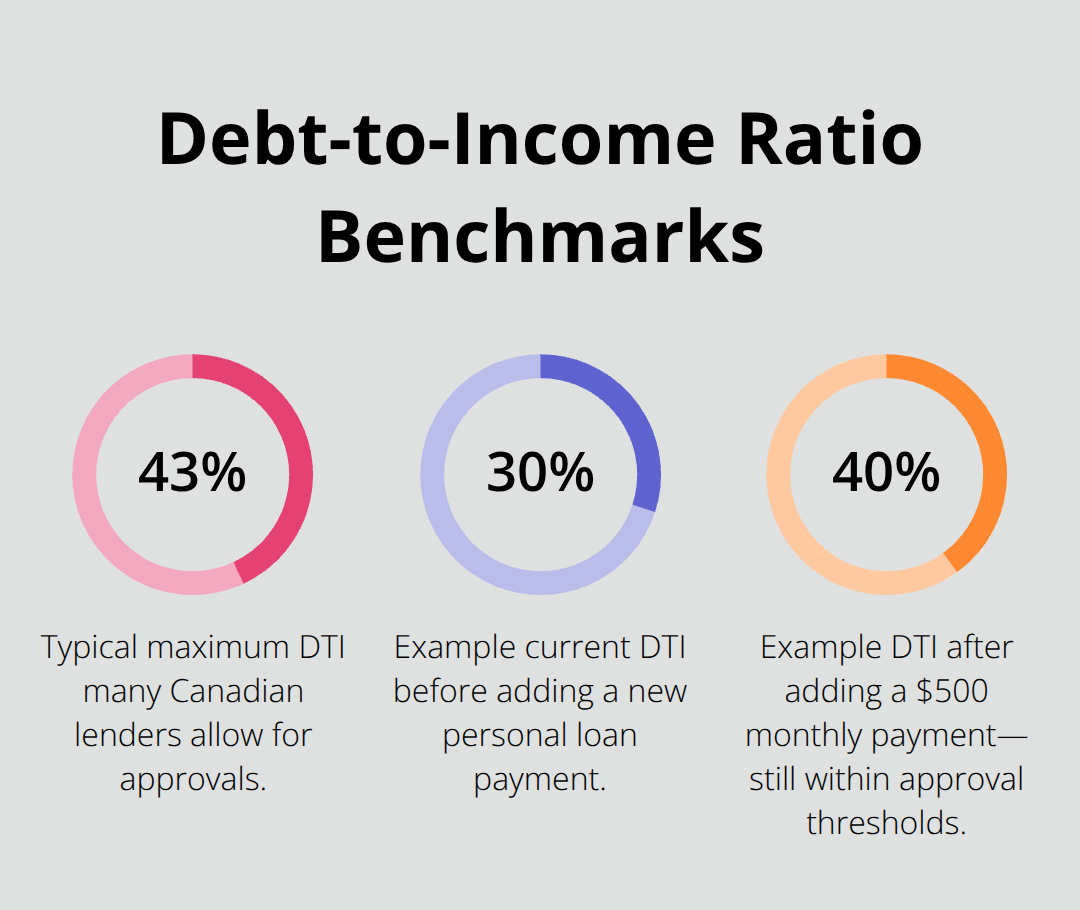
If you earn $5,000 monthly and currently owe $1,500 in debt payments, your ratio is 30 percent. Adding a $500 monthly personal loan payment pushes you to 40 percent, which sits safely within approval thresholds. Going above 43 percent triggers automatic rejections from major banks and stricter scrutiny from online lenders.
Improve Your Odds by Reducing Existing Debt First
To improve your approval odds, pay down existing debt before applying for a personal loan rather than applying first and hoping for approval. A $5,000 credit card payment that reduces your monthly obligations by $150 drops your debt-to-income ratio by 3 percentage points, often making the difference between approval and rejection.
The loan amount you request also influences your approval odds and the rate you receive. Lenders charge lower rates on larger loans because they spread their origination costs across a bigger principal, making $25,000 loans cheaper (percentage-wise) than $5,000 loans. Your purpose for the loan rarely affects your rate directly unless you’re requesting funds for debt consolidation, which many lenders view favorably since it reduces your overall debt burden.
Final Thoughts
Finding the best personal loans Canada offers requires matching your financial situation with the right lender type. If you have strong credit and stable employment, traditional banks like TD and RBC deliver competitive rates without lengthy approval timelines. Online lenders like Mogo and Borrowell work better if you need faster approval or have a credit score below 750, since they assess applications beyond traditional credit metrics.
Your approval odds and final rate depend far more on your debt-to-income ratio and employment history than most borrowers realize. Before you apply anywhere, calculate your current debt-to-income ratio and gather your recent pay stubs, employment letters, and tax returns. If your ratio exceeds 43 percent, pay down existing debt first rather than applying immediately, as this single step often makes the difference between rejection and approval at competitive rates.
Compare APR figures across at least three lenders before you commit, since the difference between 7% and 9% APR on a $15,000 loan costs roughly $1,500 extra over five years. We at Financial Canadian help you establish strong financial foundations through expert guidance and resources that drive better decisions. Once you receive approval, review the loan agreement carefully before you sign, confirming the APR, term length, and any prepayment penalties match what you discussed.











Leave a comment