
You’ve probably seen ads promising guaranteed loan approval in Canada. Here’s the truth: no lender actually guarantees approval, no matter what they claim.
At Financial Canadian, we break down what lenders really look for, which loans have the best approval odds, and how to strengthen your application. This guide shows you the actual requirements and realistic options available to you.
What Lenders Actually Look For
When you see ads claiming guaranteed approval, you’re looking at marketing language designed to attract desperate borrowers. No legitimate lender in Canada guarantees approval before assessing your financial situation. Lenders use specific criteria to evaluate risk, and understanding these criteria gives you a real advantage when applying. They analyze your credit history, income stability, debt levels, and employment background to predict whether you’ll repay the loan. This isn’t arbitrary-lenders base these decisions on decades of data showing which borrowers default and which ones pay on time. Statistics Canada reports that personal insolvencies reached between 100,000 and 130,000 annually over the past decade, which is why lenders scrutinize applications carefully. The lenders offering so-called guaranteed approval typically charge significantly higher interest rates to offset their increased risk, sometimes reaching 30% to 50% annually for short-term loans.
How Lenders Evaluate Your Risk
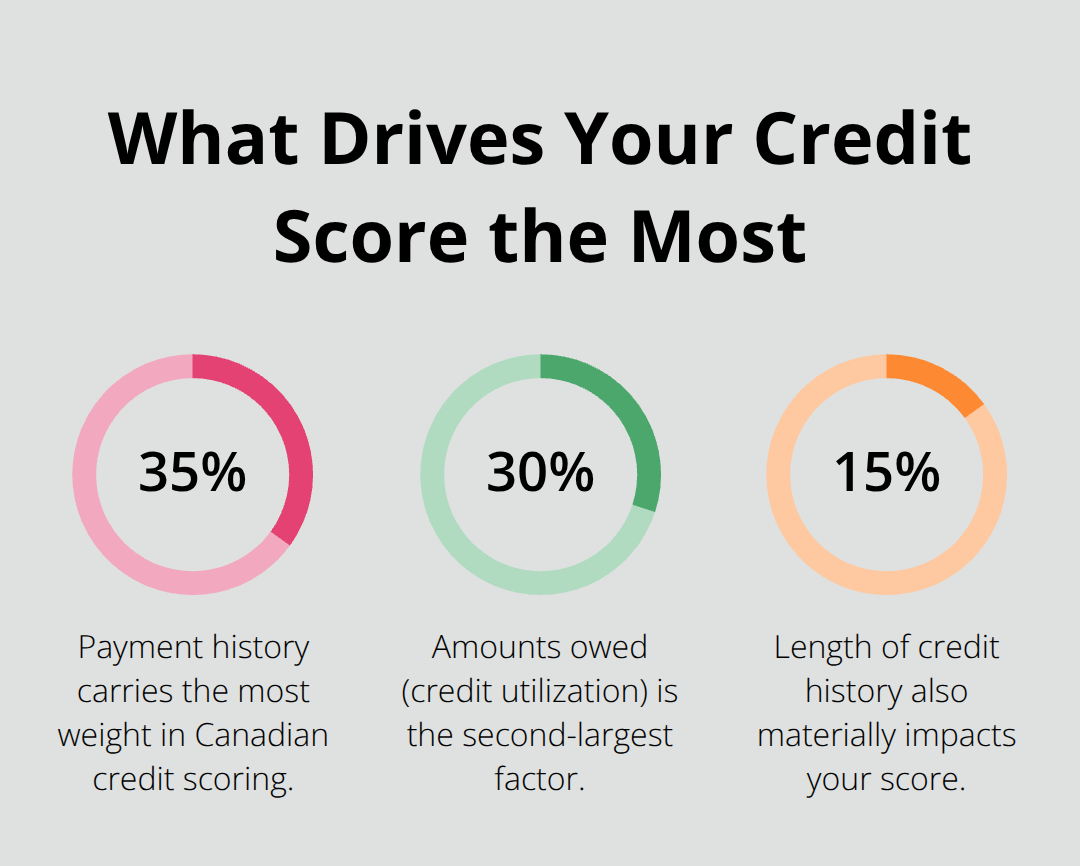
Lenders start with your credit score because it’s a proven predictor of repayment behavior. Most Canadian banks require a minimum credit score of 580 or higher for unsecured personal loans, while credit unions often accept scores as low as 550. Equifax and TransUnion, Canada’s two major credit reporting agencies, calculate scores based on payment history (35%), amounts owed (30%), length of credit history (15%), credit mix (10%), and new credit inquiries (10%). Beyond the score, lenders examine your debt-to-income ratio.
You calculate this by dividing your total monthly debt payments by your gross monthly income. Most lenders want this ratio below 40%, meaning if you earn $5,000 monthly, your total debt payments shouldn’t exceed $2,000. Employment stability matters significantly because lenders see job-hopping as a red flag for income instability. If you’ve changed jobs five times in three years, lenders worry you might lose income and default on the loan. Lenders also check for recent hard inquiries on your credit report-multiple applications within a short period suggest financial desperation and increase perceived risk.
Why Lenders Reject Applications
Lenders reject applications for concrete reasons, not arbitrary decisions. A credit score below their minimum threshold means automatic rejection at most traditional banks. High debt-to-income ratios signal you’re already stretched thin financially and cannot absorb additional payments. Recent bankruptcies or consumer proposals within the last two to three years disqualify you from many lenders because you’ve already demonstrated an inability to manage debt. Inconsistent income or frequent job changes create uncertainty about your ability to make payments. Lenders also reject applications when the requested loan amount is disproportionate to your income-asking for $50,000 when you earn $35,000 annually raises obvious concerns. Missed or late payments in the past 24 months are particularly damaging because they show current payment problems, not ancient history.
What Approval Actually Requires
Your approval odds improve when you strengthen your application across multiple dimensions. A solid credit score combined with a low debt-to-income ratio and stable employment history makes you attractive to lenders. You don’t need perfection-you need consistency. Lenders want to see that you’ve managed credit responsibly over time and that your income supports the loan amount you’re requesting. The specific requirements vary by lender type (traditional banks, credit unions, and alternative lenders all have different thresholds), which means your rejected application at one institution doesn’t mean rejection everywhere. Understanding which lenders accept your current financial profile is the first step toward approval. This is where knowing your options becomes essential-some loan types and lenders have significantly higher approval rates than others, even for applicants with weaker credit profiles.
Key Requirements to Qualify for Loans in Canada
Your credit score acts as the first barrier lenders check, and it’s non-negotiable. Traditional banks typically require a minimum score of 580 to 620 for unsecured personal loans, while credit unions operate with lower thresholds around 550 to 570. Many Canadians don’t know their actual score until they apply and face rejection. You should pull your credit report from Equifax or TransUnion before applying anywhere-this costs nothing and takes minutes online. Knowing your score prevents wasting time on applications you’ll likely face rejection from.
Your Debt-to-Income Ratio Reveals What You Can Actually Afford
Lenders obsess over your debt-to-income ratio because it reveals whether you can actually afford the loan payment. If you earn $4,000 monthly and already pay $1,800 toward existing debts, you’ve hit a ratio that makes most lenders nervous. The calculation is straightforward: divide your total monthly debt payments by your gross monthly income.
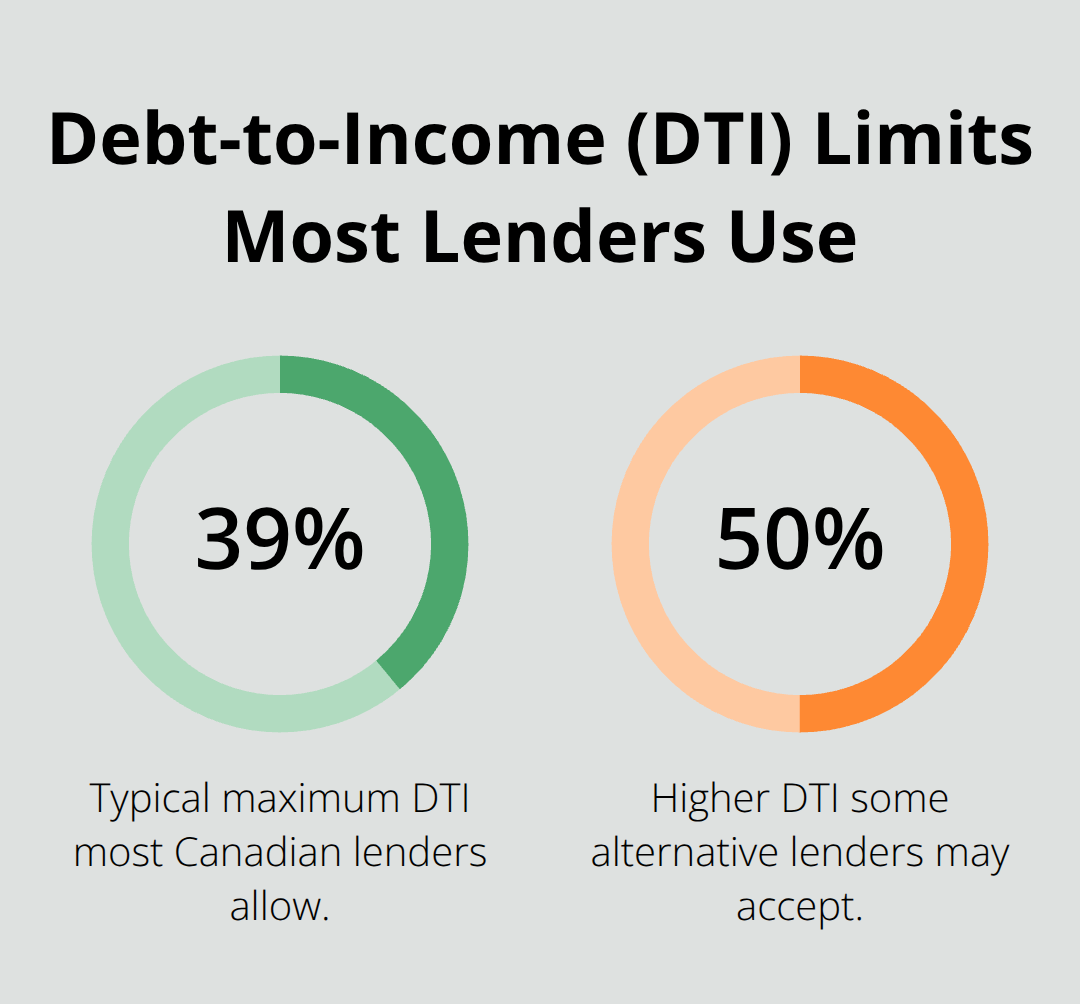
Most lenders cap this at 39% of gross income, though some alternative lenders accept ratios up to 50%. A low ratio signals financial stability and makes approval far more likely.
Employment History Determines Income Predictability
Employment history is where many applicants stumble unnecessarily. Lenders don’t care that you switched jobs if you moved up in the same field-they care about income stability and the ability to predict your future earnings. If you’ve been at your current job for less than three months, most traditional lenders will reject you outright, regardless of your salary level. Credit unions and alternative lenders sometimes accept applicants with shorter employment tenure, but they’ll scrutinize your previous roles for consistency. Recent hard inquiries on your credit report signal desperation and stack against you because multiple applications in short periods suggest financial distress rather than careful shopping.
Income Verification Requires Documentation, Not Promises
Lenders verify income through T4 forms, recent pay stubs, or tax returns-they won’t take your word for it. Self-employed Canadians face the toughest verification process because lenders typically require two years of tax returns showing consistent or growing income. If your income fluctuates significantly year to year, lenders assume you’re unreliable. Contract workers with variable income face similar skepticism unless they can demonstrate a multi-year history of steady work. The loan amount you request must align logically with your income level. Asking for $60,000 when you earn $40,000 annually signals poor financial judgment and gets rejected quickly.
Income Type Affects Your Approval Odds
Most lenders cap personal loans at three to five times your annual income, though some alternative lenders stretch this to six times for applicants with excellent credit. Your income type also affects approval odds significantly. Salary income ranks as most stable, followed by pension income, then self-employment income, then contract work. If you recently changed from contract to salaried work, you’ve improved your approval prospects because lenders view salary as more predictable. Understanding which income category you fall into helps you identify which lenders will take your application seriously and which ones will reject it before reviewing other factors.
Loan Options with Higher Approval Rates
Secured Loans: Trading Collateral for Approval
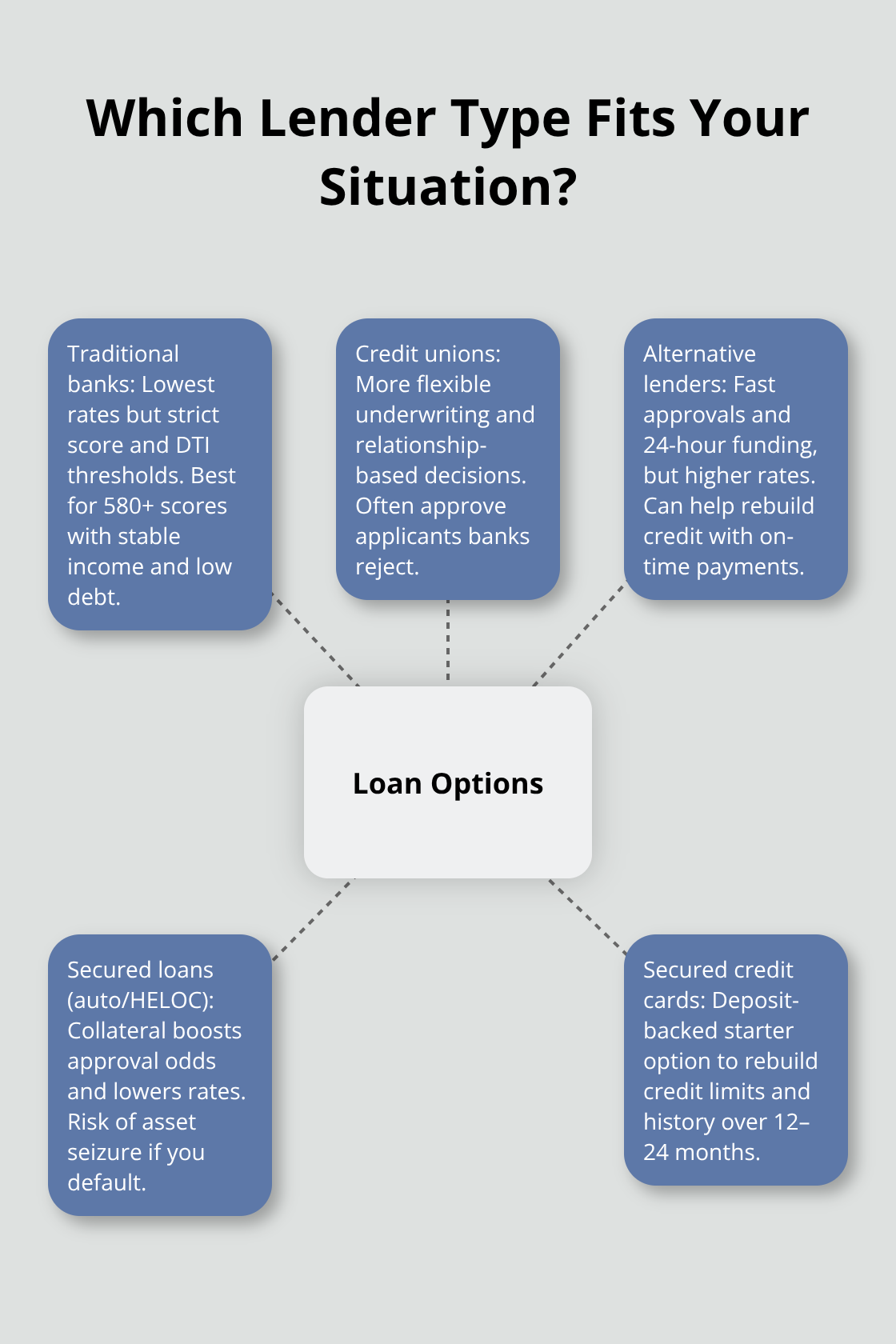
Secured loans work fundamentally differently from unsecured personal loans because you pledge collateral against the borrowed amount. If you own a car, house, or investment account, lenders view you as significantly lower risk and approve applications they’d otherwise reject. A car loan secured by the vehicle itself carries approval odds around 85-90% even for applicants with credit scores in the 550-600 range, according to data from major Canadian auto lenders. The trade-off is clear: if you default, the lender seizes your collateral.
Home equity lines of credit represent the most accessible secured option for homeowners because your house serves as security and interest rates typically run 3-6% annually compared to 15-25% for unsecured personal loans. If you have $50,000 in home equity and a 600 credit score, you’ll find approval far easier through a HELOC than through a traditional personal loan. Secured credit cards work similarly-you deposit $500 to $5,000 with a lender and receive a credit card with that amount as your limit. This approach rebuilds credit while providing immediate access to credit. The downside: you lose access to your deposited funds until you prove responsible payment behavior over 12-24 months.
Credit Unions: Different Standards, Better Odds
Credit unions operate with fundamentally different lending philosophies than traditional banks and this difference matters significantly for approval odds. Credit unions approve applications rejected by major banks because they evaluate creditworthiness beyond just credit scores. Scotiabank and Royal Bank reject applications based on rigid score thresholds, but credit unions like Conexus or Coast Capital review your employment history, savings patterns, and relationship with the institution. If you’ve maintained a chequing account with a credit union for two years, your approval odds improve substantially even with a 550 credit score.
Credit union loan rates typically run 2-4% higher than traditional banks but remain significantly lower than alternative lenders. This middle ground makes credit unions attractive for applicants who don’t qualify at major banks but want to avoid the steep rates charged by online platforms.
Alternative Lenders: Speed Over Cost
Online lenders and fintech platforms have fundamentally disrupted Canadian lending by accepting applicants traditional banks reject outright. Platforms like Mogo and Borrowell approve applications with credit scores as low as 500 and process funding within 24 hours rather than the 5-10 day timeline at traditional banks. The catch: interest rates range from 20-50% annually depending on risk assessment.
Alternative lenders also report to Equifax and TransUnion, meaning timely payments actually improve your credit score while you repay. This creates a strategic pathway: start with an alternative lender at higher rates, make consistent payments for 12 months, then refinance at a traditional bank or credit union at lower rates once your score improves. You transform a temporary high-rate loan into a credit-building tool that positions you for better terms later.
Final Thoughts
Your path to loan approval in Canada depends on matching your financial profile to the right lender rather than chasing guaranteed loan approval promises that don’t exist. Start by pulling your credit report from Equifax or TransUnion and calculating your debt-to-income ratio, as these two numbers determine your realistic options more than anything else. If your score sits below 580 and your ratio exceeds 40%, traditional banks will reject you, but this information guides you toward credit unions or secured loan options where approval becomes achievable.
Your next move depends on your specific situation and the resources available to you. If you own a vehicle or home, secured loans offer dramatically higher approval odds at reasonable rates. If you have a relationship with a credit union, leverage that history because they evaluate applications differently than major banks, and if you need immediate funding and can tolerate higher rates temporarily, alternative lenders provide a legitimate pathway while you work on improving your credit score and debt levels.
The strongest applications combine multiple improvements rather than relying on a single factor. Paying down existing debt lowers your ratio, staying at your current job for at least three months demonstrates stability, and avoiding new credit inquiries for 30 days before applying reduces the appearance of financial desperation. We at Financial Canadian help you organize your financial information and build the digital foundation you need through our web design service, because your approval odds improve when you approach lending strategically rather than desperately.











Leave a comment