
Picking the wrong lender can cost you thousands in unnecessary interest and fees. At Financial Canadian, we’ve seen borrowers waste money simply because they didn’t compare their options properly.
Personal loans in Canada come in different forms, each with distinct advantages depending on your situation. The right choice depends on your credit score, how quickly you need funds, and what you’re borrowing for.
Personal Loan Options Available in Canada
Unsecured Personal Loans Offer Quick Access
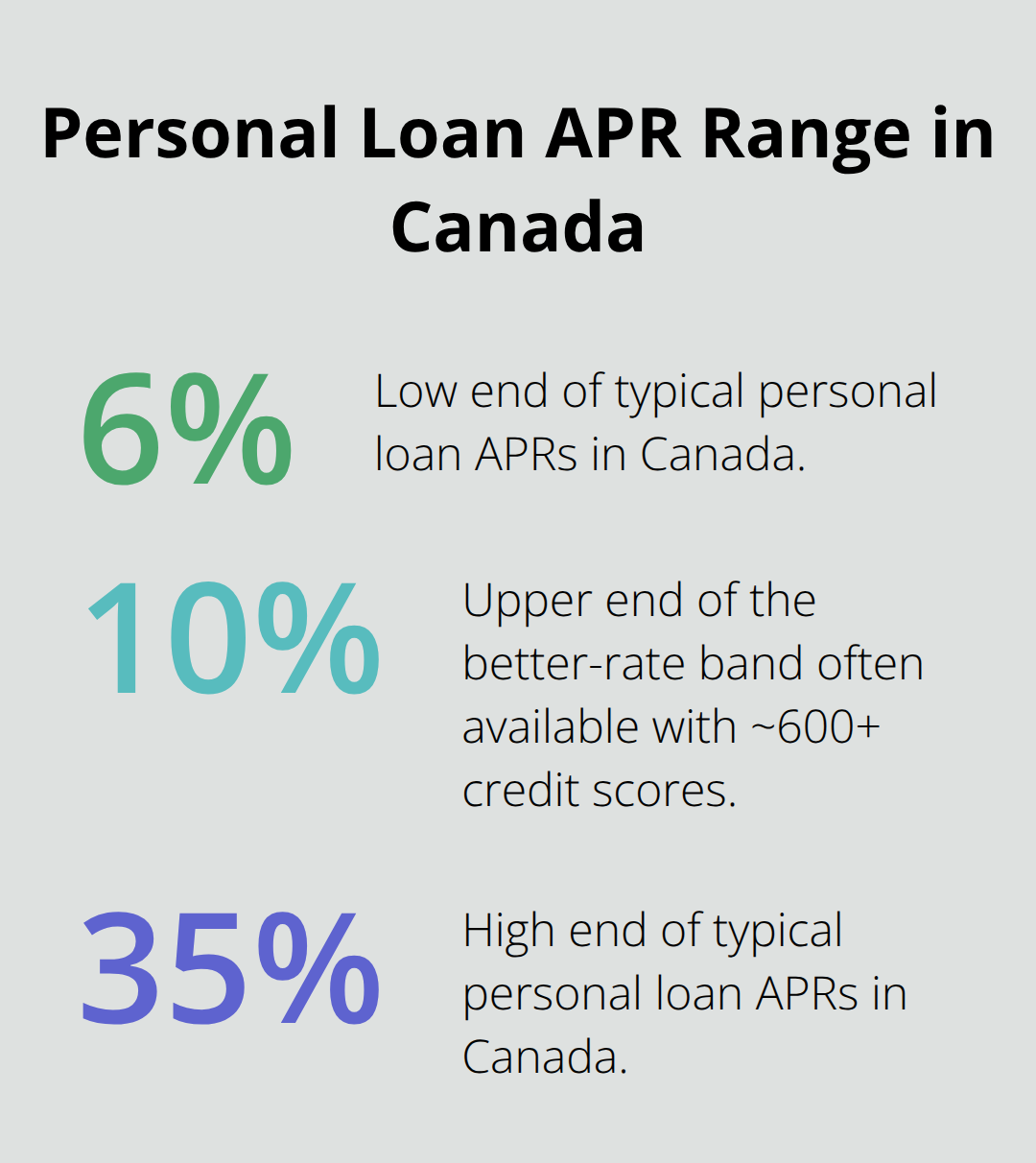
Unsecured personal loans dominate the Canadian market because they don’t require collateral, making them accessible to most borrowers. According to Ratehub, personal loan APRs in Canada typically range from 6% to 35% depending on your credit history and income. If you have a credit score around 600 or higher, you’ll qualify for better rates, often landing in the 6% to 10% range with lenders like Scotiabank. The application process is straightforward: you apply online, provide income verification, and receive funds within days.
These loans work well for debt consolidation, home renovations, or covering unexpected expenses. However, higher rates mean you’ll pay more interest over time compared to secured options. Most lenders offer terms from 6 months to 5 years, with fixed rates that keep your monthly payment predictable. Watch out for origination fees, which typically run 0.5% to 8% of the loan amount and can significantly increase your actual cost.
Secured Loans Reduce Your Interest Burden
Secured personal loans and home equity lines of credit tie your borrowing to collateral, usually your home. These options offer lower rates compared to unsecured loans. This approach requires minimum home equity and a minimum borrowing amount, but the payoff is substantial: rates drop significantly compared to unsecured loans.
Your monthly payments may adjust if prime rate changes, introducing some payment variability. This strategy suits homeowners financing major projects or consolidating high-interest debt, but you risk your home if you default. Lines of credit offer flexibility since you only pay interest on what you borrow, unlike fixed-term loans where you receive the full amount upfront. If your credit score falls below 600, a secured loan might be your only viable path to approval.
Lines of Credit Deliver Flexibility
Personal lines of credit give you a credit limit you can draw from repeatedly, similar to a credit card but with lower interest rates. Ratehub data shows these typically cost less than credit cards, making them ideal for ongoing expenses or multiple projects. You only pay interest on what you actually use, so if you need $5,000 of a $20,000 limit, you only pay interest on that $5,000. This flexibility makes lines of credit superior to fixed personal loans if your borrowing needs are unpredictable.
The downside is variable rates that move with the Bank of Canada’s decisions, meaning your payments can increase. Most lenders offer lines of credit based on income and creditworthiness rather than collateral, though secured versions tied to home equity exist. When you need ongoing access to funds rather than a one-time lump sum-such as funding a renovation over several months or covering seasonal business expenses-a line of credit becomes your best option. Your next step involves comparing how these loan types stack up against specific lenders and their fee structures.
How to Compare Personal Loan Lenders
Focus on APR, Not the Advertised Rate
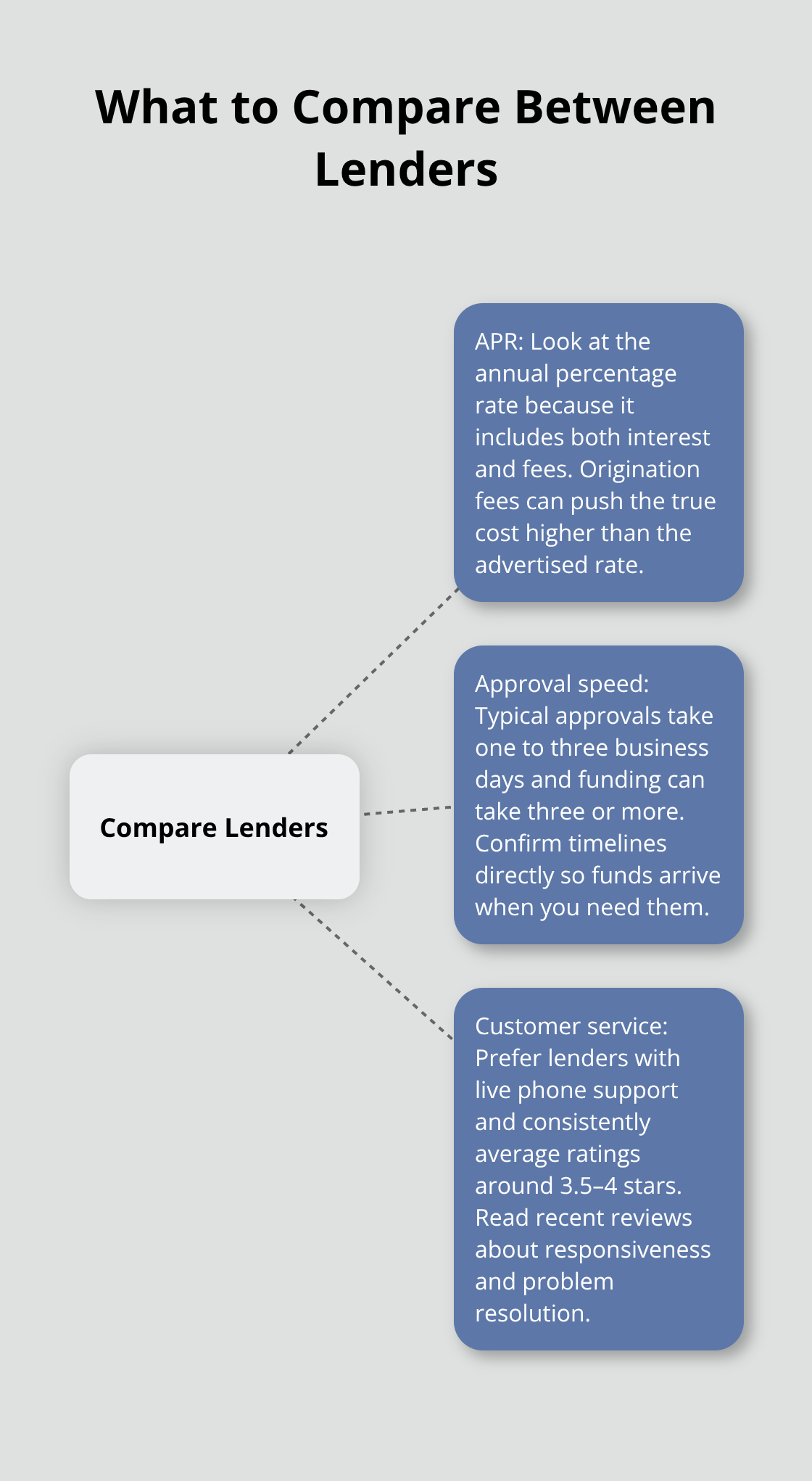
Comparing personal loan lenders requires focus on three metrics that actually matter: what you’ll pay in total interest and fees, how fast you’ll get approved, and whether the lender will treat you fairly if problems arise. Most borrowers fixate on the advertised interest rate and miss the bigger picture entirely. According to Ratehub, APR includes both interest and fees, giving you the true cost of borrowing. A lender advertising 7% might charge origination fees of 3% to 8%, which gets baked into your APR and dramatically changes what you’ll actually pay. If you borrow $10,000 at 7% with a 5% origination fee, that fee costs you $500 upfront or gets added to your loan balance, increasing your total repayment. Run the numbers on APR, not the headline rate.
Approval Speed Determines Your Timeline
Approval speed matters more than most borrowers realize, especially if you face a time-sensitive situation. Canadian banks like CIBC offer online applications with fast turnaround, while some alternative lenders take weeks. Customer service quality and approval speed vary significantly across lenders, with approval times ranging from one to three business days and funding taking three or more business days. If you need funds in a week, a lender promising two-week approval won’t help. Check the lender’s website or call directly to confirm how long their process takes, then factor in how quickly they actually deposit funds into your account.
Evaluate Customer Service Quality
Customer service quality separates lenders that handle problems smoothly from those that leave you frustrated. Look for lenders offering phone support during business hours, not just email ticketing systems that take days to respond. Check online reviews on independent sites, but treat extremely positive or negative reviews with skepticism since unhappy customers tend to be louder. A lender with consistently average ratings of 3.5 to 4 out of 5 stars usually indicates solid, reliable service. Read recent reviews specifically about their approval process and customer support responsiveness rather than focusing on one-off complaints.
Use Calculators to Compare True Costs
Comparison tools help you compare actual costs across lenders side by side, letting you see exactly how much each option costs over your full loan term. Enter your loan amount, desired term, and the lender’s APR to see monthly payments and total interest paid. This removes guesswork and prevents you from choosing a lender based on marketing hype rather than actual numbers. Once you’ve narrowed your options based on rates, approval speed, and service quality, the next step involves assessing your own financial situation to match the right loan type to your specific needs.
Finding the Right Personal Loan for Your Financial Goals
Check Your Credit Score First
Your credit score determines which loans you can access, but it shouldn’t be your only decision factor. You generally need a credit score of 580 or higher to qualify for a personal loan, and you’ll typically need a score in the 700s to qualify for better rates. Pull your credit report from Equifax or TransUnion to see exactly where you stand before applying anywhere. If your score sits below 600, stop considering unsecured personal loans and shift focus to secured options tied to home equity or finding a co-signer who can strengthen your application.
Borrow Only What You Actually Need
Calculate how much you actually need to borrow, not how much lenders will offer you. Many borrowers accept the maximum approved amount and overspend, then struggle with repayment. If you need $8,000 for a renovation, borrow $8,000, not the $15,000 a lender approves. Origination fees typically run 0.5% to 8% of your loan amount according to Ratehub, so a $15,000 loan could cost you $75 to $1,200 in fees alone.
Write down your specific purpose-debt consolidation costs less interest if you target high-rate credit cards, while home renovations may qualify for better terms through secured options. Your timeline matters enormously. If you need funds within a week, alternative online lenders beat traditional banks on speed, though they often charge higher rates. If you have three weeks, major banks like CIBC become viable, potentially offering better rates than faster alternatives.
Match Your Loan Term to What You Can Afford
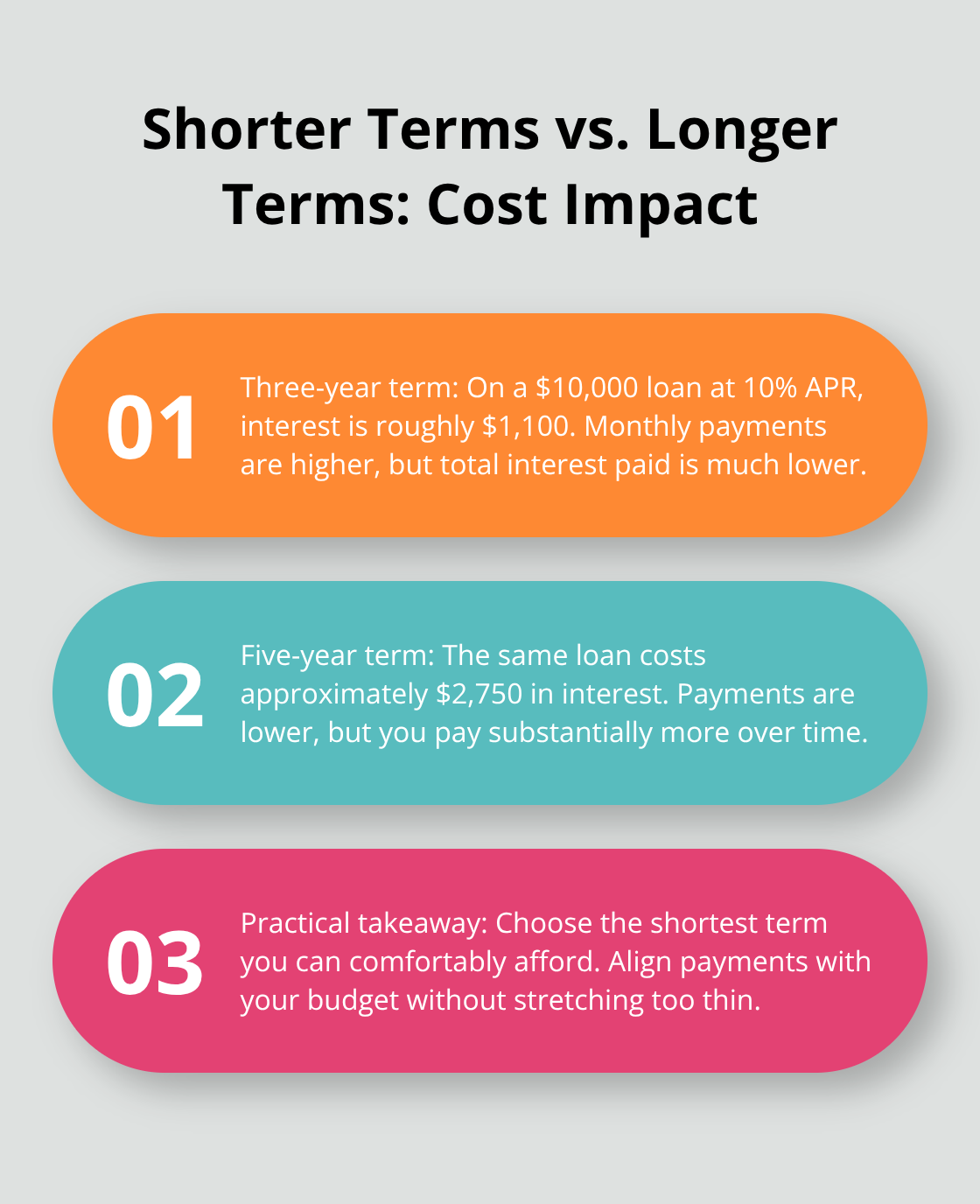
Match your loan term to your repayment capacity, not to minimizing monthly payments. A five-year term looks attractive because monthly payments drop compared to a three-year term, but you’ll pay substantially more interest overall. According to Ratehub data, a $10,000 personal loan at 10% APR costs roughly $1,100 in interest over three years but approximately $2,750 over five years. Try the shortest term you can afford monthly without stretching your budget thin.
If you’re consolidating multiple debts, lines of credit sometimes beat fixed personal loans because you only pay interest on what you use, and you can adjust your repayment speed if your income improves. However, if variable rates terrify you because you’re already stretched financially, a fixed-rate personal loan provides payment certainty even if it costs slightly more upfront.
Verify Prepayment Terms and Lender Requirements
Check whether prepayment penalties exist before committing. Some lenders charge fees if you pay off your loan early, which eliminates the benefit of refinancing if your credit improves or rates drop. Ratehub notes that refinancing becomes possible once your credit strengthens or market rates fall, but prepayment penalties can erase those savings.
Verify that the lender’s approval requirements match your situation. Some lenders accept income as low as $2,000 monthly, while others demand minimums around $17,000 annually according to Ratehub. Collect your documents-recent pay stubs, tax returns, and banking information-before applying (this speeds up the process significantly). You’ll waste time applying to lenders whose income thresholds you don’t meet.
Final Thoughts
Choosing the right lender for personal loans in Canada requires you to compare three concrete factors: total cost through APR rather than advertised rates, approval speed that matches your timeline, and customer service quality that handles problems without frustration. Your credit score determines which options you can access, but your actual borrowing need should determine how much you request-borrow only what solves your specific problem, whether that’s consolidating high-interest credit cards, funding a renovation, or covering unexpected expenses. Most borrowers focus on the wrong metric and overpay thousands in interest and fees.
Start by pulling your credit report from Equifax or TransUnion so you know exactly where you stand. Collect recent pay stubs, tax returns, and banking information before submitting applications, which speeds up approval significantly. Use loan calculators to compare monthly payments and total interest across your top three lender choices, then apply to the one offering the best combination of rate, approval speed, and service reputation.
We at Financial Canadian understand that navigating personal loans Canada options feels overwhelming when you compare dozens of lenders with different terms and fee structures. Whether you refinance existing debt or borrow for the first time, the lender you choose today impacts your finances for years. Take time to compare your options properly rather than rushing into the first approval that arrives in your inbox.










Leave a comment