
When you need cash fast, payday loans feel like the obvious answer. But before you apply, you need to understand exactly how they work, what they cost, and whether they’re actually your best option.
We at Financial Canadian created this Canada payday loan guide to walk you through the real numbers, the regulations that protect you, and the alternatives worth exploring.
What Payday Loans Actually Are
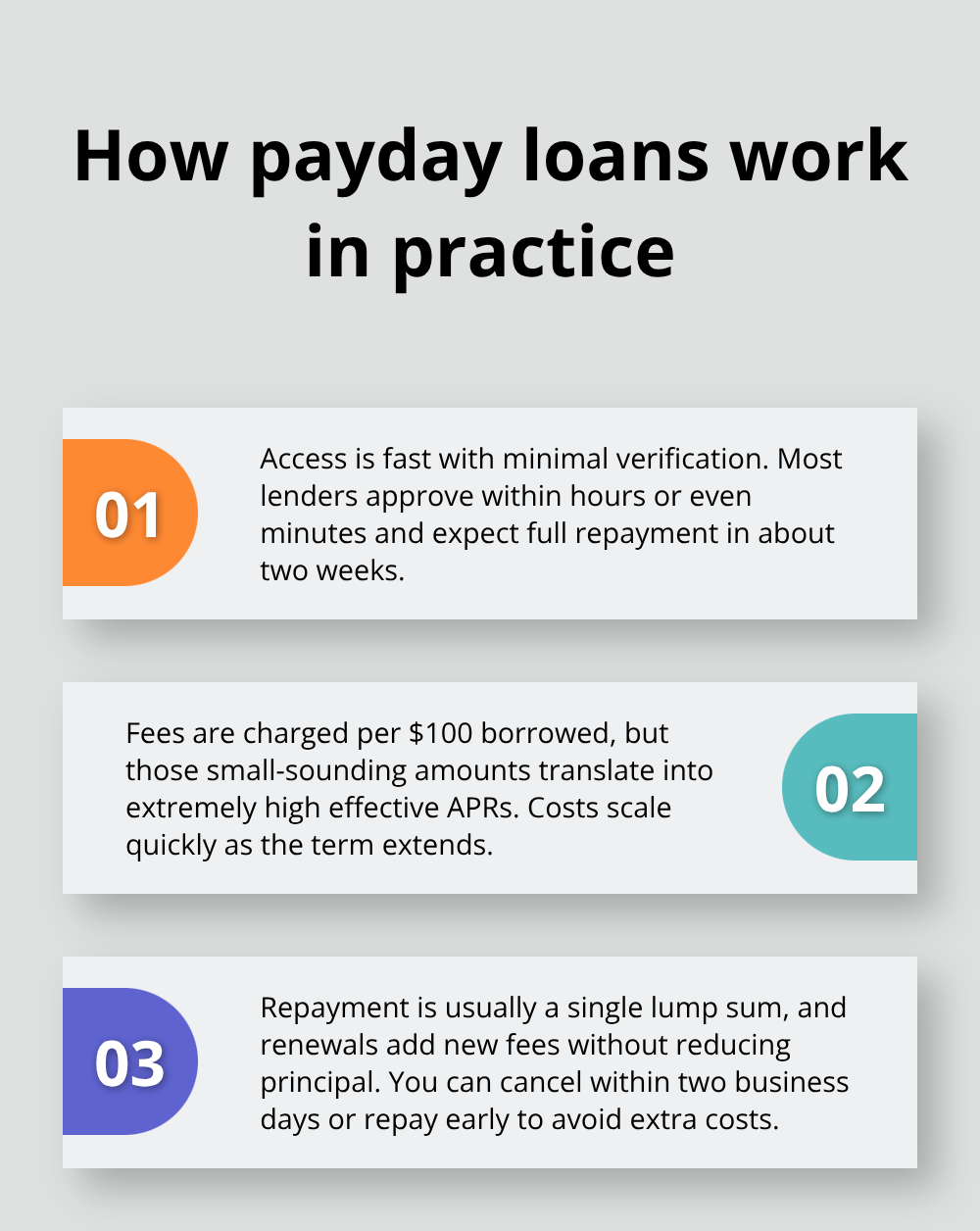
A payday loan is a short-term loan typically for $500 or less, designed to cover unexpected expenses until your next paycheck arrives. You borrow money, pay it back in full within two weeks, and the lender charges a fee for the convenience. The application process is deliberately fast-most lenders approve you within hours, sometimes minutes, without running a credit check. You walk in with proof of income and identification, answer basic questions about your employment, and walk out with cash. Online lenders operate the same way but electronically. The speed is the appeal, but it’s also where the trap starts. Because lenders don’t verify your ability to repay, they offset that risk by charging substantial fees. In Ontario, the maximum cost is capped at $15 per $100 borrowed, which sounds manageable until you realize that translates to an annual percentage rate of almost 400 percent for a two-week loan. Alberta has the lowest cap among provinces that allow payday loans at the same $15 per $100 rate. Prince Edward Island allows $25 per $100, creating an effective annual rate of about 33,519%.
These numbers matter because they show why payday loans should only be your last resort.
Approval and Cash in Your Hand
The approval process exists almost entirely to confirm you have income and a bank account. You provide recent pay stubs or proof of employment, show a government-issued ID, and sometimes consent to a background check. Lenders ask about your income, employment status, and banking details. They don’t care if you’re already carrying three other payday loans or if you’ve defaulted before-many lenders lack access to shared borrowing records. You can receive funds via direct deposit, cash, check, or a prepaid card, depending on the lender. The entire process takes two to four hours in-store or overnight online. This speed appeals to people in genuine emergencies, but it also means you’re making a major financial decision under pressure. You must receive a written loan agreement before signing anything, and that agreement must clearly show the borrowed amount, the exact due date, the total cost including all fees, and the loan duration in days. Read this document carefully. It contains information about late payment charges, which can run up to 60% of the loan amount in some provinces, and details about what happens if you can’t repay on time.
Repayment and the Renewal Trap
Repayment typically occurs as a single lump-sum payment due on your next payday. Some lenders offer installment repayment or renewal options, but renewals cost you additional fees while extending the loan term. This is where payday loans become dangerous. If you borrowed $400 and can’t repay it when it’s due, the lender offers to renew the loan for another two weeks-for another fee. You’ve now paid $60 in fees (at the Ontario rate) just to extend the debt. Renew again in two weeks, and you’ve paid $120 in fees while still owing the original $400. People caught in this cycle end up paying more in fees than they originally borrowed. You can cancel a payday loan within two business days of signing and avoid most borrowing costs if you return the full amount. You can also repay early without penalties. But once those two days pass, the fees are locked in. The average payday loan in Ontario is about $435 and lasts around 16 days, according to Ontario government data. If you need cash for longer than two weeks, a payday loan is the wrong tool-you’ll end up in the renewal cycle that payday lenders actually depend on for their business model.
What Happens When You Can’t Pay
Missing a payment triggers late charges and interest that compound your debt. Some lenders charge up to 60% of the loan amount as a late fee, turning a $400 emergency into a $640 problem within weeks. Lenders cannot take your wages directly from your employer to repay the loan, and they cannot require you to purchase additional services (such as insurance) as a condition of borrowing. However, they can pursue collection efforts and report missed payments to credit bureaus, damaging your credit score. If you can’t repay on time, contact the lender immediately to discuss your options. Some provinces offer protections-New Brunswick, for example, provides a 48-hour no-charge cancellation window, and several provinces cap the number of concurrent loans you can carry. Understanding these protections in your province matters because they affect your options when circumstances change. The trap deepens when you realize that payday loans are designed for people who can’t access traditional credit, yet the high costs make them the most expensive borrowing option available.
Costs, Fees, and Regulations You Need to Know
Provincial Fee Structures Create Massive Cost Differences
The fee structure for payday loans varies dramatically across provinces, and these differences directly impact whether borrowing makes financial sense. Ontario caps costs at $15 per $100 borrowed, translating to roughly 3,724% APR on a two-week loan. Alberta matches this rate. British Columbia reduced its cap to $15 per $100 in 2017 after initially allowing 23% of principal, and borrowers there gain the right to cancel within one business day at no cost. Manitoba charges $17 per $100, while New Brunswick also caps fees at $15 per $100 but requires lenders to be licensed with the Financial and Consumer Services Commission and provides a 48-hour cancellation window. Nova Scotia allows $17 per $100. Saskatchewan imposes a 23% cap on principal plus a 30% cap on default charges. Prince Edward Island permits $25 per $100, creating an annual rate of approximately 33,519%. Quebec effectively bans payday lending by capping all interest at 35% annually, making the industry non-viable there. Newfoundland and Labrador received a federal exemption in 2018 enabling provincial regulation, with anticipated rates around $21 per $100.
Your province of residence determines whether a payday loan costs $15 or $25 per $100-a massive difference that affects your total repayment amount. Before you borrow, verify that your lender holds a license in your province. In British Columbia, confirm registration with Consumer Protection BC. In New Brunswick, check with the FCNB. In Ontario, the province maintains a list of licensed lenders. Legitimate lenders clearly state all fees, APRs, and repayment terms upfront and don’t hide charges or surprise you with unexpected costs after approval. Unlicensed lenders operate outside these protections and can charge substantially higher rates.
Late Fees and Collection Practices Compound Your Debt
Late fees and collection practices compound the problem significantly. Federal regulations impose a limit on the cost of borrowing for payday loans of $14 per $100 borrowed in all provinces. Federal and provincial regulations prohibit lenders from taking wages directly from your employer or forcing you to purchase additional services as a condition of borrowing-protections that matter when collection pressure mounts. However, regulations do allow lenders to report missed payments to credit bureaus and pursue collection efforts.
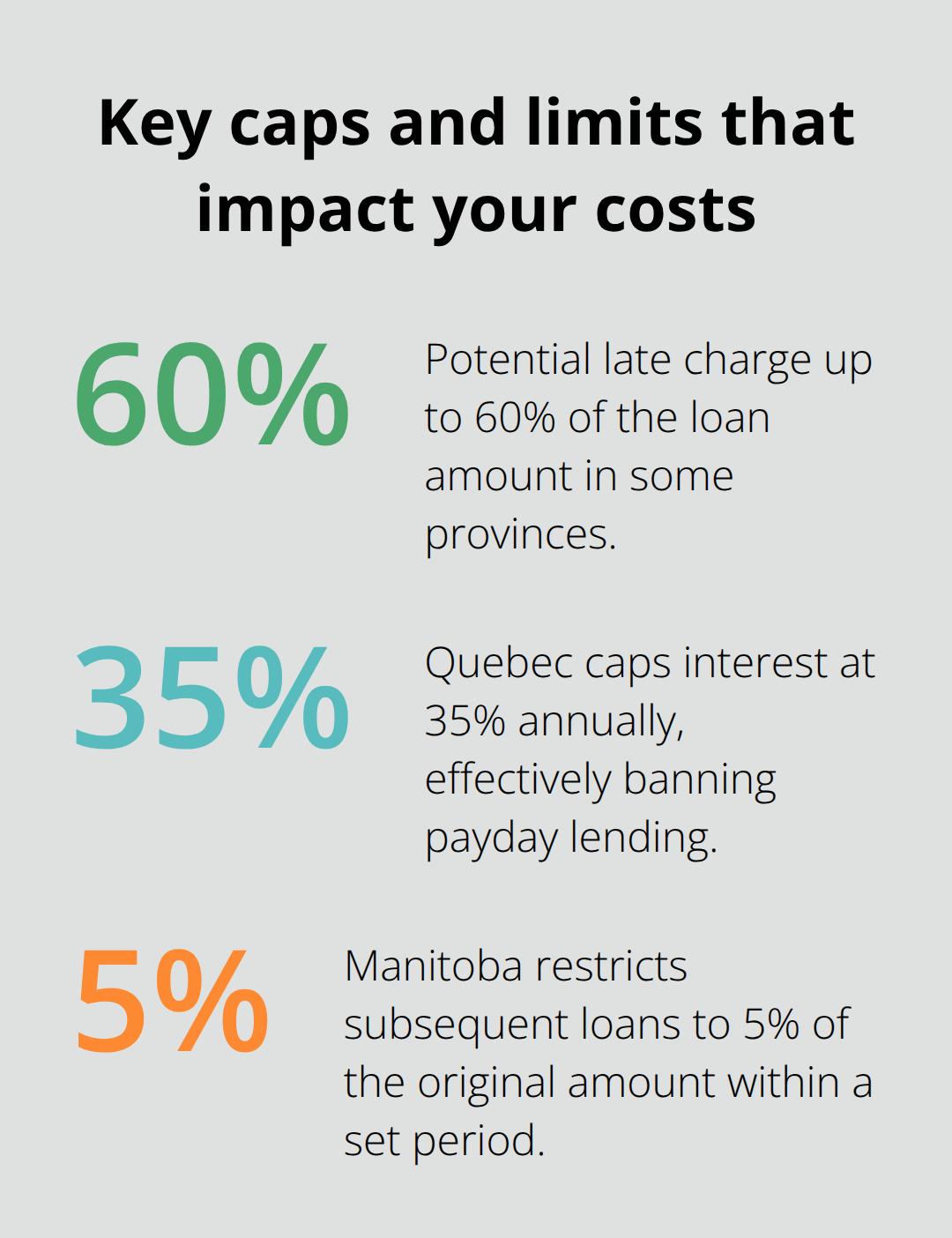
Several provinces restrict how many payday loans you can carry simultaneously. British Columbia limits borrowers to one active loan, and Manitoba restricts subsequent loans to 5% of the original amount within a defined period. These caps exist specifically to prevent the renewal trap that keeps borrowers trapped in cycles of debt.
How Payday Loans Stack Against Other Borrowing Options
Compared to other borrowing options, payday loans remain the most expensive choice available. A credit card advance typically costs 20% to 30% annually, while a personal loan from a credit union or bank ranges from 8% to 15% depending on your credit score. A line of credit costs 7% to 12%. Even a high-interest credit card at 20% APR is dramatically cheaper than a payday loan at 3,724% APR.
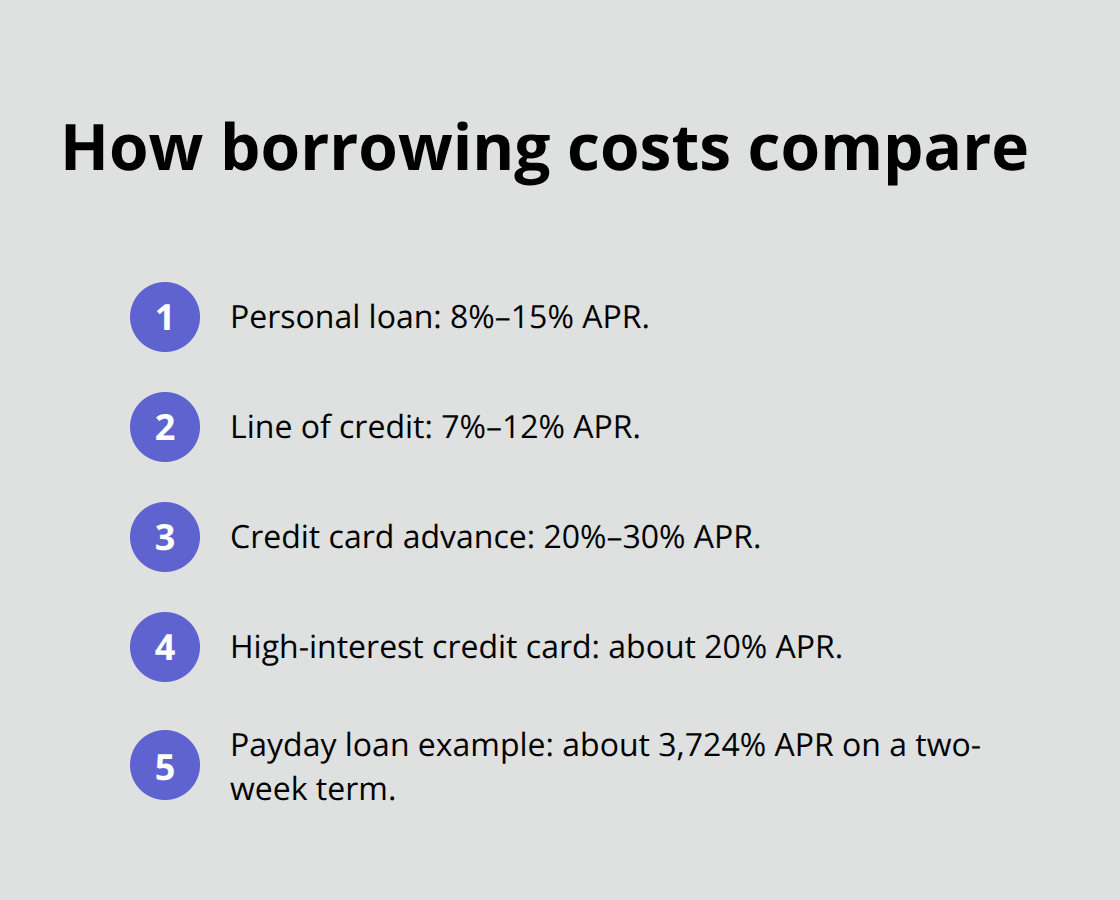
The only scenario where a payday loan costs less than alternatives is when your alternative is defaulting on a critical payment like rent or utilities, which damages your credit far more severely than a payday loan. Understanding these cost differences helps you evaluate whether a payday loan truly serves your emergency or whether you should explore other options first.
Alternatives to Payday Loans Worth Considering
Personal Loans Beat Payday Loans on Cost and Terms
Personal loans from banks and credit unions range from 8% to 15% APR depending on your credit score, making them dramatically cheaper than payday loans at 3,724% APR. Credit unions often approve loans faster than traditional banks and consider factors beyond credit scores, such as employment history and savings patterns. If you have decent credit, a personal loan from your bank takes five to ten business days to process and funds arrive within two to three business days after approval. The application requires proof of income, employment verification, and a credit check, but lenders evaluate your ability to repay rather than simply confirming you have a job. Repayment spreads over months or years instead of two weeks, which matches your actual financial capacity.
A $400 personal loan at 10% APR over 12 months costs approximately $21 in interest, compared to $60 in fees for a two-week payday loan. This difference compounds when you factor in the renewal trap-payday borrowers who renew twice pay $120 in fees while still owing the original amount. Lines of credit from banks or credit unions work similarly but offer flexibility. You access only what you need and pay interest only on the amount borrowed. A typical line of credit costs 7% to 12% APR. Credit card advances sit between these options at 20% to 30% APR, which still undercuts payday loans significantly.
The catch with all these alternatives is that they require decent credit or an established banking relationship. If your credit is damaged or you lack a banking history, credit unions become your strongest option because they weigh factors beyond credit scores.
Government and Community Resources Provide Grants, Not Loans
Government assistance programs and community resources provide grants for emergencies, yet most people overlook them when payday loans feel faster. Contact your provincial social services office about emergency assistance funds-these programs provide grants (not loans) for critical expenses like rent, utilities, or food when you face genuine hardship. Eligibility varies by province, but many programs require minimal paperwork and process applications within days. Food banks, community meal programs, and utility assistance programs reduce your immediate expenses, freeing up cash for other obligations.
Non-profit credit counselling services offer free or low-cost budgeting guidance and debt management plans that help you avoid payday loans entirely. If you’re struggling with existing payday debt, these organizations provide free guides and can connect you with certified counsellors who negotiate with lenders on your behalf. Workplace employee assistance programs often provide emergency loans or grants to employees facing unexpected expenses, and these programs carry zero interest or minimal fees. Ask your employer’s human resources department whether this benefit exists in your workplace. Community development financial institutions and non-profit lenders in your area may offer small emergency loans at rates below commercial payday lenders.
These alternatives require more effort to research and access than walking into a payday lender, but the cost difference justifies the work.
Final Thoughts
Payday loans make sense only when you face a genuine emergency, have exhausted every other option, and can repay the full amount within two weeks without renewing. You’ve compared the cost against alternatives and confirmed that a payday loan costs less than the consequence of missing a critical payment like rent or utilities. You’ve verified the lender holds a license in your province, reviewed the written agreement before signing, and understand the total cost including all fees and the APR. These conditions rarely align, which is why this Canada payday loan guide emphasizes that payday loans should genuinely be your last resort, not your first instinct.
Red flags signal predatory lenders operating outside legal protections. Unlicensed lenders who don’t display their license or registration online break the law, and lenders who pressure you to borrow more than you need or refuse to show you the written agreement before you sign violate regulations. Lenders who charge fees beyond your province’s legal cap, require you to purchase insurance or other services as a condition of borrowing, or won’t clearly explain the APR and total cost operate outside the law. Walk away from any lender who exhibits these behaviors, because payday lenders depend on borrowers who don’t understand the true cost of their loans.
Better financial planning eliminates the need for payday loans entirely. Set aside small amounts each month to build an emergency fund of $500 to $1,000, track your spending to identify where money disappears, and contact your provincial social services office about emergency assistance grants before considering any loan. Speak with a certified credit counsellor about budgeting strategies, and we at Financial Canadian offer expert guidance to help you establish a solid foundation for managing your finances online.










Leave a comment