
Getting an online loan in Canada doesn’t have to be confusing. Whether you need quick cash or a structured repayment plan, understanding your options makes all the difference.
At Financial Canadian, we’ve created this Canada online loans guide to help you navigate the borrowing landscape with confidence. We’ll walk you through loan types, comparison strategies, and what lenders actually look for when reviewing your application.
Types of Online Loans Available in Canada
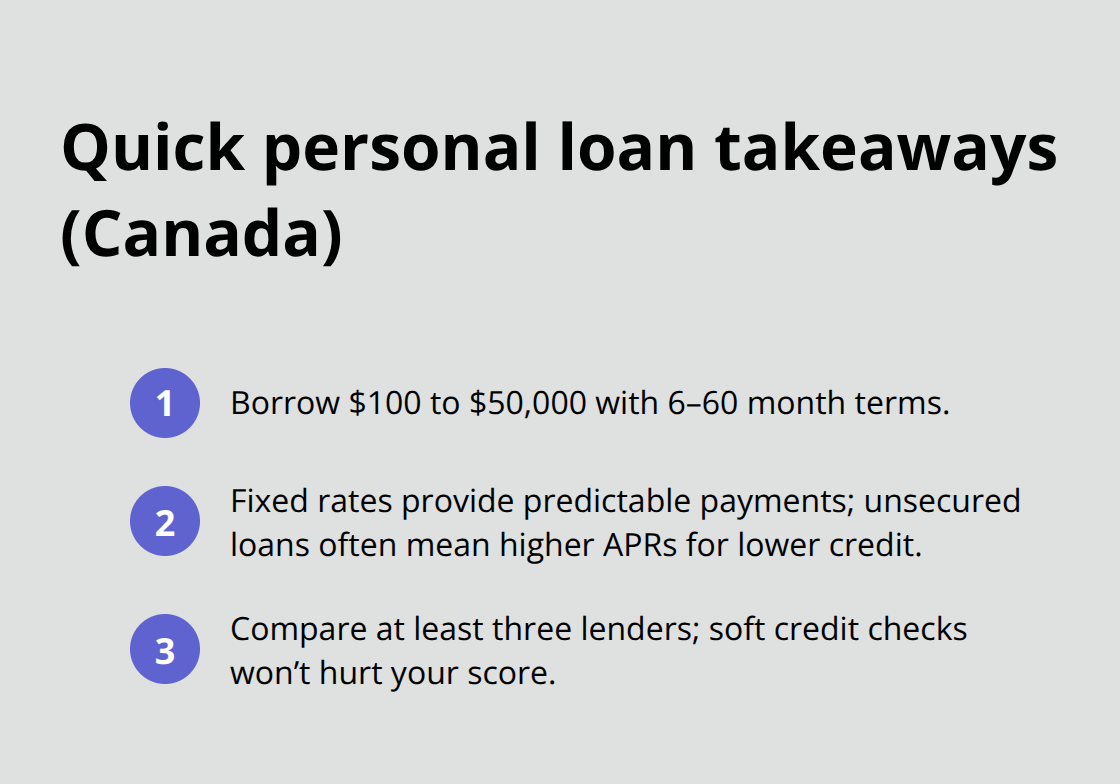
Personal loans remain the most flexible option for Canadian borrowers because they work for nearly any purpose without restrictions. You can borrow between $100 and $50,000 from most lenders and repay over 6 to 60 months with a fixed interest rate that doesn’t change. The trade-off is that personal loans are usually unsecured, so lenders charge higher interest rates to offset their risk. If you have decent credit, you’ll pay somewhere between 8% and 20% APR, but borrowers with poor credit face rates above 30%. Most online lenders approve you within 24 to 48 hours and deposit funds directly into your account. Shop around with at least three lenders before accepting an offer-each application triggers a soft credit check that doesn’t hurt your score, so comparing rates costs nothing.
When You Need Cash Immediately
Payday loans and short-term options exist specifically for emergencies, though they come with serious trade-offs. These loans typically range from $300 to $1,500 and require repayment within two weeks to one month, making them expensive relative to their size. The APR on payday loans often exceeds 400%, which translates to roughly $15 in interest for every $100 borrowed over two weeks. Money Mart offers installment loans as a middle ground-you borrow up to $25,000 and repay over 6 to 84 months with fixed payments aligned to your pay schedule. The APR typically sits between 34.56% and 34.95% depending on payment frequency. A $4,500 loan over 36 months costs about $203.42 monthly. You can repay early without penalties, which gives you flexibility if your financial situation improves. Most lenders report on-time payments to credit bureaus, so responsible use actually builds your credit history.
Ongoing Access to Funds
Lines of credit and secured loans serve borrowers who need flexibility rather than a one-time lump sum. A line of credit works like a credit card: you have a credit limit, draw only what you need, and pay interest only on the amount you actually use. This structure works well for ongoing expenses like home renovations or business costs. LendDirect offers lines of credit up to $10,000 at 34.99% APR and secured loans up to $25,000, with secured loan rates ranging from 24.99% to 34.99% depending on whether you pledge collateral like a vehicle. The advantage of a secured loan is lower interest rates because the lender holds your asset as protection. Approval typically takes 15 minutes to a few hours via Interac e-Transfer, and you can access funds immediately through their mobile app without reapplying. The disadvantage is obvious: if you miss payments, the lender can seize your collateral.
Understanding which loan type fits your situation sets you up for the next critical decision-how to evaluate lenders and compare offers side by side.
How to Compare and Choose the Right Online Loan
Comparing online loans requires more than glancing at advertised interest rates. The real cost sits in the total amount you’ll pay over the life of the loan, which depends on the APR, fees, and repayment term working together. A lender advertising 9.99% APR might charge an application fee of $50, an origination fee of 1%, and early repayment penalties that lock you in. Another lender at 11.99% APR with zero fees and no prepayment penalties often costs less overall. Calculate the total interest paid by using each lender’s loan calculator or asking for a payment breakdown before applying. For a $5,000 personal loan over 24 months, the difference between 9% and 15% APR amounts to roughly $650 in extra interest, which matters. This transparency lets you compare directly against competitors. Apply with at least three lenders using soft credit checks, which don’t damage your score, and compare the actual numbers side by side.
Evaluate Interest Rates and Fees
The advertised rate tells only part of the story. Lenders charge application fees, origination fees, and sometimes prepayment penalties that inflate your total cost significantly. One lender might offer 9% APR but charge $100 upfront, while another charges 11% with no fees at all. The second option saves you money over time. Request a complete payment breakdown from each lender before you commit. This breakdown shows your monthly payment, total interest paid, and all fees combined. LendDirect allows you to check loan eligibility without triggering a hard credit inquiry, which means you can compare offers from multiple lenders without damaging your credit score. Spend time with a calculator or spreadsheet to compare total costs across at least three lenders. The lowest advertised rate rarely produces the lowest total cost.
Review Lender Reputation and Customer Reviews
Customer reviews on TrustPilot, Google, and the lender’s website reveal patterns about speed, customer service responsiveness, and whether the lender follows through on promises. Look specifically for complaints about unexpected fees, slow funding, or difficulty reaching support. Newer online lenders sometimes offer better rates but lack the operational history to prove reliability. Check if the lender is licensed in your province, particularly in British Columbia and Manitoba where installment loans fall under high-cost credit regulations. Verify that the lender reports to credit bureaus like Equifax Canada, since responsible repayment should build your credit history. A lender with hundreds of five-star reviews praising quick approval and transparent terms beats one with scattered complaints about hidden charges or delayed funding every time. Spend 15 minutes reading recent reviews before moving forward.
Assess Approval Speed and Funding Timeline
Funding speed varies dramatically by channel and lender. Online applications typically process within 24 hours on business days, while some platforms offer funding in as little as 15 minutes through Interac e-Transfer depending on your bank’s processing speed. Next-business-day funding outside business hours is standard across most online lenders. The fastest option isn’t always the best if the lender charges higher fees or requires collateral you’d rather not pledge. Match the funding speed to your actual need. An emergency requiring cash today justifies paying a higher rate, but planned expenses like home renovations work fine with standard 24-hour processing. Ask each lender when you’ll receive funds under typical conditions, not their absolute fastest scenario. Lenders that guarantee next-business-day funding with clear timelines prove more reliable than those claiming same-day delivery with vague conditions. Your emergency ends when the money reaches your account, not when the lender approves the application.
Understanding what lenders actually look for when reviewing your application separates borrowers who get approved from those who face rejection.
The Application Process and What Lenders Look For
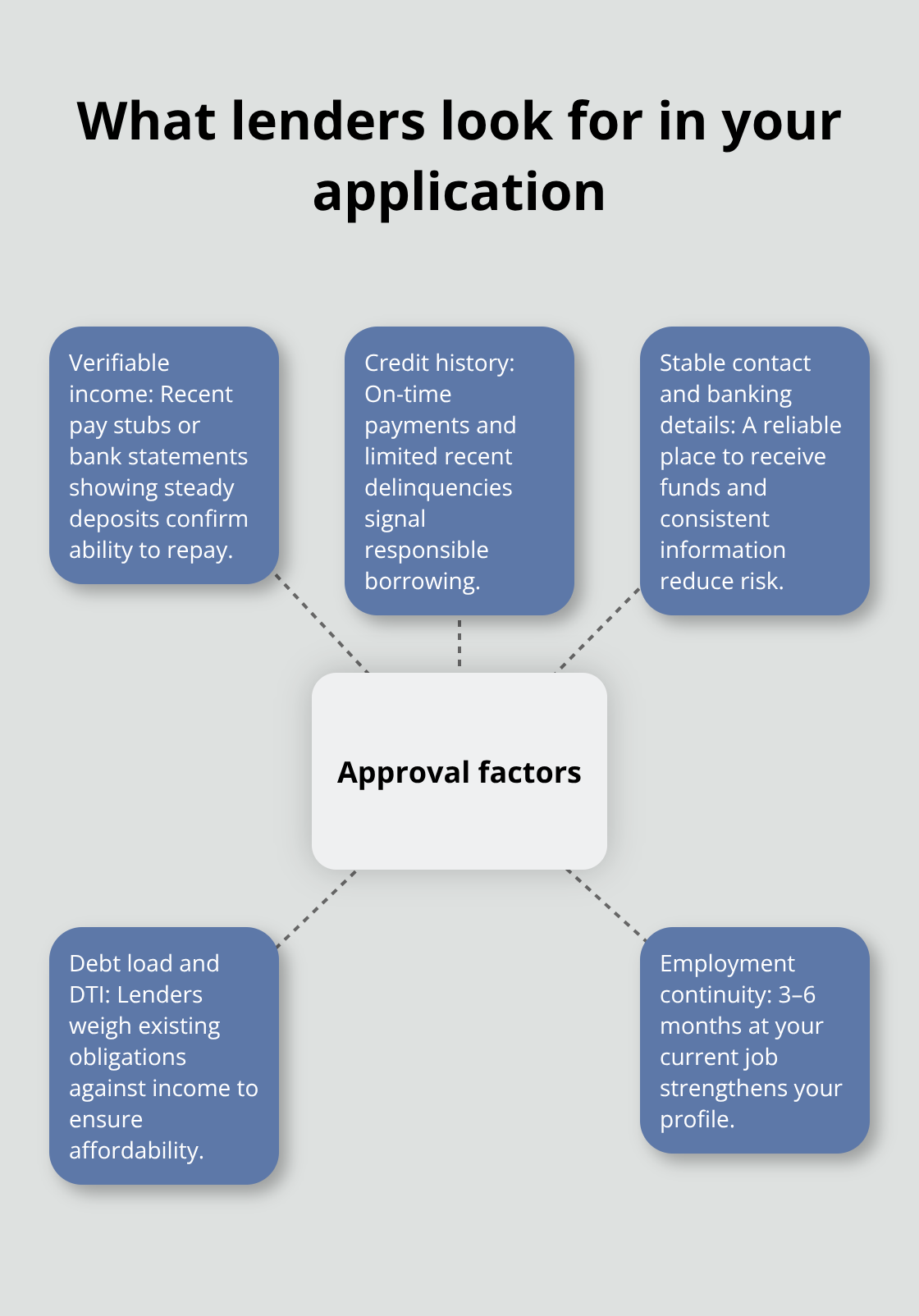
Online lenders in Canada follow a predictable formula when reviewing your application, and understanding exactly what they’re looking for dramatically improves your approval odds. Lenders need three core pieces of information: proof that you earn enough money to repay the loan, evidence that you’ve handled debt responsibly in the past, and confirmation that you have a stable place to receive funds.
Required Documentation and Income Verification
The income verification process isn’t complicated. Most lenders accept recent pay stubs covering the last 30 days, bank statements showing direct deposits over the last 90 days, or notice of assessment documents from the Canada Revenue Agency. Self-employed borrowers should prepare two years of tax returns and business financial statements. Money Mart and LendDirect both accept these standard documents and process applications within hours once you submit them.
The key is having your documentation ready before you apply, not scrambling to gather it after the lender requests it. A single missing document can delay funding by 24 to 48 hours, which defeats the purpose of choosing an online lender for speed. Prepare your paperwork in advance and upload it with your initial application to accelerate approval.
Credit Score Requirements and Impact
Your credit score matters far less than many borrowers believe. A rating of 660 or higher is generally considered acceptable in Canada, but scores below 660 don’t automatically disqualify you from approval. What actually matters is your payment history: did you pay previous debts on time, or do you have missed payments and collections accounts on your report?
Lenders pull your credit file to answer this question. A single late payment three years ago hurts less than a recent missed payment. If you have poor credit, expect to pay higher interest rates, typically 25% to 35% APR instead of 10% to 15% for borrowers with excellent credit. The good news is that responsible repayment of a new loan actively improves your score. Both Money Mart and LendDirect report on-time payments to Equifax Canada, so taking out and repaying an installment loan builds your credit history if you make every payment on schedule.
Common Reasons for Loan Denial
Loan denials happen for specific, preventable reasons that you can address before you apply. Lenders deny applications when your income doesn’t support the loan amount you’re requesting. If you earn $3,000 monthly and request a $20,000 loan, most lenders will reject it because your debt-to-income ratio exceeds their limits.
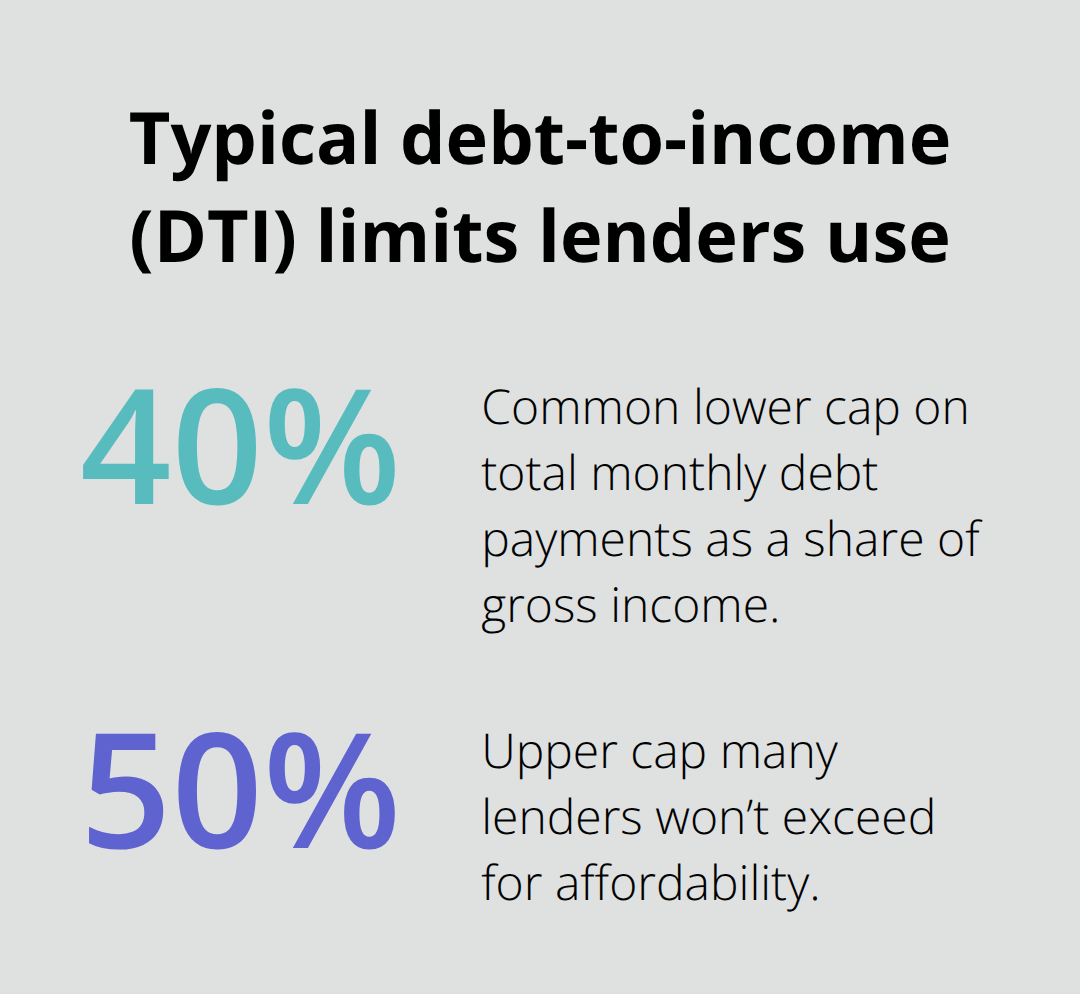
Calculate what you can actually afford: most lenders cap monthly loan payments at 40% to 50% of your gross monthly income. A $3,000 monthly income supports roughly $1,200 to $1,500 in total monthly debt payments.
A second common reason for denial is recent job changes or employment gaps. Lenders want to see at least three to six months of employment history at your current job. If you changed jobs last month, wait another two months before you apply to strengthen your application.
Unstable income from contract or seasonal work sometimes triggers denials, though some lenders specialize in serving self-employed borrowers. The third major reason for denial is too much existing debt. If you already carry credit card balances, car loans, and mortgage payments that consume most of your income, lenders see you as high-risk. Check your credit report before you apply to understand your current debt load. You can request a free credit report from Equifax Canada or TransUnion Canada annually.
Finally, lenders reject applications from borrowers with recent collections accounts, bankruptcy, or fraud flags on their credit file. If your credit report shows a collections account from last year, address it by paying the debt or negotiating a settlement before you apply for a new loan. These obstacles are surmountable with planning, but ignoring them wastes your time and damages your credit with unnecessary hard inquiries.
Final Thoughts
Borrowing online in Canada works best when you approach it strategically rather than desperately. Define exactly why you need the money and how quickly, then match your loan type to that need. A genuine emergency justifies paying higher rates for same-day funding, but planned expenses like home renovations work fine with standard 24-hour processing at lower costs. Gather your income verification documents now-recent pay stubs, bank statements, or tax returns eliminate delays that push funding into the next business day.
Check your credit report from Equifax Canada or TransUnion Canada before you submit any application to understand your current debt load and spot errors that might trigger denials. Calculate your debt-to-income ratio by adding all monthly debt payments and dividing by your gross monthly income; if that number exceeds 40% to 50%, you’ll likely face rejection. Use soft credit checks to compare offers from at least three lenders without damaging your score, then request complete payment breakdowns showing monthly payments, total interest, and all fees combined.
The lowest advertised rate almost never produces the lowest total cost, so spend 15 minutes reading recent customer reviews on TrustPilot or Google to verify that the lender actually delivers on its promises. Explore our Canada online loans guide to discover additional resources on personal finance and borrowing strategies tailored to your situation. Smart borrowing starts with preparation, not panic.











Leave a comment