
Canadians carry an average of $22,837 in consumer debt, according to TransUnion data. At Financial Canadian, we’ve created this guide to help you tackle that burden with concrete strategies that work.
Whether you’re juggling credit cards, personal loans, or lines of credit, the right debt advice and Canada-specific tips can cut years off your payoff timeline. We’ll walk you through calculating what you owe, choosing the best repayment method, and accessing tools designed for Canadian debtors.
Understanding Your Debt Situation
Calculate Your Total Debt and Interest Rates
Start by listing every debt you owe, no matter how small it feels. Write down credit cards, personal loans, lines of credit, car loans, and student loans separately. Next to each one, record the exact balance and the interest rate. Knowing your interest rates separates a smart payoff plan from wasted effort. A debt with a 21% interest rate on a credit card costs far more than a 5% personal loan with the same balance.
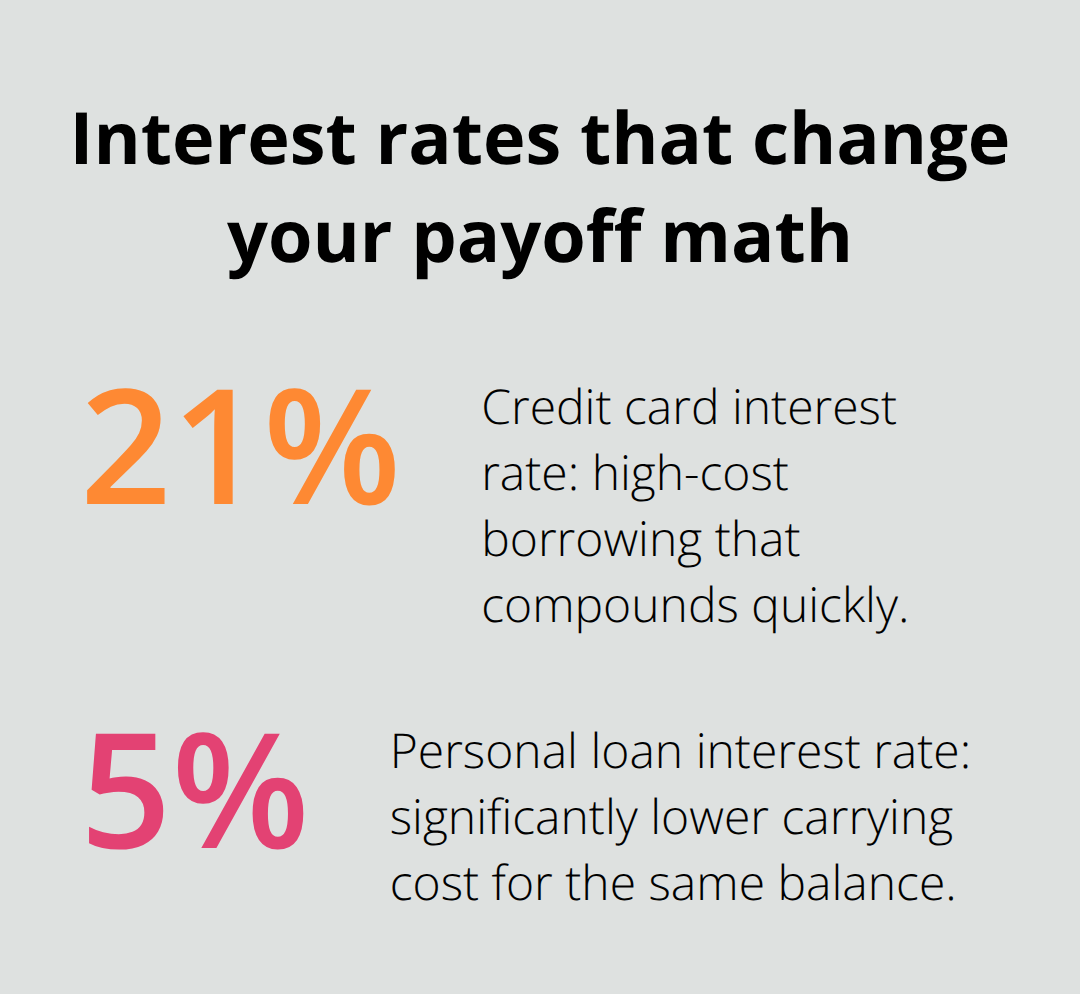
Once you have this list, calculate your total debt amount. Canadians owe an average of $22,837 in consumer debt according to TransUnion, but your number might be higher or lower. The point is knowing it precisely. Then add up all your minimum monthly payments. This figure tells you what your creditors demand each month and shows you how much breathing room you actually have in your budget.
Identify Which Debts Hurt You Most
Credit cards typically carry interest rates between 19% and 21%, while lines of credit sit around 7% to 8%. That gap matters enormously. If you have $5,000 on a credit card at 20% interest and $5,000 on a line of credit at 7%, the credit card costs you roughly $1,000 per year in interest alone while the line of credit costs about $350. This is why identifying which debts hurt you most financially comes before deciding your payoff strategy. Look at your list and mark debts with interest rates above 15% as high-priority. These are the ones stealing your money fastest.
Review Your Monthly Budget and Cash Flow
Your monthly budget determines what you can actually do about high-interest debt. Track your spending for one month-every dollar in and out. Categorize expenses as essential (housing, food, utilities, minimum debt payments) and discretionary (dining out, subscriptions, entertainment). Most Canadians find they can cut 10% to 25% from discretionary spending without major lifestyle changes. That freed-up money becomes your debt-fighting weapon. If you find $200 extra per month, you direct it toward those high-interest debts and shorten your payoff timeline significantly. With this clear picture of what you owe and what you can afford to pay, you’re ready to choose the repayment method that fits your situation best.
Proven Strategies to Pay Down Debt Faster
The Debt Avalanche Method Wins on Math
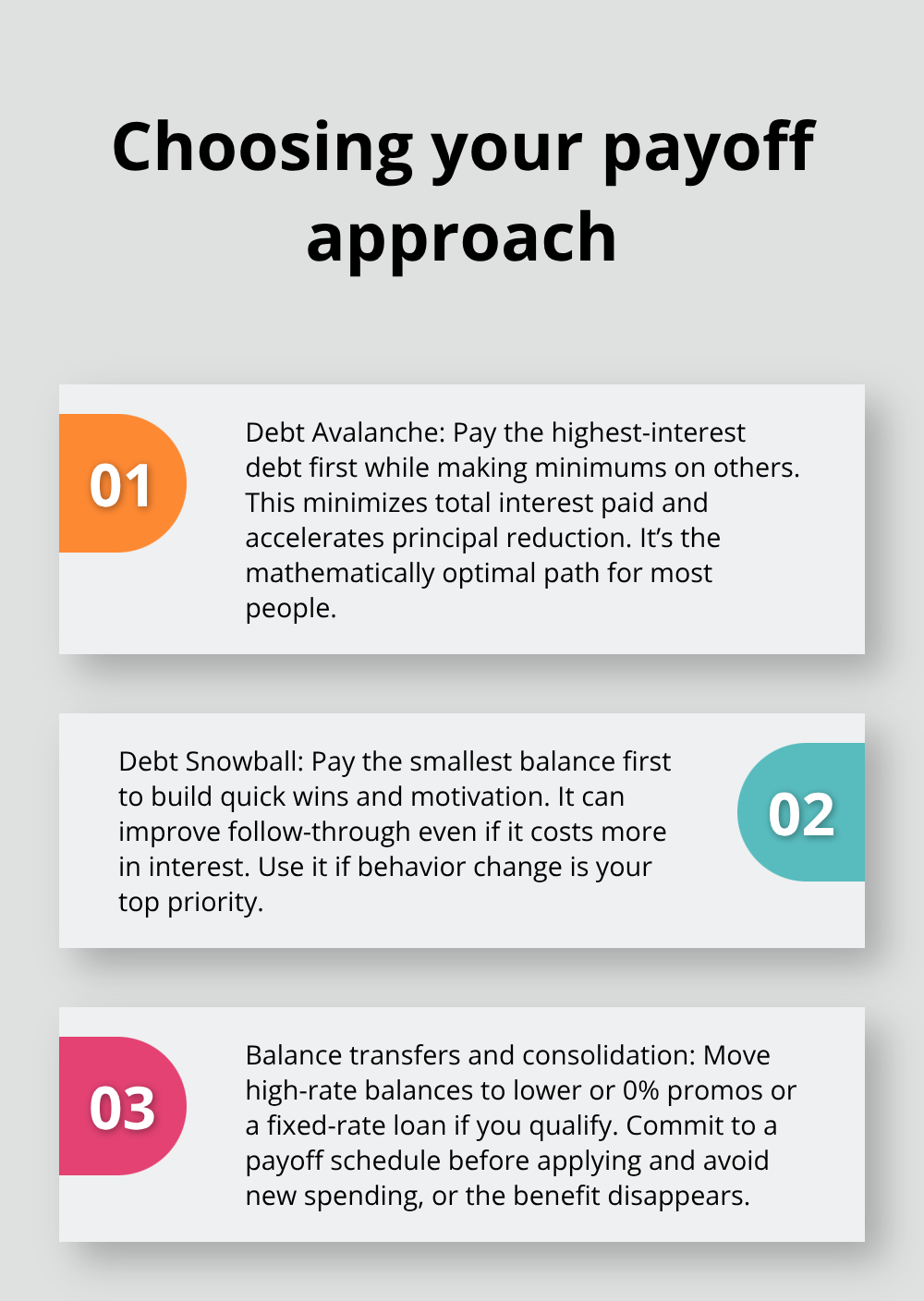
The Debt Avalanche method and the Debt Snowball method represent two fundamentally different approaches to debt repayment, and the Avalanche wins on pure financial merit. The Avalanche targets debts with the highest interest rates first while you maintain minimum payments on everything else. If you have a credit card at 20% interest, a line of credit at 7%, and a personal loan at 5%, you attack the credit card aggressively until it’s gone, then roll that payment toward the line of credit, then the personal loan. The math is undeniable: this approach minimizes total interest paid over your payoff timeline.
Someone with $10,000 in credit card debt at 20% interest pays roughly $2,000 in interest over five years if they make only minimum payments. Attack that debt with an extra $200 monthly using the Avalanche method, and you’ll eliminate it in three years while paying only $1,200 in interest. That $800 difference funds other financial goals.
When the Snowball Method Makes Sense
The Snowball method instead targets the smallest balance first regardless of interest rate, which builds psychological momentum when you eliminate debts quickly. This approach works if motivation matters more to you than saving money, but most Canadians regret choosing slower interest savings for the sake of early wins. Pick the Avalanche method and stay disciplined with those extra payments.
Balance Transfers and Consolidation Loans
Balance transfers and consolidation loans deserve serious consideration if your interest rates are genuinely high and you qualify for better terms. A balance transfer card offering 0% interest for 12 to 21 months can save thousands if you aggressively pay down the principal during that window. Calculate exactly what you owe, divide by the number of interest-free months available, and commit to that monthly payment before you apply. If you can’t hit that target, a balance transfer wastes your time.
Consolidation loans from banks or credit unions work similarly but require qualification based on credit score and income. The trap most people fall into is using consolidation as a band-aid without addressing spending habits. You consolidate $15,000 in credit card debt into a consolidation loan at 10% interest, but this helps only if you stop accumulating new credit card debt simultaneously. Too many Canadians consolidate, then max out those credit cards again within 18 months. Before you consolidate, create a written budget showing exactly where freed-up monthly cash flow goes.
Negotiate Lower Interest Rates Directly
Creditors reduce rates far less often than they should because most people never ask. Call your credit card issuer or lender and request a lower interest rate, especially if you’ve maintained good payment history. Creditors would rather reduce your rate by 2% than lose you to a competitor or watch you default. Even a reduction from 20% to 18% saves hundreds annually on a $5,000 balance (roughly $100 per year). This conversation takes 15 minutes and costs nothing.
With your payoff strategy selected and your interest rates potentially lowered, you now need access to the right tools and professional guidance to execute your plan effectively.
Resources and Tools Available to Canadian Debtors
Access Free Credit Counselling Services
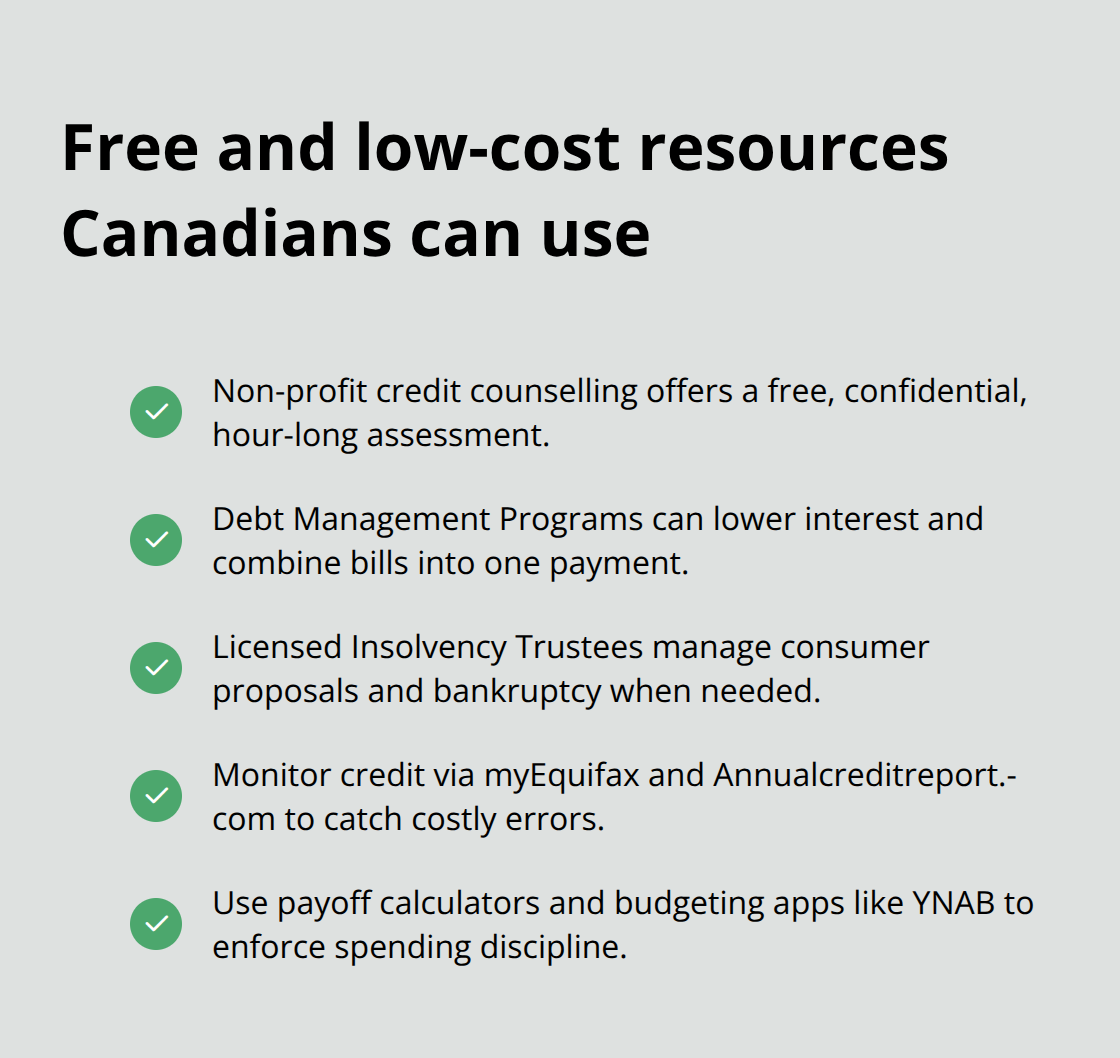
Canada offers legitimate free debt counselling through non-profit credit counselling agencies accredited by the Financial Counselling Canada association. These services cost nothing and carry no judgment. A counsellor walks you through your complete financial picture, explains all available options from debt management plans to consumer proposals, and helps you choose the path that actually fits your situation rather than pushing you toward one solution. The initial consultation is confidential and takes about an hour.
Contact a non-profit counsellor immediately if you carry more than $10,000 in consumer debt or struggle to make minimum payments. They identify options you might not know existed. For instance, a Debt Management Program negotiates directly with your creditors to lower interest rates and consolidate payments into a single monthly amount, often reducing your total interest by 30% to 50% depending on your creditor mix.
Understand Insolvency and Restructuring Options
Licensed Insolvency Trustees handle more serious situations where bankruptcy or consumer proposals become necessary. These federally regulated professionals can restructure your debt legally if you genuinely cannot repay what you owe. A consumer proposal lets you offer creditors a percentage of what you owe (sometimes as low as 30 to 40 cents on the dollar) in exchange for forgiving the rest, and it protects you from wage garnishment or asset seizure. Bankruptcy remains available as a last resort when proposals fail or debts are completely unmanageable.
Monitor Your Credit Reports and Scores
Annualcreditreport.com provides free credit reports from all three Canadian bureaus (Equifax, Experian, and TransUnion) annually, which you should check for errors that might inflate your interest rates or damage your credit score. Create a free myEquifax account to access your Equifax report monthly and monitor your VantageScore as debts decline. Errors on your credit report can cost you hundreds in unnecessary interest, so verification matters more than most people realize.
Use Debt Payoff Calculators and Budgeting Apps
Debt payoff calculators show exactly how long repayment takes under different scenarios and how much interest you’ll pay, which motivates you to commit to extra payments. These calculators are free on most bank websites and through non-profit counselling services. Apps like YNAB (You Need A Budget) cost about $15 monthly but force the spending discipline that prevents new debt accumulation while you’re paying down old debt.
The real power comes from combining a clear payoff strategy, professional guidance if needed, accurate credit monitoring, and a tool that keeps your spending honest. Most Canadians who successfully eliminate debt within three to five years use at least two of these resources simultaneously rather than relying on willpower alone.
Final Thoughts
Debt payoff requires three things: a clear strategy, honest tracking, and consistent action. You now have the debt advice Canada tips you need to eliminate what you owe faster than you thought possible. The Avalanche method saves the most money, consolidation works only if you stop accumulating new debt, and negotiating lower interest rates takes 15 minutes and costs nothing. These aren’t theoretical suggestions-they’re concrete moves that shorten your payoff timeline by years.
List every debt with its balance and interest rate today, not tomorrow. Calculate your monthly budget and find the extra money hiding in discretionary spending (most Canadians locate $150 to $300 monthly without major sacrifice). That amount, directed toward your highest-interest debt, compounds into thousands in interest savings over time. If your debt exceeds $10,000 or you struggle with minimum payments, contact a non-profit credit counsellor this week, since this conversation is free, confidential, and often reveals options like Debt Management Programs that reduce your interest rates by 30% to 50%.
Use a debt payoff calculator to see exactly when you’ll be debt-free under your chosen strategy. Check your credit report monthly through myEquifax to watch your score improve as balances decline. Your debt payoff journey begins now-pick your strategy, find your extra money, and commit to one extra payment this month.










Leave a comment