
When unexpected expenses hit, many Canadians turn to payday loans as a quick fix. But not all Canada payday loan options are created equal, and choosing the wrong lender can cost you thousands in fees and interest.
At Financial Canadian, we’ve created this guide to help you understand how payday loans work, compare providers fairly, and explore alternatives that might save you money. Whether you’re considering a payday loan or looking for better options, this resource will give you the facts you need to decide.
Understanding Payday Loans in Canada
A payday loan is a short-term option where you receive cash upfront and repay it on your next payday, typically within two weeks. The lender charges a flat fee rather than traditional interest, though the effective annual percentage rate reaches astronomical levels when annualized. In Ontario, for example, a $300 loan with a $45 fee ($15 per $100 borrowed) costs you 14,299% APR according to Ontario government calculations. This structure makes payday loans expensive relative to other credit options, but they remain accessible to people with poor credit or urgent cash needs. Each province regulates payday lending differently, creating a patchwork of rules that affects how much you’ll actually pay.
Provincial Regulations Shape What You Pay
Canada has no federal payday loan law except for a 60% annual usury cap that applies in Newfoundland and Labrador, the only province without its own payday lending legislation. Every other province caps fees differently based on their consumer protection frameworks. Alberta offers the lowest rate at $15 per $100 borrowed since August 2016, bringing the effective rate to approximately 3,724% annually. British Columbia caps charges at 23% of the principal and lets you cancel within one business day without penalty, while Ontario reduced its fee cap from $21 per $100 to $15 per $100 starting January 2018. Nova Scotia caps charges at $17 per $100, New Brunswick and Saskatchewan both limit fees to $15 per $100, and Manitoba restricts costs to $17 per $100 every two weeks.
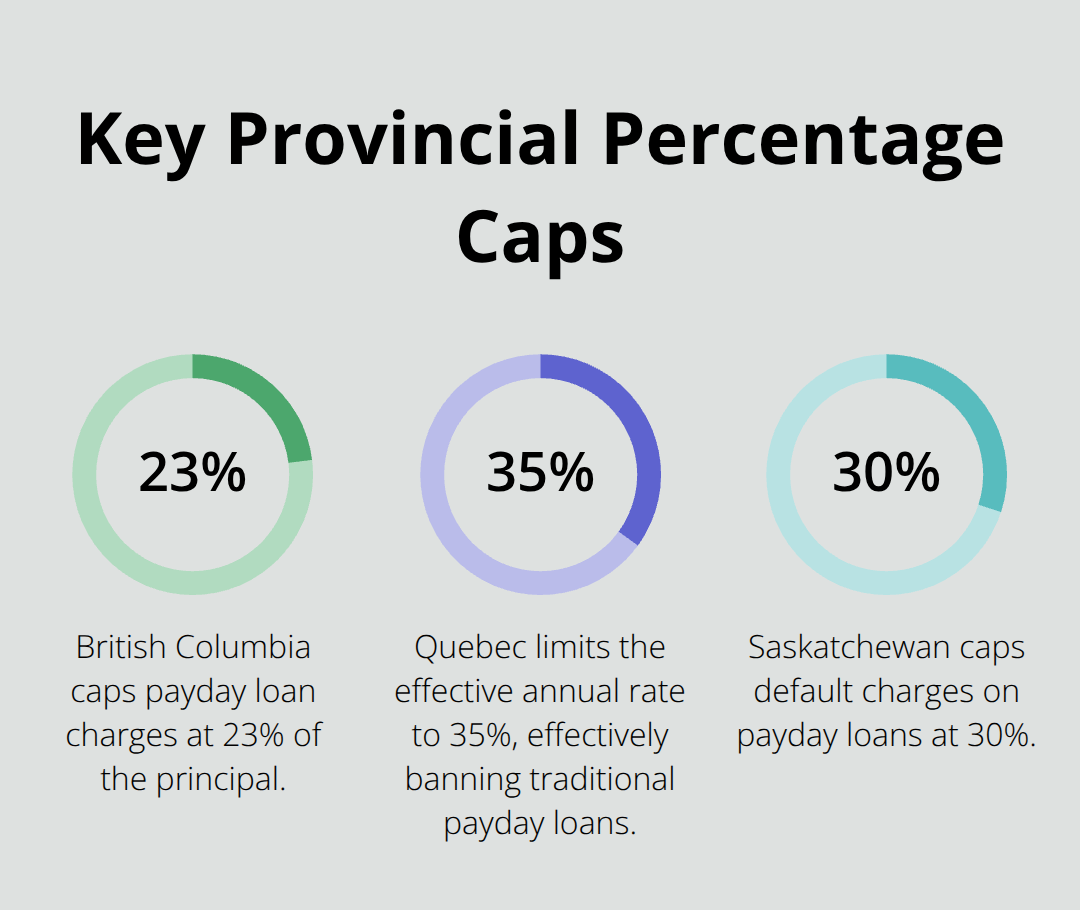
Prince Edward Island allows $25 per $100 for two weeks, producing the highest effective APR at approximately 33,519%. Quebec has effectively banned payday lending by capping the effective annual rate at 35%, making traditional payday loans impossible to offer profitably. These provincial differences matter significantly-borrowing $400 in Alberta costs far less than the same amount in Prince Edward Island.
Typical Loan Sizes and Repayment Terms
Most Canadian payday loans range from $300 to $500, with Ontario’s average sitting around $435 over approximately 16 days according to provincial data. Lenders typically limit loans to a percentage of your take-home pay-British Columbia caps them at 50% of your net pay, while New Brunswick restricts loans to 30% of net pay. The standard repayment term is two weeks, though some lenders offer slightly longer terms. Many provinces require lenders to be licensed and registered with consumer protection authorities, which you can verify before borrowing. Ontario has over 800 payday lenders operating in the province, giving borrowers multiple options but also increasing the risk of predatory practices.
Comparing Lenders and Exit Strategies
When you compare lenders, focus on the total cost of borrowing rather than the fee percentage alone, and try lenders licensed by your provincial regulator. The 48-hour cancellation window available in New Brunswick and the one-day cancellation right in British Columbia give you exit strategies if you change your mind after borrowing. These protections vary by province, so check what your jurisdiction offers before you sign any agreement. Understanding these provincial differences and cancellation options positions you to make a more informed choice about whether a payday loan fits your situation or whether alternatives might serve you better.
Picking a Payday Lender You Can Trust
Calculate Your True Borrowing Cost
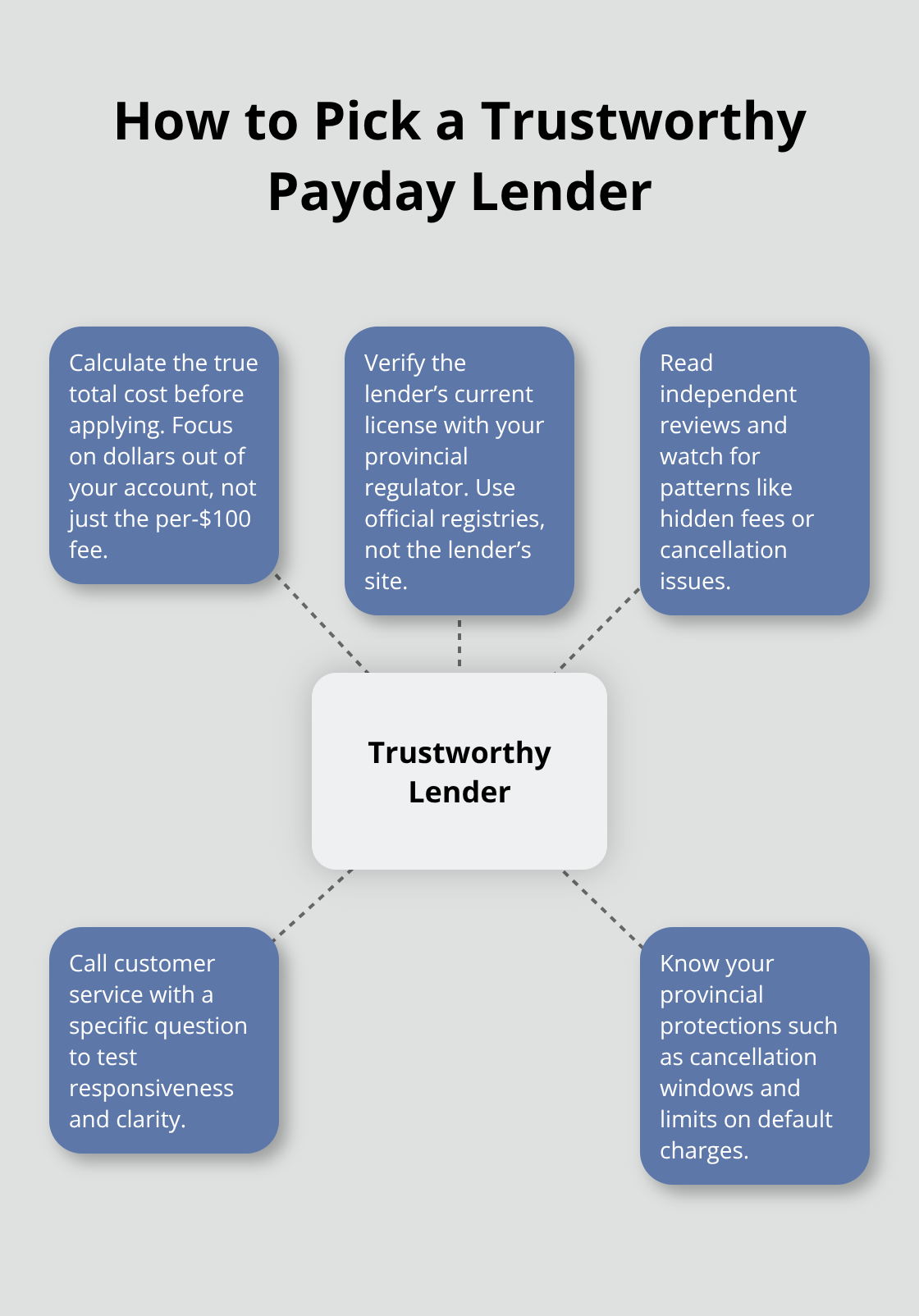
Start by calculating the actual total cost before you apply anywhere. Ontario’s government website shows how a $300 loan at $15 per $100 costs $45 in fees, making the effective APR 14,299% when annualized. That same $300 loan in Alberta costs only $45 as well (at the $15 per $100 rate), but in Prince Edward Island it costs $75, producing a 33,519% APR. The fee percentage looks similar across provinces, but the total dollars leaving your account varies dramatically.
Pull your province’s regulatory cap from your provincial consumer protection authority’s website-not from the lender’s marketing material. Alberta’s government publishes its payday lending rules clearly, as do Ontario’s Ministry of Government and Consumer Services and Consumer Protection BC. Once you know your province’s maximum fee, multiply it by your loan amount and add that to what you’re borrowing. That total cost is what actually matters when you’re deciding between lenders.
Verify Licensing and Regulatory Status
Verify that your lender holds a current license with your provincial regulator before you hand over any personal information. Ontario requires payday lenders to register with the province, and Consumer Protection BC maintains a searchable database of licensed lenders. New Brunswick’s Financial and Consumer Services Commission (FCNB) publishes its list of approved lenders, and you should check it before you borrow. Unlicensed lenders operating in your province break the law and won’t have the consumer protections built into provincial regulations.
Check Reviews and Customer Service Quality
Read actual customer reviews on Google and Trustpilot, not testimonials on the lender’s own website. Look for patterns in complaints about hidden fees, aggressive collection tactics, or difficulty canceling loans. British Columbia’s one-day cancellation right and New Brunswick’s 48-hour window are legal protections you have in those provinces-if a lender resists honoring these, that’s a red flag.
Call the lender’s customer service line with a specific question before you apply; if they’re evasive or rush you, move to the next option. The cheapest lender isn’t always the best one if their customer service disappears after you’ve signed the agreement and your paycheck is late. These interactions reveal whether the lender treats you as a customer or simply as a transaction, which matters significantly when you need help managing your repayment.
Understand Your Provincial Protections
Each province offers different safeguards that protect you after you’ve borrowed. British Columbia allows you to cancel within one business day without penalty, while New Brunswick gives you a 48-hour window to change your mind. Saskatchewan caps default charges at 30%, and Nova Scotia limits late payment interest to 30%. These protections vary by province, so check what your jurisdiction offers before you sign any agreement. Understanding these differences and what cancellation options you have positions you to make a more informed choice about whether a payday loan fits your situation-or whether exploring alternatives might serve you better.
When Payday Loans Become a Debt Trap
The Renewal Cycle That Costs You Thousands
Payday loans create debt spirals faster than most people realize. Ontario’s average loan of $435 over 16 days costs $65 in fees alone, but the real problem emerges when you can’t repay on payday. Many borrowers renew their loans instead of repaying them, and Manitoba’s regulations reveal why this happens-the province restricts subsequent loans to 5% for the same customer within a certain period, acknowledging that repeat borrowing is the industry norm, not the exception. The typical borrower takes out nine loans per year, meaning that initial $435 emergency becomes a $585-plus annual expense in fees alone.
Ontario has faced multiple class actions against major lenders like Cash Store and Instaloans, with settlements showing how predatory collection practices and hidden fee structures trap borrowers. These cases demonstrate that the debt trap isn’t accidental-it’s built into how payday lenders operate and profit from repeat customers.
Calculate Your Actual Repayment Capacity
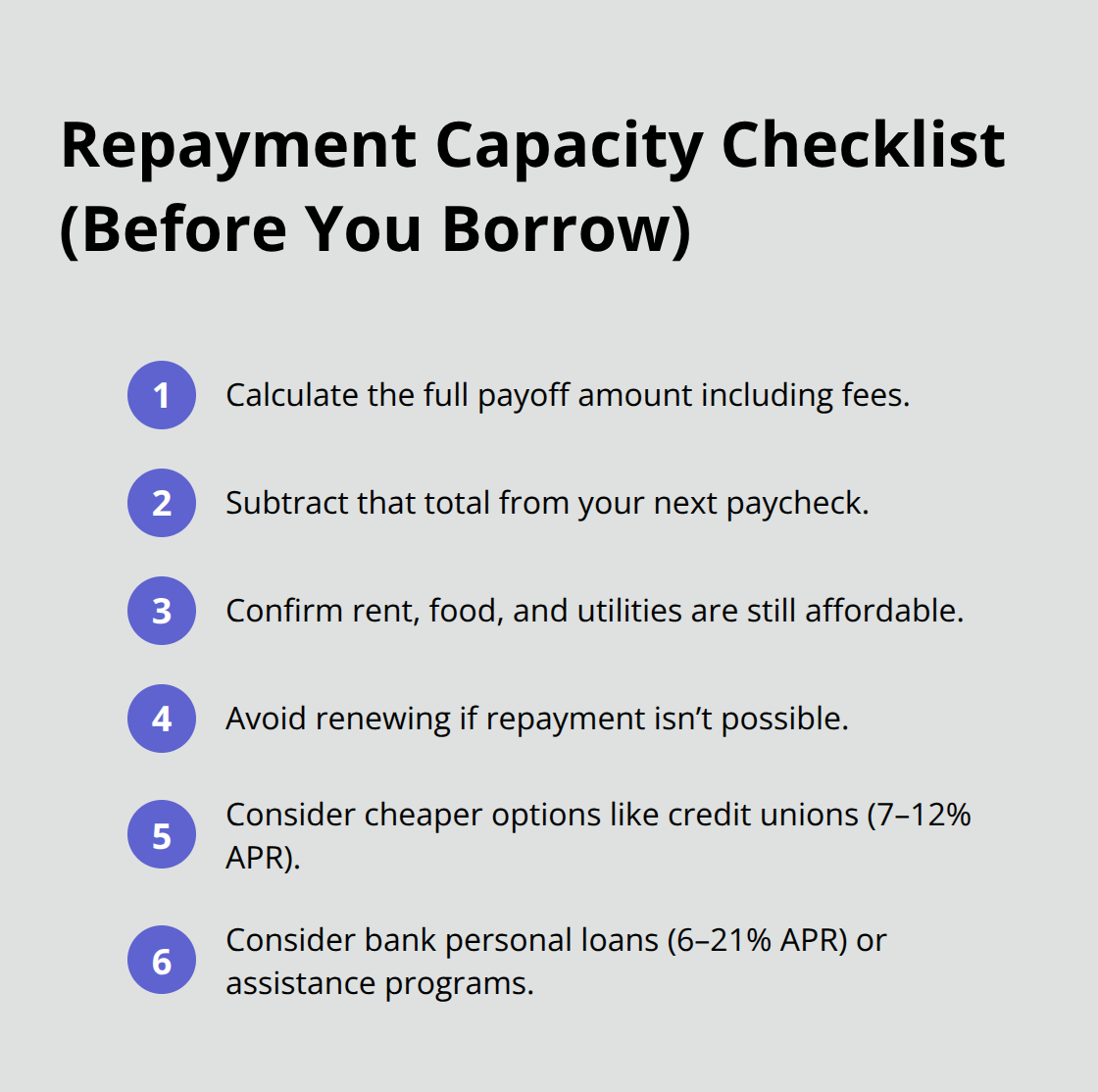
Before you sign any agreement, calculate whether you can actually repay the full amount on your next payday without renewing. If you can’t repay without borrowing again, the loan will cost you far more than the upfront fee suggests, and you’ll likely end up worse off than when you started. Test your math by subtracting the full loan amount plus fees from your next paycheck and seeing what remains for rent, food, and utilities.
Most people who take payday loans underestimate how tight their budget becomes after repayment. A $435 loan with $65 in fees requires $500 from your next paycheck-money that may not exist if your emergency was truly unexpected. This reality check separates borrowers who can handle payday loans from those who will spiral into repeat borrowing.
Credit Unions and Personal Loans Cost Far Less
Credit unions and personal loans from traditional banks offer dramatically cheaper alternatives if you have even modest credit. A credit union line of credit typically charges 7-12% annual interest compared to payday lending in Ontario. Personal loans from banks usually range from 6-21% depending on your credit score, and you’ll get 12-84 months to repay instead of two weeks.
Most credit unions will work with members who have poor credit histories, whereas banks require stronger credit profiles. If you have 48 hours before you need the money, exploring a credit union application or calling your bank about a personal loan will almost always save you hundreds of dollars compared to a payday loan.
Government Assistance Programs You Can Access
Government assistance programs exist in every province but often go unused because people don’t know they exist. Contact your provincial social services office to ask about emergency assistance, utility bill help, or food bank access before borrowing at payday loan rates. These programs won’t solve every financial crisis, but they can bridge gaps without the astronomical costs of payday lending.
Quebec essentially banned payday lending by capping effective annual rates at 35%, forcing residents to use credit unions and banks instead. The result is that Quebecers have far fewer predatory lending traps available to them, and their provincial government actively steers people toward safer alternatives.
Final Thoughts
Payday loans serve a specific purpose in Canada’s financial landscape, but they’re rarely the best choice for most borrowers. The provincial regulations we’ve outlined show that Canada payday loan options range from relatively affordable in Alberta to prohibitively expensive in Prince Edward Island, yet even the cheapest options cost far more than traditional credit. Your decision should hinge on one question: can you repay the full amount plus fees on your next payday without renewing the loan?
If the answer is yes, a payday loan from a licensed lender in your province might work as a genuine emergency bridge. If the answer is no, borrowing will trap you in the renewal cycle that Ontario’s class action settlements exposed. A $435 loan that costs $65 in fees becomes a $585-plus annual expense if you renew nine times, which is the industry average.
Before you apply anywhere, contact your provincial consumer protection authority to verify the fee cap in your jurisdiction, then call a local credit union to ask about their rates and approval timeline. Most credit unions will respond within 24 hours and offer rates between 7-12% annually, which saves hundreds of dollars compared to payday lending. If a credit union won’t work, check whether your province offers emergency assistance programs through social services-these exist in every province but remain underutilized. We at Financial Canadian help you understand your actual options and their true costs so you can make informed borrowing decisions that protect your long-term financial health.









Leave a comment