
Your credit score shapes whether you get approved for mortgages, car loans, and credit cards-and what interest rates you’ll pay. At Financial Canadian, we’ve seen how small habits compound into major financial advantages.
The good news: raising your score doesn’t require perfection. We’ll walk you through Canada credit score tips that actually work, plus the mistakes that tank your rating fast.
How Your Credit Score Works in Canada
Your credit score in Canada is a three-digit number between 300 and 900 that lenders use to decide whether you qualify for credit and what interest rate you’ll pay. Two major credit bureaus-Equifax and TransUnion-calculate your score based on your credit report, which tracks your borrowing and repayment history. Payment history makes up roughly 35% of your score, which means a single missed payment can damage your rating for years. Credit utilization-the percentage of your available credit you’re actually using-accounts for about 20% to 30% of the calculation. The length of your credit history matters at 15%, your credit mix (mortgages, car loans, credit cards) at 10%, and recent credit inquiries at 10%.
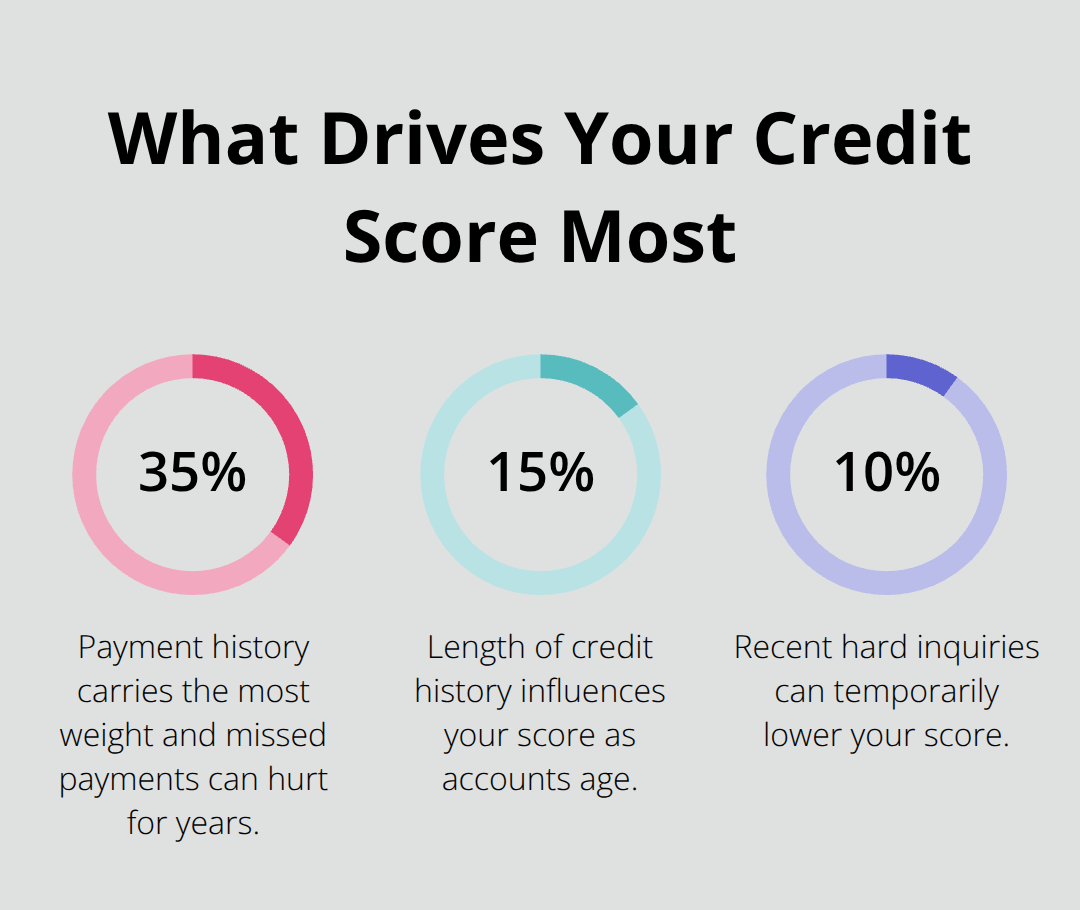
This breakdown reveals why people focus on certain habits while ignoring others that barely move the needle.
What Your Score Actually Means
A score above 750 puts you in excellent territory, where lenders offer you their best rates and approve your applications without hesitation. Between 700 and 749, you’re considered good-most lenders will approve you, though your interest rates won’t be as competitive. Scores between 650 and 699 are fair; you’ll face more scrutiny and higher rates. Below 650, approval becomes difficult, and if you do get approved, expect significantly worse terms. The difference between a 700 and 750 score can cost you thousands on a mortgage or car loan. A borrower with a 750+ score might secure a mortgage at 4.5%, while someone at 700 could face 5.2%-a difference that adds roughly $150,000 in extra interest over 25 years on a $500,000 mortgage.
Why Your Score Controls Your Financial Life
Lenders don’t just use your score to decide yes or no. They use it to price your risk. A higher score means lower interest rates on mortgages, car loans, and credit cards. You’ll also qualify for larger credit limits, which paradoxically helps your utilization ratio and further boosts your score. Some employers and landlords check credit scores too-a low score can cost you a job opportunity or an apartment you wanted. The practical advantage of building your score above 750 is undeniable: you gain access to the best products, save thousands in interest, and face fewer obstacles when making major financial moves.
How the Two Credit Bureaus Differ
Equifax and TransUnion may calculate your score slightly differently, which means you could have two different ratings at the same time. Lenders often rely on one bureau over the other, so a strong score with Equifax won’t help you if a lender pulls your TransUnion report instead. You should monitor both scores regularly to catch errors or fraud. Checking your own credit report counts as a soft inquiry and won’t hurt your score-you can access your reports for free from both bureaus annually.
Your Next Move
Understanding how your score works is the first step. The real power comes from the habits you build starting today, which directly influence each of those five factors that make up your rating.
Building the Four Habits That Move Your Score
Pay Your Bills on Time, Every Single Month
Payment history is non-negotiable. Late payments may remain on your credit reports for up to seven years, though they generally have less influence on your credit scores as time passes. Set up automatic payments from your bank account for at least the minimum balance on every credit card and loan. This eliminates the excuse entirely. If you carry variable expenses, set the automatic payment to cover your minimum and pay any extra balance manually when the bill arrives. This approach guarantees you never miss a deadline while keeping flexibility for larger payments. Prevention matters far more than recovery.
Keep Your Credit Utilization Below 30 Percent
Credit utilization sits at roughly 20 to 30 percent of your score, and this is where most people leak points unnecessarily. Keep your credit utilization below 30 percent. If you have a $5,000 credit limit, that means keeping your balance below $1,500. Many people hit 80 or 90 percent utilization and wonder why their score stalls. The gap between 30 percent and 90 percent utilization can mean 50 to 100 points on your score. Request credit limit increases from your card issuers every six months if you have a solid payment history. Higher limits automatically lower your utilization ratio without requiring you to change your spending. Try paying down balances aggressively if you’re currently above 50 percent utilization. This single change produces faster results than almost any other habit.
Build a Diverse Credit Mix
A mortgage, car loan, and credit card together create stronger score growth than three credit cards alone. Lenders want to see you handle different types of credit responsibly. If you only have credit cards, consider a small personal loan or a car loan when you need credit to diversify your profile. Don’t take on debt you don’t need just for the mix. Keep older accounts open even after you pay them off. Closing old accounts shortens your overall credit history length, which directly damages your score. That first credit card you opened years ago continues working for you every month it stays active.
Monitor Both Bureaus to Catch Errors Early
Check your credit reports from both Equifax and TransUnion annually at no cost. Errors appear on reports regularly, and fraudsters can add accounts to your file without your knowledge. A single incorrect late payment can cost you 100 points. Dispute inaccuracies immediately and follow up until they’re removed. Some lenders use one bureau exclusively, so a strong Equifax score means nothing if TransUnion shows errors. You can access free annual reports directly from both bureaus. If you want frequent monitoring between annual checks, tools like Equifax Core Credit provide regular updates so you catch problems early rather than discovering them during a mortgage application. These four habits form the foundation of score improvement, but knowing what to do matters far less than understanding what mistakes actively destroy your progress.
What Destroys Your Credit Score Fastest
One Missed Payment Costs You Months of Progress
A single late payment tanks your score more than months of good behavior can repair. One missed payment at 30 days past due drops your rating by 100 to 150 points depending on your current score. At 90 days past due, the damage compounds and the account moves into default territory, where lenders stop waiting for payment and start pursuing collection. The brutal math: it takes roughly 12 to 24 months of perfect payments to recover from one missed deadline. This is why automatic payments matter so much-set them up today and forget about them.
If you can’t trust yourself to pay manually, you shouldn’t be using credit cards or loans in the first place. Your bank can handle this responsibility far better than you can. Late payments stay on your credit reports for up to seven years, though they generally have less influence on your score as time passes.
Maxing Out Your Credit Cards Destroys Your Utilization Ratio
Maxing out your credit cards is the second fastest way to crater your score, and most people don’t realize they’re doing it until the damage appears. A balance above 50 percent utilization costs you points immediately. At 90 percent utilization, you lose serious points every single month that balance stays high. The worst part: people often max out cards during emergencies or slow business months, exactly when they need good credit to access a loan at reasonable rates.
Instead of maxing cards, request higher limits from your issuers before you need them. A $10,000 limit instead of $5,000 cuts your utilization ratio in half if you maintain the same spending. Apply for credit limit increases every six months if your payment history is clean. This costs nothing and takes five minutes online.
Closing Old Accounts Shortens Your Credit History
Closing old credit accounts after paying them off seems logical but destroys your score. Your oldest active account contributes significantly to your credit history length, which represents 15 percent of your score. Close a 15-year-old card and you’ve just shortened your average account age, triggering an immediate score drop of 20 to 50 points.
Keep paid-off accounts open with zero balances. Use them occasionally for small purchases and pay them off monthly to maintain activity. The account age stays on your report and keeps working for you without any effort on your part.
Multiple Credit Applications Signal Desperation to Lenders
Multiple credit applications within six months signal desperation to lenders and trigger hard inquiries that each lower your score by 5 to 10 points. Apply for three credit cards in two months and you’ve lost 15 to 30 points from inquiries alone, plus the new accounts themselves lower your average age. Space applications at least six months apart.
If you need credit, determine exactly what you need and apply once rather than shopping around aggressively. Hard inquiries stay on your report for one year but impact your score most heavily in the first three months. The difference between a focused strategy and panic applications can mean 50 to 100 points over a year.
Final Thoughts
Your credit score improves through consistent action, not perfection. The Canada credit score tips we’ve covered-paying on time, keeping utilization low, building credit diversity, and monitoring for errors-form a complete strategy that works. Most people focus on one or two habits and ignore the rest, which is why their progress stalls.
Start with automatic payments today, as this single step eliminates the biggest threat to your score and requires zero ongoing effort. Within 30 days, request a credit limit increase from your card issuer to lower your utilization ratio. Within 60 days, pull your free credit reports from both Equifax and TransUnion to catch any errors before they damage your rating further.
A higher rating saves you thousands on mortgages and car loans while opening doors to better credit products and terms. Visit Financial Canadian to explore resources and guidance that support your financial goals.










Leave a comment