
Finding the right personal loan in Canada means comparing rates, terms, and lender options that actually fit your situation. We at Financial Canadian have reviewed the best personal loans Canada offers to help you make an informed choice.
This guide walks you through what matters most when selecting a lender, shows you top providers across banks and online platforms, and explains the approval process from start to finish.
What Actually Matters When Comparing Personal Loans
The difference between a cheap loan and an expensive one often comes down to three numbers: the APR, the term length, and the fees stacked on top. In Canada’s 2026 market, personal loan APRs range from around 6% for borrowers with excellent credit at major banks to well over 30% for those with weaker profiles. Major banks like Scotiabank, TD, BMO, CIBC, and RBC typically advertise starting rates in the 6% to 10% APR range for strong borrowers, while online lenders such as Spring Financial and Mogo span much wider ranges-9.99% to 34.95% and 9.90% to 46.96% respectively. Your actual rate depends on your credit score, income, debt-to-income ratio, and the loan amount you request. This is why comparing multiple offers matters far more than chasing a single advertised rate. Tools like Ratehub’s LoanFinder show personalized offers in about 60 seconds without a hard credit inquiry affecting your score. The difference between a 10% APR and a 20% APR on a $10,000 loan over three years amounts to roughly $1,500 in extra interest-money that stays in your pocket if you shop around properly.
APR Tells the True Cost of Borrowing
APR includes both the interest rate and any upfront fees, so it represents the true cost of borrowing. If a lender charges an origination fee of 3% to 8% of the loan amount, that fee gets wrapped into the APR calculation. Some lenders like LightStream and Discover advertise no-fee loans, which means their APR equals the interest rate-a genuine advantage. Others deduct fees directly from your proceeds, so a $10,000 loan with a 5% origination fee means you receive only $9,500. The term length amplifies this effect dramatically.
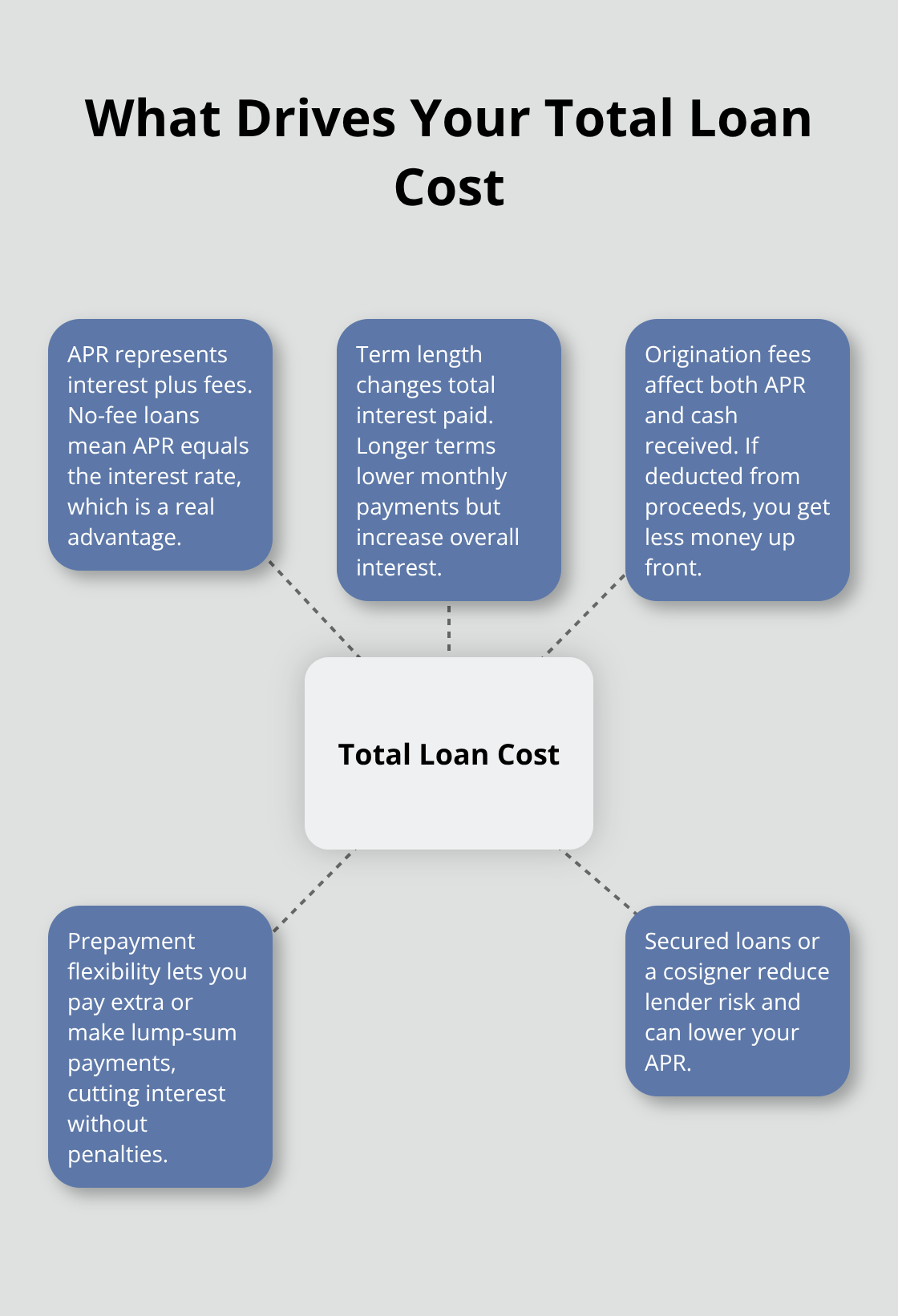
A $10,000 loan at 12% APR costs roughly $1,800 in interest over three years but jumps to around $4,300 to $5,700 over five years depending on your exact rate. Longer terms lower your monthly payment but significantly increase total interest paid.
Term Length and Prepayment Options Shape Your Total Cost
Most Canadian lenders offer terms from two to seven years, though some like LightStream extend up to 20 years for specific purposes such as home renovations. Prepayment flexibility matters because it directly affects whether you can save money by paying faster. Some lenders allow you to pay extra or make lump-sum payments without penalties, while others restrict early repayment. Check this detail before signing because it determines your true flexibility.
Origination Fees Vary Widely Across Lenders
Origination fees are standard across Canadian personal lending. Traditional banks and online lenders typically charge 0.5% to 8% of the loan amount. Upgrade ranges from 1.85% to 8.99%, Universal Credit from 5.25% to 9.99%, and Best Egg from 0.99% to 9.99%. Some lenders advertise lower starting rates but compensate with higher fees, so always compare the full APR rather than fixating on a single component. Beyond origination fees, watch for prepayment penalties, late payment fees, and processing charges. Many Canadian lenders now offer transparent fee structures, but reading the fine print remains essential.
Your Credit Score Determines Your Rate Range
Your credit score determines personal loan APR rates. Borrowers with excellent credit typically qualify for APRs around 10% to 12%, while those with good credit see rates closer to 15% to 20%. Fair and poor credit borrowers face 25% to 35% APRs or higher. This is where a secured loan backed by collateral or a cosigner can help-both strategies reduce the lender’s risk and lower your rate. If your credit score sits below 600, most lenders either decline you or charge premium rates. Checking your credit reports from Equifax Canada and TransUnion Canada before applying helps you understand where you stand and identify any errors that might inflate your rate.
Next, You Need to Know Which Lenders Actually Fit Your Profile
With these three factors in mind-APR, term length, and fees-you’re ready to evaluate which lenders match your credit profile and borrowing needs. Different providers target different borrowers, and what works for someone with excellent credit won’t work for someone rebuilding their score.
Where to Actually Borrow in Canada Right Now
Major Banks Offer Low Rates-If You Qualify
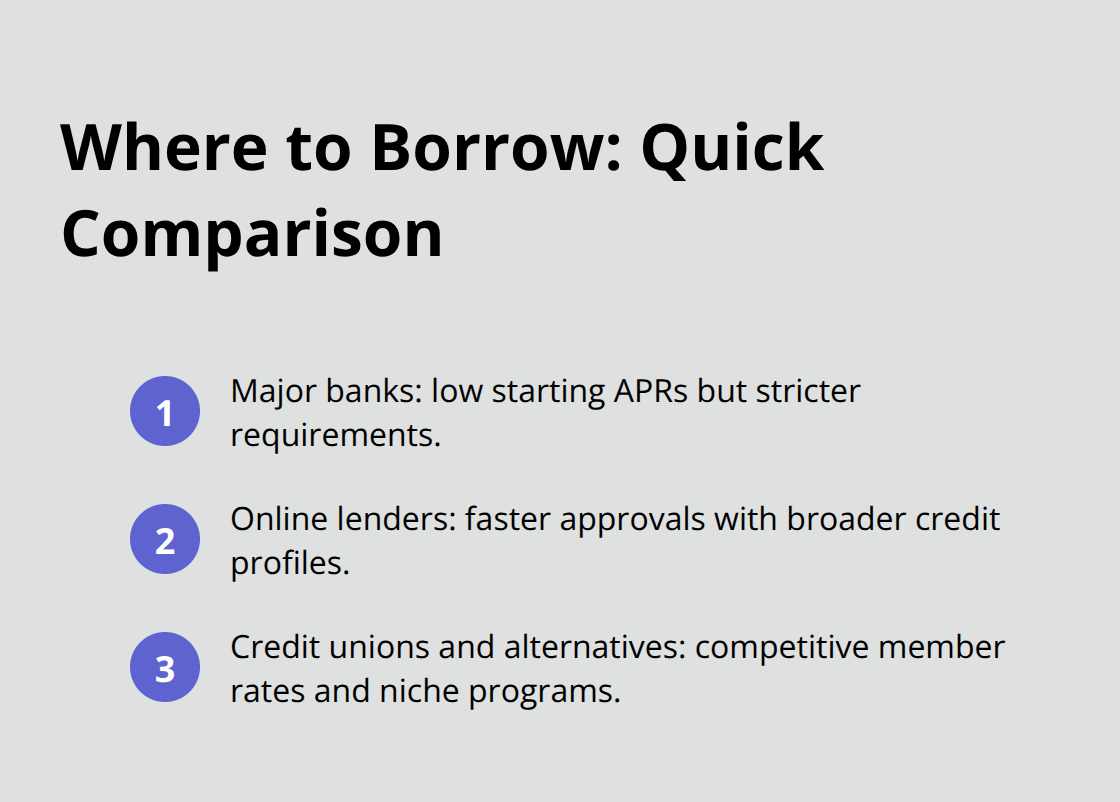
Major Canadian banks dominate the personal loan market, but they’re not always the best choice for your situation. Scotiabank, TD, BMO, CIBC, and RBC advertise starting rates between 6% and 10% APR, which sounds competitive until you check their actual approval requirements. These banks typically demand a credit score above 660, stable employment history, and a debt-to-income ratio under 40%. If you meet those criteria and have banked with them for years, you’ll likely qualify for their advertised rates. The problem: most borrowers don’t fit this profile perfectly, and banks won’t tell you your actual rate until they pull your credit hard.
Online Lenders Move Faster and Approve Broader Profiles
Spring Financial and Mogo operate differently, targeting borrowers across the entire credit spectrum with rates spanning 9.99% to 34.95% and 9.90% to 46.96% respectively. They approve faster (sometimes within hours) and don’t require the same employment stability that traditional banks demand. Online lenders like Upgrade, Best Egg, and LightStream have carved out specific niches rather than trying to serve everyone equally. Upgrade focuses on debt consolidation with origination fees from 1.85% to 8.99% and approves borrowers with fair credit if they have solid payment history. Best Egg targets homeowners who can offer collateral, which typically lowers rates by 2% to 5% compared to unsecured loans.
LightStream charges zero origination fees, though it requires good credit and offers limited visibility into rates before you apply.
Credit Unions and Alternative Lenders Fill Critical Gaps
Credit unions and alternative lenders fill gaps that banks and online platforms miss. First Tech Credit Union provides competitive rates starting around 7% for members with good credit, plus flexible terms up to seven years and the option of secured or joint loans without the speed penalty of traditional banks. Happen Bank, formerly LendingClub, specializes in debt consolidation and sends funds directly to your creditors rather than depositing cash into your account, which prevents you from overspending consolidated balances. Universal Credit explicitly targets borrowers with bad to fair credit and offers direct creditor payments plus multiple rate discounts, though origination fees run 5.25% to 9.99%.
How to Actually Compare Offers Before You Apply
The real decision comes down to your specific situation: if you have excellent credit and want the lowest possible APR, major banks deliver. If you’re rebuilding credit or need fast approval, online lenders move faster and approve more profiles. If you’re a credit union member, check your institution’s rates first because member rates often beat what you’ll find elsewhere. The mistake most borrowers make is applying to one lender, getting declined or quoted a high rate, then accepting it. Ratehub’s LoanFinder pulls personalized offers from multiple lenders in 60 seconds without a hard inquiry, letting you compare actual rates side by side before committing to an application. This comparison step separates borrowers who pay thousands in unnecessary interest from those who secure competitive terms.
How to Get Approved for a Personal Loan Without Wasting Credit Inquiries
Check Your Credit Score Before You Apply Anywhere
Your credit score sits at the center of loan approval, but checking it doesn’t have to damage it. Pull your reports from Equifax Canada and TransUnion Canada before applying anywhere because soft inquiries don’t affect your score at all. You’ll see exactly where you stand, spot any errors that might inflate your rate, and know whether you qualify for competitive terms or need to target lenders specializing in lower credit profiles. Most Canadian lenders require a score above 600 for reasonable rates, though major banks typically demand 660 or higher. Consider monitoring your credit report quarterly and setting alerts for key changes like new accounts and hard inquiries.
Use Soft Prequalification to Compare Multiple Lenders
Once you know your score, use Ratehub’s LoanFinder to generate personalized offers from multiple lenders in about 60 seconds without triggering hard credit pulls. This step matters tremendously because soft prequalification lets you compare real APRs, terms, and fees across five to ten lenders simultaneously before committing to formal applications. The difference between shopping with soft pulls versus jumping straight to hard applications can mean the difference between a 10% APR and a 20% APR on the same loan amount. Hard credit inquiries typically lower your score by a few points to 10 points and stay on your report for up to a year, so minimizing them through soft prequalification first is non-negotiable. After you’ve narrowed your choices to two or three lenders with the lowest APRs, then submit formal applications knowing exactly what rate you’ll receive. Some lenders like BHG Financial, Upstart, and Upgrade delay the hard pull until you accept an offer, which protects your score during the comparison phase.
Understand Approval Timelines and What Lenders Actually Need
Approval timelines in Canada vary dramatically depending on whether you choose traditional banks or online platforms. Major banks like TD, BMO, and Scotiabank typically take three to five business days from application to funding, partly because they verify employment and income manually. Online lenders move exponentially faster, with companies like Discover, SoFi, and Happen Bank offering same-day or next-day funding after approval. Spring Financial and Mogo can approve applications within hours, though funding might take an additional one to two business days. Your debt-to-income ratio, income verification documents, and whether you’re applying for a secured or unsecured loan all influence approval speed.
Prepare the Right Documents and Meet Income Requirements
Lenders commonly require recent pay stubs, tax returns from the last two years, and employment letters confirming your job status and salary. If you’re self-employed, expect additional scrutiny and longer approval timelines because lenders want to see two to three years of business income through tax returns and financial statements. Income requirements exist across the board; CIBC cites a minimum of $17,000 gross annual income as their floor, and most other lenders operate in that range or higher. Debt-to-income ratio approval requirements typically prefer no more than 36%, though some lenders accept up to 50%.
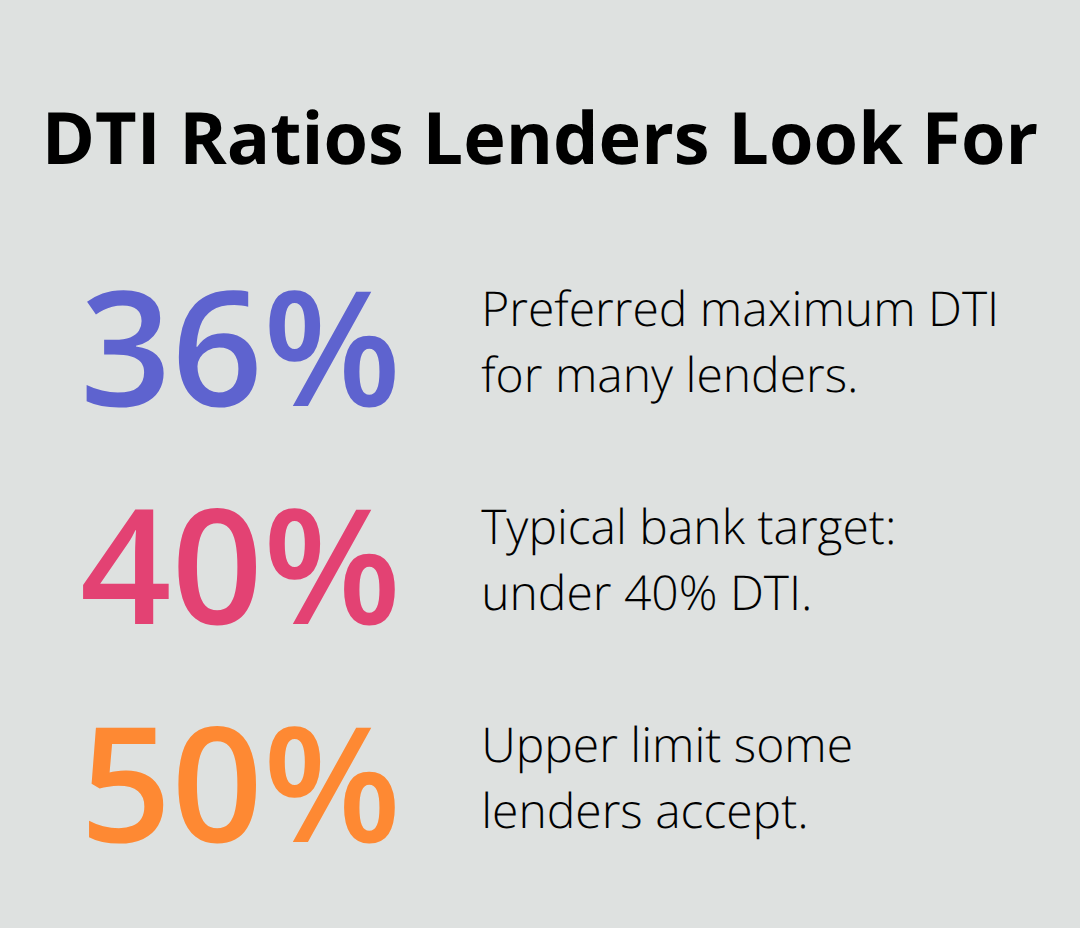
Calculate this before applying by adding all monthly debt obligations, dividing by your gross monthly income, and multiplying by 100. If you fall above your lender’s threshold, either pay down existing debt first or accept that you’ll qualify for smaller loan amounts at higher rates. The approval process accelerates dramatically when you prequalify with the right lender for your profile rather than applying broadly and hoping one accepts you.
Final Thoughts
Finding the best personal loans Canada offers requires matching your financial situation to the right lender rather than chasing the lowest advertised rate. Your actual rate depends on your credit score, income, debt-to-income ratio, and the specific loan amount you need, which is why comparing multiple offers before applying matters far more than applying to a single institution. The three factors that determine whether a loan is truly affordable are the APR including all fees, the term length you select, and prepayment flexibility.
Start by pulling your credit reports from Equifax Canada and TransUnion Canada to identify any errors, then use soft prequalification tools like Ratehub’s LoanFinder to compare actual offers from multiple lenders without triggering hard inquiries that damage your score. Once you narrow your choices to two or three lenders with competitive APRs, submit formal applications knowing exactly what rate you will receive. Prepare your recent pay stubs, tax returns, and employment verification documents to accelerate approval.
The entire process from comparison to funding typically takes one to five business days depending on whether you choose online lenders or traditional banks. We at Financial Canadian help borrowers navigate personal loans with clear information and practical guidance through our financial resources and tools. Access the information you need to make informed decisions about your finances.










Leave a comment