
Your credit score shapes your financial future in Canada. Lenders check it before approving mortgages, loans, and credit cards-and a lower score can cost you thousands in higher interest rates.
At Financial Canadian, we believe credit score monitoring in Canada shouldn’t be complicated. This guide shows you how to track your score, avoid common mistakes, and take control of your financial health.
How Your Credit Score Actually Works in Canada
The Two-Bureau System and Your Three-Digit Number
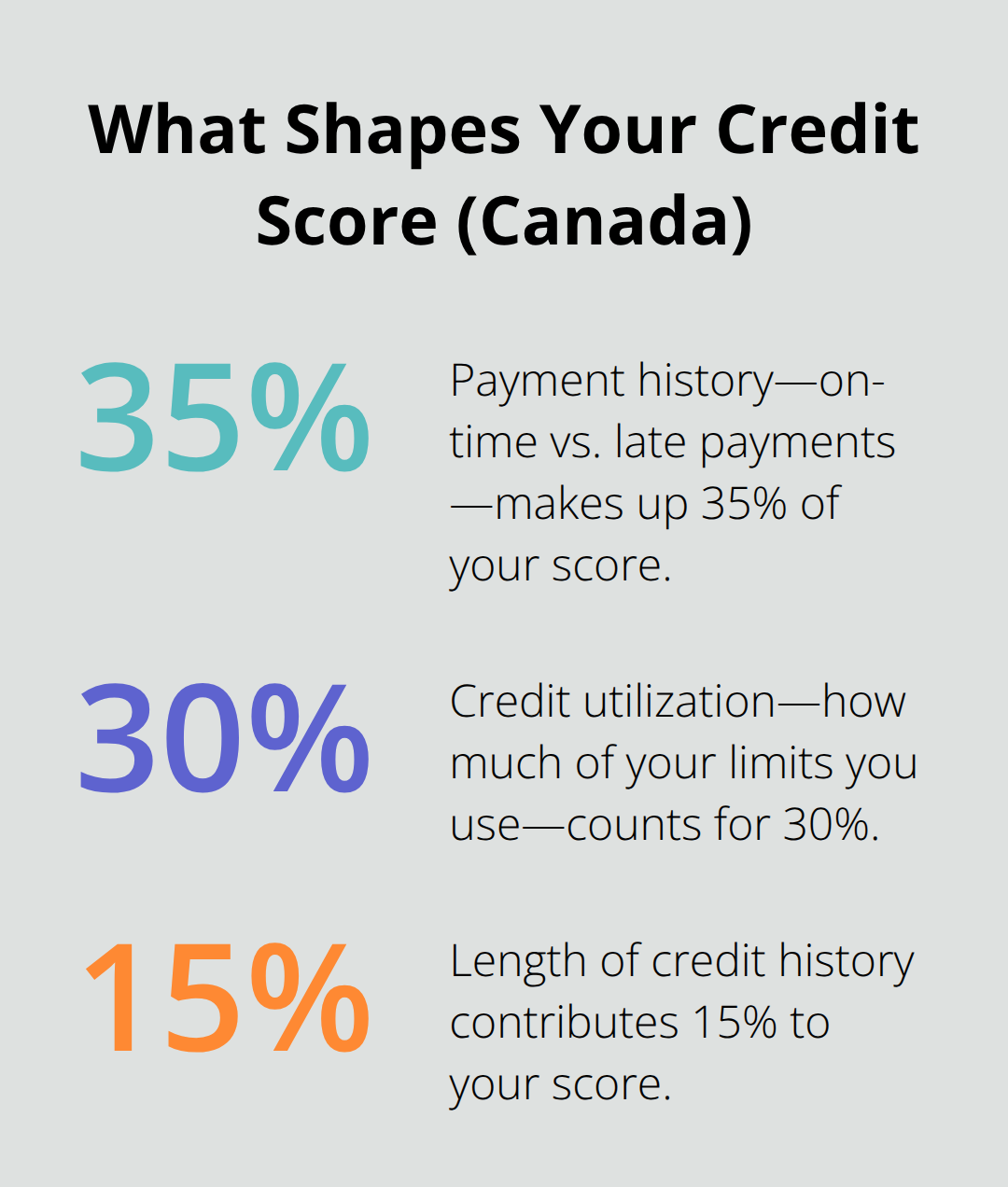
Your credit score is a three-digit number that Equifax and TransUnion calculate based on your financial behavior. These two bureaus collect data from lenders, creditors, and public records to build your credit file, then assign you a score between 300 and 900. The higher your score, the lower the risk you represent to lenders. Equifax and TransUnion use different scoring models, though both focus on the same core factors: payment history accounts for 35% of your score, credit utilization for 30%, length of credit history for 15%, credit mix for 10%, and new credit inquiries for 10%.
How Missed Payments and High Balances Impact Your Score
A single missed payment can drop your score by 50 to 100 points, while carrying a balance above 30% of your credit limit on any card directly suppresses your score. Lenders don’t all use the same model-some rely on FICO scores while others use VantageScore-so your score can vary slightly depending on which bureau or model a lender checks. Your score is not fixed. It changes monthly based on the data the bureaus receive, which means you have real control over it through responsible behavior.
What Lenders Actually Look For
When you apply for a mortgage, car loan, or credit card, lenders pull your credit report and score to assess whether you’ll repay them. A score of 800 or above qualifies you for the best interest rates, while a score between 650 and 749 still gets approvals but at higher rates. Below 650, approval becomes difficult and expensive. The difference is substantial-a borrower with a 750+ score might qualify for a mortgage at 4.5%, while someone with a 650 score could face 5.5% or higher. That 1% difference on a $500,000 mortgage costs you roughly $5,000 per year in extra interest.
Hard Inquiries and Multiple Applications
Lenders use your score because it’s a proven predictor of default risk; higher scores correlate with lower default rates. Hard inquiries-the checks lenders make when you apply for credit-temporarily lower your score by a few points, so avoid applying for multiple credit products within a short window. Your score also influences the credit limits you receive and whether you qualify at all. If you plan a major purchase like a home or car, check your score 3 to 6 months beforehand through Equifax or TransUnion, then focus on paying all bills on time and reducing any high balances before lenders review your file.
Taking Action Before It’s Too Late
The gap between a strong score and a weak one translates directly into dollars. Understanding how lenders evaluate your creditworthiness puts you in position to make strategic moves before you apply for major credit. The next section covers the tools and services available to monitor your score in real time, so you can catch problems early and track your progress as you improve.
How to Monitor Your Credit in Canada
Free Options That Work Without Paying a Dime
Equifax and TransUnion let you pull a free credit report once per year through their official channels, and you should do this at minimum annually to spot errors or fraud. You can also access a free weekly credit report, which gives you four chances per year to check your file at no cost. If you want continuous monitoring without paying, Borrowell and Credit Karma offer free credit score tracking, though they monetize your data through targeted advertising to lenders and financial companies. The trade-off is real: you get free monitoring, but advertisers know your financial profile.
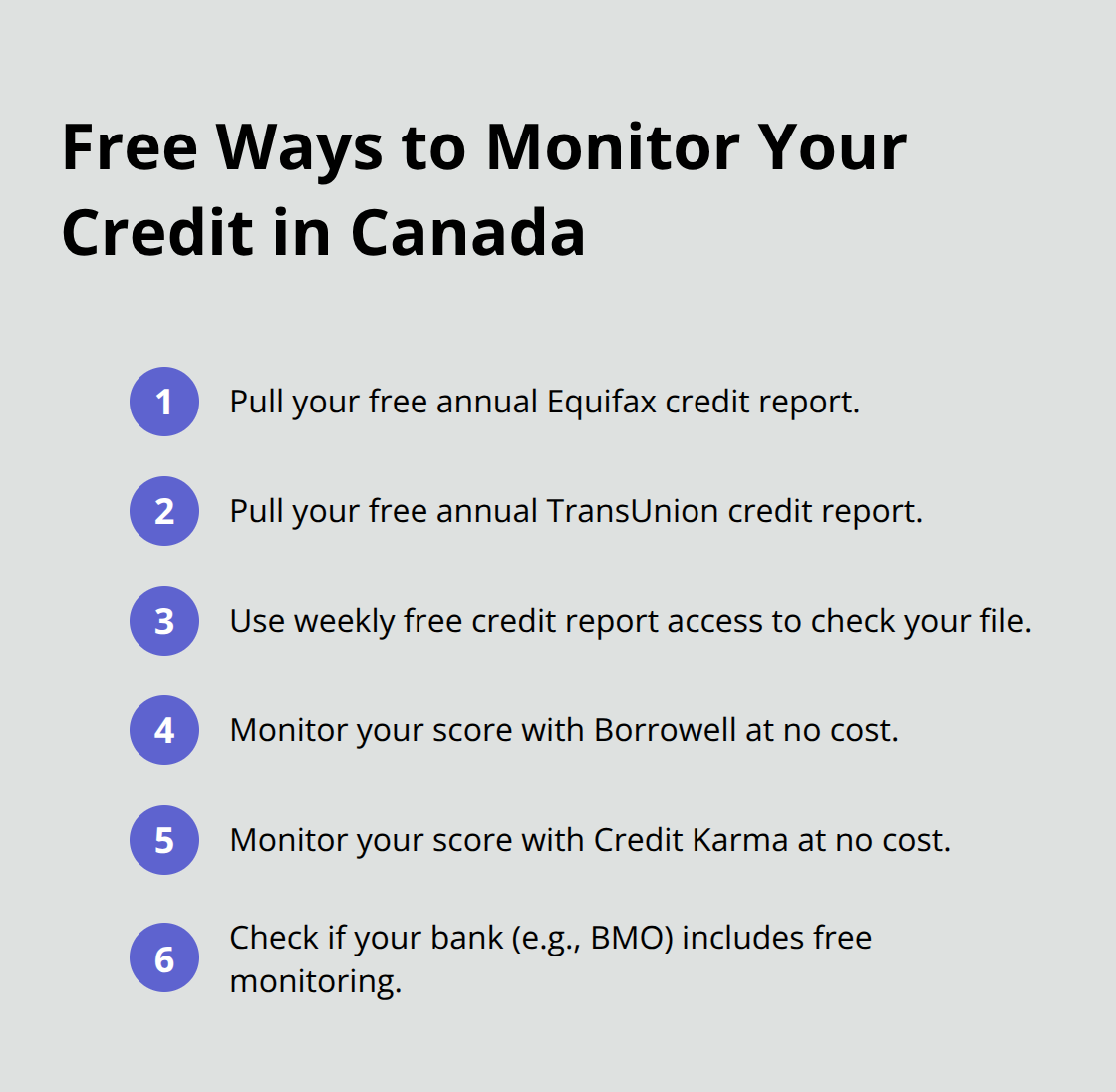
Many Canadian banks including BMO provide free credit monitoring to account holders as part of their package, so check your bank first before signing up elsewhere. If your bank doesn’t offer it, call and ask-some institutions quietly added this benefit in recent years without promoting it heavily. Most people waste money on services they don’t need or miss free options that work just as well.
Paid Monitoring: When Speed Matters More Than Cost
Paid credit monitoring in Canada typically costs between CAD 10 and CAD 24.95 per month, with most providers offering a 30-day free trial you can cancel before being charged. TransUnion and Equifax both sell subscription plans that include weekly or monthly score updates, fraud alerts, and identity theft insurance ranging from basic to comprehensive coverage. The real value of paid monitoring isn’t the score itself-that’s available free-but the speed of alerts when something changes on your report.
According to TransUnion data, more than 75% of Canadians have little to no understanding of credit scoring. If you’ve experienced a data breach, lost your credit card, or plan to apply for a mortgage within six months, paid monitoring makes sense because catching fraud early prevents thousands in damage.
Identity Theft: Why Speed Matters
Identity theft is a serious concern: 91% of Canadians express concern about online misuse of personal information according to the Office of the Privacy Commissioner of Canada’s 2022-23 report, and 47% are extremely concerned. Hard inquiries and new accounts you didn’t authorize appear on your report immediately, so monitoring alerts give you days or weeks to call lenders and bureaus before fraudsters cause real harm.
If you suspect identity theft, place a free fraud alert or credit freeze with both Equifax and TransUnion-this forces creditors to verify your identity before extending credit, stopping most fraudsters cold. The difference between catching fraud in week one versus week four can mean the difference between a quick fix and months of restoration work.
Choosing the Right Monitoring Strategy for Your Situation
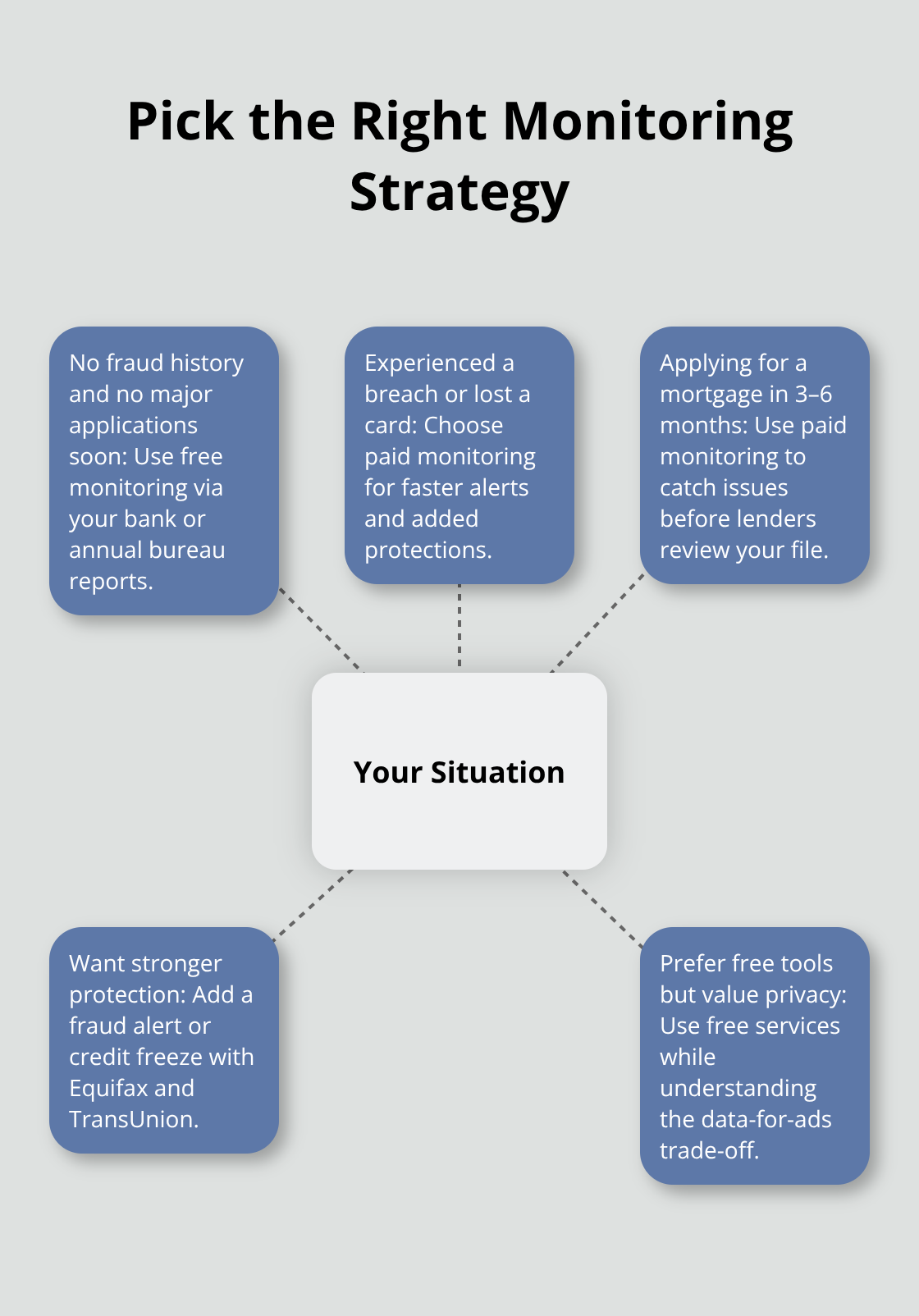
Your choice depends on your risk profile and financial plans. If you’ve never experienced fraud and don’t plan major credit applications soon, free monitoring through your bank or annual reports from the bureaus covers your needs. If you’ve had a breach, lost a card, or plan to apply for a mortgage (a process that typically takes 3 to 6 months), paid monitoring alerts you to problems before lenders see them. The next section covers the mistakes that damage your score most-understanding these patterns helps you decide whether monitoring alone is enough or whether you need active intervention to repair existing damage.
The Three Mistakes Costing You Thousands
Late Payments Destroy Your Score for Years
A single missed payment drops your score by 50 to 100 points immediately, and that damage lingers on your credit report. Late payments may remain on your credit reports for up to seven years, though they generally have less influence on your credit scores as time passes. One month late damages your score. Ninety days late marks you as a serious risk in lenders’ eyes.
The financial cost extends far beyond the initial score drop. Paying 30 days late on a $10,000 credit card balance at 19.99% interest costs you roughly $166 in extra interest charges alone. The real damage emerges six months later when you apply for a mortgage and face a 0.5% higher rate because of that late payment. That 0.5% difference on a $500,000 mortgage costs $2,500 per year. Many Canadians believe they can catch up later without consequences, but lenders report payments to the bureaus every month, and the damage compounds with each missed deadline.
High Credit Card Balances Signal Financial Stress
Carrying a balance above 30% of your credit limit directly suppresses your score, and the higher your utilization, the lower your score drops. A $5,000 credit limit with a $3,500 balance means you use 70% of your available credit, which signals to lenders that you are financially stretched. This utilization ratio matters because it tells lenders how close you are to maxing out your available credit.
The solution works quickly. Pay down balances aggressively or request a higher credit limit from your card issuer. Moving from 70% utilization to 30% utilization can boost your score by 50 to 75 points within one or two billing cycles. This works because the bureaus receive updated balance information monthly, so you see results fast. The speed of improvement makes this one of the easiest wins available to you.
Multiple Credit Applications in Short Timeframes Raise Red Flags
Each application triggers a hard inquiry that temporarily lowers your score by a few points, but multiple inquiries within six months signal desperation to lenders and suggest you are taking on too much debt at once. Applying for three credit cards, a car loan, and a line of credit all within two months makes lenders see someone in financial trouble. Space applications at least three to six months apart, and avoid applying for credit unless you have a specific need.
The bureaus treat multiple hard inquiries differently depending on the type. Mortgage and auto loan inquiries within 14 to 45 days often count as a single inquiry, but credit card applications each count separately. Know the difference before you apply, as this knowledge helps you plan your applications strategically and minimize unnecessary score damage.
Final Thoughts
Your credit score monitoring in Canada starts with action, not observation. Pull your free annual credit report from Equifax or TransUnion to verify accuracy, file disputes immediately if you find errors, and pay all bills on time going forward-this single habit accounts for 35% of your score and delivers the fastest improvement. Then tackle high balances by paying down cards above 30% utilization, which typically boosts your score by 50 to 75 points within one or two billing cycles.
If you’ve experienced fraud or plan to apply for a mortgage within six months, paid credit monitoring alerts you to suspicious activity before lenders see it. The cost of CAD 10 to CAD 24.95 monthly is negligible compared to the damage identity theft causes or the interest rate difference a lower score triggers on a major loan (most providers offer 30-day free trials, so test the service before committing). Space credit applications at least three to six months apart, and avoid applying unless you have a genuine need.
Track your score trends over time-an upward trajectory signals improving financial health and positions you for better rates when you apply for mortgages or loans. Visit Financial Canadian to explore resources that support your financial growth and connect you with tools designed for your success.











Leave a comment