
Canadians carrying multiple debts often feel trapped by high monthly payments. At Financial Canadian, we know that debt consolidation advice for Canada can transform your financial situation by combining those separate obligations into one manageable payment.
The right consolidation strategy can lower what you pay each month and help you regain control of your finances. This guide walks you through your options and shows you exactly how to reduce your debt burden.
How Debt Consolidation Works in Canada
Merging Multiple Debts Into One Payment
Debt consolidation merges multiple debts into a single loan with a straightforward mechanism. A lender pays off your existing debts directly, and you repay that lender one monthly payment instead of juggling multiple creditors. The process typically takes one to two business days with online lenders, though banks may take longer. Your credit score will take a small hit from the hard inquiry, usually dropping 5 to 10 points temporarily, but consistent on-time payments afterward recover and improve it within months.
The real advantage appears in your interest rate. If you pay 19% on credit cards and 8% on a personal loan, consolidation saves money immediately. Calculate your blended rate by adding all outstanding balances and finding the weighted average interest rate, then compare it to your new loan rate. If the new rate isn’t lower, consolidation wastes your time.
Credit Score Requirements and Approval Odds
A typical Canadian consolidation loan requires a credit score around 650, though some lenders accept scores as low as 541. Your approval odds improve dramatically if you avoid new credit applications and pay down existing balances before applying. Most consolidation loans range from 24 to 84 months, meaning you could extend your repayment timeline significantly. Extending from five to seven years lowers your monthly payment but increases total interest paid, so this choice demands careful math.
How Your Credit Score Recovers After Consolidation
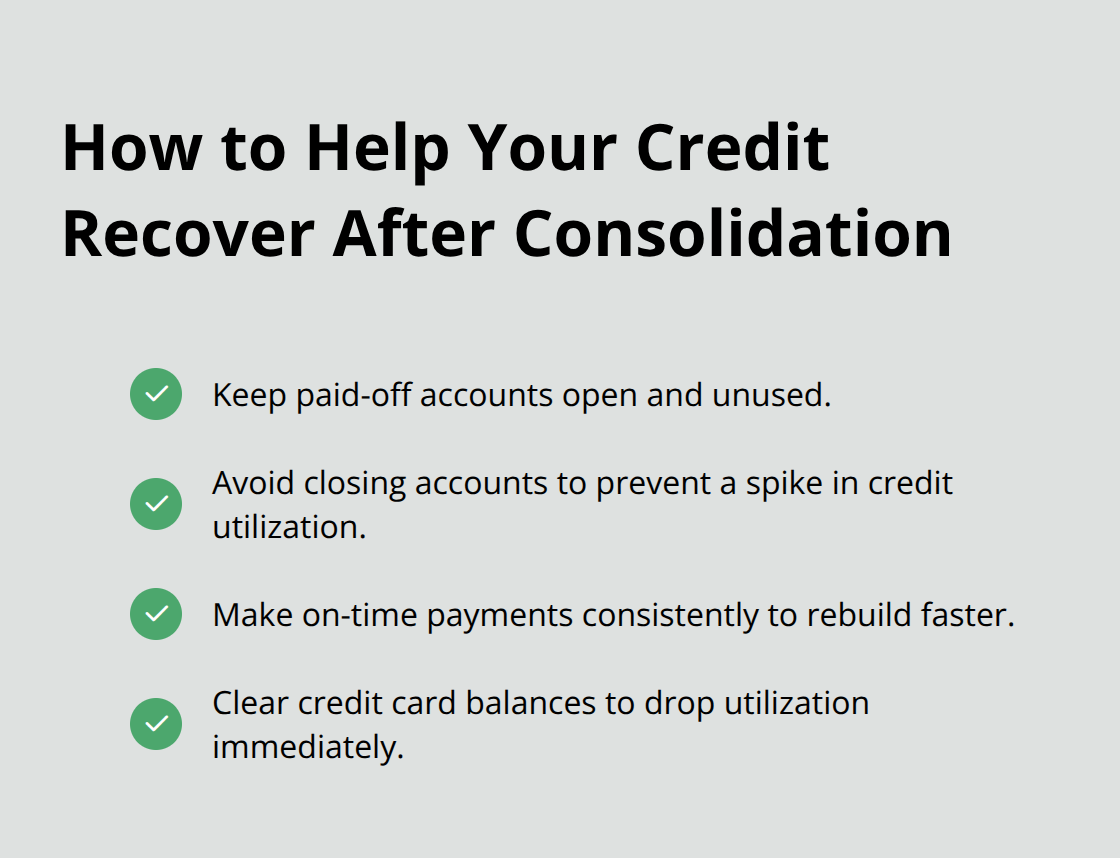
Your credit score’s long-term trajectory depends entirely on what happens after consolidation. Closing accounts lowers your total available credit, which can increase your credit utilization ratio. Instead, keep paid-off accounts open and unused. If you consolidate credit card debt, your utilization ratio drops immediately since you’ve cleared those balances, which boosts your score faster than anything else.
Comparing Loan Types and Lender Options
Home equity lines of credit and second mortgages are secured by your property, but they carry real risk: you could lose your home if payments fail. Unsecured personal loans carry higher rates, usually 8 to 12%, but no collateral requirement. Banks remain stricter on approval but offer competitive rates for borrowers with solid credit. Credit unions often approve borrowers banks reject and may offer slightly lower rates.
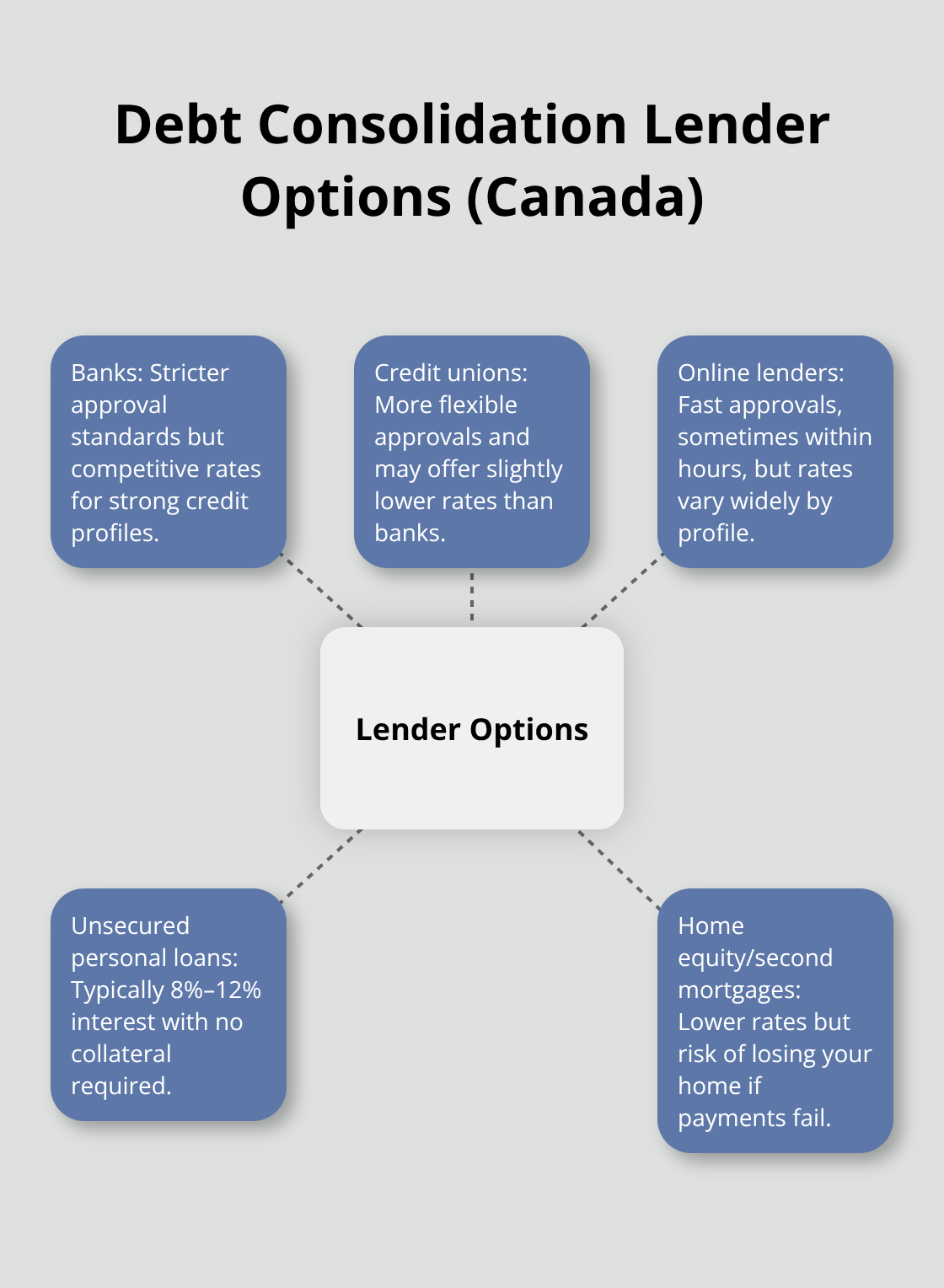
Online lenders approve fastest, sometimes within hours, but their rates vary wildly depending on your profile.
Calculating Your Actual Savings
Before signing anything, use a debt consolidation calculator to estimate your new monthly payment and total interest cost. Compare this to your current situation: if you pay $1,500 monthly across five debts and consolidation reduces that to $1,100, you’ve found a workable solution. The worst consolidation decision happens when borrowers ignore the total cost and focus only on monthly payment reduction. A longer loan term always lowers your payment but can increase total interest by thousands of dollars, leaving you in debt longer than if you’d stayed the course with your original debts. Understanding which consolidation option fits your situation-whether a personal loan, balance transfer, or secured option-requires honest assessment of your credit profile and financial goals.
Your Best Consolidation Options
Personal Loans from Banks and Credit Unions
Personal loans from banks and credit unions dominate the consolidation landscape in Canada, and for good reason. Banks typically offer rates between 8% and 12% for borrowers with credit scores above 650, making them competitive if you qualify. Credit unions often approve applicants banks reject and occasionally match or beat bank rates by 1% to 2%, which compounds into real savings over a five-year loan. The tradeoff is speed: banks take 5 to 10 business days while credit unions may take longer due to member voting requirements. Online lenders like Mogo and LendingClub approve within hours, sometimes same-day, but rates vary wildly from 9% to 29% depending on your profile.
If you need cash quickly and your credit sits below 650, online lenders become your only option, though you’ll pay for that convenience. The best strategy here is simple: apply to your primary bank first, then check two credit unions in your area, then explore one online lender if those fail. This approach takes two weeks maximum and captures the lowest available rate without unnecessary hard inquiries damaging your score.
Balance Transfer Credit Cards for Smaller Debts
Balance transfer credit cards work best for smaller debts under $10,000 with strong credit above 700. Cards like the RBC Rewards Visa and TD Cash Back offer 0% interest for promotional periods with no balance transfer fees, meaning every dollar you pay goes toward principal. The math turns brutal if you miss the window: after the promo ends, rates jump to 19% to 21%. Only choose this path if you can pay down at least 50% of the balance during the promotional period.
Home Equity Options: High Risk, Lower Rates
Home equity lines of credit and second mortgages deliver genuinely low rates (5% to 7%), but they carry real danger. Your home becomes collateral, and missing payments means foreclosure, not just credit damage. You should avoid this option entirely unless you have substantial equity, stable employment, and can absolutely guarantee payments. Most Canadians face too much risk with this approach.
Finding Your Strongest Consolidation Path
The strongest consolidation play for typical borrowers remains a personal loan from a credit union at 8% to 10% over 60 months, delivering lower monthly payments without risking your home. Your next step involves calculating exactly how much you’ll save with each option and understanding which lender will approve your application fastest.
Strategies to Lower Your Monthly Payments
Consolidation alone won’t automatically slash your monthly payment. The real reduction comes from three specific actions: securing a better interest rate than your current blended rate, strategically extending your repayment timeline, and eliminating high-interest debt first. Most borrowers focus only on the monthly payment number and miss the total cost entirely. If you consolidate at 10% over 84 months instead of paying off credit cards at 19% over 60 months, your payment drops but you’ll pay thousands more in interest.
Calculate Your Blended Rate First
The math must work in both directions before you move forward. Start with your current blended rate: add all outstanding balances, multiply each by its interest rate, divide by total debt, and you have your baseline. Your new consolidation rate must beat this number meaningfully, ideally by 3% or more. If a lender offers 9% and your blended rate sits at 8.5%, consolidation wastes your time. Online calculators show exactly how different rates and terms affect your total interest cost, so use them ruthlessly before committing.
Extend Your Timeline Strategically, Not Recklessly
The timeline decision separates smart consolidators from those who extend debt unnecessarily. Extending your repayment from 5 years to 7 years typically reduces your monthly payment by 20% to 25%, but total interest climbs 40% to 50%. A $25,000 debt at 9% costs $5,355 in interest over 60 months versus $8,412 over 84 months. That extra $3,057 buys you only $120 in monthly savings.
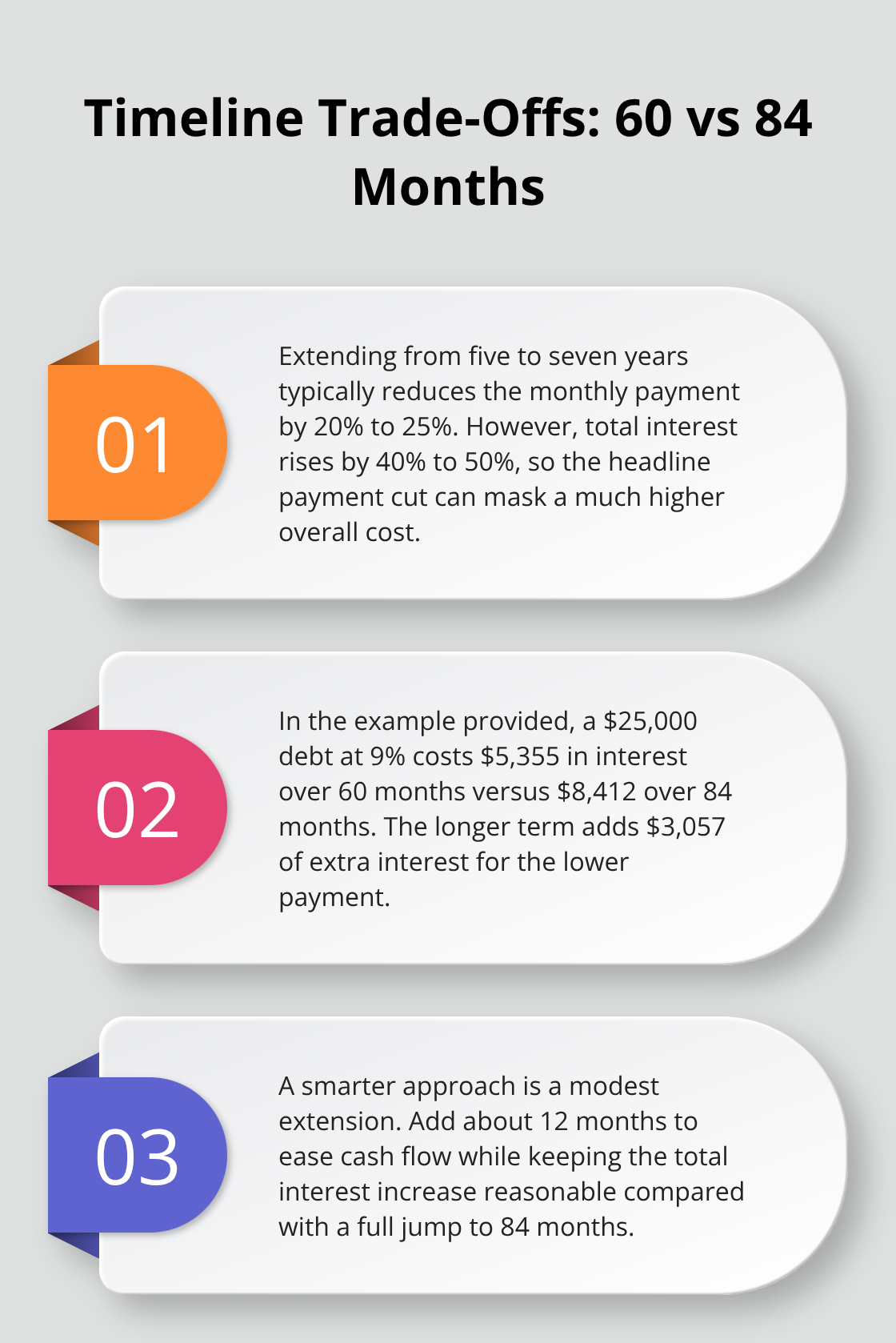
Instead, extend your timeline by just 12 months, reduce your payment moderately, and keep total interest reasonable.
Attack High-Interest Debt First
The aggressive approach targets your highest-interest debt first while consolidating everything else. If you carry $8,000 on credit cards at 21%, $12,000 on a personal loan at 9%, and $5,000 on a line of credit at 7%, consolidate the personal loan and line of credit into a single payment, then attack the credit card aggressively with extra payments. This hybrid strategy lowers your overall monthly burden while eliminating the worst debt faster. Most Canadians ignore this option entirely and consolidate everything indiscriminately, missing an opportunity to accelerate their path to debt freedom.
Final Thoughts
Debt consolidation works when you focus on three concrete outcomes: lowering your interest rate below your current blended rate, reducing your monthly payment without extending debt unnecessarily, and eliminating high-interest obligations faster. The strategy itself matters far less than the math behind it. A personal loan from a credit union at 8% beats a balance transfer card at 0% if you cannot pay down the balance during the promotional period. A home equity line of credit at 6% destroys your finances if you miss a single payment and lose your home.
Your next step is immediate and specific. Calculate your current blended interest rate across all debts, then obtain rate quotes from your primary bank, two local credit unions, and one online lender (this takes two weeks maximum and reveals your actual savings potential). Use a debt consolidation calculator to compare monthly payments and total interest costs across different loan terms. Most borrowers skip this step and regret it when they realize they have extended their debt timeline by years for minimal monthly savings.
If consolidation numbers do not work in your favor, consider alternatives. Licensed Insolvency Trustees in Canada offer free initial consultations and can propose legal debt relief options like consumer proposals if your situation warrants it. Non-profit credit counseling organizations like Credit Counselling Canada provide education and budgeting support without pressure or upfront fees. Debt consolidation advice Canada borrowers receive from these professionals helps you avoid predatory debt relief services that charge thousands upfront while delivering nothing.










Leave a comment