
Guaranteed personal loans in Canada offer a faster path to borrowing when your credit history isn’t perfect. But speed comes with trade-offs that borrowers need to understand before signing.
At Financial Canadian, we break down the real costs, risks, and when these loans actually make sense for your situation.
What Makes a Guaranteed Loan Different
A guaranteed personal loan in Canada requires a co-signer, typically a family member or friend, who legally agrees to repay the debt if you default. This isn’t a theoretical safety net-it’s a binding obligation that puts someone else’s finances at direct risk. Lenders use guarantors to offset the risk of lending to borrowers with weak credit histories or limited income verification. The approval process moves faster because the lender has a backup repayment source, which means you might receive funding within days instead of weeks. However, the trade-off is significant: your guarantor’s credit score gets pulled during the application, and their debt-to-income ratio affects whether the lender approves you.
The Real Cost of Default
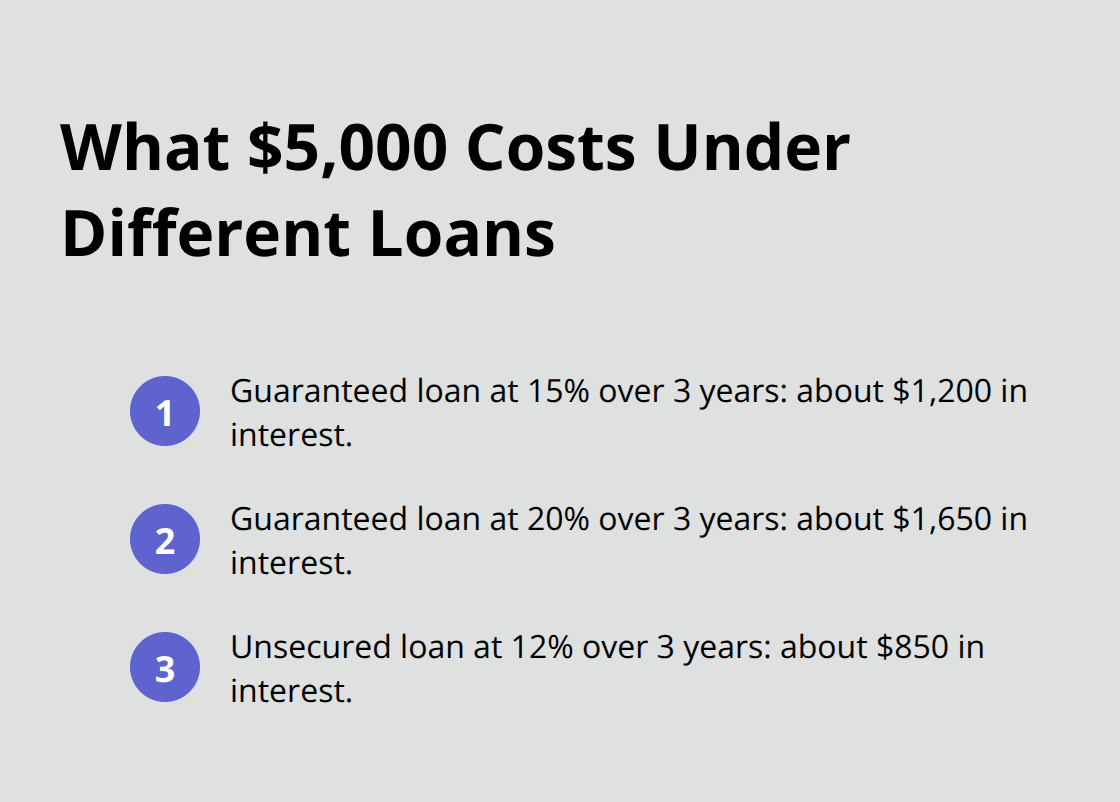
If you miss a payment, the lender pursues your guarantor first or simultaneously, damaging their credit score and potentially straining your relationship permanently. Most Canadian lenders offering guaranteed loans charge between 15% and 29.99% annual interest rates, depending on your credit profile and the guarantor’s strength. That 15% rate on a $5,000 loan over three years costs you roughly $1,200 in interest alone. Your guarantor absorbs this same financial burden if you cannot pay, making the decision to co-sign far more serious than many borrowers realize.
Who Can Actually Act as a Guarantor
Your guarantor must have stable income, typically verified through recent pay stubs or tax returns, and a credit score generally above 650. Banks and private lenders assess the guarantor as rigorously as they assess you, sometimes even more carefully since they’re betting on this person’s reliability.
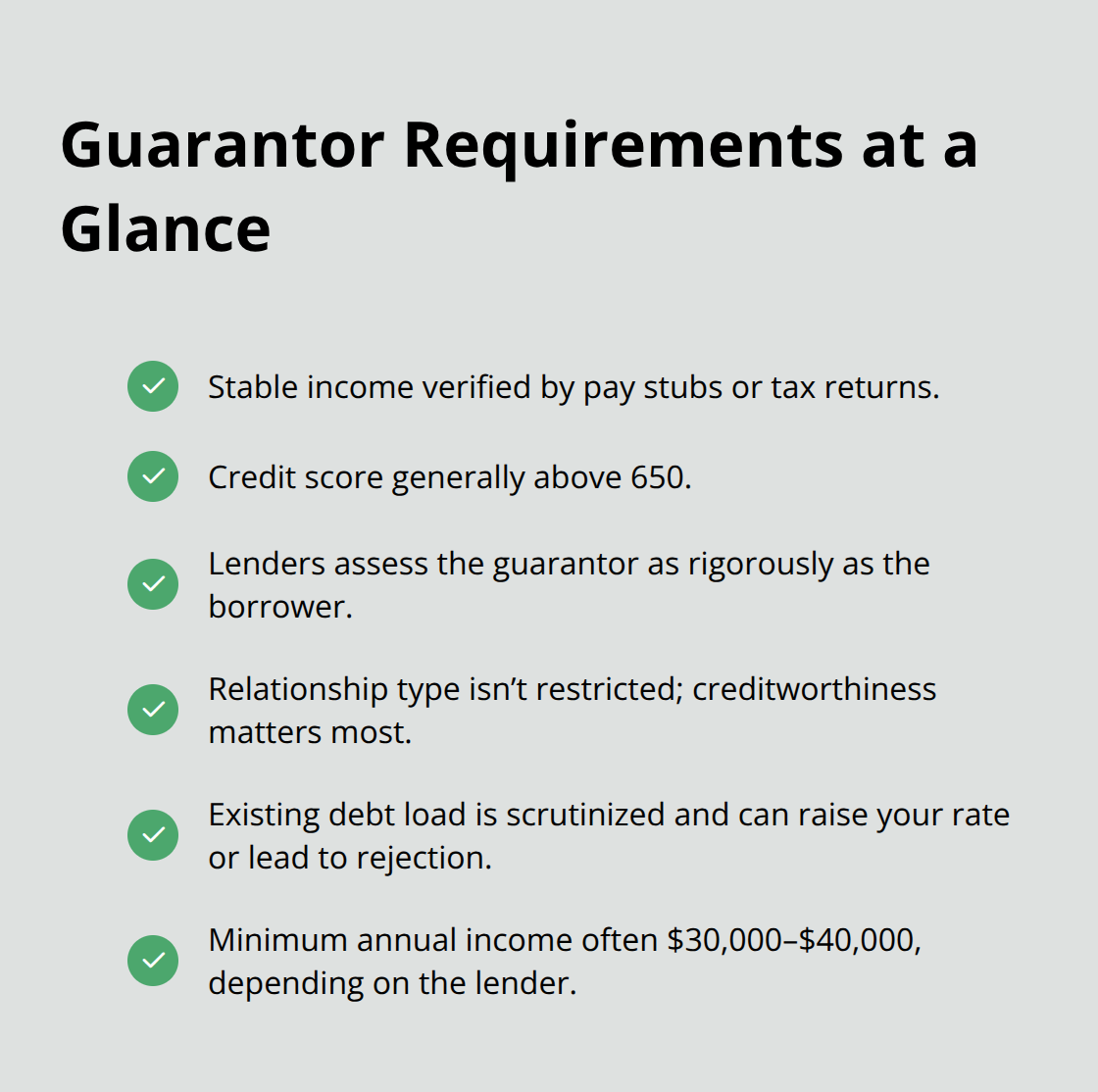
A parent, spouse, or sibling is common, but lenders don’t restrict the relationship-they care about creditworthiness and income. The guarantor’s existing debt matters enormously; if they already carry high credit card balances or multiple loans, lenders may reject them or approve you at a higher rate. Some lenders require the guarantor to have a minimum annual income of $30,000 to $40,000, though this varies by institution.
What Your Guarantor Needs to Know
Before you ask someone to guarantee your loan, they should understand that a single late payment from you becomes their problem immediately, and collection agencies can pursue them for the full outstanding balance. Your guarantor cannot simply walk away if circumstances change-they remain legally liable for the entire debt until you repay it in full or the loan term ends. This responsibility extends beyond missed payments; if you default completely, your guarantor faces the same collection efforts, credit damage, and potential legal action that you would face.
Understanding these dynamics helps you evaluate whether a guaranteed loan truly fits your needs or whether exploring other financing options makes more sense for your situation and your guarantor’s financial security.
What Guaranteed Loans Actually Cost You
Interest Rates and Hidden Fees
Guaranteed loans carry interest rates between 8% and 36% annually, with an average of 12.41%, and that range matters more than you might think. On a $5,000 loan at 20% over three years, you’ll pay roughly $1,650 in total interest-that’s a third of your original borrowing amount going straight to the lender.
The exact rate depends on your credit score, the guarantor’s creditworthiness, and the lender’s pricing model.
Some lenders front-load fees into the rate or charge origination fees between 5% and 12% of the loan amount, which the lender typically deducts from your approved funds. If you borrow $5,000 with a 10% origination fee, you receive $4,500 but repay the full $5,000 plus interest. This difference between what hits your account and what you owe creates cash flow problems many borrowers don’t anticipate.
Calculate the total cost before applying by using a loan calculator or asking the lender directly for a payment breakdown that includes all fees. Late fees (typically $25 to $50 per occurrence) and increased interest rates kick in immediately if you miss payments, and the cost compounds faster from that point forward.
How Your Credit Score Takes Damage
Your credit score drops the moment you apply because lenders pull a hard inquiry for both you and your guarantor. A hard inquiry typically reduces your score by 5 to 10 points, but the real hit comes from the new account itself. Your credit mix shifts, your average account age decreases, and your credit utilization ratio changes-all factors that scoring models weight heavily.
If you default on a guaranteed loan, the negative mark stays on your credit report for six years in Canada, making it nearly impossible to access favorable rates on mortgages, car loans, or credit cards during that period. Your guarantor’s credit suffers equally; their score drops from the hard inquiry and the new account, and if you miss payments, their credit report gets flagged with the same delinquency.
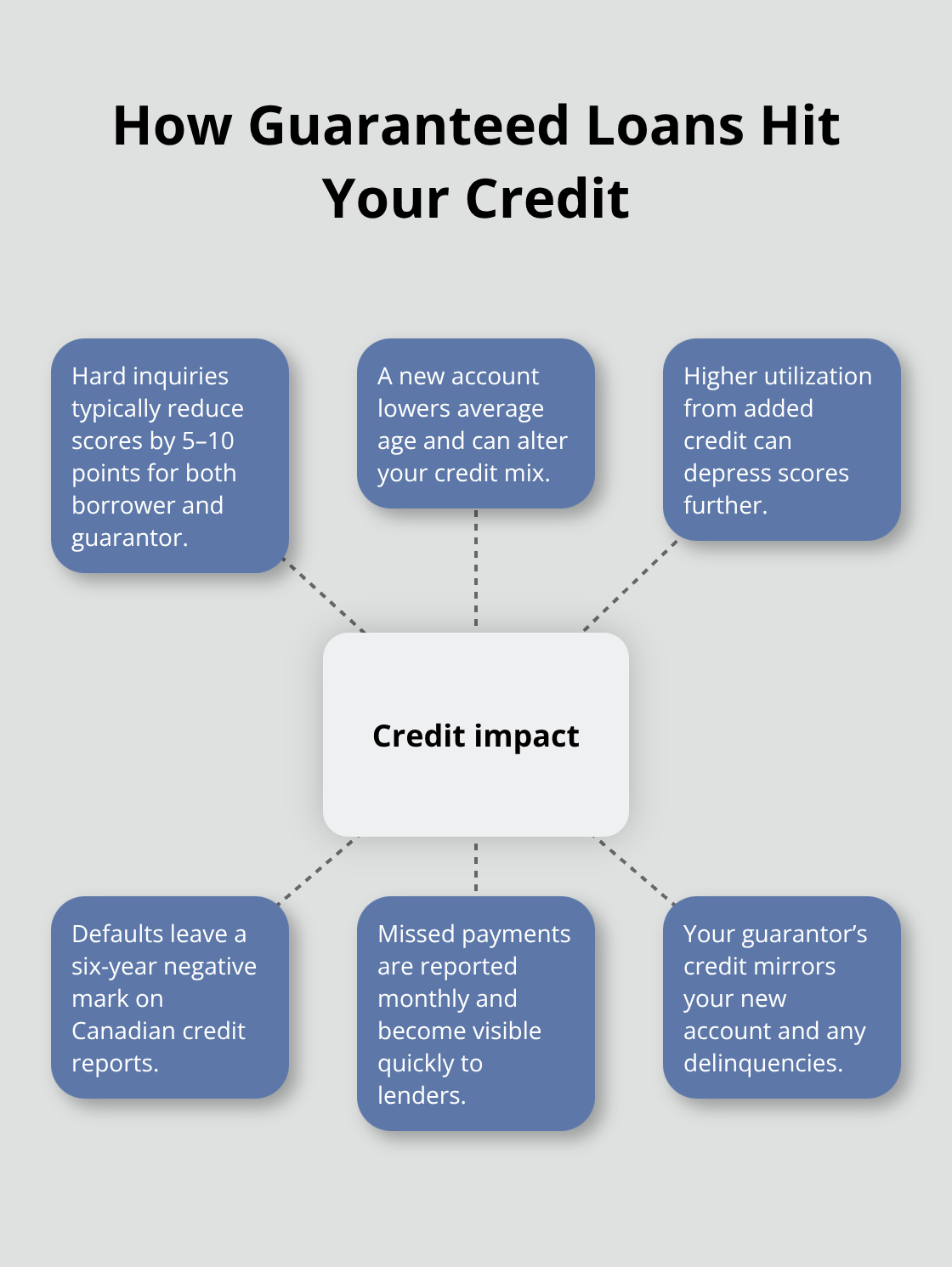
Lenders report payment history to credit bureaus monthly, so even a single missed payment becomes visible to future creditors.
Collection Agencies and Legal Consequences
Collection agencies pursue both you and your guarantor aggressively once the loan reaches 120 days past due. At that point, collection calls, wage garnishment, and legal action become real possibilities, and the guarantor faces these consequences alongside you. The relationship strain intensifies when a family member realizes their credit is damaged because of your financial choices, and many guarantor relationships don’t survive this pressure.
These financial and personal costs make it essential to explore what alternatives exist before committing to a guaranteed loan structure.
Better Options Beyond Guaranteed Loans
Unsecured personal loans eliminate the guarantor requirement entirely, which means no one else’s finances hang in the balance if you struggle with repayment. These loans rely on your creditworthiness alone, so approval depends on your income, employment history, and credit score rather than finding someone willing to co-sign. Interest rates for unsecured personal loans typically range from 6.99% to 32.99% depending on your credit profile, and while this overlaps with guaranteed loan rates, the key difference is that lenders assess only you. If your credit score sits above 700, unsecured personal loans from banks or online lenders often cost significantly less than guaranteed alternatives. A $5,000 unsecured loan at 12% over three years costs roughly $850 in interest compared to $1,200 for a guaranteed loan at 15%, saving you real money without risking someone else’s financial stability. The application process takes longer because lenders verify your income more thoroughly, but you avoid the hard inquiry hit on your guarantor’s credit and the relationship damage that comes with default. Online lenders process unsecured loans within 24 to 48 hours once approved, making speed competitive with guaranteed options while keeping your personal relationships intact.
When Unsecured Loans Won’t Work
Your credit score needs to clear the 650 threshold for most lenders, and if you fall significantly below that, unsecured approval becomes difficult regardless of income stability. Some lenders require minimum annual income between $25,000 and $35,000, which eliminates borrowers with irregular or part-time earnings. If you fall into either category, a secured loan backed by your vehicle, savings, or home equity becomes more realistic than waiting for your credit to improve. A secured car title loan lets you borrow $500 to $10,000 using your vehicle as collateral, with approval often happening within 24 hours, but interest rates typically range from 15% to 39.99% annually, making these loans expensive despite faster access. Home equity lines of credit offer much better rates, typically between 6% and 8.99%, because your home secures the debt, but you risk losing your house if you default. The trade-off between speed, cost, and risk becomes clearer when you compare these options side by side rather than rushing into a guaranteed loan because it feels familiar.
Government Programs That Actually Help
The Canadian government and provincial agencies offer loan programs specifically designed for borrowers banks reject. The Canada Small Business Financing Program helps entrepreneurs and self-employed individuals access loans up to $1 million with government backing, reducing lender risk and lowering interest rates accordingly. If you’re unemployed or underemployed, provincial employment assistance programs sometimes include emergency loans or grants that don’t require a guarantor or collateral. Service Canada administers several programs depending on your province, and eligibility varies widely, but checking your provincial government’s website costs nothing and could reveal programs you didn’t know existed. Some provinces offer micro-lending programs through non-profit organizations that lend $500 to $5,000 at rates between 8% and 18%, targeting people excluded from traditional banking. Community Credit Unions across Canada often have more flexible lending standards than big banks and approve borrowers with lower credit scores, though rates still vary between 12% and 28%. These alternatives require more research and slightly longer approval timelines, but they protect your personal relationships and often cost substantially less than guaranteed loans, making the extra effort worthwhile before you ask someone to co-sign.
Final Thoughts
Guaranteed personal loans in Canada solve a real problem for borrowers with weak credit or limited income verification, but they transfer your financial risk directly onto someone else’s shoulders. The speed and accessibility come at a steep price: interest rates between 15% and 29.99%, origination fees that reduce your actual funding, and a six-year credit report mark if you default. Your guarantor faces identical consequences, and the relationship damage often outlasts the loan itself.
If your credit score exceeds 700 and your income is stable, unsecured personal loans from banks or online lenders typically cost less and eliminate the guarantor requirement entirely. A $5,000 unsecured loan at 12% costs roughly $850 in interest versus $1,200 for a guaranteed loan at 15%, protecting both your finances and your relationships. If your credit sits below 650, secured loans backed by your vehicle or home equity offer better rates than guaranteed options, though they carry collateral risk.
Choose a guaranteed personal loan only when unsecured and secured options genuinely aren’t available, and only after confirming your guarantor fully understands the legal and financial obligations. Calculate the total cost including all fees and interest, then compare that number against every alternative. Financial Canadian helps you navigate these decisions with clear information and practical guidance tailored to your circumstances.











Leave a comment