
Buying a home is one of the biggest financial decisions you’ll make, and understanding mortgages in Canada is the first step toward making it confidently.
At Financial Canadian, we’ve created this guide to break down everything you need to know about mortgages Canada explained-from the basics of how they work to finding the right lender for your situation.
How Mortgages Work in Canada
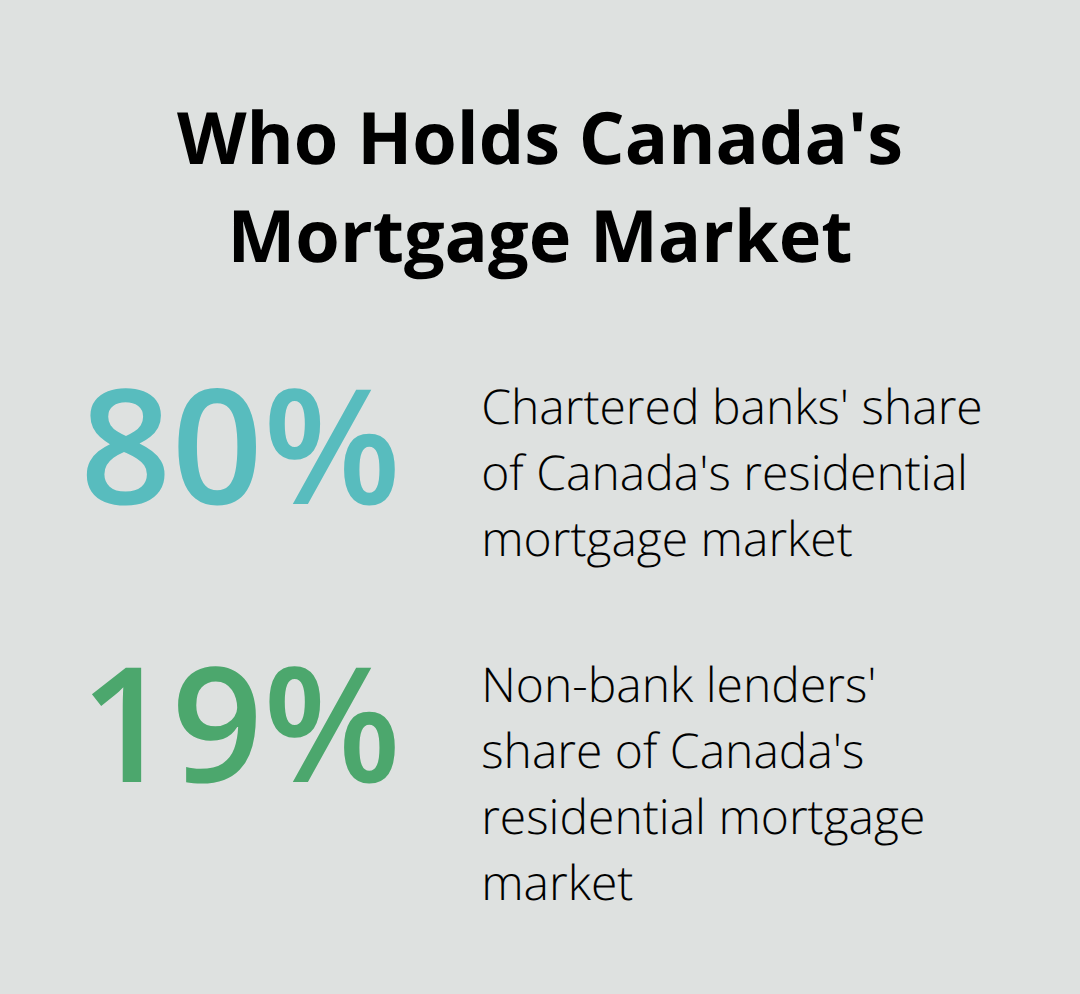
A mortgage is a loan secured by your property, meaning the lender holds a claim against your home until you repay the debt in full. When you borrow money to buy a house, you enter a legal agreement where you make regular payments over a set period, typically 15 to 30 years. The lender takes on risk by lending you money, so they charge interest-the cost of borrowing-which varies based on market conditions, your creditworthiness, and the type of mortgage you choose. According to OSFI’s E2 Mortgage Loans Report, chartered banks hold approximately 80 percent of Canada’s residential mortgage market, while non-bank lenders account for roughly 19 percent.
Different lenders offer different rates and terms, so shopping around can save you tens of thousands of dollars over the life of your loan.
Fixed Rates Lock In Your Payment
A fixed-rate mortgage keeps your interest rate the same for your entire term, typically ranging from one to ten years. Your monthly payment remains constant, making budgeting predictable and protecting you if rates climb. This approach works best when interest rates are low or rising, as you lock in favorable terms before they increase. If rates drop significantly, you can refinance, though you may face a penalty for breaking your current contract early.
Variable Rates Move With Market Conditions
Variable-rate mortgages tie your interest rate to the prime rate, so your payment fluctuates with market conditions. When prime rates fall, your payments drop, but when they rise, you pay more. Variable rates appeal to borrowers with flexible budgets who believe rates will stay flat or decline, but they carry more risk during periods of rising rates.
Amortization Determines Your Timeline and Total Cost
Amortization is the length of time you have to repay your mortgage in full, and it directly affects how much interest you’ll pay overall. A 25-year amortization is standard in Canada, but you can choose shorter terms like 15 or 20 years, or extend to 30 years if you need lower monthly payments. With a longer amortization period, your payments are lower, but you pay more in interest overall. Shorter amortizations mean higher monthly payments but significantly less interest paid over time.
How Remaining Amortization Affects Your Refinancing Options
Your remaining amortization period matters when refinancing or renewing your mortgage, as it shows how many months of payments remain and helps you assess near-term borrower exposure. Many Canadians accelerate their amortization by making extra payments or increasing their payment frequency, which reduces interest costs and builds equity faster without refinancing penalties. These strategies work particularly well early in your mortgage term, when most of your payment covers interest rather than principal.
Understanding how these components interact prepares you to evaluate the different mortgage types available to Canadian borrowers and choose the option that aligns with your financial situation.
Types of Mortgages Available to Canadian Borrowers
Conventional Mortgages and the 20 Percent Threshold
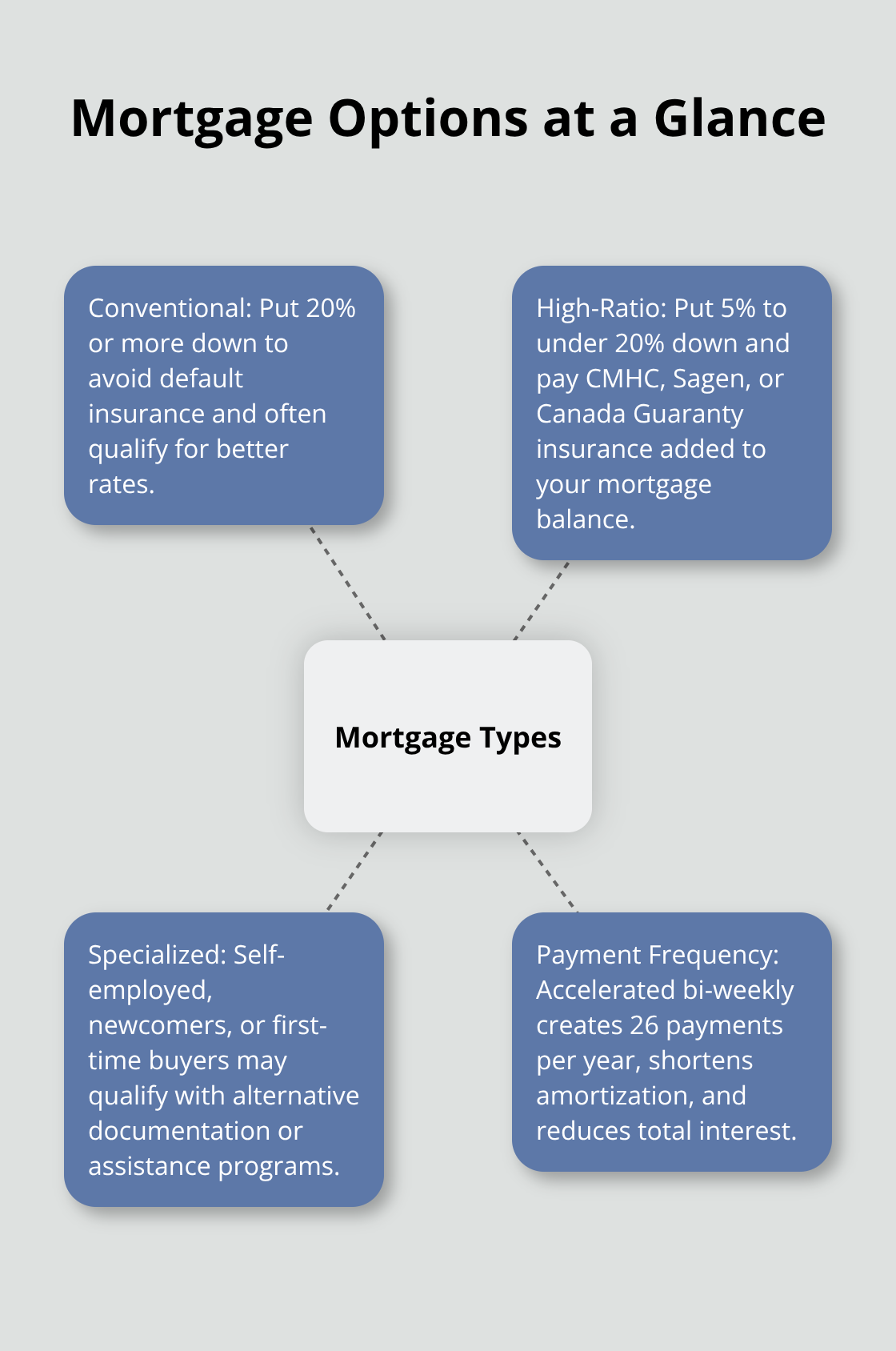
Conventional mortgages require a down payment of at least 20 percent, and this threshold matters more than most borrowers realize. When you put down 20 percent or more, you avoid mortgage default insurance, which protects the lender if you stop paying. This insurance adds thousands of dollars to your mortgage cost over time. According to OSFI’s E2 Mortgage Loans Report, chartered banks dominate the conventional mortgage space, holding roughly 80 percent of Canada’s residential mortgage market. If you have 20 percent saved, a conventional mortgage is almost always the cheapest route because you skip insurance premiums entirely and often qualify for better rates.
High-Ratio Mortgages When You Have Less Than 20 Percent
High-ratio mortgages let you borrow with a down payment as low as 5 percent, but they require mortgage insurance through CMHC, Sagen, or Canada Guaranty. The insurance premium gets added to your mortgage balance, so you pay interest on it for years. The insurance itself protects the lender, not you, yet you foot the bill. Many borrowers rush into high-ratio mortgages before they’re ready, then spend a decade paying for insurance they could have avoided by waiting another year or two to save more. Non-bank lenders and mortgage finance companies, which account for about 19 percent of Canada’s residential mortgage market according to Statistics Canada, often compete aggressively on high-ratio mortgages with slightly better rates, but the insurance cost remains the real expense you cannot escape.
Specialized Mortgages for Your Specific Circumstances
Some borrowers qualify for specialized mortgages designed around their circumstances. Self-employed borrowers often face stricter documentation requirements and may work with mortgage investment entities or alternative lenders who assess income differently. Recent immigrants can access mortgages through lenders who accept international credit histories or use alternative credit scoring. First-time homebuyers sometimes qualify for down payment assistance programs through provincial governments, which can bridge the gap between savings and the 20 percent threshold without triggering insurance. Accelerated bi-weekly payment mortgages let you make payments every two weeks instead of monthly, which results in 26 payments per year instead of 12-this extra payment each year reduces your amortization significantly and cuts total interest paid.
The mortgage type you select shapes not only your monthly payment but also your qualification process. Understanding how lenders evaluate your application and what documentation they require helps you prepare for the approval stage and position yourself as a strong candidate.
Getting Approved for a Mortgage
Credit Scores and Debt Service Ratios
Your credit score is the first hurdle lenders examine, and most Canadian banks require a minimum score of 620 to even consider your application. Scores between 620 and 679 typically qualify you for mortgages, but you’ll pay higher interest rates than borrowers with scores above 700. A score of 740 or higher unlocks the best rates available. OSFI’s E2 Mortgage Loans Report shows that chartered banks, which hold 80 percent of Canada’s mortgage market, use credit scores alongside debt service ratios to assess your ability to repay.
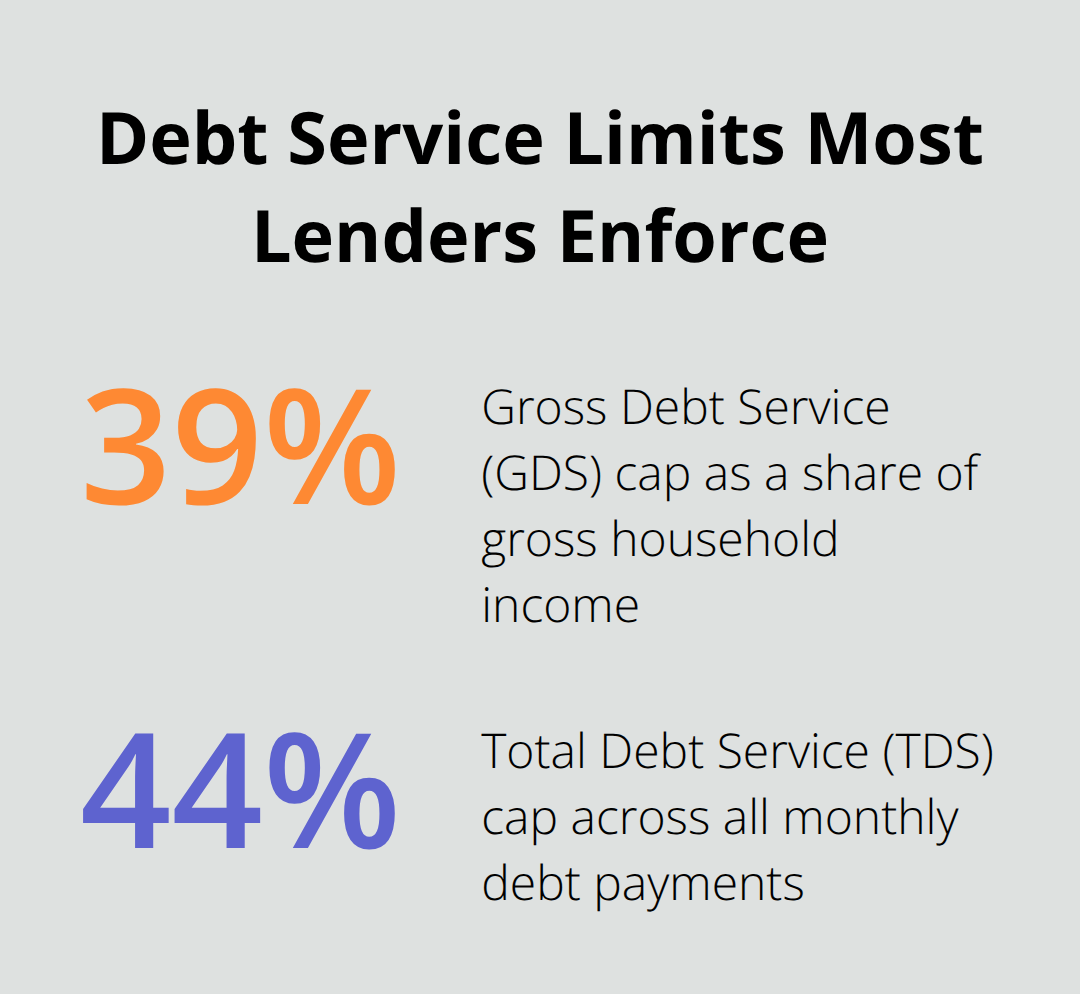
Your gross debt service ratio measures whether your housing costs (mortgage, property tax, heating, insurance) exceed 39 percent of your gross household income, while your total debt service ratio ensures all debt payments don’t exceed 44 percent of income. These aren’t suggestions-they’re hard limits most lenders enforce. If your score sits below 680, spend three to six months paying down existing debt and making all payments on time; this improves your score faster than you might expect.
Lenders pull your credit report directly from Equifax or TransUnion, so check yours first for errors that could be costing you points.
Documentation and Pre-Approval Requirements
The pre-approval process separates serious buyers from casual shoppers, and most lenders complete it within 24 to 48 hours. You’ll need recent pay stubs, two years of tax returns, proof of employment, and bank statements showing your down payment funds. Self-employed borrowers face stricter scrutiny and typically must provide two years of financial statements and tax returns; non-bank lenders and mortgage finance companies, which represent about 19 percent of Canada’s market according to Statistics Canada, often handle self-employed applications more flexibly than chartered banks.
Once approved, your pre-approval letter locks in a rate for 90 to 120 days, giving you time to find a property without losing your quoted rate. This window matters because rates shift constantly, and your locked rate protects you from increases during your home search.
Shopping for Rates Across Multiple Lenders
Rate shopping matters enormously-a difference of 0.25 percent on a $400,000 mortgage costs you roughly $1,000 annually. Call at least three lenders directly; online rate comparison sites often show outdated numbers. Credit unions sometimes offer competitive rates with slightly different qualification criteria, and mortgage brokers can access lenders you wouldn’t find independently, though their rates aren’t always better than direct lender quotes.
Your mortgage broker costs nothing if you proceed with their recommendation, since lenders pay their commission, but this creates a conflict of interest-they profit when you accept their offer, not when you find the cheapest rate elsewhere. Compare offers side by side, focusing on the annual percentage rate (APR) rather than just the posted rate, as APR includes fees and gives you a true cost comparison.
Final Thoughts
Mortgages Canada explained boils down to three core principles: understanding how mortgages work, choosing the right type for your situation, and preparing thoroughly for approval. A mortgage shapes your finances for decades, so rushing through the process costs you thousands in unnecessary interest and insurance fees. The difference between a 620 credit score and a 740 score means paying 1 to 2 percent more in interest annually, which compounds into tens of thousands of dollars over 25 years.
Pull your credit report from Equifax or TransUnion and fix any errors immediately. Gather your documentation now rather than scrambling when you find a property, and contact at least three lenders directly to compare their annual percentage rates side by side. If you’re self-employed or have an unconventional income situation, speak with non-bank lenders who often evaluate applications differently than chartered banks.
Pre-approval takes less than two days and costs nothing, so lock in your rate before you start house hunting. We at Financial Canadian help you navigate financial decisions with the same attention to detail we apply to every resource we create. Explore Financial Canadian to access additional resources and stay informed about mortgage trends, rates, and strategies that affect your home purchase.











Leave a comment