
A damaged credit score can feel like a permanent setback, but it isn’t. At Financial Canadian, we know that rebuilding credit in Canada is entirely possible with the right approach and consistent action.
The strategies in this guide will show you exactly how to repair your credit, from understanding your score to taking concrete steps that produce measurable results. You’ll learn what lenders actually look at and how to fix the issues holding you back.
Your Credit Score and Report Explained
Your credit score is a three-digit number between 300 and 900 that tells lenders whether you pay your debts on time. In Canada, Equifax and TransUnion are the two major credit bureaus that calculate your score based on your payment history, credit utilization, length of credit history, credit mix, and recent inquiries. Payment history alone accounts for the largest portion of your score, which means a single missed payment can damage your creditworthiness significantly. The Financial Consumer Agency of Canada notes that you’re entitled to a free credit report from each bureau once yearly, and you should check both because they sometimes report different information. Many Canadians mistakenly believe their scores are identical across bureaus, but discrepancies are common and worth investigating.
What’s Actually On Your Credit Report
Your credit report contains far more than just your score. It lists every credit account you’ve opened, including credit cards, lines of credit, loans, and mortgages, along with your payment status for each one. The report shows whether you’ve missed payments, how much you owe relative to your limits, and any collections, judgments, or bankruptcy filings. Negative information typically stays on your report for six to seven years in Canada, though bankruptcies remain for six to seven years after discharge and judgments can be renewed for up to ten years. The report also includes hard inquiries from lenders who’ve checked your credit when you applied for new credit, and multiple inquiries in a short period can temporarily lower your score. You’ll also see personal information like your name, address history, and employment details, which can contain errors that need correcting.
How to Access Your Free Reports
Access your free annual reports directly from Equifax Canada and TransUnion Canada through their websites-this is your legal right under Canadian consumer protection laws. When you receive your reports, review them carefully for inaccuracies like accounts you didn’t open, incorrect payment statuses, or duplicate entries. If you find errors, contact the bureau immediately with documentation supporting your claim; they must investigate within thirty days.
Taking Action on What You Find
Don’t assume your reports are accurate just because the information came from a credit bureau. Many people discover errors that have been dragging down their scores for months or years. Once you’ve verified the accuracy of your reports and identified the specific issues hurting your score, you’ll know exactly where to focus your rebuilding efforts. Understanding how your credit score impacts your interest rate on future borrowing is crucial as you move forward. The next section walks you through the practical steps that produce the fastest results.
How to Fix Payment History and Lower Your Debt Fast
Payment History: Your Fastest Path to Score Recovery
Payment history accounts for the largest portion of your credit score, and this is where most people see the fastest improvement. The Financial Consumer Agency of Canada confirms that bringing all accounts current directly boosts your score, which is why this step matters more than anything else you’ll do. Set up automatic payments for at least the minimum amount on every debt, but go further-pay a few days before the due date to account for processing delays. If automatic payments worry you because of insufficient funds, set a calendar reminder instead and manually pay before the deadline each time. Late payments reported to credit bureaus can haunt you for years, so treating this as non-negotiable is the difference between rebuilding credit in two years versus five years.
Reduce Your Credit Utilization Strategically
Your credit utilization ratio is the second-most important factor, and here’s where the math works in your favor. If you use 75 percent of a $10,000 credit limit, you actively damage your score every month that balance gets reported. Try to keep credit utilization under 30 percent across all accounts combined, though aiming for single-digit percentages produces faster results. The balance that matters is what gets reported to the credit bureaus, not necessarily your actual balance on any given day.
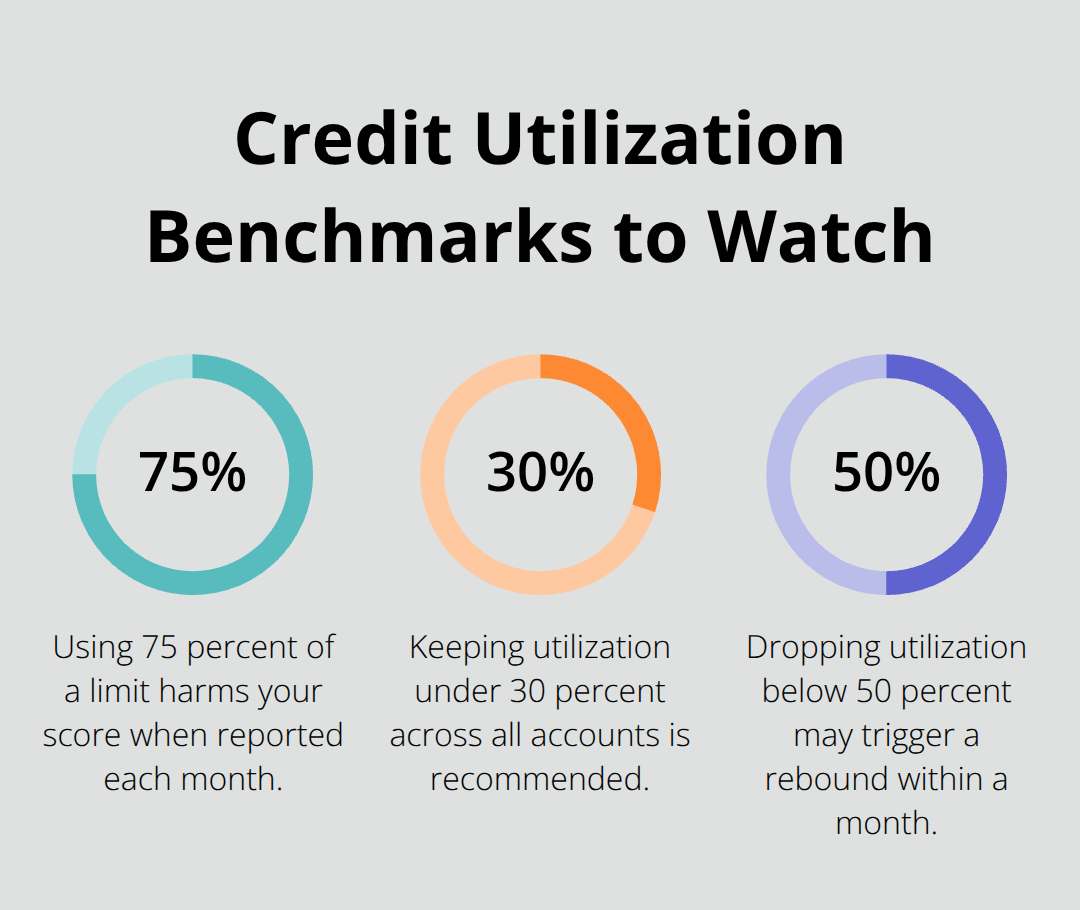
Time your payments strategically: if your statement closes on the 15th and reports to bureaus shortly after, make a large payment before that date so a lower balance gets reported. You might see your score rebound within a month of dropping utilization below 50 percent (assuming no new negative marks appear). Start by paying down the highest-utilization cards first, then move to others. This approach is more effective than spreading payments evenly across all accounts.
Find and Fix Errors on Your Credit Report
Errors on your credit report cost you points you didn’t actually earn. Some Canadians find collections accounts from unpaid utilities, phone bills, or parking tickets sitting on their reports-debts they forgot about or didn’t realize were reported. Pull both your Equifax and TransUnion reports and look for accounts you don’t recognize, incorrect payment statuses, or duplicate entries. If you find a collection, pay it off first, but then request its removal from the report in writing. Collections often come from non-credit sources like utilities and cell phone companies, and removing them can provide an immediate score lift. Dispute any inaccuracies directly with the bureau; they must investigate within 30 days. Don’t assume the bureaus will catch errors-you’re responsible for finding and challenging them.
Use a Secured Credit Card to Rebuild Trust
A secured credit card is the most practical tool for rebuilding credit in Canada because it gives you control while establishing positive payment history. Open a secured card with a $100 to $500 deposit, charge small purchases monthly, and pay the full balance before the due date. This approach demonstrates responsible credit use to the bureaus without the risk of overspending. After six months to a year of perfect payments, you’ll likely qualify for an unsecured card from major Canadian lenders, and your deposit gets returned. The key is making purchases you can immediately pay off, not just opening the account and leaving it unused. Many people graduate from a secured card to options like Canadian Tire or PC Financial cards once their score improves enough to qualify. Your next step involves understanding which types of credit accounts work best together and how to structure your credit mix for long-term strength.
Building Sustainable Credit Growth
Your credit mix and account history matter far more than most people realize, and this is where patience becomes your greatest asset. A healthy credit profile includes both revolving credit (like credit cards and lines of credit) and installment credit (like car loans or personal loans). Lenders want to see that you can manage different types of borrowing responsibly, which is why closing old accounts actually hurts your score even after you’ve paid them off. The length of your credit history matters, so keeping your oldest account open protects your average account age.
Why Your Account Age Matters
If you opened a credit card five years ago and kept it active, that history becomes increasingly valuable as time passes. Many people make the mistake of closing accounts after paying them down, thinking this improves their profile, when the opposite is true. Instead, keep old accounts open with small monthly charges like a subscription, then pay the balance immediately. This maintains your account age while keeping utilization near zero.
Building Your Foundation with Active Accounts
Your secured credit card or newly obtained unsecured card should stay active indefinitely as your foundation account. After maintaining perfect payments for 12 to 18 months, apply for a second credit product, whether that’s another card or a line of credit, to diversify your mix. Spacing applications at least six months apart prevents multiple hard inquiries from damaging your score temporarily.
Tracking Progress and Understanding Your Timeline
Track your progress monthly using free tools like Credit Karma, which monitors both Equifax and TransUnion scores and shows you exactly which factors are improving. Expect gradual monthly gains rather than dramatic jumps, with most people seeing meaningful improvement within six to twelve months of consistent on-time payments and reduced utilization. The timeline matters because negative information remains on your report for six years in Canada, so older delinquencies gradually lose their impact as time passes and recent positive behavior accumulates. Focus on what you control now, not on mistakes from years ago, because lenders weight recent activity far more heavily than historical errors.
Final Thoughts
Rebuilding credit in Canada takes consistency, not perfection, and the strategies we’ve covered address what lenders actually measure. Payment history matters most, utilization matters second, and everything else follows-most people see meaningful score improvements within six to twelve months of following these rebuild credit Canada tips. Negative marks fade gradually over six years, which means time works for you once you stop creating new problems.
Free resources support your journey at no cost (the Financial Consumer Agency of Canada offers credit basics, non-profit credit counsellors provide confidential help, and Credit Karma tracks your progress monthly across both bureaus). Every on-time payment strengthens your profile, and every month of low utilization compounds your progress. Stop waiting for the perfect moment to start-set up automatic payments today and check your reports for errors.
The person you’ll be in two years will thank you for the discipline you show right now. For additional support building your financial foundation, explore our comprehensive resources designed to strengthen your financial health.











Leave a comment