
A bad credit score doesn’t mean you’re locked out of borrowing. Many Canadians with poor credit histories still qualify for personal loans through lenders willing to work with them.
At Financial Canadian, we’ve found that bad credit personal loans in Canada come in more varieties than most people realize. This guide walks you through your actual options and shows you how to rebuild while you repay.
What Bad Credit Actually Means in Canada
In Canada, bad credit typically means a credit score below 600, though the definition matters less than understanding what lenders actually see when they review your application. According to Equifax Canada’s May 2025 report, 1.4 million Canadians missed a non-mortgage payment in Q1 2025, marking the highest delinquency level since 2009. This isn’t a moral failing-it’s a signal to lenders about your recent payment behavior.
Credit scores range from 300 to 900, with scores in the 500s considered poor, 600s fair, 700s good, and above 800 excellent. Your payment history accounts for 35% of your credit score, making it the single most important factor. A single missed payment can drop your score by 50 to 100 points, but the damage fades over time if you stay current afterward. What matters most to lenders isn’t your lowest point-it’s your recent track record. If you missed payments two years ago but have remained reliable for the last six months, many lenders will overlook the old damage.
Why Younger Canadians Face Tougher Odds
Delinquency rates jumped 15.1% among Canadians aged 18 to 25 in Q1 2025, making younger borrowers the highest-risk group in the market. This age group also shows the lowest credit card payment rates, with under-35s paying significantly less than older demographics. Lenders respond to this risk by tightening standards and charging higher rates for younger applicants with bad credit.
The Other Factors That Shape Your Score
The amount you owe relative to your limits accounts for 30% of your credit score. If you carry balances above 70% of your available credit, lenders see you as stretched thin. The length of your credit history makes up 15% of your score, meaning newer borrowers start with an inherent disadvantage. Credit mix-having different types of credit like cards, loans, and lines of credit-comprises 10% of your score.
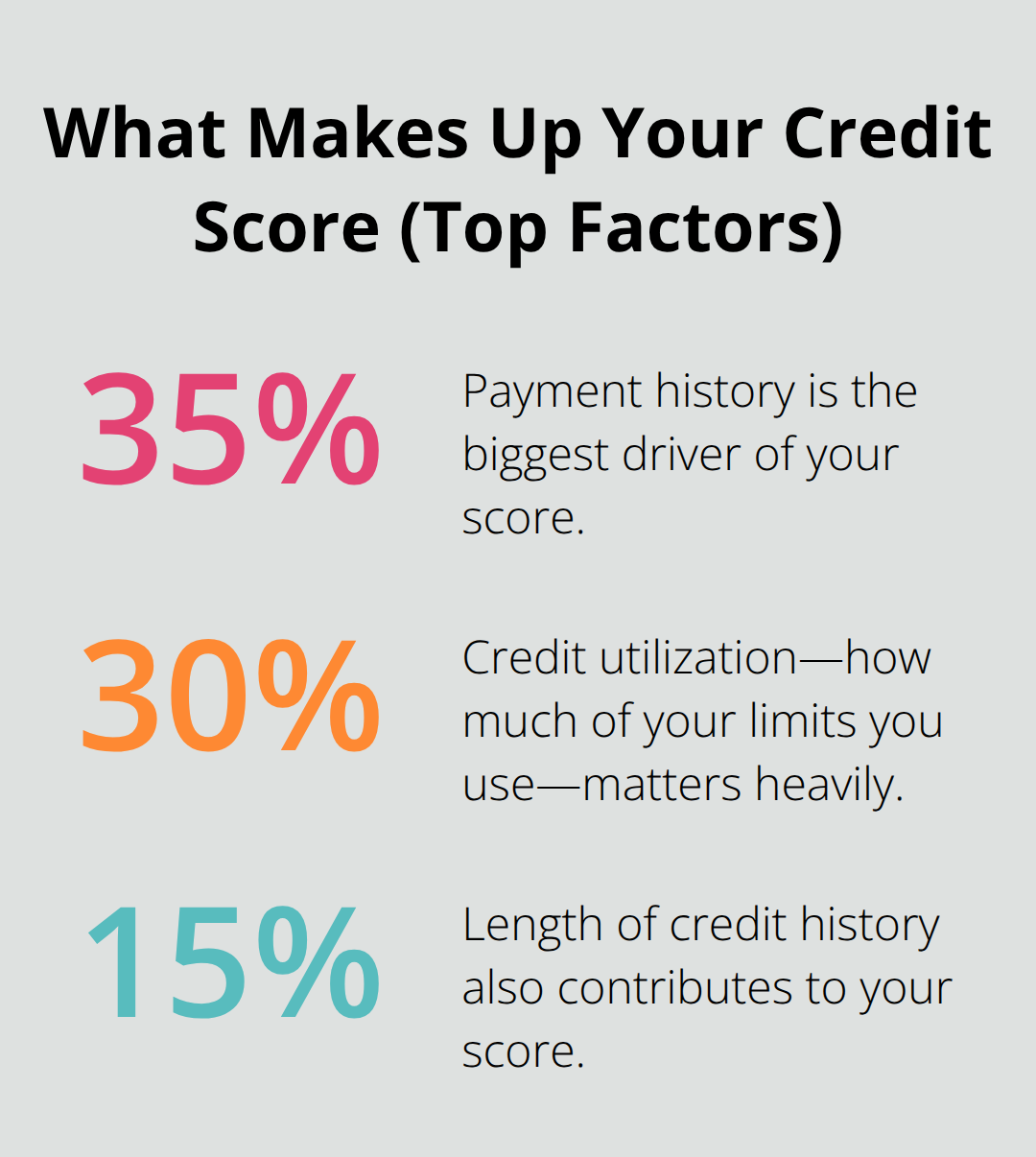
The final 10% comes from new credit inquiries, and applying for multiple loans in a short period signals financial desperation to lenders.
What Lenders Actually Look For
Lenders don’t treat all bad credit the same way. A recent missed payment carries more weight than an old one. Recent on-time payments demonstrate that you’ve turned things around, even if your overall score remains low. Some lenders look beyond your credit score entirely, using alternative data points to assess your ability to repay. Your income stability, employment history, and bank account activity all factor into lending decisions at many institutions. This approach opens doors for borrowers who have faced temporary setbacks but show solid fundamentals.
Understanding these components helps you see where you stand and what lenders will scrutinize. Your next step involves exploring which lenders actually work with bad credit borrowers and what terms they offer.
Where Bad Credit Borrowers Actually Get Approved
Traditional banks in Canada reject most bad credit applications outright. Major institutions like TD, RBC, and Scotiabank maintain strict underwriting criteria that disqualify applicants with credit scores below 600 before any human review occurs. Their personal loan rates start around 7% for prime borrowers, but they won’t extend credit to you if your score is poor. This reflects their risk model, not your worth as a borrower. Credit unions offer slightly more flexibility than traditional banks, yet they still require a credit score in the 600s or higher for most personal loans. Some credit unions will consider applicants with scores between 550 and 600 if you maintain a long membership history and stable employment, but approval remains uncertain.
Alternative Lenders Fill the Gap
The real options for bad credit borrowers come from alternative lenders and online platforms built specifically for your market. These lenders approve personal loans with fast and easy applications, offering approval in minutes. A $1,000 loan for 12 months at 29.99% APR costs roughly $125.09 monthly, totaling around $1,501.08 before optional protections. You can reduce your rate by 2% if you add a co-applicant, bringing your APR down to 27.99%. Approval happens without affecting your credit score during the initial application stage, and about 60% of customers improve their credit score through on-time payments.

How Online Lenders Assess Your Application
Online lenders specializing in bad credit have fundamentally changed what’s possible for borrowers in your situation. These platforms use alternative assessment methods beyond your credit score-analyzing over 1,000 data points including income stability, bank account activity, and employment history to make lending decisions. Some platforms have helped more than 4 million borrowers access loans, indicating this market segment is substantial and competitive. Loan terms range from 9 to 84 months, allowing you to choose repayment speeds that fit your budget. No upfront application fees and no prepayment penalties mean you can pay off your loan early without financial punishment.
Flexible Borrowing Structures
Lines of credit up to $10,000 let you borrow only what you need and pay interest only on the amount you use, rather than committing to a full loan amount upfront. If you have vehicle equity, secured loans up to $25,000 offer potentially lower rates than unsecured options because the lender holds collateral. Required documentation typically includes two recent pay stubs, your last 90 days of banking information, one current utility bill, and a non-expired government photo ID-most people have this within an hour. Funding can arrive as quickly as 15 minutes via Interac e-Transfer or direct deposit, depending on your bank’s processing speed.

Who Qualifies
Students and newcomers to Canada qualify even without prior credit history, expanding access beyond traditional borrowers. The approval process uses a soft credit check initially, which doesn’t impact your score, with final offers potentially requiring a hard inquiry only after you’ve accepted terms. Your income stability and employment history matter far more to these lenders than your past credit mistakes. This shift in assessment criteria opens doors that traditional institutions keep firmly closed.
Understanding your actual approval options changes everything. The next step involves knowing exactly what documents you’ll need and how to prepare your application for the fastest possible funding.
Rebuilding Credit While You Repay Your Loan
Taking out a personal loan when your credit is poor creates an opportunity most borrowers miss. The loan itself becomes a tool to rebuild your credit if you handle it strategically. Payment history accounts for 35% of your credit score, meaning every on-time payment directly strengthens your profile. About 60% of customers improve their credit score through consistent on-time payments, and roughly 1 in 3 graduate to prime rates based on reliable repayment behavior. This isn’t theoretical progress-it’s measurable movement that opens better borrowing options within months. Set up automatic payments from your chequing account on the same day your income deposits, which eliminates the risk of forgetting a payment date.
Attack Your Highest-Cost Debt First
Most people with bad credit carry multiple debts, and this is where strategic thinking separates those who escape the cycle from those who stay trapped. If you’re carrying credit card balances alongside your new personal loan, prioritize the credit card debt first because credit card interest rates average 19.56%, far exceeding most personal loan rates. Use your personal loan funds specifically to pay down or eliminate high-interest credit cards, then maintain zero balances on those cards going forward. This approach accomplishes two things simultaneously: it lowers the interest you pay overall and it improves your credit utilization ratio.
The average credit card pay rate dropped to 52.9% in Q1 2025, with under-35s paying even less, indicating most borrowers struggle with this exact problem. If you have multiple credit cards, pay the minimum on all of them while directing extra funds to the one with the highest interest rate. Once that card reaches zero, redirect those payments to the next highest-rate card. This snowball effect accelerates your progress and keeps your utilization ratio low across all cards, which directly boosts your credit score.
Generate Additional Income to Accelerate Your Recovery
Tightening your budget helps, but it rarely solves the underlying problem that led to bad credit in the first place. Your real path forward involves increasing what you earn rather than just cutting what you spend. This might mean pursuing a higher-paying position at your current employer, seeking work in a higher-wage industry, or developing a skill that commands better compensation. If immediate job changes aren’t realistic, consider temporary income sources like freelance work, gig economy positions, or part-time roles that don’t interfere with your main employment.
The goal is to direct 100% of this additional income toward debt repayment rather than lifestyle inflation. Even an extra $200 monthly from side work accelerates loan payoff significantly and demonstrates to lenders that you’re actively improving your situation. This matters because lenders reviewing your next application will see not just your improved credit score but also evidence that your income has grown, making you a genuinely lower-risk borrower.
Final Thoughts
Bad credit personal loans in Canada exist because lenders recognize that credit scores tell an incomplete story. Your past mistakes don’t define your future capacity to repay. Alternative lenders have built entire businesses around this principle, approving borrowers that traditional banks reject within minutes, offering unsecured personal loans from $500 to $20,000, lines of credit up to $10,000, or secured loans up to $25,000 if you have vehicle equity.
Before you apply, gather your documentation: two recent pay stubs, your last 90 days of banking information, one current bill, and a non-expired government photo ID. Calculate exactly how much you need to borrow and what monthly payment fits your budget. If you’re considering a personal loan primarily for debt consolidation, map out which debts you’ll pay first and commit to keeping those accounts at zero balance afterward.
Your financial recovery isn’t determined by where you are today-it’s determined by the decisions you make starting now. Set up automatic payments to eliminate missed payment risk, and direct any additional income toward debt repayment rather than spending it. Within six months of consistent on-time payments, you’ll see measurable improvement in your credit profile, and we at Financial Canadian can help you build a strong strategy for your financial recovery.







Leave a comment