
Canadians carry an average of $22,837 in personal debt, excluding mortgages, according to TransUnion data. If your monthly payments feel overwhelming, you’re not alone-and there are concrete steps you can take right now.
At Financial Canadian, we’ve put together practical debt management Canada tips that work. This guide shows you how to assess your situation, negotiate with creditors, and access tools that can genuinely lower what you owe each month.
Map Your Debt Before You Act
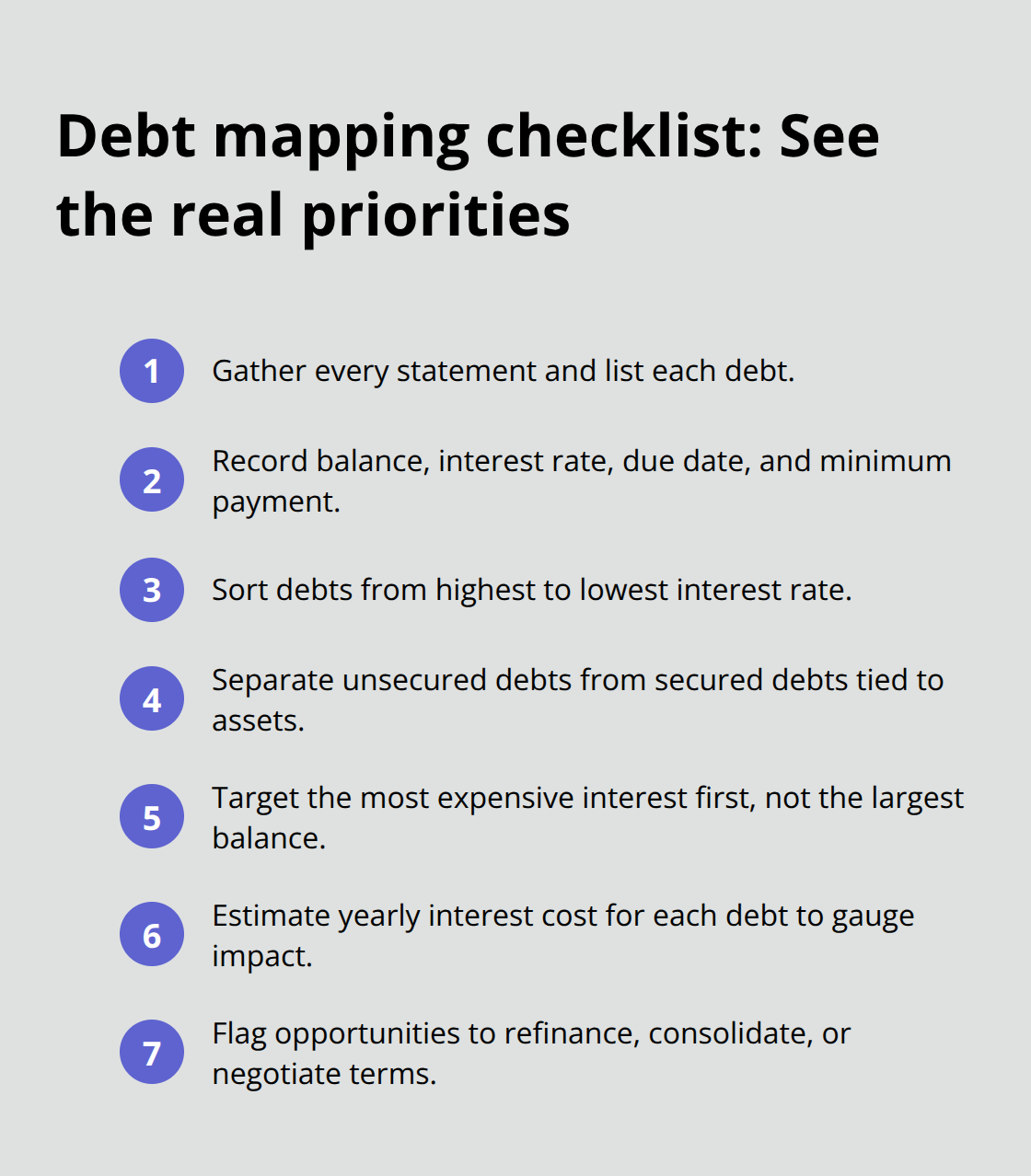
Start by collecting every statement you have. Credit cards, lines of credit, student loans, car payments, medical debts-write down each one with the exact balance and interest rate. This matters because interest rates vary wildly. A credit card charging 21.99% annually will cost you far more than a car loan at 6.5%, even if the car loan balance is larger. Statistics Canada data shows Canadian credit card rates average around 20%, while personal loans sit closer to 10–15%. The difference compounds quickly. If you owe $5,000 on a card at 21% versus $5,000 on a personal loan at 10%, you’ll pay roughly $1,050 more in interest over five years on the credit card. That’s money you could redirect elsewhere. Write the interest rate next to each debt, then sort them from highest to lowest. This reveals your real priority immediately-not necessarily the largest balance, but the most expensive one.
Track Every Due Date and Payment Amount
Your next step is harder than it sounds: you must know exactly when each payment hits. Penalty interest rates can jump to 22% or higher on credit cards, destroying your budget in one mistake. Create a simple calendar or spreadsheet showing the due date, minimum payment, and current balance for each debt. Many Canadians miss deadlines simply because they don’t see them coming. If you have five different creditors with staggered due dates, one payment arriving on the 5th, another on the 15th, another on the 25th, your cash flow becomes fragmented. Map out every debt you owe to see the full picture. You cannot budget what you don’t see. Once you know your payment schedule, you can spot opportunities-like asking creditors for different due dates that align better with your paycheque, or consolidating multiple payments into one monthly cycle. Some lenders will adjust due dates at no cost if you ask.
Identify Which Debts Cost You the Most
High-interest debt bleeds your budget faster than anything else. A $10,000 credit card balance at 20% costs you $2,000 annually in interest alone, while a $10,000 car loan at 7% costs roughly $700. That $1,300 difference per year could cover groceries, utilities, or accelerate other payments. This is why targeting high-interest debt first-the avalanche method-saves you the most money over time. The snowball method, paying smallest balances first, builds psychological momentum but costs more in total interest. Your choice depends on whether you prioritize cash flow relief or total savings. If your budget is extremely tight and you need a quick win for motivation, snowball works. If you can sustain payments and want to minimize interest, avalanche wins. Look at debts you cannot discharge easily, like mortgages and secured debts tied to assets, separately from unsecured debts like credit cards and lines of credit. This distinction matters because your options for lowering payments differ significantly. You might refinance a mortgage or negotiate a car loan, but a credit card requires different tactics-negotiation, consolidation, or formal debt solutions.
What Comes Next
Once you have your complete debt picture-total balances, interest rates, due dates, and priority ranking-you’re ready to act. The strategies that follow show you how to negotiate with creditors, explore consolidation options, and access formal debt management plans that can substantially lower your monthly obligations.
How to Actually Lower Your Monthly Payments
Negotiate a Lower Interest Rate with Your Creditors
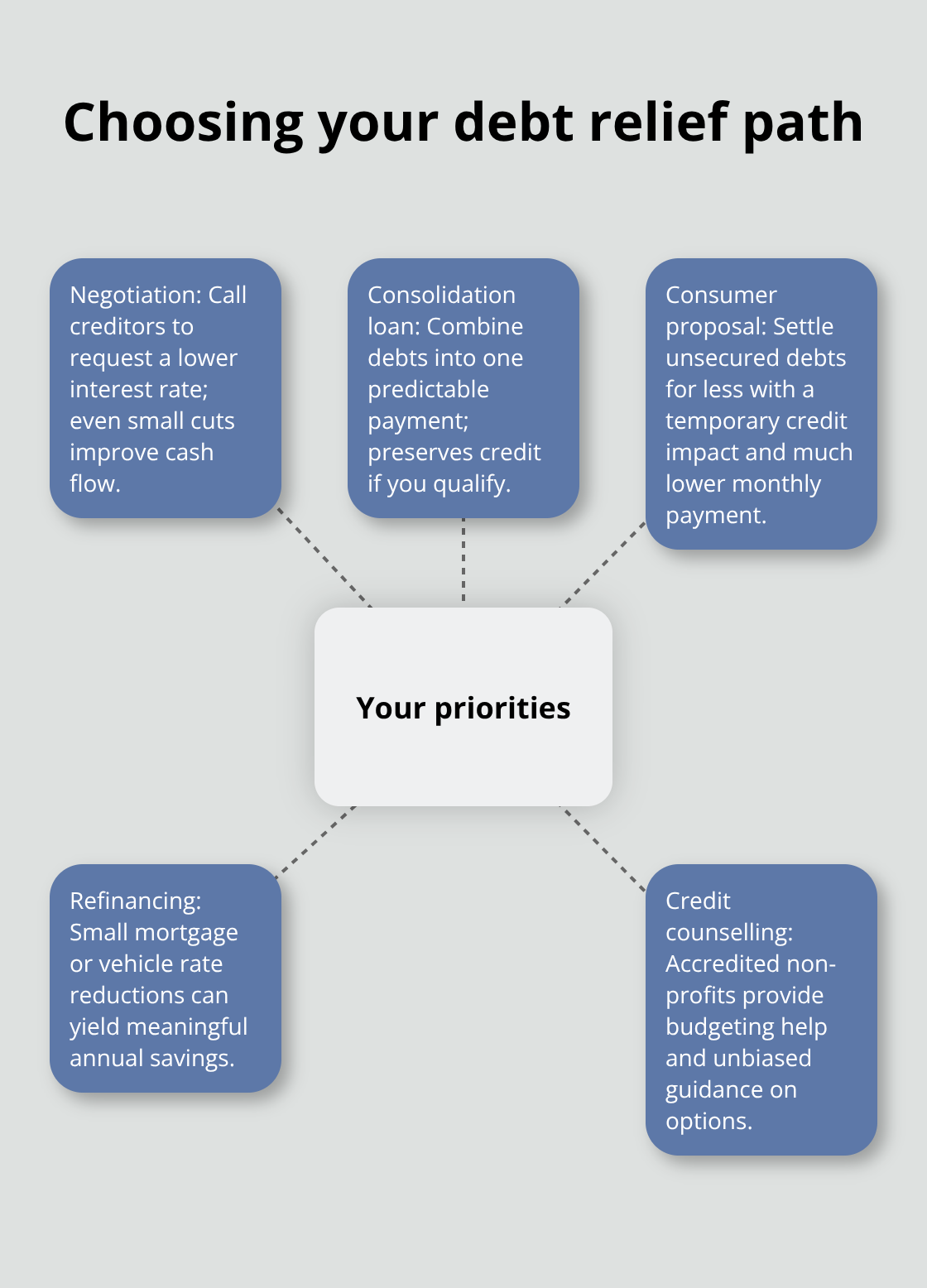
Calling your creditors feels uncomfortable, but it works. Most credit card companies and lenders have retention teams specifically designed to keep customers from leaving. If you’ve paid on time for six months or longer, you have leverage. Contact your card issuer’s customer service number, ask to speak with someone who handles account reviews, and state your situation plainly: your budget is tight, you’re looking at consolidation or other options, and you’d like to discuss a lower interest rate. Credit card companies would rather reduce your rate than lose you entirely. A rate reduction from 21% to 18% on a $5,000 balance saves you roughly $150 annually. That’s real money. If the first representative says no, ask for a supervisor.

Persistence matters here.
For secured debts like mortgages and car loans, contact your lender about refinancing if rates have dropped since you borrowed. Canadian mortgage rates have fluctuated significantly, and even a 0.5% reduction on a $300,000 mortgage saves you approximately $1,500 per year. Vehicle loans are harder to refinance but worth exploring if you have good payment history and your credit score has improved since you took out the loan.
Consolidation Loans: Simplify Your Payments
Debt consolidation pools multiple debts into one monthly payment, typically at a lower interest rate than credit cards. You’ll pay interest over time, but your monthly obligation becomes predictable and easier to manage. A consolidation loan in Canada can cost around $600 per month for 7–10 years to pay off about $40,000 in debt, depending on interest and terms. This approach preserves your credit score better than other formal debt solutions, though it requires you to qualify for a new loan. Consolidation works best if you’re managing your current situation but drowning in interest charges across multiple accounts.
Consumer Proposals: Trade Monthly Burden for Temporary Credit Impact
A consumer proposal, administered by Licensed Insolvency Trustees, allows you to settle unsecured debts for less than you owe. The structure differs dramatically from consolidation. A consumer proposal might allow about $200 per month for 60 months to settle roughly $40,000 in unsecured debt. With a proposal, total payments over 5 years could reach around $12,000, significantly less than paying a high monthly loan for many years. Your credit score dips temporarily with a proposal, but your monthly cash flow improves dramatically. Rebuilding credit after proposal approval can occur within about 45 days if you implement strategies to restore your score quickly. This option makes sense if your current situation leaves you unable to cover rent and food after debt payments, despite the temporary credit impact.
Choose Based on Your Real Priorities
The choice between consolidation and a consumer proposal isn’t about which is objectively better-it’s about whether you prioritize preserving your credit profile or gaining breathing room in your monthly budget. Consolidation costs significantly more over time but maintains your credit standing. A proposal reduces what you owe substantially but requires you to accept a temporary credit score reduction. Licensed Insolvency Trustees can assess your situation at no cost, showing you actual numbers for both options before you decide.
Your income, assets, and the types of debts you carry all affect which path makes sense for your circumstances. Once you understand these two major strategies, you’ll want to explore the specific tools and resources available to Canadian debtors that can support whichever approach you select.
Tools and Resources Available to Canadian Debtors
Start with Accredited Credit Counselling Services
Credit counselling services in Canada range from government-backed programs to non-profit organizations, and the difference in quality matters significantly. Non-profit credit counselling agencies accredited by Credit Counselling Canada or the Canadian Association of Credit Counselling Services operate without profit incentives and won’t push you toward solutions that benefit them financially. The Government of Canada’s Financial Consumer Agency offers free debt management guidance and budgeting resources through their website, including a comprehensive budget planner that tracks exactly where your money goes each month. Many provinces also operate consumer affairs offices that provide debt resources at no cost.
When you contact a counsellor, they’ll help you understand whether consolidation, a consumer proposal, or debt management plans align with your income and assets. Licensed Insolvency Trustees, who administer consumer proposals, offer free initial consultations where they’ll show you actual numbers for your specific situation before you commit to anything. This consultation is worth doing even if you’re unsure about pursuing a proposal, because seeing real figures for your options beats guessing.
Avoid Predatory Debt Settlement Companies
Debt settlement companies that charge upfront fees or promise to negotiate away large portions of your debt often damage your credit score further and may violate provincial regulations. Check for complaints about any service through your provincial regulator before engaging them. Your provincial consumer affairs office can tell you which services have complaints filed against them and which operate legitimately.
Use Budgeting Tools and Apps to Track Real Spending
Budgeting tools and debt repayment apps have become far more practical than they were five years ago. Statistics Canada’s Personal Inflation Calculator lets you measure your actual spending patterns against national averages, revealing where your expenses deviate from typical Canadian households. Free budgeting apps offered through your bank’s online platform or third-party services help you track spending in real time, which matters because most people underestimate discretionary expenses by 20–30% when they guess rather than measure.
Refinance Your Mortgage or Vehicle Loan
For mortgage refinancing, contact your current lender first to ask about rate reductions or term adjustments, then get quotes from other lenders to compare. Even a 0.25% reduction on a $300,000 mortgage saves roughly $750 annually. Vehicle loans are trickier to refinance, but if your credit score has improved significantly since you took out the loan, it’s worth exploring with your bank or credit union.
The key action here is this: contact your current lender before shopping elsewhere, because they have incentive to keep your business and may offer better terms than competitors without you needing to apply elsewhere and trigger multiple credit inquiries. Most lenders will provide a rate hold for 30–60 days while you compare, so you can gather real numbers from several sources before deciding.
Final Thoughts
You now have a complete framework for lowering your monthly debt payments. The debt management Canada tips we’ve covered-mapping your debts, identifying high-interest priorities, negotiating with creditors, and exploring consolidation or consumer proposals-give you concrete options rather than vague advice. The difference between knowing your interest rates and acting on them is hundreds of dollars annually.
Your next step depends on where you stand right now. If your situation is manageable but interest charges eat your budget, call your creditors and ask for rate reductions, as this costs nothing and works more often than most people expect. If you’re juggling multiple payments across different due dates, explore consolidation loans to simplify your obligations while potentially lowering your rate. If your monthly payments leave you unable to cover essentials like rent and food, a consumer proposal administered by a Licensed Insolvency Trustee deserves serious consideration, despite the temporary credit score impact.
Before committing to any path, contact a Licensed Insolvency Trustee for a free consultation showing actual figures for your situation, use Statistics Canada’s Personal Inflation Calculator to see where your spending actually goes, and work with a non-profit credit counselling service accredited by Credit Counselling Canada to understand which option aligns with your income and assets. Financial Canadian provides resources to support your long-term financial goals and help you build the foundation you need.










Leave a comment