
Getting guaranteed loan approval in Canada isn’t about luck-it’s about meeting specific requirements that lenders actually look for. We at Financial Canadian know that many borrowers feel confused about what banks and alternative lenders really need to see.
This guide breaks down the exact standards lenders use, the documents you’ll need, and the practical steps to strengthen your application. Whether you’re applying for a mortgage, personal loan, or line of credit, understanding these requirements puts you in control.
What Guaranteed Approval Actually Means in Canada
No lender in Canada offers truly guaranteed approval regardless of your financial situation. What lenders actually mean by guaranteed or near-guaranteed approval is that they’ve pre-screened you and found you meet their baseline criteria. Alternative lenders and private lenders focus heavily on current cash flow and income stability rather than your credit history, which is why they can approve applicants that traditional banks reject. Banks typically require credit scores around 680 or higher, while alternative lenders assess real-time metrics like monthly revenue trends and consistent deposit activity. For personal loans, private lenders evaluate whether you have steady income and a functioning bank account more than they scrutinize past financial mistakes. The companies offering same-day or 30-minute approvals aren’t being reckless-they use automated systems to verify your current income against your existing debts and make decisions based on what you can afford right now, not what happened five years ago.
Where Higher Approval Rates Actually Exist
Secured loans backed by collateral like your vehicle have significantly higher approval rates than unsecured personal loans because the lender has an asset to recover if you default. Revenue-based financing and merchant cash advances for businesses approve applicants with poor credit because repayment ties directly to your sales volume rather than your creditworthiness. Lines of credit from alternative lenders are easier to obtain than term loans because you only pay interest on what you actually borrow, reducing the lender’s risk. Business loans from private lenders approve based on your current bank deposits and sales velocity rather than historical credit scores, meaning a business with three months of strong revenue can qualify even with previous bankruptcies.
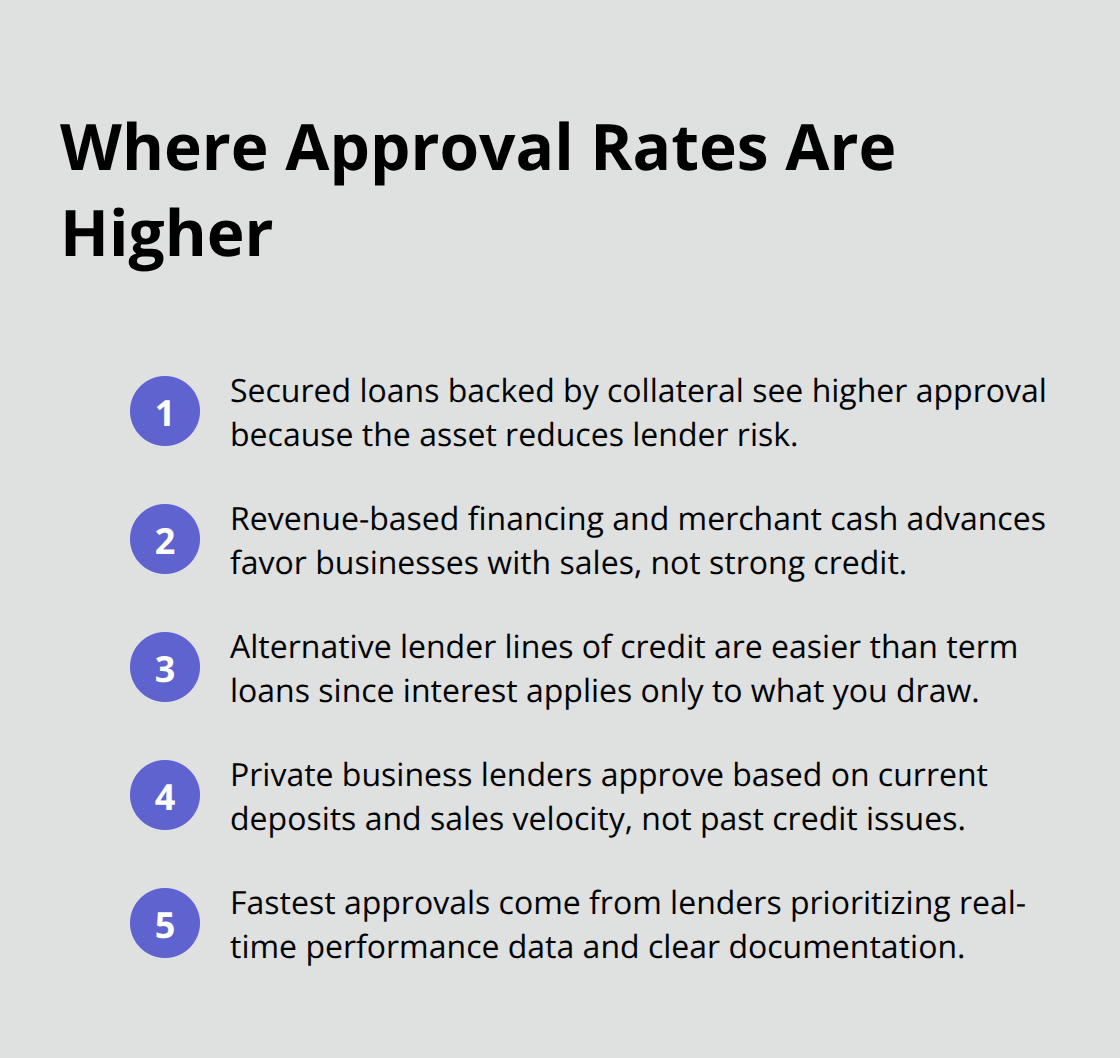
The fastest approvals-same-day or within 1-2 business days-come from lenders who prioritize real-time performance data and transparent documentation over lengthy credit investigations.
What Actually Improves Your Odds
If you have a steady job, regular paychecks, and a clean bank account for the past few months, your approval odds improve dramatically with alternative lenders compared to traditional banks. Lenders want to see consistent deposits that match your stated income and minimal overdrafts or returned payments. Transparent documentation (current pay stubs, recent tax filings, and bank statements) signals that you manage your finances responsibly. Reducing existing debts before you apply strengthens your application because lenders calculate your debt-to-income ratio by adding up all your monthly debt payments and dividing them by your gross monthly income.
Why Guaranteed Approval Claims Are Actually Red Flags
Any lender claiming 100 percent approval regardless of your circumstances is either exaggerating or planning to charge you predatory rates that make the loan unaffordable. Legitimate lenders perform some form of verification-they check your income, confirm you have a bank account, and verify you’re employed or self-employed. The phrase guaranteed approval is marketing language designed to attract desperate borrowers, but real lenders always have minimum standards because they need reasonable confidence you’ll repay them. What you should look for instead is lenders transparent about their actual approval process and willing to explain exactly what they evaluate. Alternative lenders with competitive rates and transparent terms-those charging between 3 and 15 percent APR rather than 35 percent-actually perform underwriting and reject applications that don’t meet their criteria. Understanding these red flags positions you to identify lenders worth your time and those you should avoid entirely.
What Lenders Actually Check Before Approving You
Banks and alternative lenders evaluate your financial health through different lenses, but both want proof you can repay them. Traditional banks demand credit scores around 680 or higher and scrutinize your entire credit history, while alternative lenders focus on your current income stability and recent banking activity. If your credit score sits below 680, traditional banks will reject you outright, but private lenders care far more about whether your paychecks hit your account consistently and whether you have money left after covering existing debts.
How Debt-to-Income Ratios Work
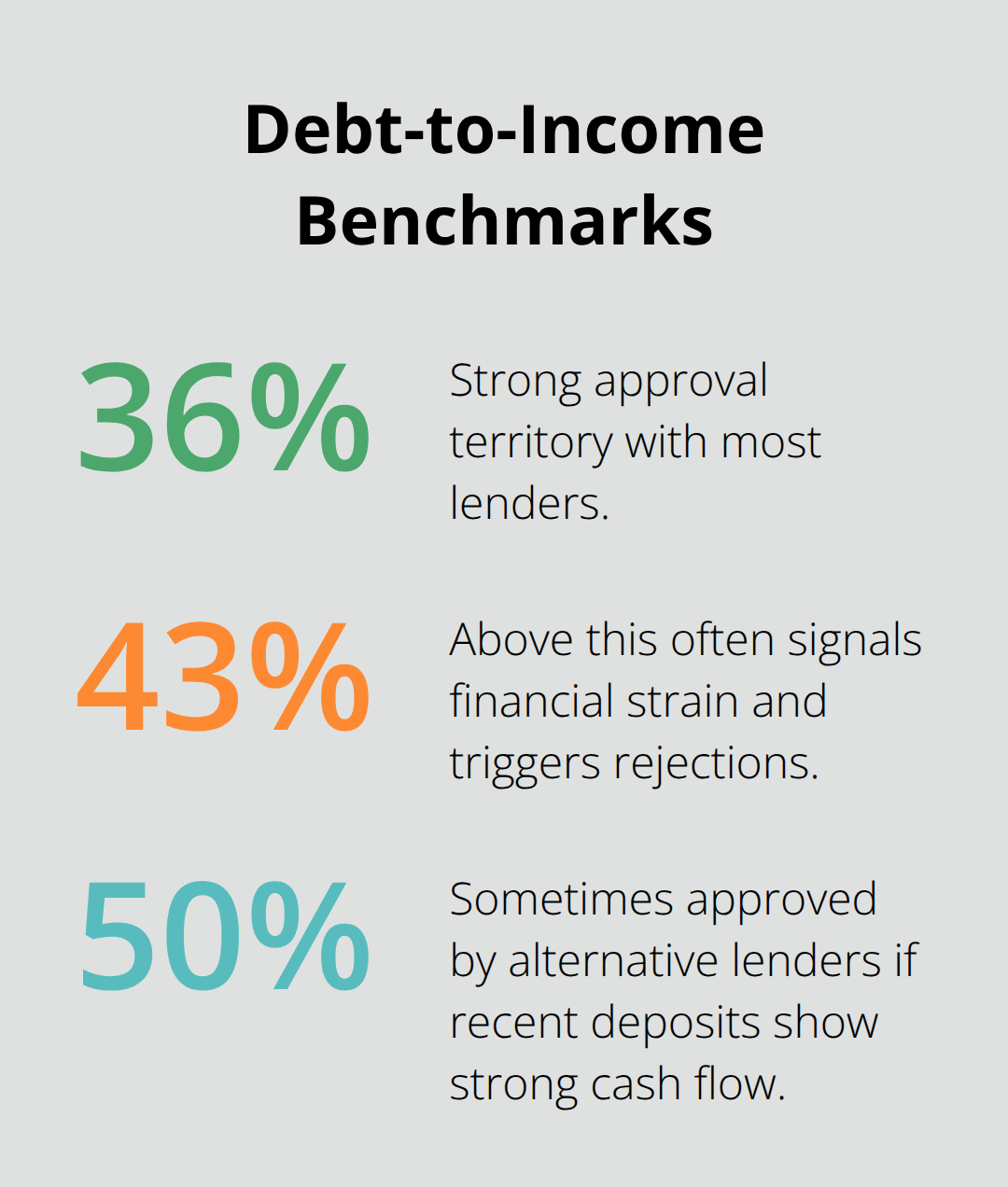
Debt-to-income ratio matters to both types of lenders because it reveals how much of your monthly income already goes toward debt payments. You calculate this by adding all your monthly debt obligations (mortgage, car payments, credit cards, student loans, personal loans) and dividing by your gross monthly income. A ratio below 36 percent puts you in strong territory with most lenders, while anything above 43 percent signals financial strain that triggers rejections. Alternative lenders sometimes approve ratios up to 50 percent if your recent bank deposits show stronger cash flow than your stated income suggests, meaning they trust what they see in your account more than what appears on paper.
Employment History and Income Stability
Employment history matters differently depending on which lender you approach. Traditional banks want to see at least two years with the same employer and will penalize you heavily for job changes, contract work, or self-employment income that hasn’t been documented for multiple years. Alternative lenders evaluate employment differently because they measure stability through deposit patterns rather than job tenure. If you’ve been self-employed for only six months but your bank statements show consistent monthly revenue and healthy deposits, private lenders will approve you while banks would demand two years of tax returns and still hesitate.
What Strengthens Your Application
The strongest applications combine current employment stability with recent financial responsibility. This means no missed payments in the past three to six months, consistent deposits matching your stated income, minimal overdraft activity, and low credit card balances relative to your limits. Lenders pull your credit report to verify you’re not currently in default on anything, but alternative lenders weight this check far less heavily than banks do.
Timing Your Applications Strategically
If you apply to multiple lenders, space your applications at least one week apart because multiple hard credit inquiries within a short period damage your score and signal desperation to lenders. The fastest approvals come when you apply directly to lenders rather than brokers, since brokers add processing time while shopping your application across their network. Understanding these approval mechanics positions you to move forward with confidence, knowing exactly which documents and financial records will matter most when you sit down to complete your application.
Documentation and Application Tips
Lenders request specific documents because they verify three things: your identity, your income, and your ability to repay. Traditional banks demand more paperwork than alternative lenders, but both need proof you exist, you earn money, and you’re not drowning in existing debt. For personal loans, you’ll provide a government-issued ID, recent pay stubs (usually from the last 30 days), and your last two months of bank statements showing consistent deposits. Self-employed applicants face stricter requirements and should prepare their last two years of tax returns, current business registration documents, and three to six months of business bank statements that demonstrate steady revenue. Alternative lenders often skip the tax return requirement if your business bank deposits clearly show monthly income patterns, which is why many approve self-employed applicants faster than traditional banks. Secured loan applications add another layer because lenders need proof you own the collateral, so you’ll bring your vehicle registration and insurance documents. Most applicants make a critical mistake: they show up with incomplete documentation and expect the lender to chase down missing pieces. Lenders have hundreds of applications in their queue, so incomplete submissions get rejected immediately. You should prepare everything before you apply, not after you receive a request.
Why Your Bank Statements Matter Most
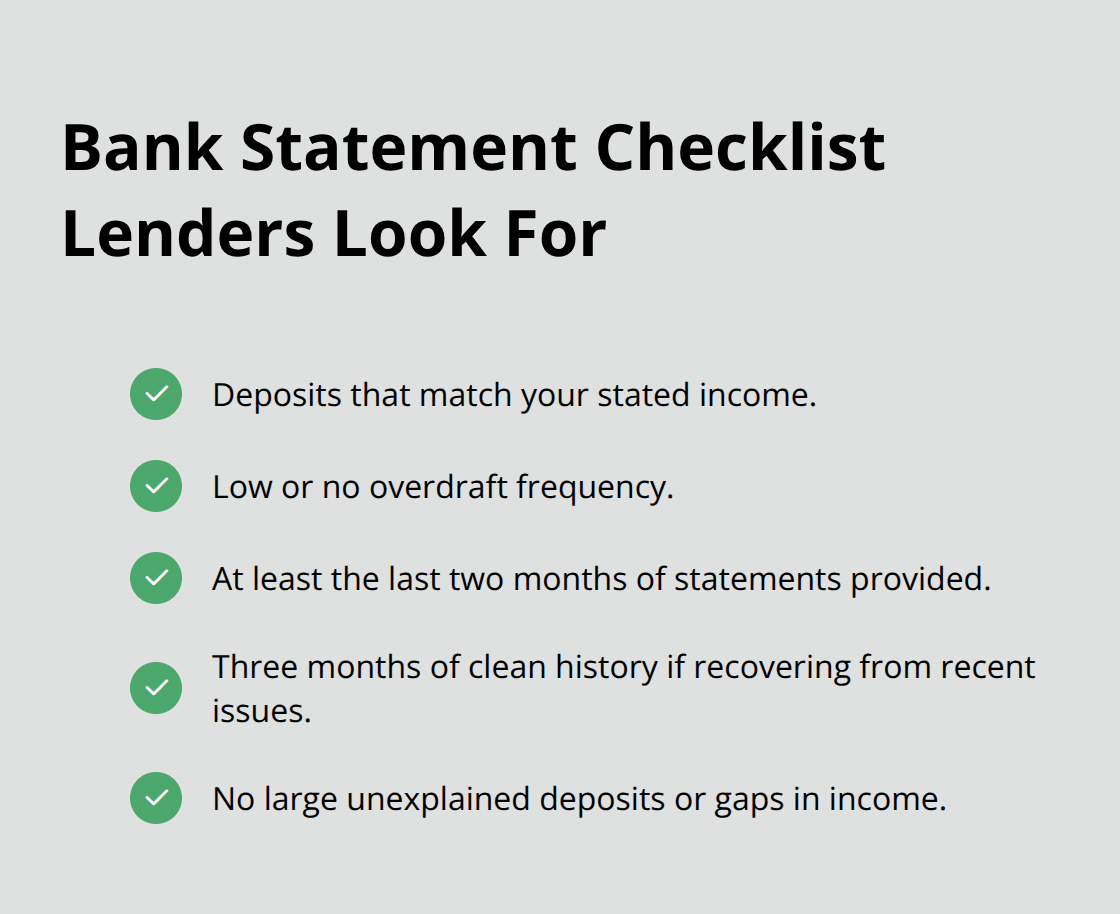
Your bank statements reveal the truth that credit scores hide. Lenders look for consistent deposits that match your stated income, low overdraft frequency, and available funds after your regular expenses. If you claim you earn $4,000 monthly but your statements show deposits averaging $2,800, lenders flag this discrepancy and either reject you or reduce their offer. Alternative lenders specifically examine deposit velocity and patterns because these metrics predict repayment behavior more accurately than historical credit data. You should ensure your statements cover the last two months minimum and show clean transaction history without multiple overdrafts or returned payments. If you’ve had financial problems recently, you can demonstrate improvement by showing your last three months of statements, proving you’ve stabilized your finances. You should never submit statements with large unexplained deposits or gaps in income because lenders interpret these as red flags.
One common rejection reason involves applicants showing statements with recent large transfers from family members, which lenders view as temporary money rather than actual income capacity.
Common Reasons Applications Get Rejected
The most common rejection reasons fall into three categories: insufficient income relative to debt obligations, inconsistent or undocumented income, and recent missed payments or defaults. If your debt-to-income ratio exceeds 50%, approval becomes significantly more difficult until you pay down existing debts. Lenders approve applications despite poor credit history when your recent financial activity proves you’ve stabilized, so showing three months of on-time payments and healthy balances strengthens weak applications significantly. You should submit applications during your strongest financial months when your bank balance is highest and recent deposits look most impressive. You should avoid applying immediately after job changes or income fluctuations because lenders need proof of stability, and timing your application when your income documentation is cleanest increases approval odds substantially.
Final Thoughts
Guaranteed loan approval in Canada hinges on one reality: lenders need confidence that you’ll repay what you borrow. Alternative lenders evaluate your current financial situation rather than punishing you for past mistakes, which is why they approve applications quickly when your recent bank deposits and income stability demonstrate repayment capacity. If you have steady income, consistent deposits, and manageable debt levels, you meet the baseline criteria that alternative lenders use to make fast decisions.
Your approval odds improve dramatically when you prepare complete documentation before applying. Collect your government-issued ID, recent pay stubs, and two months of bank statements that show clean transaction history without overdrafts or returned payments. Self-employed applicants should compile business registration documents and three to six months of business bank statements that demonstrate consistent revenue, since lenders evaluate your actual deposits more heavily than tax returns when your banking activity tells a clear story.
Timing and lender selection matter strategically for guaranteed loan approval in Canada. Space multiple applications at least one week apart to avoid triggering multiple hard credit inquiries that damage your score, and apply directly to lenders rather than brokers when possible since brokers add processing time. We at Financial Canadian help you identify which lender type matches your situation and navigate your borrowing options with transparent information.











Leave a comment